Source Foldable Adjustable Shower Stool with Backrest for Elderly, Children, Pregnant Women
Explore 30 listings for a Foldable Adjustable Shower Stool with Backrest designed for elderly, children, and pregnant women. Compare specifications like load capacity, materials, and dimensions to find the right rehabilitation therapy supply for your needs.
Key considerations
Products List


Height-Adjustable Rotating Shower Stool with Comfortable Backrest Design
$10.30 - $13.39
MOQ: 20 Pieces


Bath Stool Shower Chair with Backrest Quick Detacbale Legs Adjustable Height
$13.50 - $14.50
MOQ: 100 Pieces

Factory Hot Sale light Tweight Shower Chair Bath Stool with Adjustable Height
$9.50 - $10.50
MOQ: 100 Pieces

Lightweight Height Adjustable Shower Stool with Padded Armrest, Non-Slip Feet
$22.00 - $25.00
MOQ: 200 Pieces




Comprehensive Sourcing Guide
Strategic Sourcing Guide for Foldable Adjustable Shower Stools with Backrest
Procuring medical-grade or assistive bathroom furniture requires a rigorous approach that balances ergonomic safety, material durability, and regulatory compliance. The Foldable Adjustable Shower Stool with Backrest represents a critical category within rehabilitation therapy supplies, designed specifically to enhance independence for children, pregnant women, and the elderly. Sourcing these items involves navigating a complex landscape of material specifications, load-bearing requirements, and customization options. This guide provides a structured framework for buyers to evaluate suppliers and select products that meet the highest standards of safety and functionality without relying on unverified claims.
Technical Specifications and Material Integrity
The core functionality of a foldable shower stool relies heavily on its structural design and material composition. Buyers must scrutinize the specific materials used for the frame, seat, and backrest to ensure resistance to water damage and corrosion. In the observed market data, aluminum and aluminum alloy are prominent choices for the main frame and handrails, often reinforced with nylon for added stability. The seat board itself is frequently constructed from high-density polyethylene (HDPE) or polyethylene (PE), materials selected for their non-slip properties and resistance to moisture absorption.
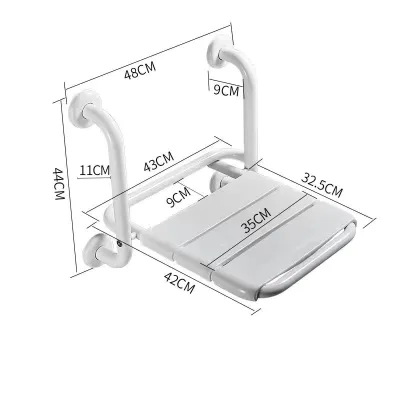
Critical dimensional specifications vary by model, yet certain ranges indicate standard industry expectations for safety and comfort. For instance, seat dimensions typically fall around 460mm by 410mm, providing adequate surface area for secure positioning. The backrest size is often approximately 395mm by 240mm, ensuring proper lumbar support. Adjustability is a key feature, with seat heights ranging from 43cm to 53cm or extending up to 550mm depending on the model, allowing users to customize the height to match their specific needs or the height of the shower tray.
The thickness of the structural components is another vital metric. Observed data indicates a minimum thickness of 1.0mm for certain structural elements, which contributes to the overall rigidity of the stool. The foot mats are commonly made from TPE (Thermoplastic Elastomer) or anti-slip rubber, providing essential traction on wet surfaces. The total weight of the unit is also a consideration for portability; some models are engineered to be lightweight, with specific units weighing as little as 3kg or 6.42kg, while maintaining a robust load-bearing capacity.
Load-Bearing Capacity and Safety Standards
Safety is the paramount concern when sourcing assistive devices for vulnerable populations. The load-bearing capacity of a shower stool must be verified against the intended user group. While general observations suggest a capacity of 100kg, more robust models are rated to support up to 150kg (approximately 330lbs). This variance highlights the importance of checking the specific model's rating rather than assuming a universal standard. The structural integrity must withstand dynamic loads, such as a user shifting weight or standing up from the seated position, without compromising the folding mechanism.
The folding mechanism itself must be secure. Products described as "folding" or "fodable" often utilize plug-in connections or screw fixation methods for assembly. Buyers should verify that the locking mechanisms in the folded and unfolded states are reliable and do not require excessive force to engage or disengage. The presence of a backrest adds a layer of stability, but the connection points between the backrest and the seat must be reinforced to prevent tipping. The standard dimensions for these units, such as 4438(70-80)CM or 670600270mm for packing, provide a baseline for storage and transport, but the operational dimensions must align with the user's bathroom layout.
Compliance, Certification, and Regulatory Adherence
Navigating the regulatory landscape is essential for B2B procurement, particularly when dealing with medical or rehabilitation supplies. The presence of certifications such as CE and RoHS is a strong indicator of compliance with European safety and environmental standards. Additionally, ISO certification suggests that the manufacturer adheres to international quality management systems. However, buyers must treat these certifications as observations of specific products rather than universal guarantees for all listed items.
When evaluating a supplier, it is crucial to request documentation that proves the validity of these certifications for the specific model being purchased. The "New" condition of the product and the "One Year" warranty period are also standard attributes that signal a commitment to quality, but they do not replace the need for third-party testing data. The product origin, often cited as Hebei Hengshui or generally China, does not inherently dictate quality but serves as a reference point for supply chain logistics. Buyers should verify that the manufacturing facility holds the necessary ISO certifications and that the products have passed relevant safety tests for load capacity and material safety.
Cost Drivers and Pricing Structures
The pricing of foldable adjustable shower stools is influenced by several factors, including material quality, customization options, and order volume. The observed price range in the market spans from $0.01 to $85, a wide disparity that reflects differences in build quality, brand positioning, and included features. Lower-priced items may utilize thinner materials or simpler folding mechanisms, while higher-priced units often feature premium aluminum alloys, enhanced anti-slip surfaces, and more complex adjustability features.
Minimum Order Quantity (MOQ) is another significant cost driver. While some suppliers offer an MOQ as low as 1 piece, others require orders of 10 pieces or up to 500 pieces. This variability allows buyers to scale their procurement based on their immediate needs. Customization is a key value-add that can impact cost. Options such as logo printing, custom packaging, and color selection are frequently available. These customizations add value for branding purposes but may increase the unit price or require a higher MOQ to be economically viable. Buyers should calculate the total cost of ownership, including shipping and potential tariffs, rather than focusing solely on the unit price.
Supplier Evaluation and Quality Control
Selecting the right supplier requires a multi-faceted evaluation process that goes beyond the product listing. Buyers should assess the supplier's ability to provide consistent quality control throughout the production process. The "Standard Export Package" or "Carton" packing methods are common, but the quality of the packaging is critical to prevent damage during transit. The packing size, such as 600170400mm or 670600270mm, must be optimized to minimize shipping costs while ensuring product protection.
Quality control checks should focus on the assembly of the stool, the integrity of the folding joints, and the finish of the materials. Suppliers should be able to provide evidence of their production capabilities, including the use of high-quality aluminum and HDPE/PE materials. The "Special Feature" of being portable, foldable, lightweight, and adjustable should be verified through physical inspection or third-party testing. Buyers should also inquire about the supplier's response to defects and their warranty fulfillment process. A "One Year" warranty is a standard offering, but the terms and conditions of this warranty should be clearly understood.
Typical Applications and User Demographics
The primary application of foldable adjustable shower stools is in the rehabilitation and daily living support sectors. These products are designed to assist children, pregnant women, and the elderly, addressing the specific needs of each demographic. For the elderly, the backrest and adjustable height provide essential support for those with limited mobility or balance issues. For pregnant women, the stool offers a safe place to sit during bathing, reducing the risk of falls. For children, the lightweight and portable nature of the stool makes it easy to store and use in various bathroom settings.
The "Multi-Function" and "Design Sense" attributes of these products make them suitable for both medical facilities and private homes. The "Resistance to Heavy" and "Beautiful" characteristics indicate that the products are built to last while maintaining an aesthetic appeal that fits modern bathroom designs. The "Rehabilitation Therapy Supplies" classification underscores their role in healthcare settings, where durability and safety are non-negotiable. Buyers should consider the specific needs of their target market when selecting a model, ensuring that the features align with the intended user group.
Long-Term Procurement Considerations
Sourcing assistive devices is a long-term commitment that requires careful planning for inventory management and supply chain stability. The "Customized" nature of many products means that buyers must maintain clear communication with suppliers regarding design changes and branding requirements. The "Logo, Package, Color Acceptable" attributes allow for significant flexibility, but buyers should establish clear guidelines for these customizations to avoid delays.
Lead times and production capacity are critical factors for long-term planning. While specific lead times are not provided in the data, buyers should negotiate realistic timelines based on the order volume and customization level. The "Standard Export Package" and "Carton" options suggest that the products are designed for efficient shipping, but buyers should verify the packing efficiency to optimize logistics costs. Additionally, the "New" condition and "One Year" warranty period should be factored into the total cost of ownership, as they reflect the expected lifespan and reliability of the product.
Comparative Analysis of Key Product Attributes
To facilitate decision-making, the following table summarizes the key technical and commercial attributes observed in the market data for foldable adjustable shower stools. This comparison highlights the variability in specifications and helps buyers identify the most suitable options for their specific requirements.
| Attribute Category | Specific Feature | Observed Range / Value | Relevance to Buyer |
|---|---|---|---|
| Material | Frame / Handrail | Aluminum / Aluminum Alloy + Nylon | Durability and corrosion resistance |
| Material | Seat Board | HDPE / PE | Moisture resistance and hygiene |
| Material | Foot Mat | TPE / Anti-Slip Rubber | Safety and traction on wet surfaces |
| Load Capacity | Maximum Weight | 100kg to 150kg (330lbs) | Safety for intended user weight |
| Dimensions | Seat Size | 460*410mm | Comfort and stability |
| Dimensions | Seat Height | 43-53cm / 485-550mm | Adjustability for different users |
| Dimensions | Packing Size | 600170400mm to 670600270mm | Logistics and storage efficiency |
| Weight | Unit Weight | 3kg to 6.42kg | Portability and ease of handling |
| Certification | Compliance | CE, RoHS, ISO | Regulatory adherence and safety |
| Customization | Options | Logo, Package, Color | Branding and market differentiation |
| MOQ | Minimum Order | 1 to 500 pieces | Flexibility for small vs. bulk orders |
| Warranty | Period | One Year | After-sales support and reliability |
By adhering to these guidelines and leveraging the provided data, buyers can make informed decisions that prioritize safety, quality, and value. The Foldable Adjustable Shower Stool with Backrest is a versatile product that, when sourced correctly, can significantly improve the quality of life for its users.
FAQs
What certifications do these shower stools typically hold?
Products often carry CE, RoHS, and ISO certifications. These indicate compliance with safety and quality standards, but buyers must verify specific model documentation rather than assuming universal coverage.
How much weight can a foldable shower stool support?
Load-bearing capacity ranges from 100kg to 150kg depending on the model. Users should check the specific product rating to ensure it safely accommodates their weight before purchase.
Can I customize the logo and packaging for this product?
Yes, customization for logo, package, and color is generally acceptable. Buyers should confirm specific MOQ requirements, which can vary from 10 pieces to higher thresholds for custom orders.
What materials are used for the frame and seat?
Frames are typically made of aluminum or aluminum alloy with reinforced nylon. The seat board often uses HDPE or PE, while foot mats may be TPE or anti-slip rubber for safety.
What is the warranty period for these rehabilitation supplies?
The standard warranty period is one year for new products. This coverage applies to defects but does not replace the need for third-party testing data on load capacity.
How adjustable is the seat height on these units?
Seat height is adjustable, typically ranging from 43cm to 53cm or up to 550mm. This allows users to customize the height to match their specific needs or shower tray levels.
Where are these shower stools manufactured?
Products originate from locations such as Hebei Hengshui or generally China. Buyers should verify the specific origin for logistics planning while noting that origin does not guarantee quality.