Source Foldable Bath Commode Chair with Removable Toilet Bucket for Elderly, Pregnant Women, and Children
Explore 30 listings of the Foldable Bath Commode Chair with Removable Toilet Bucket designed for elderly, pregnant women, and children. Buyers can compare specifications like seat dimensions, weight capacity, and folding features to find the right mobility aid.
Key considerations
Products List


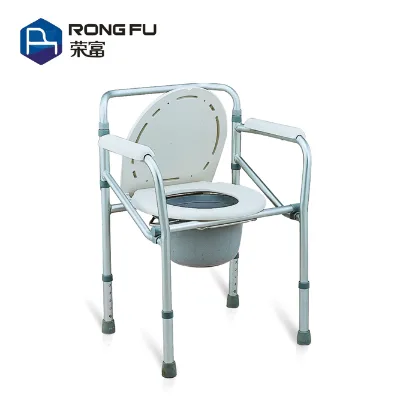

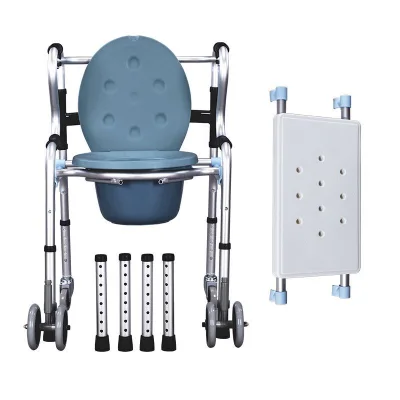
Comfortable Commode Chair Foldable Portable Toilet Chair with Wheels Customized
$15.90 - $17.53
MOQ: 200 Pieces


Comprehensive Sourcing Guide
Strategic Sourcing Guide for Foldable Bath Commode Chairs
The global demand for assistive bathroom furniture has surged as populations age and accessibility standards evolve. For procurement professionals, the core keyword "Foldable Bath Commode Chair with Removable Toilet Bucket" represents a critical intersection of mobility, hygiene, and safety. Sourcing these units requires a disciplined approach that balances technical specifications with regulatory compliance. This guide synthesizes available product data and industry standards to provide a framework for evaluating suppliers and selecting products that meet rigorous B2B requirements.
Technical Specifications and Dimensional Analysis
When evaluating foldable bath commode chairs, the physical dimensions and structural integrity are paramount. The product data indicates a range of models, such as the TCM-01H, TCM-01S, and TCM-02D, each with distinct dimensional profiles. The standard footprint for several models is observed at 604583 cm, while the TCM-02D variant presents a different configuration at 74.558.551 cm. These variations suggest that buyers must align product dimensions with the specific spatial constraints of their target facilities, whether residential or institutional.
The seat geometry is another critical technical factor. Data points reveal a seat width of 48 cm and a seat depth of 41.5 cm for specific models, while others list a cushion dimension of 430mm by 430mm. The vertical clearance is equally important, with height from the armrest to the seat recorded at 225mm and the total product height ranging between 905mm and 1005mm. The armrest distance from the ground varies between 52 cm and 62 cm, offering adjustability that is essential for user comfort.
Structural components also define the product's utility. The tube wall thickness is specified at 0.7mm for certain frames, constructed from semi-steel or steel materials. The inclusion of casters is a standard feature, with some units equipped with four casters to facilitate movement. The front wheel diameter is noted as 3 inches, and the rear wheel diameter as 5 inches, a configuration that typically enhances stability on uneven bathroom surfaces. The total width of the unit is listed as 540mm in some specifications, ensuring it fits through standard doorways.
Material Composition and Surface Engineering
The longevity and hygiene of a commode chair are directly tied to its material composition. The primary frame material is identified as steel or semi-steel, providing the necessary load-bearing capacity. The data specifies a maximum bearing weight of 150 kg for certain models, while others list a loading capacity of 100 kg. These figures are critical for procurement teams serving elderly or bariatric populations. The net weight of the units varies significantly, ranging from 20.4 kg to 32.5 kg, which impacts shipping costs and handling logistics.
Surface finishing plays a vital role in preventing corrosion, especially in the humid environment of a bathroom. One model explicitly mentions an ABS surface finishing, which offers durability and resistance to moisture. The bedpan material is consistently identified as plastic, a choice that balances ease of cleaning with cost-effectiveness. The frame material is described as semi-steel in some contexts, suggesting a hybrid approach to weight reduction and strength. Buyers should verify that the steel used is treated to resist rust, as the "Resistance to Heavy" characteristic implies a need for robust construction under frequent use.
Regulatory Compliance and Certification Verification
In the medical and assistive device sector, compliance is not optional; it is a prerequisite for market entry. The product data highlights specific certifications, including CE and ISO marks. The implementation standard ISO13485 is explicitly mentioned, which is the international standard for quality management systems specific to medical devices. This certification indicates that the manufacturer adheres to rigorous processes for design, production, and service.
However, buyers must exercise caution when interpreting these certifications. While the data lists CE and ISO, it does not specify the exact directive or standard number for the CE mark (e.g., MDR 2017/745). Similarly, the ISO certification could refer to general quality standards or specific medical device standards. Procurement teams should request valid certificates of conformity from suppliers and verify their authenticity with the issuing bodies. The presence of the ISO13485 standard suggests a high level of quality assurance, but it should be confirmed that the specific product model is covered under this certification scope.
Cost Drivers and Pricing Dynamics
The pricing landscape for foldable bath commode chairs is influenced by several variables, including material costs, customization options, and shipping logistics. The observed price range in the market spans from $0.01 to $480.71 USD. This wide disparity indicates a fragmented market with products ranging from basic, unbranded units to high-end, feature-rich models. The minimum order quantity (MOQ) varies from 1 to 200 units, offering flexibility for small retailers and large institutional buyers alike.
Shipping costs are a significant component of the total landed cost. The data indicates that shipping is included in some listings, while others may require separate freight arrangements. The packing standard is typically one piece per carton, with dimensions that must be calculated to optimize container utilization. The net weight of the units, ranging from 20.4 kg to 32.5 kg, directly affects freight charges. Buyers should consider the trade-off between unit price and shipping efficiency; a lower unit price may be offset by higher shipping costs if the packaging is inefficient.
Typical Applications and User Demographics
The intended application of these chairs is diverse, catering to specific user groups. The product data explicitly lists applications for children, pregnant women, and the elderly. This broad demographic coverage suggests that the designs are versatile enough to accommodate various physical needs. The "Multi-Function" characteristic is a recurring attribute, implying that these chairs serve multiple purposes, such as a bathing aid, a toilet seat, or a general support chair.
The "Folded" attribute is particularly relevant for users with limited space. The ability to fold the chair allows for easy storage in small bathrooms or apartments. The "Beautiful" and "Fashion" characteristics, while subjective, indicate that modern designs are moving away from purely clinical aesthetics to integrate better with home decor. This trend is important for buyers targeting the residential market, where aesthetics can influence purchasing decisions.
Supplier Evaluation and Quality Control Protocols
Evaluating suppliers requires a focus on their ability to deliver consistent quality and adhere to specifications. The data shows that customization is available, with some models listed as "Customized" and others as "Non-Customized." This suggests that suppliers can offer tailored solutions, such as specific colors, dimensions, or accessory additions. Buyers should assess the supplier's capacity to handle these customizations without compromising the structural integrity of the product.
Quality control should be a priority, particularly regarding the welding of steel frames and the stability of the folding mechanism. The "Resistance to Heavy" characteristic implies that the product must withstand significant stress. Buyers should request test reports or third-party verification of the load-bearing capacity. The "New" condition of the products is a baseline requirement, but buyers should also verify that the products are free from manufacturing defects.
Long-Term Procurement Considerations
Sourcing assistive devices is a long-term commitment that involves after-sales support and supply chain reliability. The origin of the products is listed as China, which is a major manufacturing hub for medical equipment. Buyers should consider the lead times and the supplier's ability to maintain inventory levels. The "Whether Shipping Is Included" attribute highlights the importance of understanding the Incoterms used in the transaction.
The "Product Origin" being China also necessitates a review of import regulations and tariffs in the destination country. Buyers should ensure that the supplier can provide all necessary documentation for customs clearance. The "1 Piece /CTN" packing standard is efficient for handling but requires verification that the packaging is robust enough to prevent damage during transit. Long-term partnerships with suppliers who demonstrate reliability in meeting delivery schedules and maintaining quality standards are essential for sustaining a successful procurement strategy.
Comparative Analysis of Key Models
To assist in decision-making, the following table summarizes the key specifications of the observed models. This comparison highlights the variations in dimensions, weight, and capacity that buyers must consider.
| Feature | Model TCM-01H | Model TCM-01S | Model TCM-02D | Model Commode 032502 |
|---|---|---|---|---|
| Dimensions (LWH) | 604583 cm | 604583 cm | 74.558.551 cm | 534364~74 cm |
| Seat Width | N/A | 48 cm | N/A | N/A |
| Seat Depth | N/A | 41.5 cm | N/A | N/A |
| Net Weight | 32.5 Kg | 20.4 Kg | N/A | 5 kg |
| Load Capacity | 150 Kg | 100 kg | N/A | N/A |
| Wheel Dia (Front/Rear) | 3 Inch / 5 Inch | N/A | N/A | N/A |
| Material | Steel | Steel | Semi-Steel | Semi-Steel |
| Certification | CE, ISO | ISO | ISO | N/A |
| Packing | 1 Piece /CTN | 1 PC in One Carton Box | N/A | Carton Packing |
This comparative view underscores the need for buyers to match specific model attributes to their operational requirements. The variation in weight and dimensions suggests that no single model is universally superior; rather, the optimal choice depends on the specific use case, such as the available space in a bathroom or the weight of the intended user.
Conclusion
Sourcing foldable bath commode chairs with removable toilet buckets requires a meticulous approach that integrates technical, regulatory, and logistical considerations. By focusing on verified specifications, confirming certifications like ISO13485, and understanding the nuances of material and design, procurement professionals can identify suppliers that deliver value and safety. The wide range of available models offers flexibility, but it also demands careful evaluation to ensure that the selected products meet the diverse needs of the elderly, pregnant women, and other vulnerable populations. Ultimately, a successful procurement strategy relies on clear communication with suppliers, rigorous quality control, and a deep understanding of the product's intended application.
FAQs
What certifications do these commode chairs hold?
The products hold CE and ISO certifications, with some models meeting the ISO13485 standard for medical devices. Buyers should verify specific certificate scopes to ensure compliance with local regulations before procurement.
How much weight can the chair support?
Load capacity varies by model, with some units supporting up to 150 kg while others are rated for 100 kg. Procurement teams must select models matching the intended user's weight to ensure safety and structural integrity.
Can the product dimensions be customized?
Customization is available for certain models, allowing adjustments to specifications like seat width or overall dimensions. Buyers should confirm if the specific model, such as TCM-01H or TCM-02D, supports the required custom features.
Which materials are used for the frame?
Frames are constructed from steel or semi-steel materials to provide durability and resistance to heavy use. The tube wall thickness is specified at 0.7mm, ensuring the structure can withstand frequent folding and unfolding in bathroom environments.
What is the typical minimum order quantity?
The minimum order quantity ranges from 1 to 200 units depending on the supplier and model selection. This flexibility allows both small retailers and large institutional buyers to source products without excessive inventory commitments.
How are the chairs packed for shipping?
Standard packing is one piece per carton box, with dimensions optimized for container utilization. Some listings indicate shipping is included, but buyers must verify packaging robustness to prevent damage during transit from China.
Which user groups are these chairs designed for?
These chairs are designed for children, pregnant women, and the elderly, offering multi-function support for various needs. The foldable design and adjustable heights accommodate different physical requirements and limited space in residential or institutional settings.