Source Foldable Long Reach Rubbish Grabber for Home, Outdoor, Recycling
Compare 30 listings of Foldable Long Reach Rubbish Grabber tools designed for efficient waste collection. Buyers can evaluate specifications, materials, and customization options from verified suppliers in China.
Key considerations
Products List


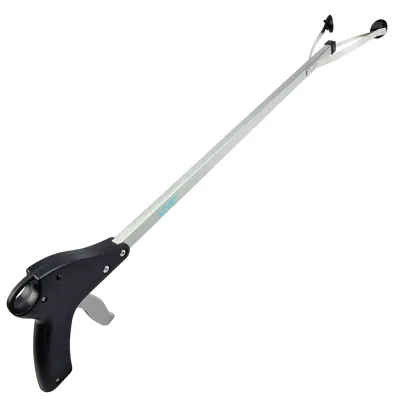


Outdoor Litter Cleaning Reaching Tool and Trash Pick up Tools (ED-403)
$0.95 - $1.50
MOQ: 10000 Pieces

Outdoor Litter Cleaning Reaching Tool and Trash Pick up Tools (ED-404)
$0.95 - $1.50
MOQ: 10000 Pieces

Outdoor Litter Cleaning Reaching Tool and Trash Pick up Tools (ED-401)
$0.95 - $1.50
MOQ: 10000 Pieces
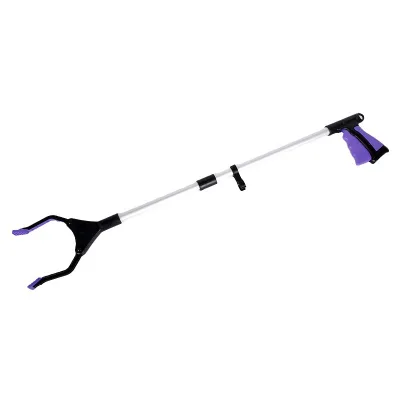

Comprehensive Sourcing Guide
Strategic Sourcing Guide for Foldable Long Reach Rubbish Grabbers
The global demand for efficient waste management tools has elevated the profile of the Foldable Long Reach Rubbish Grabber, a specialized category of mechanical reachers designed for public sanitation, recycling operations, and industrial cleanup. For B2B procurement professionals, navigating this market requires a disciplined approach that distinguishes between generic descriptions and verified product attributes. The core keyword "Foldable Long Reach Rubbish Grabber" implies a tool that combines extended reach capabilities with compact storage, yet the actual market landscape presents a complex array of configurations. Buyers must rely on observed product facts rather than marketing hyperbole to make informed decisions. This guide provides a structured framework for evaluating suppliers, verifying technical specifications, and ensuring that the selected equipment meets rigorous operational standards without relying on unverified claims.
Technical Specifications and Material Composition
When evaluating a mechanical reacher, the primary focus must be on the material composition and structural design, as these factors directly dictate durability and weight. Based on observed product data, the most common material configuration for these tools involves a composite of Aluminum, Polypropylene (PP), and Thermoplastic Rubber (TPR). Aluminum serves as the primary structural element for the shaft, offering a high strength-to-weight ratio essential for long-reach applications. The inclusion of PP in the claw or gripping mechanism provides necessary rigidity while resisting chemical degradation from various waste types. Meanwhile, TPR is frequently utilized for grip surfaces, ensuring that the tool remains secure in the operator's hand even when wet or oily.
Weight is a critical specification for ergonomic performance. Observed data indicates that specific models weigh approximately 0.22 kilograms, a figure that suggests a lightweight design intended to reduce operator fatigue during extended use. However, buyers must verify if this weight applies to the folded or unfolded state, as the "Folded" attribute in product listings can sometimes refer to the storage configuration rather than the operational weight. The "Multi Sizes" specification observed in the market indicates that there is no single standard length; instead, procurement teams must define the required reach based on the specific waste environment. Whether the tool is designated as a "Grabber Stick," "Rubbish Reacher," or "Trash Picker," the underlying mechanical principles remain consistent: a long shaft with a claw mechanism at the distal end.
Operational Features and Functional Design
The functional design of a long reach grabber extends beyond simple material selection to include specific operational features that enhance usability. A key attribute observed in high-quality listings is the "Ergonomic Handle," which is crucial for preventing strain injuries during repetitive lifting tasks. The handle material often incorporates rubber or TPR to provide a non-slip grip, a feature explicitly noted in the "Handle Material" attribute. Furthermore, the "Claw Function" is a vital performance indicator; the "Strong Clamping Force" attribute suggests that the mechanism is designed to securely grasp irregularly shaped waste items, from plastic bottles to larger debris.
The "Folded" status of the product is a distinguishing feature for storage and transport. While some listings indicate an "Unfolded" state for operational readiness, the ability to collapse the tool is essential for logistics efficiency. This feature allows for compact storage in vehicles or tight spaces, a significant advantage for municipal cleaning crews or recycling facilities with limited storage areas. The "Color" attribute, often listed as "Multicolor," serves both aesthetic and safety purposes, allowing organizations to color-code tools for different departments or to increase visibility in low-light environments. Additionally, the "Usage" attribute highlights versatility, with tools designed for "Outdoor, Home, Recycling, and Public" applications, confirming that these devices are not limited to a single niche but serve a broad spectrum of waste management needs.
Compliance, Standards, and Certification Verification
In the B2B procurement of industrial tools, verifying compliance and standards is non-negotiable, yet the market data presents a nuanced picture regarding certifications. While some background information mentions "CE" certification, this is classified as low-confidence and should not be assumed without direct verification from the supplier. Buyers must treat such claims as assertions that require documentary proof rather than established facts. Similarly, the "prod_standard" attribute varies significantly, with some listings citing "Aluminum+PP plastic" as a standard, while others list "Regular" or specific dimensions like "83cm." This inconsistency underscores the need for buyers to explicitly request the specific standard number or technical specification sheet for any potential order.
The "Quality Grade" attribute, observed as "Professional Level" or "DIY," is another critical differentiator. Procurement teams should prioritize products rated as "Professional Level" for commercial applications, as these are likely subjected to more rigorous testing and manufacturing controls. The "Warranty" period, observed as "12 Months" in some listings, provides a baseline for expected product longevity, but this should be treated as a variable term subject to negotiation rather than a universal guarantee. When evaluating suppliers, buyers should request evidence of adherence to any relevant international safety standards, particularly if the tools are to be used in regulated environments. The absence of a universally cited standard number in the provided data means that the buyer must define the required standard in the Request for Quotation (RFQ) to ensure the supplier meets specific safety and performance criteria.
Cost Drivers and Pricing Dynamics
Understanding the cost drivers for foldable long reach rubbish grabbers requires an analysis of the observed price range and Minimum Order Quantity (MOQ) data. The observed listed price range spans from $0.95 to $2,200 USD, a vast disparity that reflects differences in product complexity, material quality, and order volume. The lower end of this spectrum likely corresponds to basic, single-unit purchases or entry-level models, while the upper end may represent bulk industrial orders, specialized heavy-duty variants, or complete sets with accessories. The "MOQ" attribute, observed to range from 1 to 10,000 pieces, indicates that suppliers are flexible with order sizes, but the unit price will inevitably fluctuate based on volume.
Customization is a significant cost driver in this market. The "Customization" attribute is listed as "Available," and "Customized Support" includes "OEM" (Original Equipment Manufacturer) options. This means that buyers can request branding, color changes, or specific dimensional modifications, but these customizations will likely increase the unit cost and potentially the lead time. Conversely, "Non-Customized" options are also available, offering a lower-cost alternative for buyers who do not require branding. The "Packing" attribute, which varies between "OPP Bag," "Box," and "Carton Box," also impacts the final price. Bulk packaging in "Carton Box" formats, often containing 60 pieces per carton, is generally more cost-effective for large-scale distribution than individual retail packaging. Buyers should carefully balance the need for customization against the budget constraints, ensuring that the added cost of branding or special features delivers tangible value to the end-user.
Supplier Evaluation and Origin Verification
Evaluating suppliers for mechanical reachers requires a focus on geographic origin and production capabilities. The observed product data lists origins in "Zhejiang, China" and "Shanghai, China," two major manufacturing hubs known for their metalworking and plastic molding industries. These locations suggest a mature supply chain capable of producing aluminum and plastic composite tools at scale. However, the presence of multiple origins indicates that buyers should not assume uniform quality across all suppliers in these regions. Instead, the evaluation process should include a detailed audit of the supplier's manufacturing facilities, focusing on their quality control processes and capacity to meet the "Professional Level" grade requirements.
The "Customized" attribute, which appears in both "Customized" and "Non-Customized" forms, suggests that suppliers vary in their willingness to engage in OEM projects. Buyers seeking long-term partnerships should prioritize suppliers who demonstrate a strong commitment to customization and brand alignment. The "Key" attributes, such as "Reacher" and "Picker," are often used in marketing but should be cross-referenced with the actual product model numbers (e.g., SK13-3, GB209, 62105M5032) to ensure the supplier has a proven track record with specific models. A supplier offering a wide range of model numbers indicates a versatile production line, whereas a supplier with a limited catalog may lack the flexibility to meet unique procurement needs.
Quality Control and Long-Term Procurement Considerations
Ensuring consistent quality in the procurement of long reach grabbers requires a robust quality control (QC) strategy. The "Advantages" listed as "Sturdy & Durable" and "Eco-Friendly" are marketing claims that must be validated through physical inspection and testing. Buyers should establish clear acceptance criteria for the "Clamping Force" and "Handle" integrity, as these are the most critical failure points in daily use. The "Folded" mechanism should be tested repeatedly to ensure it does not loosen or break over time, a common issue in lower-quality models.
Long-term procurement considerations also involve the "Warranty" and after-sales support. A "12 Months" warranty is a standard baseline, but buyers should negotiate terms that cover specific failure modes, such as claw mechanism failure or handle breakage. The "Usage" environment, ranging from "Outdoor" to "Recycling" facilities, dictates the level of durability required. Tools used in harsh outdoor conditions may require more frequent replacement or higher-grade materials than those used in controlled indoor environments. Additionally, the "Feature" of being "Eco-Friendly" should be scrutinized; buyers should verify if the materials used are recyclable or if the manufacturing process adheres to environmental standards, as this can impact the organization's sustainability goals.
Comparative Analysis of Product Models
To facilitate decision-making, buyers can compare the observed product models based on their specifications. The following table summarizes the key attributes of the models identified in the market data, highlighting the variations in model numbers, packing, and standards.
| Product Model | Material Composition | Packing Type | Standard/Dimension | Origin | Customization |
|---|---|---|---|---|---|
| SK13-3 | Aluminum+PP+TPR | Box | Multi Sizes | Zhejiang, China | Available (OEM) |
| SK10-5 | Aluminum+PP+TPR | Box | Multi Sizes | Zhejiang, China | Available (OEM) |
| SK11-5 | Aluminum+PP+TPR | Box | Multi Sizes | Zhejiang, China | Available (OEM) |
| SK05-4 | Aluminum+PP+TPR | Box | Multi Sizes | Zhejiang, China | Available (OEM) |
| SK20-1 | Aluminum+PP+TPR | Box | Multi Sizes | Zhejiang, China | Available (OEM) |
| SK05-5 | Aluminum+PP+TPR | Box | Multi Sizes | Zhejiang, China | Available (OEM) |
| GB209 | Aluminum+PP+TPR | Carton Box | Regular | Shanghai, China | Customized |
| GB204 | Aluminum+PP+TPR | Carton Box | Regular | Shanghai, China | Non-Customized |
| 62105M5032 | Aluminum+PP+TPR | 60PCS | 83cm | Shanghai, China | Customized |
This comparison reveals that while the core material composition remains consistent across most models, the packing and standardization vary significantly. The "GB" series models appear to be associated with Shanghai-based suppliers and offer "Carton Box" packing, which is suitable for bulk shipping. In contrast, the "SK" series models are linked to Zhejiang and often come in individual "Box" packaging. The "62105M5032" model stands out with a specific dimension of "83cm" and a bulk packing of "60PCS," suggesting it is designed for large-scale distribution. Buyers should use this data to align their procurement strategy with their specific logistical and operational requirements, ensuring that the selected model matches the intended use case.
Conclusion
Sourcing foldable long reach rubbish grabbers requires a meticulous approach that balances technical specifications, cost considerations, and supplier reliability. By focusing on verified attributes such as material composition, weight, and packing methods, buyers can avoid the pitfalls of unverified marketing claims. The diversity in product models and origins necessitates a tailored evaluation process, where each potential supplier is assessed against the specific needs of the organization. Whether the requirement is for a lightweight, ergonomic tool for public sanitation or a heavy-duty, customizable solution for industrial recycling, the key to success lies in rigorous due diligence and clear communication of expectations. As the market continues to evolve, maintaining a disciplined focus on quality and compliance will ensure that procurement teams secure the most effective tools for their waste management operations.
FAQs
What materials are used to construct the grabber?
The grabber is constructed from Aluminum, PP, and TPR materials. This composite design ensures a high strength-to-weight ratio while providing a durable grip surface for the operator.
Can I order custom branded units for my company?
Yes, customized support including OEM options is available for this product. Buyers can request specific branding or modifications, though this may affect the unit price and lead time.
What is the minimum order quantity for this tool?
The standard minimum order quantity is 1000 pieces for this specific model. However, observed market data shows that some suppliers may accept orders as low as one unit depending on the configuration.
Where are these mechanical reachers manufactured?
These tools originate from manufacturing hubs in Zhejiang and Shanghai, China. These locations are known for their mature supply chains in metalworking and plastic molding industries.
How long is the warranty period for the grabber?
A 12-month warranty is offered on some listed models of the grabber. This period covers potential defects but should be verified as a variable term subject to negotiation with the supplier.
What is the weight of the unfolded grabber tool?
The observed weight for the specific model is approximately 0.22 kilograms. This lightweight design helps reduce operator fatigue during extended use in outdoor or recycling environments.