Source Forged Oil Gas Choke Manifold for Drilling, Energy, Mining
Explore 30 listings of Forged Oil Gas Choke Manifold units designed for well drilling and energy applications. Buyers can compare specifications, working pressures, and material grades from verified suppliers in Jiangsu, China.
Key considerations
Products List

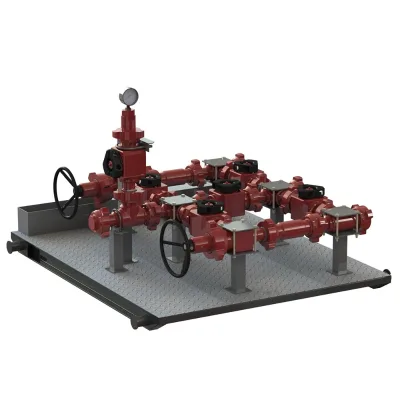
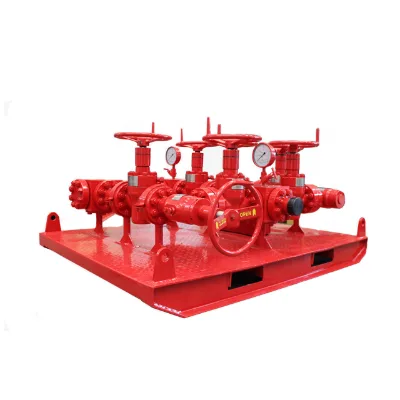


16c Iron Forged Choke Manifold with 10000psi for Well Drilling Control
$100.00 - $318.00
MOQ: 1 Pieces


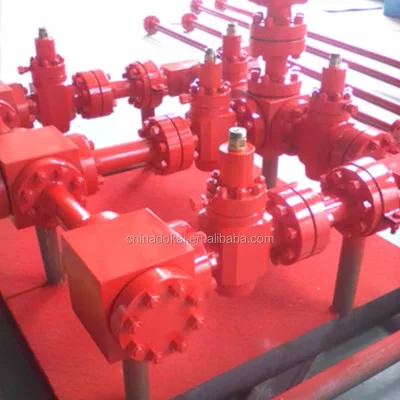
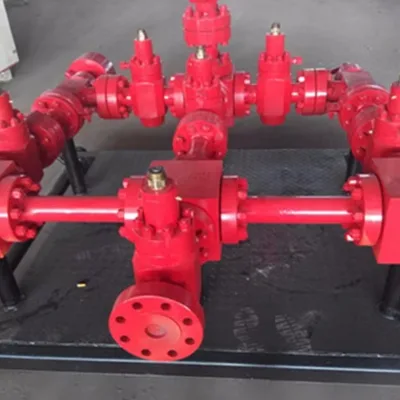


Choke & Kill Manifold / Oilfield Exhaust Manifold with High Performance
$3000.00 - $30000.00
MOQ: 1 Pieces

Comprehensive Sourcing Guide
Strategic Sourcing Guide for Forged Oil Gas Choke Manifolds
Understanding the Core Product and Manufacturing Integrity
The foundation of a reliable oil and gas choke manifold lies in its manufacturing process and material integrity. When sourcing a Forged Oil Gas Choke Manifold, the primary differentiator is the production method. Unlike cast alternatives, forged components undergo deformation under high pressure to align the grain structure of the metal, significantly enhancing mechanical strength and resistance to fatigue. The supplied product data explicitly identifies Forging as the manufacturing process for these units, a critical attribute for equipment subjected to the extreme pressures found in well drilling operations.
The core function of this equipment is to control fluid flow and pressure within the wellhead assembly. The product is categorized under Drilling Equipment with a specific structure identified as a Manifold. These units are designed to handle Oil/Gas media, including Crude Oil, and must operate effectively across a spectrum of environmental conditions. The observed Working Pressure ranges in the market data span from 10000psi up to 15,000 Psi, indicating that buyers must carefully match the manifold's rating to their specific wellhead requirements. The Nominal Bore sizes observed range from 2 9/16" to 4 1/16", which correlates with the Port Size specifications of 2in/3in/4in found in the product listings.
Material selection is paramount for durability. The data indicates the use of Stainless Steel and Alloy materials, with specific Material Grades such as Dd, Ee, FF, and Hh listed. These grades are essential for withstanding the corrosive nature of hydrocarbon fluids and the mechanical stress of high-pressure operations. The Surface Treatment is typically Spray-Paint, providing an additional layer of protection against environmental degradation. The Condition of the units observed in the market includes both new and Used items, necessitating a rigorous inspection protocol for any pre-owned equipment to ensure structural integrity remains uncompromised.
Technical Specifications and Operational Parameters
When evaluating a forged choke manifold, buyers must scrutinize the technical specifications to ensure compatibility with existing drilling infrastructure. The Dimensions of the units vary, with observed measurements including 2-1/16, 2-9/16, 3-1/16, 3-1/8, and 4-1/16 inches. These dimensions are critical for flange compatibility and spatial constraints on the rig floor. The Model Number is frequently listed as Choke Manifold or specific codes like SLD-229, serving as a unique identifier for the configuration.
The operational capabilities of these manifolds are defined by their pressure and temperature ratings. The Temperature of Media can range from High Temperature to Low Temperature, with specific Temperature Levels denoted as L, P, and U. This variability requires the buyer to verify the specific thermal rating of the unit against the anticipated downhole conditions. The Operation mode can be either Manual or Hydraulic, with the Power Source often being Hydraulic for automated control systems. The Operation Pressure is noted as Atmospheric Pressure in some contexts, which likely refers to the casing or external environment, while the internal Working Pressure is the critical metric for performance.
A comparison of key technical attributes helps clarify the diversity within the product category:
| Attribute | Observed Range/Value | Relevance to Procurement |
|---|---|---|
| Manufacturing Process | Forging | Ensures superior grain structure and fatigue resistance compared to casting. |
| Working Pressure | 10,000 psi – 15,000 psi | Must match the wellhead pressure rating to prevent catastrophic failure. |
| Nominal Bore | 2 9/16" – 4 1/16" | Determines flow capacity and flange compatibility. |
| Material | Stainless Steel, Alloy (Dd, Ee, FF, Hh) | Critical for corrosion resistance and tensile strength. |
| Operation Type | Manual / Hydraulic | Influences control system integration and automation requirements. |
| Port Size | 2in / 3in / 4in | Directly impacts piping connections and flow dynamics. |
The Type of the product is sometimes listed as Drill Pipe, which may indicate a classification error in some listings or a specific sub-component integration. Buyers should verify the actual Product Name, which is consistently identified as Choke Manifold or Kill Manifold. The Key words associated with these products include "kill manifold" and "choke manifold," reflecting their dual role in well control scenarios. The Standard for these units is often described as choke&kill manifold or High pressure plug valve, though specific industry standards (such as API) should be explicitly confirmed rather than assumed.
Compliance, Certification, and Regulatory Verification
In the oil and gas sector, compliance is not merely a formality but a safety imperative. The supplied data mentions ISO 9001 certification, which is a standard for quality management systems. However, the listing format "ISO 9001:Material:Alloy" and "ISO 9001:Material:Cast Steel" suggests that the certification may be tied to specific material batches or manufacturing lines. Buyers must verify that the ISO 9001 certification covers the specific forging process and the final assembly of the manifold, rather than just the raw material supply.
Beyond general quality management, the Standard section notes that standards can be "according to requirement." This is a critical area for verification. While the product is described as a High pressure plug valve or choke&kill manifold, specific industry standards like API 6A (Wellhead and Christmas Tree Equipment) are typically the benchmark for such high-pressure equipment. The absence of explicit API references in the provided facts means the buyer must request and validate the specific standard compliance documents for each unit.
The Certification data also highlights material-specific claims. For instance, one entry links ISO 9001 to Alloy material, while another links it to Cast Steel. Since the core keyword is forged, the buyer must ensure the certification aligns with the forging process. If a listing claims Cast Steel certification for a Forged product, it indicates a potential discrepancy in the product description or the listing data. The Material Grade (Dd, Ee, FF, Hh) should be cross-referenced with material test reports (MTRs) to ensure the alloy composition meets the required specifications for the intended pressure and temperature environment.
Furthermore, the Place of Origin is listed as Jiangsu, China and China generally. While this provides a geographical context, it does not guarantee compliance with international safety standards. The Showroom Location in Saudi Arabia suggests a regional distribution hub, which may facilitate inspection but does not replace the need for factory-level audits. Buyers should treat the Marketing Type as "Ordinary Product" with caution, as high-pressure well control equipment often requires specialized handling and documentation beyond standard commercial goods.
Cost Drivers and Pricing Dynamics
The pricing for forged oil gas choke manifolds exhibits a vast range, observed from 10 USD to 95,000 USD. This extreme variance is driven by several factors, including the Working Pressure rating, the Material grade, the complexity of the Structure, and the Condition of the unit. A unit priced at the lower end of the spectrum is likely a smaller, lower-pressure component or a used item, whereas the upper end represents high-pressure, large-bore, fully automated hydraulic systems.
The Weight of the units is a significant cost driver, with one observed listing indicating a weight of 1850 KG. Heavier units typically require more raw material, more complex forging dies, and more expensive logistics. The Single package size is listed as XX cm, indicating that packaging dimensions vary and must be confirmed for shipping cost calculations. The prod_packing is described as Export Packaging or Export Wooden Box, which adds to the cost but is essential for protecting the equipment during international transit.
The MOQ (Minimum Order Quantity) ranges from 1 to 5, offering flexibility for buyers who may need a single replacement unit or a small batch for a specific project. The Selling Units are listed as Single Item, which simplifies the procurement process for individual components. However, the Customization options available, including OEM support and Customized Support, can significantly increase the cost. Customization may involve specific Color requirements, unique Dimensions, or tailored Port Sizes that deviate from standard configurations.
Buyers should also consider the Warranty period, which is observed as 1.5 year. This warranty period is a key factor in the total cost of ownership. A longer warranty might indicate higher confidence in the manufacturing quality but could also be reflected in a higher initial price. The Video outgoing-inspection being Provided is a value-added service that reduces the risk of purchasing defective units, potentially justifying a higher price point. The Condition of the product, whether Used or new, is perhaps the most significant price determinant. Used units require thorough inspection and may have a shorter remaining lifespan, affecting the long-term value proposition.
Typical Applications and Industry Use Cases
The primary application for forged choke manifolds is in Well Drilling operations within the Energy & Mining sector. These units are integral to the wellhead assembly, where they manage the flow of Oil/Gas and Crude Oil from the wellbore to the surface facilities. The Use case is specifically tied to Oil Field operations, where the reliability of the manifold is critical for maintaining well control and preventing blowouts.
The Structure of the manifold, often a Manifold type, allows for the distribution of flow to multiple lines, such as kill lines and choke lines. This configuration is essential for kill manifold and choke manifold operations, which are used to circulate heavy drilling mud into the well to control pressure or to vent fluids safely. The Operation mode, whether Manual or Hydraulic, determines the speed and precision of the response during well control events. Hydraulic systems are preferred for high-pressure scenarios where rapid and precise valve actuation is required.
The Temperature Level (L, P, U) indicates that these manifolds are designed for various thermal environments, from deep, hot wells to shallow, cold-water operations. The Material Grade (Dd, Ee, FF, Hh) ensures that the equipment can withstand the specific corrosive and mechanical stresses of the intended application. The Brand Name "Wellhead" and "Hongxun" suggests that these products are marketed as specialized wellhead components, reinforcing their role in the drilling ecosystem.
The Applicable Industries are broadly defined as Energy & Mining, but the specific use case is Well Drilling. This distinction is important for buyers who may be sourcing for exploration, production, or abandonment phases of a well. The Working Pressure range of 10,000 to 15,000 psi covers a wide spectrum of drilling depths and reservoir pressures. The Nominal Bore sizes allow for flexibility in handling different flow rates and pipe sizes.
Supplier Evaluation and Quality Control Protocols
Evaluating a supplier for forged choke manifolds requires a multi-faceted approach. The Place of Origin is Jiangsu, China, a region known for manufacturing, but buyers must verify the specific factory capabilities. The Video outgoing-inspection being Provided is a positive indicator, suggesting the supplier is willing to demonstrate the product's condition before shipment. However, this should be supplemented with third-party inspection reports.
The Certification status, specifically ISO 9001, should be verified against the specific manufacturing batch. Buyers should request material test reports (MTRs) that confirm the Material (Stainless Steel, Alloy) and Material Grade (Dd, Ee, FF, Hh). The Process of Forging must be validated to ensure the grain structure is intact and the mechanical properties meet the required standards. The Surface Treatment of Spray-Paint should be inspected for uniformity and adhesion to ensure long-term corrosion resistance.
The Condition of the product is a critical factor. If purchasing a Used unit, a detailed inspection is mandatory to check for cracks, wear, and corrosion. The Warranty of 1.5 year provides a baseline for recourse, but the terms should be clearly defined in the contract. The Showroom Location in Saudi Arabia may offer an opportunity for physical inspection, but the primary manufacturing and quality control should occur at the source in China.
Buyers should also evaluate the Customization capabilities. The availability of OEM support and Customized Support indicates a flexible supplier, but this flexibility must not compromise quality. The Standard of "according to requirement" requires the buyer to explicitly define the technical requirements and ensure the supplier can meet them. The Marketing Type as "Ordinary Product" should not lead to complacency; high-pressure equipment requires specialized handling and documentation.
Long-Term Procurement and Lifecycle Management
Long-term procurement of forged choke manifolds involves considerations beyond the initial purchase price. The Warranty period of 1.5 year is a starting point, but buyers should plan for maintenance and replacement cycles. The Material (Stainless Steel, Alloy) and Surface Treatment (Spray-Paint) influence the lifespan of the unit in harsh environments. Regular inspections are necessary to detect early signs of wear or corrosion.
The Working Pressure and Temperature ratings define the operational envelope. Operating the manifold outside these parameters can lead to premature failure. The Nominal Bore and Port Size must remain compatible with the evolving needs of the well. As drilling depths increase or reservoir conditions change, the manifold may need to be upgraded or replaced.
The Packaging (Export Wooden Box) ensures safe transport, but the storage conditions at the destination are equally important. Exposure to moisture or extreme temperatures can degrade the Surface Treatment and Material integrity. The Video outgoing-inspection service is a valuable tool for initial quality assurance, but ongoing quality control should be part of the procurement strategy.
The MOQ of 1 to 5 allows for flexible ordering, which is beneficial for managing inventory and reducing storage costs. However, buyers should consider the Lead Time and Location of the supplier. The Place of Origin in Jiangsu, China and the Showroom in Saudi Arabia suggest a global supply chain that may be subject to logistical delays. Planning for these delays is essential to avoid project downtime.
Finally, the Brand Name "Wellhead" and "Hongxun" provides a level of traceability. Buyers should maintain records of the Model Number, Material Grade, and Certification for future reference and compliance audits. The Key words "kill manifold" and "choke manifold" highlight the critical safety function of the equipment, underscoring the need for rigorous long-term management and maintenance protocols. By adhering to these guidelines, buyers can ensure the reliable performance of their forged oil gas choke manifolds throughout the lifecycle of their drilling operations.
FAQs
What manufacturing process is used for these manifolds?
The manifolds are manufactured using a forging process to ensure superior grain structure and fatigue resistance. This method aligns the metal grain under high pressure, offering greater strength than casting for high-pressure well drilling applications.
Which working pressure ratings are available for these units?
Available working pressure ratings range from 10,000 psi up to 15,000 psi depending on the specific model. Buyers must verify the exact rating matches their wellhead requirements to ensure safe operation under extreme conditions.
Can I get custom dimensions and port sizes for this equipment?
Yes, customization is available including specific port sizes of 2in, 3in, or 4in and various nominal bore dimensions. OEM support allows for tailored configurations to fit unique drilling infrastructure constraints and flow requirements.
What material grades are used for the manifold construction?
The units are constructed from Stainless Steel and Alloy materials with grades such as Dd, Ee, FF, and Hh. These specific grades provide necessary corrosion resistance and tensile strength for handling crude oil and gas media.
How is the product packaged for international shipping?
Products are shipped using export packaging or export wooden boxes to ensure protection during transit. This robust packaging is essential for safeguarding heavy components weighing up to 1850 kg against damage during global logistics.
What certifications verify the quality of these forged units?
ISO 9001 certification is provided, often linked to specific material batches like Alloy or Cast Steel. Buyers should verify that the certification covers the forging process and final assembly rather than just raw material supply.
Is video inspection available before shipment for used units?
Video outgoing inspection is provided for the units to verify their condition prior to shipping. This service helps buyers assess structural integrity, especially for used items, ensuring the equipment meets operational safety standards.