Source Front and Rear Ballast Tractor with Shovel for corn, rice, and wheat farming
Compare 30 listings for Front and Rear Ballast Tractor with Shovel options including electric start, hydraulic transmission, and CE certification. Buyers can review specifications for models like LS-Tractor and BL750 suitable for diverse agricultural applications.
Key considerations
Products List


4WD Tractor Cost Effective Diesel Agriculture Farm Tractor with Front Shovel
$14000.00 - $14500.00
MOQ: 1 Pieces

Durable 95HP 4WD Farm Tractor with Front Shovel for Large Scale Farm Land
$14000.00 - $14500.00
MOQ: 1 Pieces

Used 4WD Tractor Compact 95HP with Front Shovel for Fruit Plantation
$14000.00 - $14500.00
MOQ: 1 Pieces

95HP 4WD Agricultural Tractor with Front Shovel Heavy Duty Farming Wheel Tractor
$14000.00 - $14500.00
MOQ: 1 Pieces
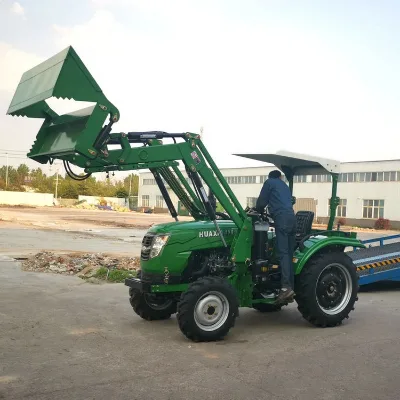


40HP Brand New Backhoe Loader Mini Tractor with Front End Loader and Backhoe
$3885.00 - $4325.00
MOQ: 1 Pieces

High Quality Tractor 4WD for Agriculture Use with Front and Backhoe Loader
$3885.00 - $4325.00
MOQ: 1 Pieces


Comprehensive Sourcing Guide
Strategic Sourcing Guide for Front and Rear Ballast Tractor with Shovel
Understanding the Product Category and Core Specifications
When sourcing a front and rear ballast tractor equipped with a shovel, buyers must first distinguish between the specific configurations available in the current market. The core keyword implies a heavy-duty agricultural or industrial vehicle designed for stability during lifting and digging operations. Based on available product data, the market offers distinct variations ranging from small loaders to large wheel tractors. One observed configuration is the "Small Loader" type, which often features a "Front Discharge" load and unload mode and utilizes a "Hydraulic" transmission system. These units are frequently described as "Automatic Planting Machines" or "Dual Seeding and Fertilization" units, though the primary function for a ballast tractor with a shovel is material handling and earthmoving.
The technical specifications for these machines vary significantly based on their intended application. For instance, a "Wheel Tractor" model, such as the M954K, may feature a "4-Cylinder Water-Cooled Diesel Engine" with a rated power of 95HP (70kw). This specific model operates on a "Gas / Diesel" fuel source and utilizes a "Naturally Aspirated" air intake type. The transmission is manual, offering a "12 Forward + 12 Reverse Gears" shift method, which is critical for precise control when maneuvering a shovel attachment. The physical dimensions are substantial, with some models measuring approximately 5150mm in length, 2215mm in width, and 2620mm in height. The drive configuration is typically "4WD," ensuring traction in varied terrain, and the machine is equipped with tires sized 9.5-24 or 650-16.
In contrast, other listings describe a "Seedling Planting Machine" or a "Full-size Fertilizer" unit, which may also be categorized under the broader umbrella of agricultural machinery. These units often feature a "Tractor" power source, indicating they are implements pulled by a separate engine or integrated into a larger system. The "Ditching Mode" is noted as "Continuous Ditching" for certain models, suggesting a capability for trenching operations. The "Condition" of these units ranges from "New" to "Used," with some specific listings indicating a "Used" status for larger, heavy-duty wheel tractors. The "prod_model" identifiers, such as LS-Tractor or BL750, serve as unique markers for these specifications, allowing buyers to cross-reference technical data sheets.
Compliance, Certification, and Regulatory Standards
Navigating the compliance landscape is a critical step in the procurement of agricultural machinery, particularly when sourcing from international markets. The supplied product data highlights several key certifications that buyers should verify during the supplier evaluation process. The most frequently observed certification is "CE," which indicates conformity with health, safety, and environmental protection standards for products sold within the European Economic Area. Some listings provide a more comprehensive certification suite, including "CE," "ISO9001:GMP," "QS," and "UL." The presence of "ISO9001" suggests adherence to quality management systems, while "GMP" (Good Manufacturing Practice) and "QS" (Quality Safety) are often relevant for machinery involved in food production or agricultural processing.
Buyers must also consider emission standards, as these are increasingly regulated globally. One observed specification lists an "Emission Standard" of "Euro III." This is a crucial data point for buyers operating in regions with strict environmental regulations, such as the European Union or countries with similar import requirements. It is important to note that not all listed products may meet the same emission criteria; therefore, verifying the specific engine compliance for the intended market is essential. The "prod_standard" field in the product data sometimes lists values like "4CBM" or specific dimensions (e.g., 617022683760), which may refer to cargo capacity or physical footprint standards rather than regulatory certifications.
Additionally, the "machinery test report" is mentioned as "Provided" for certain models. This document serves as empirical evidence of the machine's performance and safety characteristics. Buyers should request these reports to validate claims regarding engine power, hydraulic pressure, and structural integrity. While background knowledge might suggest standards like ISO 3834 or EN 15085-2, the provided facts do not explicitly confirm their application to every listed product. Consequently, procurement teams should treat these as verification targets rather than guaranteed attributes. The "Made in China" origin is a common fact, and while it does not imply a specific quality level, it necessitates a rigorous review of the supplier's export documentation and compliance history.
Cost Drivers and Pricing Structure Analysis
The pricing structure for front and rear ballast tractors with shovels is influenced by a complex interplay of factors, including engine power, transmission type, and the condition of the unit. The observed price range in the market spans from $1,995 to $26,500 USD. This wide variance reflects the diversity of the product catalog, which includes everything from small, single-purpose implements to large, high-horsepower wheel tractors. The lower end of the spectrum likely corresponds to smaller loaders or specialized planting attachments, while the upper end aligns with full-sized tractors featuring 95HP engines and advanced hydraulic systems.
Several specific attributes drive the cost upward. The "Rated Power" is a primary determinant; a 95HP engine commands a significantly higher price than a smaller auxiliary unit. The complexity of the "Transmission" system also impacts cost, with "Hydraulic" transmissions generally being more expensive than manual gear shifts, although the latter offers durability and lower maintenance costs in certain contexts. The "Condition" of the machine is another critical cost driver. "New" units typically carry a premium over "Used" ones, but the latter may offer a lower entry point for budget-conscious buyers, provided the maintenance history is verified.
The "prod_packing" method can also influence the final landed cost. Listings indicate "Iron Package," "Wooden Case Packing," or "CBU" (Complete Built Unit) shipping. Wooden cases and specialized iron packaging are designed to protect the machinery during long-distance transit but add to the overall shipping weight and volume, thereby increasing freight charges. Furthermore, the "After-sales Service Provided" attribute, such as the availability of an "Overseas service center," adds value to the purchase price. Buyers paying a premium for a unit with guaranteed overseas support are effectively purchasing risk mitigation and long-term operational continuity.
Typical Applications and Operational Versatility
The versatility of front and rear ballast tractors with shovels makes them suitable for a broad spectrum of applications. The product data explicitly lists applications for "Corn, Rice, Wheat, Tubers, Fruit, Trees, Beans, Peanut," indicating a strong focus on diverse agricultural sectors. These machines are not limited to crop production; they are also applicable in "Forestry, Agriculture, Livestock, Aquaculture." This multi-sector capability suggests that the ballast and shovel configuration is robust enough to handle the varied demands of different industries.
In the context of "Forestry," the 4WD drive and heavy ballast design provide the necessary traction for uneven terrain and the stability required for lifting operations. For "Livestock" and "Aquaculture," the ability to move feed, clear waste, or manage waterways is essential. The "Dual Seeding and Fertilization" function mentioned in some listings highlights a specialized application where the tractor or its attached implement can perform multiple tasks simultaneously, increasing operational efficiency. The "Broadcast Seeder" capability further expands the utility of these machines in large-scale farming operations.
The "Ditching Mode" of "Continuous Ditching" is particularly relevant for irrigation management and drainage projects in agriculture. The "Front Discharge" load and unload mode is a standard feature for loaders, facilitating the rapid movement of soil, compost, or feed. The "Small Loader" type is ideal for confined spaces or smaller farms, while the "Wheel Tractor" with a 95HP engine is better suited for large-scale commercial operations requiring high throughput. The "Rear Hitch Type," specifically "Category II Three-Point Hitch," ensures compatibility with a wide range of third-party implements, enhancing the machine's adaptability to specific farm or industrial needs.
Supplier Evaluation and Quality Control Protocols
Evaluating suppliers for this category of machinery requires a methodical approach to ensure the quality and reliability of the equipment. The "After-sales Service Provided" attribute is a key indicator of supplier reliability. A supplier offering an "Overseas service center available" demonstrates a commitment to long-term support, which is vital for machinery that may require specialized repairs or part replacements. Buyers should prioritize suppliers who can provide a "machinery test report," as this document offers objective data on the machine's performance metrics.
The "prod_packing" method is another area for quality assessment. "Wooden Case Packing" and "Iron Package" suggest a focus on protecting the machinery during transit, which is a proxy for the supplier's attention to detail. However, buyers must verify that the packing materials are suitable for the specific climate and shipping duration to prevent corrosion or damage. The "Condition" of the machine, whether "New" or "Used," must be clearly defined in the contract. For used units, a detailed inspection report is necessary to assess the wear on critical components like the engine, hydraulic system, and tires.
Quality control should also extend to the verification of certifications. While "CE" and "ISO9001" are common, buyers should request copies of the actual certificates to ensure they are current and valid. The "brand name," such as "Huaxia brand," should be cross-referenced with the supplier's official documentation to confirm authenticity. The "core components," such as the "Motor," should be sourced from reputable manufacturers to ensure longevity. Finally, the "Lead Time" and "MOQ" (Minimum Order Quantity) should be clearly agreed upon, with the observed MOQ range of 1-2 units indicating flexibility for smaller buyers, though this may vary by supplier.
Long-Term Procurement and Lifecycle Management
Procuring a front and rear ballast tractor with a shovel is a long-term investment that requires careful consideration of lifecycle management. The "Engine Type," specifically the "4-Cylinder Water-Cooled Diesel Engine," suggests a design focused on durability and continuous operation. However, the "Air Intake Type" being "Naturally Aspirated" may have implications for performance at high altitudes or in extreme temperatures, which buyers should verify against their operational environment. The "Shift Method" of "Manual Gear Shift" offers a mechanical simplicity that can be easier to repair in remote locations compared to complex electronic systems, but it requires skilled operators.
Maintenance and parts availability are critical for long-term success. The "After-sales Service Provided" attribute is a strong indicator of the supplier's ability to support the machine over its lifespan. Buyers should inquire about the availability of spare parts, particularly for the "core components" like the motor and hydraulic system. The "prod_standard" and "prod_model" identifiers are essential for ordering the correct parts. A mismatch in model numbers can lead to delays and increased downtime.
The "Emission Standard" of "Euro III" may become a regulatory hurdle in the future as environmental standards tighten. Buyers should consider the regulatory trajectory of their target market and whether the machine will remain compliant for the duration of its intended use. The "Color," such as "Orange," is often a safety requirement in industrial settings, but it also affects the resale value and visibility of the machine. Finally, the "Location" of the product origin, "Made in China," should be factored into the logistics plan, including shipping costs, import duties, and potential supply chain disruptions. By addressing these long-term considerations, buyers can ensure that their investment in a front and rear ballast tractor with a shovel remains productive and compliant for years to come.
FAQs
What certifications are available for these tractors?
Common certifications include CE, ISO9001:GMP, QS, UL, and ISO. Buyers should verify specific certificates for their target market, as not every listed product satisfies all certifications simultaneously.
How is the transmission system configured in these models?
Transmission options vary between hydraulic systems and manual gear shifts with 12 forward and 12 reverse gears. The specific configuration depends on the model, such as the M954K which uses manual shifting.
Which engine types power these agricultural machines?
Many units feature a 4-cylinder water-cooled diesel engine with naturally aspirated air intake. Some models operate on gas or diesel fuel and offer a rated power of 95HP or 70kw.
Can these tractors be customized for specific farming needs?
Customization is available for various applications including corn, rice, wheat, and forestry. Buyers can request specific configurations, though availability depends on the individual supplier and product listing.
What is the typical price range for these units?
The observed price range spans from 1995 to 26500 USD. Costs vary significantly based on whether the unit is new or used, its horsepower, and specific packaging requirements like wooden cases.
How are these machines packed for international shipping?
Packing methods include iron packages, wooden case packing, and CBU (Complete Built Unit). The chosen method affects shipping weight and volume, which influences the final landed cost.
What is the minimum order quantity for these tractors?
The observed minimum order quantity ranges from 1 to 2 units. This flexibility allows smaller buyers to procure equipment without needing to meet large bulk purchase thresholds.
Where are these tractors typically manufactured?
The products are made in China, with specific origins listed as China or Made in China. Buyers should verify the supplier's location and export documentation for compliance with local regulations.