Source Front American Cars Clutch Booster for engines, transmissions, and brakes
Compare 30 verified listings for Front American Cars Clutch Booster parts suitable for engine, transmission, and brake system replacements. Buyers can review specifications, certifications, and pricing details to find suitable components for repair or manufacturing needs.
Key considerations
Products List


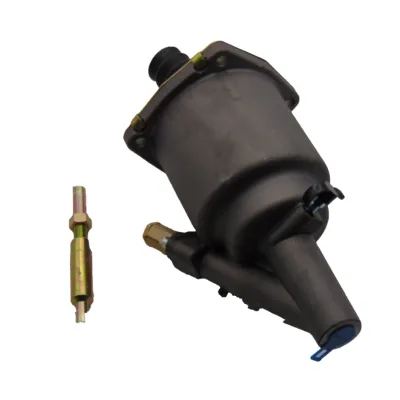


High Quality Auto Parts Clutch Booster 642-03502
$20.00 - $40.00
MOQ: 20 Pieces
Wuhan Yuanyumu Automobile Industry Import and Export Co., Ltd

Auto Transmission System Clutch Booster 500334937
$15.00 - $20.00
MOQ: 10 Pieces
Wuhan Yuanyumu Automobile Industry Import and Export Co., Ltd

Auto Parts Clutch Booster 642-09402-H 05134 642-09402
$12.00 - $20.00
MOQ: 10 Pieces
Wuhan Yuanyumu Automobile Industry Import and Export Co., Ltd

Heavy Duty Truck Parts Clutch Booster Fit 627499am
$18.00 - $20.00
MOQ: 10 Pieces
Wuhan Yuanyumu Automobile Industry Import and Export Co., Ltd

Air Brake System Clutch Booster 1642176708 5000883250
$20.00 - $30.00
MOQ: 10 Pieces
Wuhan Yuanyumu Automobile Industry Import and Export Co., Ltd

High Quality Clutch Booster 624199am 1331966
$20.00 - $40.00
MOQ: 5 Pieces
Wuhan Yuanyumu Automobile Industry Import and Export Co., Ltd


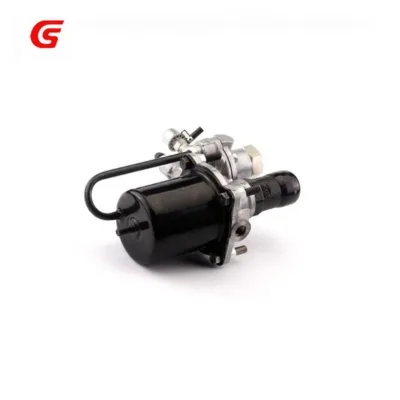


Factory Direct Sale Trucks Clutch Booster 1608010-T0501 Clutch Booster Assy
$5.20 - $8.90
MOQ: 1 Pieces


Comprehensive Sourcing Guide
Strategic Sourcing Guide for Front American Cars Clutch Booster
Understanding Product Attributes and Technical Specifications
When sourcing a clutch booster specifically for front American cars, buyers must first distinguish between the specific component names and the underlying mechanical architectures observed in the market. The core keyword "Front American Cars Clutch Booster" often intersects with related components such as the "Clutch Slave Cylinder" and "Brake Booster," which share similar mounting geometries and hydraulic principles but serve distinct functions within the vehicle's control system. Based on available product data, the clutch booster is frequently categorized under the broader "Brake System" or "Machinery Parts" classifications, indicating its critical role in vehicle dynamics.
The technical specifications for these components vary significantly depending on the manufacturer's design intent. For instance, observed product models include identifiers such as "WG9725230052" and "MC113122," which serve as unique fingerprints for specific vehicle applications. A crucial observation in the current market is the variation in material composition. While some high-performance or heavy-duty variants utilize Aluminum for the pressure chamber structure to reduce weight, other standard units are constructed from Steel to ensure durability under high stress. The tolerance grade for these machined parts is often observed at Grade 8, which implies a specific level of precision required for the fitment within the engine bay or firewall of American vehicles.
The structural design of the pressure chamber is another vital specification. The market data indicates a prevalence of "Vertical" pressure chamber structures, which influences how the booster integrates with the master cylinder and the clutch pedal assembly. Furthermore, the surface finish plays a significant role in longevity. Observed finishes range from "Tin Plate" to "Polishing," with some units offering "Custom" color options, typically in Grey, to match OEM aesthetics. The condition of the parts is consistently listed as "New," ensuring that buyers are not dealing with refurbished units unless explicitly stated. Understanding these physical attributes is the first step in filtering the vast array of available options to find a part that matches the specific requirements of the target vehicle.
Compliance, Certification, and Regulatory Standards
Navigating the compliance landscape is essential for sourcing automotive components that will be installed in vehicles intended for sale or operation in regulated markets. The primary certification observed in the product listings is ISO 9001, which validates the supplier's quality management system. This standard is a baseline requirement for any serious manufacturer of automotive parts, ensuring that the production process is consistent and controlled. Additionally, the data references ISO/TS and IATF standards, which are critical for the automotive industry. These standards go beyond general quality management to address specific automotive sector requirements, including risk management and product safety.
Beyond the ISO framework, environmental and safety certifications such as RoHS and CE are frequently cited. RoHS compliance ensures that the components do not contain restricted hazardous substances, a requirement for export to many regions including the European Union. The CE marking indicates conformity with health, safety, and environmental protection standards for products sold within the European Economic Area. While the core keyword focuses on American cars, the supply chain for these parts is often global, with origins traced to China, specifically regions like Shaanxi. This geographical context means that buyers must verify if the certifications listed are valid for the destination market, as a part certified for the European market may not automatically meet all US Department of Transportation (DOT) or EPA requirements without further verification.
Buyers should also scrutinize the "Standard" field in product listings. While some entries list standards as "as drawing" or "By The Customer Needs," others provide specific numerical values like "2kg" or dimensions such as "370 x 141 x 124." These figures are not universal; they represent specific product configurations. When sourcing for front American cars, the buyer must ensure that the "Standard" listed by the supplier matches the OEM specifications of the vehicle. Relying solely on a generic certification like ISO 9001 is insufficient; the specific part must adhere to the dimensional and material standards required by the vehicle manufacturer. The "prod_standard" field often defaults to "as drawing," which places the onus on the buyer to provide or verify the exact engineering drawings to ensure compliance.
Cost Drivers and Pricing Dynamics
The pricing for clutch boosters and related hydraulic components is influenced by a complex interplay of material costs, manufacturing processes, and order volumes. The observed price range in the market is broad, spanning from $0.10 to $280.00 USD. This wide variance is not indicative of a single product type but rather reflects the diversity of the supply, ranging from small, simple components to complex, precision-machined assemblies. The lower end of the price spectrum likely corresponds to basic parts or bulk raw materials, while the higher end reflects fully assembled, precision-engineered units with custom packaging and certifications.
Material composition is a primary driver of cost. Units made from Steel generally command a different price point than those utilizing Aluminum. Aluminum, while lighter, often requires more expensive machining processes such as CNC Machining, which can increase the unit cost. The "Cold Chamber Die Casting Machine" type mentioned in the product data suggests a specific manufacturing method that impacts the final price. This process is typically used for high-volume production of complex shapes but requires significant upfront tooling investment, which is amortized over the order quantity.
Order Volume, or Minimum Order Quantity (MOQ), is another critical factor. The observed MOQ ranges from 1 to 5,000 units. Suppliers often offer tiered pricing structures where the unit cost decreases as the order volume increases. For a buyer sourcing a single item, the price will be at the premium end of the spectrum. Conversely, an order of 5,000 units may access the lower price brackets. The "Selling Units" are listed as "Single item" in some contexts, suggesting that small-batch procurement is possible, but the economic efficiency is realized only at higher volumes. Additionally, the "Delivery Time" of 15 days or "Within 15 Days" suggests a relatively standard lead time, but rush orders or customizations may incur additional costs. Buyers must balance the immediate need for parts against the long-term savings achieved through larger, consolidated orders.
Typical Applications and Vehicle Compatibility
The application of clutch boosters extends beyond a single vehicle model, covering a wide spectrum of automotive and machinery needs. The product data explicitly lists "Machinery Parts" and "Brake System" as key application areas. For the specific target of "front american cars," the compatibility is determined by the specific model number and the physical dimensions of the unit. Models such as "642-03502" and "642-09402-H" suggest a systematic numbering convention used by manufacturers to denote specific vehicle fits. These numbers are often cross-referenced with OEM part numbers to ensure compatibility.
The "Purpose" of these components is consistently listed as "for replace/repair," indicating that the primary market is the aftermarket service sector. This means that the parts are designed to be direct replacements for worn or damaged units in existing vehicles. The "Position" is often specified as "Front," which aligns with the core keyword, ensuring that the booster is suitable for the front-mounted engine configurations typical of many American vehicles. However, buyers must be cautious, as some listings also mention "Drum Brakes Classification" or "Disc" classifications, which may indicate that the same supplier offers parts for different braking systems.
The "Main Market" data reveals a global distribution network, with destinations including South America, North America, Eastern Europe, and Southeast Asia. This global reach suggests that the components are designed to meet diverse regulatory and mechanical standards. For a buyer targeting the North American market, it is essential to verify that the specific model number matches the requirements of the target vehicle. The "Place of Origin" being Shaanxi, China, is a common source for these parts, but the "Main Market" diversity implies that the supplier has experience exporting to various regions. Buyers should confirm that the specific part they are sourcing has been successfully used in the North American market previously to avoid compatibility issues.
Supplier Evaluation and Production Capabilities
Evaluating a supplier for clutch boosters requires a deep dive into their production capabilities and logistical strengths. The presence of "CNC Machining" and "Cold Chamber Die Casting Machine" in the product attributes indicates a supplier with advanced manufacturing capabilities. These technologies allow for high precision and consistency, which are vital for hydraulic components where even minor deviations can lead to system failure. The "Surface Preparation" process, specifically "Polishing," further demonstrates a commitment to quality, as it ensures a smooth finish that can reduce friction and improve the longevity of the moving parts.
The "Packing" options provided by suppliers are also a key indicator of their professionalism. Options range from "Pallet" and "Ocean Freight" to "Customized Packing or Neutral Packing." For international buyers, the ability to handle "Ocean Freight" logistics is crucial. "Neutral Packing" is often preferred for rebranding purposes, while "Customized Packing" may be necessary for specific retail requirements. The "prod_packing" field also mentions "One Piece in a Box," which suggests a level of individual protection for the product during transit.
When evaluating a supplier, buyers should also look at their "Delivery Time" consistency. The observed lead time of "15 days" or "Within 15 Days" is a standard benchmark. However, buyers must verify if this lead time includes the time for customization, as "Customization" is listed as an available attribute. If a buyer requires a specific color or dimension, the lead time may extend beyond the standard 15 days. Additionally, the "Condition" being "New" and the "Purpose" being "for replace/repair" should be confirmed in the contract to ensure that the supplier is not inadvertently supplying refurbished or used parts.
Quality Control and Long-Term Procurement Strategy
Implementing a robust quality control (QC) strategy is essential for mitigating the risks associated with sourcing automotive components from international suppliers. The "Tolerance Grade 8" observed in the product data is a specific metric that buyers should verify through third-party inspection reports. This grade indicates the acceptable deviation in dimensions, and ensuring that the parts meet this standard is critical for proper fitment. Buyers should request test results or certification documents that confirm the parts adhere to the specified tolerance levels before shipment.
The "Certification" field, which includes ISO/TS and IATF, provides a foundation for quality assurance, but it is not a guarantee of individual part quality. Buyers should implement a sampling plan based on the "MOQ" of the order. For smaller orders, a 100% inspection might be necessary, while larger orders could rely on statistical sampling. The "Surface Finish" of "Tin Plate" or "Polishing" should also be inspected visually and through coating thickness tests to ensure corrosion resistance and aesthetic quality.
For long-term procurement, establishing a relationship with a supplier who offers "Customization" is advantageous. This flexibility allows the buyer to adapt the product to changing vehicle models or specific customer requirements. The "Standard" field, often listed as "as drawing," suggests that the supplier is willing to work from provided engineering drawings. This capability is vital for maintaining a consistent supply chain as vehicle designs evolve. Additionally, the "Main Market" diversity of the supplier indicates experience in handling complex logistics and regulatory requirements, which reduces the risk of supply chain disruptions.
Comparative Analysis of Product Variants
To facilitate decision-making, buyers can compare different product variants based on the observed attributes. The following table summarizes the key differences between the observed product types:
| Feature | Variant A (Aluminum) | Variant B (Steel) | Variant C (Generic) |
|---|---|---|---|
| Material | Aluminum | Steel | Mixed/Undefined |
| Pressure Chamber | Vertical | Vertical | Vertical |
| Surface Finish | Tin Plate / Polishing | Polishing | Custom |
| Tolerance Grade | 8 | 8 | 8 |
| MOQ | 10 PCS | 50 PCS | 1-5000 PCS |
| Certification | ISO 9001, RoHS, CE | ISO/TS, IATF | ISO 9001 |
| Delivery Time | 15 Days | Within 15 Days | 15 Days |
| Application | Machinery Parts | Brake System | Replace/Repair |
This comparison highlights that while the core mechanical structure (Vertical Pressure Chamber) remains consistent, the material and certification levels vary. Buyers should select the variant that best aligns with their specific vehicle requirements and budget constraints. The "MOQ" differences also suggest that Variant B might be more suitable for larger fleet operations, while Variant A could be ideal for specialized, lower-volume applications.
Final Procurement Considerations
In conclusion, sourcing a clutch booster for front American cars requires a meticulous approach that balances technical specifications, compliance, and supplier reliability. The market offers a wide range of options, from basic steel units to precision aluminum components with advanced certifications. Buyers must verify that the specific model numbers and dimensions match their vehicle requirements, as the "Standard" field often defaults to "as drawing." The presence of global certifications like ISO 9001 and IATF provides a baseline for quality, but individual part verification through tolerance checks and surface finish inspections is essential.
The cost drivers, including material type and order volume, significantly impact the final price, with ranges spanning from $0.10 to $280.00. Buyers should leverage the "Customization" capabilities of suppliers to ensure the parts meet their exact needs. Long-term success depends on establishing a relationship with a supplier who can consistently deliver high-quality parts within the standard 15-day lead time. By carefully evaluating the technical attributes, certifications, and logistical capabilities of potential suppliers, buyers can secure a reliable supply chain for their clutch booster needs, ensuring the safety and performance of the vehicles they service.
FAQs
What certifications do Front American Cars Clutch Booster manufacturers hold?
Manufacturers typically hold ISO 9001, RoHS, and CE certifications. Some listings also reference ISO/TS and IATF standards for automotive quality management. Buyers should verify these specific certifications match their regional regulatory requirements before ordering.
Which materials are used for Front American Cars Clutch Booster construction?
Products are constructed from either Aluminum or Steel depending on the specific design. Aluminum variants often feature vertical pressure chambers for weight reduction, while Steel units prioritize durability under high stress. The material choice impacts the final price and application suitability.
Can buyers request custom packaging for Front American Cars Clutch Booster orders?
Yes, suppliers offer customized packing or neutral packing options to meet specific needs. Some units come in individual boxes, while larger orders may use pallets or ocean freight configurations. Customization is available but may affect the standard delivery timeline of fifteen days.
What is the typical lead time for Front American Cars Clutch Booster delivery?
The standard delivery time is within fifteen days for most orders. This timeframe applies to standard specifications, though custom modifications might extend the schedule. Buyers should confirm the exact lead time based on their specific model requirements and order volume.
How does the minimum order quantity affect Front American Cars Clutch Booster pricing?
Minimum order quantities range from one to five thousand units, influencing the unit cost significantly. Lower prices are generally available for bulk orders, while single items or small batches cost more. Buyers must balance immediate needs against the economic benefits of larger volume purchases.
Where are Front American Cars Clutch Booster products typically manufactured?
Products originate primarily from Shaanxi, China, serving global markets including North America and South America. The location indicates a robust supply chain capable of meeting international shipping requirements. Buyers should verify that the origin location aligns with their logistics and customs preferences.