Source Fried Potatoes Deoiling Dehydrator Machine for Chips, Leafy Greens, and Root Vegetables
Compare 30 units of the Fried Potatoes Deoiling Dehydrator Machine designed for snack food processing plants. These electric models feature food-grade stainless steel construction and support applications for chips, leafy greens, and root vegetables.
Key considerations
Products List


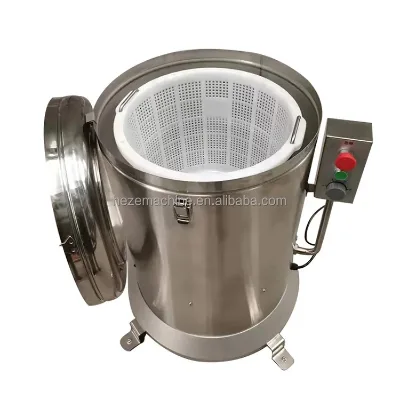


Automatic Centrifugal Dewatering Drying Machine Potato Chips Deoiling Machine
$1800.00 - $3000.00
MOQ: 1 Pieces
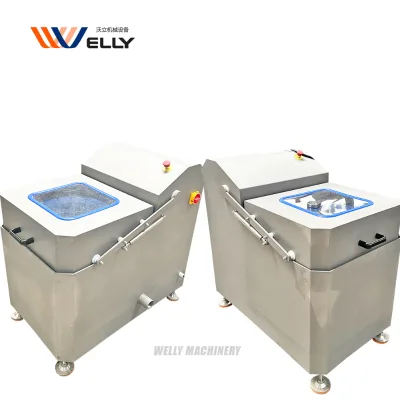


Potato Chip and Sweet Potato Dehydrator / Vegetable Drying Machine
$6121.00 - $231231.00
MOQ: 1 Pieces


Vegetable Centrifugal Dehydrator Onion Potato Chips Parsley Dewatering Machine
$8200.00 - $11000.00
MOQ: 1 Sets


Comprehensive Sourcing Guide
Strategic Sourcing Guide for Fried Potato Deoiling and Dehydrator Machinery
The global demand for processed snack foods, particularly fried potato chips and french fries, has driven a significant need for specialized post-frying equipment. Buyers seeking a Fried Potatoes Deoiling Dehydrator Machine must navigate a complex landscape of technical specifications, material standards, and operational requirements. This guide provides a disciplined approach to sourcing this critical machinery, focusing on evidence-based evaluation rather than marketing claims. The primary objective is to identify equipment that effectively removes excess oil and moisture while maintaining product integrity and ensuring long-term operational efficiency in a commercial processing environment.
Technical Specifications and Operational Mechanics
Understanding the core technical specifications is the first step in evaluating a deoiling and dehydration unit. The machinery designed for this purpose typically utilizes high-speed centrifugal spinning as the primary dehydration method. This mechanism separates oil and water from the surface of fried products through rapid rotation, leveraging centrifugal force to eject liquids without damaging the structural integrity of the potato chips or fries.
When reviewing product data, buyers should note specific power and voltage requirements. Available models in the market often operate on electric power sources with varying wattage ratings. For instance, certain units are rated at 2.2kw, while others may operate at 0.75kw, depending on the scale and capacity of the machine. Voltage compatibility is equally critical; some models are designed for 220V systems, whereas industrial-grade units may require 380V power supplies. Procurement teams must verify that their facility's electrical infrastructure aligns with these specifications to prevent operational failures.
The physical dimensions and weight of the machinery are also essential factors for facility planning. Observed specifications indicate a wide range of sizes, from compact units measuring approximately 670590835mm to larger industrial models reaching 2500x1130x1800mm. Weight variations are equally significant, with some units weighing as little as 57kg or 65kg, while heavy-duty industrial deoilers can reach a gross weight of 350kg or even 300kg. These figures directly impact floor space allocation, foundation requirements, and logistics planning for installation.
Material Construction and Hygiene Standards
The material composition of the machine is a non-negotiable aspect of food safety and equipment longevity. High-quality deoiling and dehydration machines must be constructed from food-grade stainless steel. Specifically, the industry standard often points to SUS304 stainless steel, which offers excellent corrosion resistance and durability against the acidic and oily environments found in snack processing.
Buyers should verify that the contact parts of the machine, including the barrel, bucket, and discharge ports, are made from this specific grade of stainless steel. The barrel diameter and bucket depth are critical design parameters; for example, some models feature a barrel diameter of about 750mm and a bucket depth of about 400mm. The discharge port height, often around 800mm, must be engineered to facilitate smooth product ejection without causing spillage or contamination.
The "Automatic Grade" of the machine is another key observation. Most modern units are fully automatic, reducing the need for manual intervention and ensuring consistent processing cycles. The application scope extends beyond just potatoes; these machines are often versatile enough to handle leafy greens, root vegetables, and other fried seafood or vegetables. However, the primary focus for the fried potato deoiling dehydrator remains on the specific requirements of potato chips and french fries, ensuring that the machine can handle the specific texture and oil content of these products.
Compliance, Certification, and Customization Options
Navigating the compliance landscape requires a careful review of certification statuses and customization capabilities. While some background information may suggest general certifications like CE, buyers must treat these as observations rather than guaranteed attributes for every listed product. It is imperative to request current, valid certification documents directly from the supplier to ensure the machine meets the regulatory standards of the target market.
Customization is a significant feature in this sector. Many suppliers offer customizable options to tailor the machine to specific production lines. Buyers should investigate whether the supplier supports customization for barrel dimensions, voltage configurations, or automation levels. The "Whether Customization Is Supported" attribute often indicates a "Support" status, meaning the manufacturer is willing to adapt the design. However, this does not imply that every standard model is already customized; rather, it suggests a potential for modification based on the buyer's unique needs.
The production model codes, such as TZ, JW-TS350, or JW-TY400, serve as unique identifiers for different configurations. These codes often correlate with specific standard dimensions and functional capabilities. For instance, the JW-TS350 model is associated with a specific set of dimensions and a 0.75KW power rating, while the JW-TY400 might differ in capacity and standard size. Understanding these model distinctions helps buyers avoid purchasing a unit that is either too small for their volume or too large for their space.
Cost Drivers and Procurement Economics
The cost of a Fried Potatoes Deoiling Dehydrator Machine is influenced by several variables, including material quality, power rating, and the extent of customization. The observed price range in the market is vast, spanning from approximately 450 USD to over 231,000 USD. This wide disparity reflects differences in capacity, automation levels, and the complexity of the engineering involved.
Buyers must look beyond the sticker price to understand the total cost of ownership. Factors such as the weight of the machine, which affects shipping costs, and the type of packaging, such as a wooden case or fumigation-free wooden case, play a role in logistics expenses. The minimum order quantity (MOQ) is another economic factor; while some suppliers list an MOQ of just 1 set, others may have different thresholds. Understanding the MOQ is crucial for small-scale operations or pilot projects.
Additionally, the "Gross Weight" of the unit is a direct cost driver for freight. A machine weighing 350kg will incur significantly higher shipping costs compared to a 57kg unit. Buyers should calculate these logistics costs into their budget before finalizing a purchase. The "Low Energy High Speed" feature mentioned in some product attributes suggests that energy efficiency is a potential cost-saving factor over the machine's lifespan, though specific energy consumption data should be verified with the supplier.
Typical Applications and Process Integration
The versatility of these machines allows them to be integrated into various processing lines. While the core keyword focuses on fried potatoes, the technology is applicable to a broader range of food items. The "Application" field often lists "Chips, Popcorn," "Vegetable Processing Plant," and "Meat Processing Plant." This indicates that the same deoiling mechanism can be used for fried seafood, onion rings, and various fried vegetables.
Specific applications include the processing of leafy greens like lettuce and spinach, root vegetables such as potatoes and radishes, and fried items like french fries and fried seafood. The machine's ability to handle these diverse products makes it a valuable asset for facilities that produce a variety of snack foods. The "Function" is explicitly described as "Vegetable Dehydration" or "French Fries/Potato Chips Dewatering Deoiling," confirming its primary role in the post-frying stage.
Integration into a "Snack Food Processing Plant" requires careful consideration of the machine's dimensions and discharge port height. The standard dimensions, such as 140014301500mm or 850500600mm, must fit within the existing workflow. The "Volume" of the machine, often listed as 35L or 70L, determines the batch size and throughput, which must align with the plant's production targets.
Supplier Evaluation and Quality Assurance
Evaluating suppliers requires a rigorous approach to verifying claims and ensuring product quality. Buyers should prioritize suppliers who provide transparent information about their manufacturing processes and material sourcing. The origin of the machinery, often listed as China, should be verified for quality control standards and export compliance.
Quality assurance should focus on the construction materials and the precision of the centrifugal spinning mechanism. Buyers should request detailed specifications regarding the barrel diameter, bucket depth, and discharge port height to ensure they match the required processing parameters. The "prod_packing" method, whether a standard wooden case or a fumigation-free wooden case, is also a quality indicator, as proper packaging protects the machine during transit and ensures it arrives in optimal condition.
When assessing suppliers, buyers should look for evidence of past performance in similar industries. The "Suitable for" attribute, which mentions "Vegetables Root Vegetables Leaf Vegetables," suggests a track record in vegetable processing. However, buyers must confirm that the specific model they are considering has been successfully used for fried potato applications. Test results and performance claims should be treated as observations rather than guaranteed outcomes, and independent verification is recommended.
Long-Term Procurement and Maintenance Considerations
Long-term procurement success depends on understanding the maintenance requirements and the durability of the equipment. The "Automatic Grade" and "Electric" power source suggest a need for regular electrical maintenance and lubrication of moving parts. The "Low Energy High Speed" feature implies that the machine is designed for efficiency, but the high-speed nature of the centrifugal spinning requires robust bearings and seals to prevent wear and tear.
Buyers should consider the availability of spare parts and the technical support offered by the supplier. The "Customization" attribute indicates that the machine can be tailored, but it also means that non-standard parts may be required, potentially affecting lead times for replacements. The "Gross Weight" and physical dimensions also influence the ease of maintenance; heavier machines may require more robust lifting equipment for servicing.
Finally, the "prod_standard" and "prod_model" codes serve as references for future procurement and maintenance. Keeping a record of these details ensures that the buyer can order compatible parts and upgrades in the future. By focusing on these long-term considerations, buyers can ensure that their investment in a Fried Potatoes Deoiling Dehydrator Machine yields consistent results and minimal downtime over its operational life.
Comparative Analysis of Key Machine Attributes
To facilitate decision-making, the following table summarizes the key attributes observed across different models, highlighting the variations in specifications that buyers must evaluate.
| Attribute | Model A (Compact) | Model B (Industrial) | Model C (High Capacity) |
|---|---|---|---|
| Product Model | TZ | JW-TS350 | JW-TY400 |
| Power Source | Electric | Electric | Electric |
| Power Rating | 2.2kw | 0.75KW | According to Model |
| Voltage | 220V | 380V | Variable |
| Material | Food Grade Stainless Steel | SUS304 Stainless Steel | Food-Grade SUS304 |
| Dimensions (LxWxH) | 2500x1130x1800mm | 670590835mm | 850500600mm |
| Gross Weight | 300 Kg | 350kg | 57kg |
| Volume | 35L/70L | N/A | N/A |
| Application | Chips, Popcorn | French Fries/Potato Chips | Leafy Greens, Fried Items |
| Dehydration Method | High-Speed Centrifugal | High-Speed Centrifugal | High-Speed Centrifugal |
| Customization | Non-Customized | Customized | Support |
| Origin | China | China | China |
This comparison underscores the importance of matching specific machine attributes to the buyer's production needs. The variation in power, voltage, and dimensions necessitates a thorough review of the facility's capabilities before making a final selection. By adhering to these evidence-based guidelines, buyers can confidently source a Fried Potatoes Deoiling Dehydrator Machine that meets their operational and quality standards.
FAQs
What material is used for the Fried Potatoes Deoiling Dehydrator Machine?
The machine is constructed from food-grade stainless steel, specifically SUS304, to ensure hygiene and corrosion resistance. This material is essential for contact parts like the barrel and bucket to maintain food safety standards during vegetable and potato processing.
How does the dehydration method work on fried potato chips?
It utilizes high-speed centrifugal spinning to separate oil and moisture from the product surface. This mechanism leverages centrifugal force to eject liquids without damaging the structural integrity of the chips or fries during the post-frying stage.
Which power source and voltage options are available for this equipment?
The equipment operates on an electric power source with options for 220V or 380V voltage systems. Power ratings vary by model, with some units rated at 0.75KW and others at 2.2KW depending on the specific capacity and industrial requirements.
Can the machine be customized for specific production needs?
Yes, customization is available and supported by the manufacturer for various production requirements. Buyers can inquire about adapting barrel dimensions, voltage configurations, or automation levels to fit their specific facility layout and processing volume.
What is the minimum order quantity for purchasing this machine?
The minimum order quantity is typically one set for this equipment. This low threshold allows small-scale operations or pilot projects to acquire the machinery without needing to meet large bulk purchase requirements.
How is the machine packaged for shipping from China?
The unit is packed in a wooden case, with some models offering a fumigation-free wooden case option. This packaging protects the machinery during transit and ensures it arrives in optimal condition for installation at the processing plant.
What is the gross weight range for these dehydrator machines?
Gross weights vary significantly by model, ranging from approximately 57kg for compact units to 350kg for heavy-duty industrial versions. These weight differences directly impact shipping costs and the foundation requirements for facility installation.