Source Vegan Probiotic Gummies for adults, kids, and health care
Compare 30 listings for Vegan Probiotic Gummies from verified manufacturers. Buyers can review specifications like packaging, certifications, and MOQs to find suitable health supplement options for adults and children.
Key considerations
Products List


OEM Private Label Gut Health Probiotic Gummies for Digestion and Bloating
$1.95 - $3.80
MOQ: 100 bottle


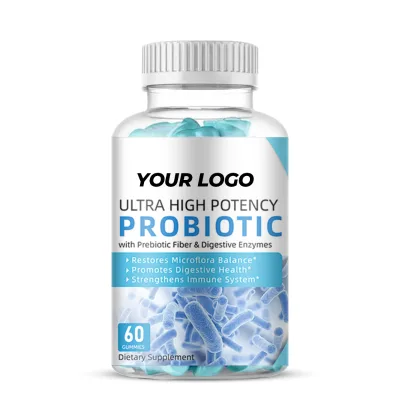


Vitamin Vegan Probiotic Supplement with Prebiotic Fiber for Gut Health
$0.01 - $0.02
MOQ: 600000 Pieces

Dietary Supplement Support Flavored Food Multivitamin Gelatin-Free Probiotic Gummies
$1.80 - $3.50
MOQ: 100 Pieces

Comprehensive Sourcing Guide
Strategic Sourcing Guide for Vegan Probiotic Gummies
Understanding Product Specifications and Formulation Variability
When sourcing Vegan Probiotic Gummies, buyers must first navigate a landscape of diverse technical specifications that define the final product's efficacy and market fit. The core product category, identified as "Pet Nurture & Health Products" in some listings but more accurately aligned with "Health Care Products" and "Food" for human consumption, exhibits significant variation in active substance content. The observed data indicates that the content of active substances can range from 0% to 30%, a critical variable that directly impacts dosage and regulatory compliance. Buyers should not assume a uniform concentration across all suppliers; instead, they must verify the specific assay results for each batch.
The physical form of the product is a primary differentiator. While the category is broadly defined as "Gummies," the "Application Form" field reveals that manufacturers often produce the same formulation in multiple formats, including tablets and capsules. The "State" is explicitly listed as "Gummy," and the "Appearance" confirms this texture. However, the "Extract Source" is noted as "Probiotic Gummies," suggesting that the probiotic strain is the defining ingredient within the gummy matrix. For buyers seeking a strictly vegan product, the "Feature" attribute "All Natural" and "Resource: Natural" are positive indicators, but they must be cross-referenced with the specific ingredient list to ensure no animal-derived gelatin is used, as the "Application Form" also lists "Capsule" and "Tablet," which may utilize different binding agents.
Packaging and storage requirements are equally critical for maintaining product integrity. The "Packaging Material" is predominantly "Plastic," with specific configurations including "Bottle" and "Drum" options. The "prod_packing" attribute lists "Catton" (likely a typo for Carton) and "Carton" as standard outer packaging, while the inner unit is often a bottle containing 50, 60, or 90 gummies per bottle. The "Storage Method" is listed as "Normal," yet the "Storage Condition" specifies "Sealed in Cool and Dry Place," and the "Storage Note" emphasizes "Moisture Proof." This dichotomy suggests that while general storage is standard, the product is highly sensitive to humidity, which can degrade the probiotic viability. The "Shelf Life" is a contentious point in the data, with some entries stating ">12 Months" and others explicitly listing "2years." Buyers must verify the stability data for the specific formulation they intend to purchase, as the "Sheif Life" (Shelf Life) discrepancy highlights the need for rigorous quality assurance before finalizing orders.
Compliance, Certification, and Regulatory Alignment
Navigating the compliance landscape for Vegan Probiotic Gummies requires a meticulous review of supplier certifications and adherence to international standards. The provided data highlights a strong emphasis on quality management systems, with "Certification" fields frequently listing "ISO," "HACCP," and "GMP" (Good Manufacturing Practice). The presence of both HACCP and ISO certifications suggests that the manufacturing facilities adhere to rigorous food safety and quality management protocols. However, buyers must verify the specific ISO standard (e.g., ISO 9001 for quality or ISO 22000 for food safety) and the scope of the HACCP certification to ensure it covers probiotic handling and gummy production.
The "prod_standard" attribute provides specific numerical and dimensional data, such as "202060" and "60 Capsules" or "50gummies/Bottle." These standards likely refer to packaging dimensions or unit counts rather than product purity. For regulatory compliance, buyers should look for evidence of "Food Grade" status, which is explicitly listed as a "Grade" attribute. This confirms that the raw materials and the final product are suitable for human consumption. Furthermore, the "Application" is listed as "Health Care Products, Food," indicating that the product may be marketed under different regulatory frameworks depending on the destination country. In markets where probiotics are classified as dietary supplements, the "OEM/ODM: Acceptable" attribute becomes crucial, as it allows for customization of labels and claims to meet local regulatory requirements.
Assay methods are another pillar of compliance. The "Assay Method" is consistently listed as "HPLC" (High-Performance Liquid Chromatography) and "UV" (Ultraviolet Spectroscopy). These are industry-standard techniques for quantifying active ingredients and ensuring potency. The "Content of active substances" ranging from 0% to 30% underscores the necessity of these tests. A supplier claiming a specific probiotic count must provide HPLC or equivalent test results to validate that claim. Without such data, the "All Natural" and "Vegan" claims remain unverified. Buyers should also note the "Adaptation Population" includes "Adult, Kid" and "Children," which implies that the product must meet safety standards for pediatric use, potentially requiring additional testing for heavy metals, microbial contamination, and allergen cross-contamination.
Cost Drivers and Economic Factors in Procurement
The economic structure of sourcing Vegan Probiotic Gummies is influenced by several distinct cost drivers, primarily revolving around minimum order quantities (MOQ), packaging complexity, and customization levels. The observed MOQ range is exceptionally wide, spanning from 10 to 600,000 units. Specific listings indicate MOQs of "100bottles," "50bottles," and "20bottles," suggesting that smaller buyers can access the market with lower initial capital outlay, while larger enterprises can leverage economies of scale. The "Listed price range" of 0.01 to 8.3 USD per unit reflects this variability, likely correlating with the bottle size (50, 60, or 90 gummies) and the concentration of active ingredients.
Packaging represents a significant portion of the total cost. The "prod_packing" options include "Bottle" and "Drum," with "Carton" as the outer shipping container. The "Standard" of "202060" may refer to the dimensions of the carton or pallet, which affects shipping logistics. Buyers must consider that "Plastic" bottles, while standard, may have different cost implications based on the type of plastic (e.g., PET vs. HDPE) and the inclusion of child-resistant caps or desiccants for moisture protection. The "Transport Method" is listed as "by Air or by Sea," which introduces another variable. Air freight is faster but more expensive, suitable for smaller, urgent orders, while sea freight is cost-effective for bulk shipments but requires careful planning regarding lead times and inventory management.
Customization is a major cost driver. The "Customization: Available" attribute and "OEM/ODM: Acceptable" status indicate that buyers can tailor the product to their brand. However, customization often incurs additional setup fees and higher MOQs. The "Product Name" "OEM Health Supplement Capsule" suggests that the manufacturer is capable of producing under the buyer's brand, but the specific "Application Form" (Gummies vs. Capsules) must be confirmed. If a buyer requests a specific flavor, color, or probiotic strain that deviates from the standard "Probiotic Gummies" profile, the cost per unit may increase. Additionally, the "Sample: Free Samples Are Available" attribute is a valuable cost-saving tool, allowing buyers to test product quality before committing to a large order, though shipping costs for samples may still apply.
Typical Applications and Market Positioning
The versatility of Vegan Probiotic Gummies allows for a broad range of applications, from general health maintenance to targeted nutritional support. The "Type" is categorized as "Pet Nurture & Health Products," yet the "Application" and "Adaptation Population" fields clarify that the product is primarily intended for human consumption, specifically "Adult, Kid," and "Children." This duality suggests that some manufacturers may produce similar formulations for both humans and pets, or that the classification system is broad. For human buyers, the "Suitable for: Health" attribute positions these gummies as functional foods or dietary supplements designed to support digestive health, immune function, and overall well-being.
The "Appearance" as "Gummies" makes the product highly appealing to specific demographics, particularly children and adults who struggle with swallowing traditional capsules or tablets. The "State" of "Gummy" implies a chewable texture, which enhances compliance and user experience. The "Extract Source" being "Probiotic Gummies" indicates that the primary functional ingredient is live probiotic cultures, which are essential for gut health. The "Application Form" listing "Tablet, Capsule, Gummies" shows that manufacturers often offer a portfolio of formats, allowing buyers to choose the delivery method that best suits their target market. For instance, a brand targeting children might focus on the gummy format with a fun flavor profile, while a brand targeting health-conscious adults might offer the same probiotic strain in a capsule for higher potency.
The "Feature" of "All Natural" and "Resource: Natural" aligns with current consumer trends favoring clean-label products. This positioning allows the product to compete in the premium health supplement segment. However, the "Content of active substances" ranging from 0% to 30% suggests that not all gummies are created equal. Some may be primarily candy with minimal probiotic content, while others may be high-potency supplements. Buyers must clearly define their product positioning to ensure they source a product that matches their brand promise. The "Grade: Food Grade" confirms that the product is safe for consumption, but the specific health claims (e.g., "supports immunity") must be substantiated by the supplier's test data and regulatory compliance in the target market.
Supplier Evaluation and Quality Control Protocols
Evaluating a supplier for Vegan Probiotic Gummies requires a multi-faceted approach that goes beyond simple price comparisons. The "Certification" of "ISO, HACCP, GMP" is a baseline requirement, but buyers should verify the validity and scope of these certificates. A supplier with a GMP certification for food manufacturing is essential to ensure that the production environment is controlled and free from contamination. The "Assay Method" of "HPLC, UV" indicates that the supplier has the technical capability to test for active ingredients, but buyers should request recent test reports for the specific batch they intend to purchase. The "Content of active substances" of 0% to 30% is a wide range, so verifying the actual potency of the batch is critical.
Quality control should also extend to the "Storage Condition" and "Storage Note." The requirement for "Sealed in Cool and Dry Place" and "Moisture Proof" packaging suggests that the probiotics are sensitive to environmental factors. A supplier with robust quality control will have strict protocols for maintaining these conditions during production, storage, and shipping. The "Shelf Life" discrepancy between ">12 Months" and "2years" highlights the need for stability testing data. Buyers should ask for stability reports that demonstrate the product maintains its potency and safety over the claimed shelf life. The "Sample: Free Samples Are Available" attribute is a positive sign, but buyers should treat samples as a critical part of their quality control process, testing them for texture, taste, and microbial load before placing a large order.
The "MOQ" variability from 20 to 100 bottles suggests that suppliers are flexible, but buyers should assess the supplier's ability to scale. A supplier that can handle an MOQ of 100 bottles but struggles with 600,000 units may not be suitable for large-scale distribution. The "Transport Method" of "by Air or by Sea" indicates logistical flexibility, but buyers should evaluate the supplier's track record in shipping perishable or sensitive goods. The "Location" of "China" is a common sourcing hub, but buyers should verify the specific factory location and its proximity to ports to minimize transit time and potential quality degradation. The "Brand" "Xazy" is mentioned, but buyers should not rely on a single brand name; instead, they should evaluate the manufacturer's overall reputation and capacity.
Long-Term Procurement and Supply Chain Resilience
Sourcing Vegan Probiotic Gummies is not a one-time transaction but a long-term partnership that requires strategic planning for supply chain resilience. The "Customization: Available" and "OEM/ODM: Acceptable" attributes indicate that suppliers are willing to work with buyers to develop unique products. However, long-term success depends on the supplier's ability to maintain consistent quality and supply over time. The "Standard" of "50gummies/Bottle," "60gummies/Bottle," and "90gummies/Bottle" suggests that buyers should standardize their packaging requirements to simplify inventory management and reduce costs.
The "Storage Method" of "Normal" combined with the "Storage Condition" of "Sealed in Cool and Dry Place" requires careful logistics planning. Buyers should ensure that their distribution partners are equipped to handle these conditions, especially if the product is being shipped to regions with high humidity or temperature fluctuations. The "Shelf Life" of 2 years is a significant advantage, allowing for longer inventory cycles and reduced waste. However, buyers must monitor the "Content of active substances" to ensure that the potency does not degrade over time, especially if the product is stored for extended periods.
The "Application" of "Health Care Products, Food" suggests that the product can be marketed in multiple channels, from retail stores to online platforms. This versatility allows buyers to diversify their sales channels and reduce dependency on a single market. The "Adaptation Population" of "Adult, Kid" and "Children" further expands the potential market, allowing buyers to target different demographics with tailored marketing strategies. The "Feature" of "All Natural" and "Resource: Natural" aligns with long-term consumer trends, making the product a sustainable choice for the future.
In conclusion, sourcing Vegan Probiotic Gummies requires a deep understanding of technical specifications, compliance requirements, cost drivers, and supply chain dynamics. By carefully evaluating suppliers based on certifications, assay methods, and quality control protocols, buyers can ensure they receive a high-quality product that meets their brand standards and regulatory requirements. The wide range of MOQs and packaging options provides flexibility for buyers of all sizes, but long-term success depends on building a strong partnership with a reliable supplier who can deliver consistent quality and support.
FAQs
What certifications do vegan probiotic gummy manufacturers hold?
Manufacturers typically hold ISO, HACCP, and GMP certifications to ensure food safety and quality management. These standards verify that production facilities adhere to rigorous protocols for handling probiotics and gummy matrices suitable for human consumption.
How is the active substance content measured in these gummies?
The active substance content is measured using HPLC and UV assay methods to ensure potency accuracy. This testing confirms the specific concentration of probiotics, which can range from 0% to 30% depending on the formulation and batch.
Can buyers request free samples before placing a bulk order?
Yes, free samples are available for buyers to evaluate product quality and formulation before committing to a large purchase. This allows verification of the gummy texture, taste, and probiotic viability without immediate financial risk.
What packaging options are available for shipping these health products?
Products are packaged in plastic bottles containing 50, 60, or 90 gummies, often shipped in cartons or drums. The packaging must be moisture-proof and sealed to maintain probiotic stability during storage and transport.
Which MOQ values are typically required for custom gummy orders?
Minimum order quantities vary significantly, with specific listings showing requirements of 20, 50, or 100 bottles. Buyers should verify the exact MOQ with the supplier as it depends on the customization level and production capacity.
How long is the shelf life of these probiotic gummies?
The shelf life is generally listed as greater than 12 months or up to 2 years depending on the specific product. Proper storage in a cool, dry, and sealed environment is essential to maintain probiotic viability throughout this period.
What application forms are available for these health supplements?
While the primary form is gummies, manufacturers also produce these formulations as tablets and capsules. This flexibility allows buyers to select the delivery method that best suits their target demographic and regulatory requirements.