Source Gearless Home Elevator Traction Machine for Hotels Villas Offices
Compare 30 Gearless Home Elevator Traction Machine options featuring microcomputer control and AC drive modes. Buyers can review specifications for passenger and home applications with capacities ranging from under 500kg to 1000kg.
Key considerations
Products List


Home Lift with Gearless Traction Machine for Modern Villas and Apartments
$3000.00 - $6000.00
MOQ: 1 Pieces


Luxury Villa Elevator with Gearless Traction Machine for Modern Homes
$7150.00 - $11450.00
MOQ: 1 Pieces


Household Elevator Geared and Gearless Traction Residential Elevator
$8900.00 - $10800.00
MOQ: 1 Pieces
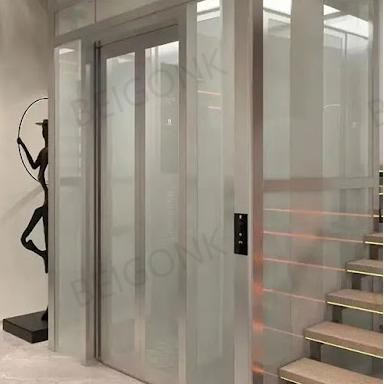

Custom Indoor Residential Lift Elevator 5 Persons Traction Driven Elevator Home Elevator
$8000.00 - $20000.00
MOQ: 1 Pieces

High Quality House Traction Villa Elevator Safety Lift Residential Elevator Mini Home Elevator
$8000.00 - $15000.00
MOQ: 1 Pieces

2-4 Floors Outdoor and Customized Villa Elevator Passenger Small Home Lift Elevator Lifts
$8000.00 - $15000.00
MOQ: 1 Pieces

4-Person Passenger Elevator Home Elevator Small Home Elevator Residential Elevator
$8000.00 - $20000.00
MOQ: 1 Pieces


Home Elevator Gearless Motor Elevator Passenger Elevator for Residential
$8200.00 - $15000.00
MOQ: 1 Set


High Speed Gearless Elevator Machine in Commercial Buildings for Passenger
$500.00 - $1200.00
MOQ: 1 Pieces

Stainless Steel Passenger Gearless Traction Machine Residential Elevators/Home Elevator Price
$10000.00 - $20000.00
MOQ: 1 Pieces

Comprehensive Sourcing Guide
Strategic Sourcing Guide for Gearless Home Elevator Traction Machines
The procurement of a Gearless Home Elevator Traction Machine represents a critical decision in the construction and renovation of residential and light commercial properties. Unlike geared systems, gearless traction machines offer superior efficiency, smoother operation, and reduced maintenance requirements, making them the preferred choice for modern installations. This guide synthesizes observed market data and technical attributes to assist buyers in navigating the complex landscape of elevator component sourcing. The focus remains on evidence-based evaluation of specifications, compliance, and operational suitability without relying on unverified supplier claims.
Technical Architecture and Performance Specifications
Understanding the mechanical and electrical architecture of the traction machine is the first step in defining procurement requirements. The core component, often identified as the "Elevator Gearless Traction Machine," operates on an AC drive mode, utilizing a specific lifting mechanism known as the Lift Chain. This configuration is designed to handle varying load capacities, with observed market data indicating units capable of supporting up to 1000kg, while other configurations cater to capacities under 500kg or within the 500-1000kg range. The speed of operation is a defining characteristic; high-performance units are observed with speeds ranging from 1.00 to 2.00m/s, whereas other models are specified for speeds under 1.00m/s.
The control system is equally vital. Modern units frequently employ Microcomputer Control, specifically Microcomputer Frequency Control, to manage the drive mode efficiently. This allows for precise speed regulation and smooth acceleration, which is essential for passenger comfort in home and hotel applications. The drive mode is consistently identified as AC, compatible with VVVF (Variable Voltage Variable Frequency) controllers such as the Monarch Vvvf Controller. The model specifications vary, with some units categorized under "Geared/Gearless" models, while others are explicitly labeled as "Traction Machine" or "V FUJI" models.
The physical design includes a T Guide rail system and a deceleration device to ensure safe stopping. The door mechanism is typically a single door knife with a center opening door, suitable for the spatial constraints of residential buildings. The position of the computer room is a significant design variable; some units are designed with the computer room positioned up, while others, such as the PL-KW series, are specified for inorganic rooms, offering flexibility in installation layouts.
Compliance Standards and Certification Verification
In the elevator industry, adherence to international and local standards is non-negotiable for safety and legal compliance. Buyers must verify that the traction machine meets specific production standards. Observed data indicates that some units comply with ISO7465, a standard relevant to elevator safety components. Other listings reference "normal" standards or specific model-based standards like "PL-K has a computer room; PL-KW inorganic room," which suggests that compliance may be tied to specific installation configurations rather than a single universal metric.
While background information often mentions certifications like CE and ISO9001, these should be treated as background context rather than guaranteed attributes of every listed product. Procurement teams must explicitly request and verify current certification documents from the supplier for the specific batch being purchased. The absence of a specific certification claim in a product listing does not necessarily imply non-compliance, but it does require the buyer to demand proof of conformity before finalizing the order. Verification should extend to the material standards, ensuring that components like the hairline stainless steel 304 or mirror etching finishes meet the required durability and aesthetic specifications for the intended application.
Cost Drivers and Pricing Dynamics
The pricing of gearless home elevator traction machines is influenced by a complex interplay of technical specifications, customization levels, and logistical factors. The observed market price range spans from approximately $499.99 to $20,000. This wide variance is not arbitrary; it reflects differences in load capacity, speed, control system sophistication, and the inclusion of optional functions.
Several key factors drive the cost upward. Units with higher load capacities (e.g., 1000kg vs. <500kg) and higher speeds (2.00m/s vs. <1.00m/s) naturally command a premium. The inclusion of advanced control systems, such as the Monarch Vvvf Controller, adds to the base cost. Furthermore, the availability of customization is a significant cost driver. Products marked as "Customized" or "Customized" allow for tailored solutions, which inherently increases the unit price compared to standard off-the-shelf models.
Logistics also play a role. The observed shipping methods include Sea and Air transport. Sea freight is generally more cost-effective for heavy machinery but involves longer lead times, while air freight reduces transit time at a higher cost. The packing method, whether it is a standard export tray, a wooden case, a pallet, or PE-film, impacts the overall shipping volume and weight, thereby influencing the final landed cost. Buyers should request detailed breakdowns of these costs to understand the total cost of ownership, rather than focusing solely on the unit price.
Typical Applications and Installation Scenarios
The versatility of gearless traction machines allows them to be deployed across a wide spectrum of applications. The primary use cases identified include public traffic, indoor types, and specific building categories such as hotels, villas, apartments, and office buildings. The "Public Traffic" designation suggests suitability for high-frequency usage environments, while "Indoor Type" confirms their adaptation for enclosed residential spaces.
The capacity and speed of the machine must align with the building's usage profile. For instance, a villa or a small apartment building may require a unit with a capacity under 500kg and a speed under 1.00m/s, prioritizing space efficiency and cost-effectiveness. Conversely, a hotel or a multi-story office building might necessitate a 1000kg capacity unit with speeds up to 2.00m/s to handle higher passenger volumes efficiently. The "Attendant" feature, indicating the presence of an attendant control mode, is particularly relevant for luxury hotels or high-end residential complexes where a concierge or staff member operates the elevator.
The production capacity of suppliers, observed at up to 10,000 units, suggests that the market can support large-scale projects. However, buyers must ensure that the supplier's production capacity aligns with their project timeline. The origin of the products, primarily from China and specifically Huzhou, indicates a robust manufacturing hub, but buyers should verify the specific production facility's ability to meet their project's specific delivery schedule.
Supplier Evaluation and Procurement Strategy
Selecting the right supplier requires a rigorous evaluation process that goes beyond the initial product listing. Buyers should assess the supplier's ability to provide "Customization" services, as many projects require tailored solutions. The availability of optional functions such as ARD (Automatic Rescue Device), IC Card access, and Remote Monitor capabilities should be confirmed as these features enhance security and convenience.
The Minimum Order Quantity (MOQ) is another critical factor. Observed MOQs range from 1 to 5 units, indicating flexibility for both small residential projects and larger commercial developments. However, buyers must verify if the quoted price is valid for their specific order quantity, as bulk orders often attract different pricing tiers. The production capacity of 10,000 units is a strong indicator of a supplier's scale, but it does not guarantee immediate availability for custom orders.
When evaluating suppliers, buyers should request detailed technical documentation, including the specific model numbers (e.g., Traction Machine, V FUJI) and the exact standards they adhere to. The "Standard" packing options, such as Wooden Case, Pallet, and PE-Film, should be confirmed to ensure the product arrives in pristine condition. Additionally, the supplier's location, such as Huzhou, China, should be factored into the logistics planning, considering potential tariffs, shipping times, and communication time zones.
Quality Control and Long-Term Maintenance
Quality control is paramount in elevator procurement, as the safety of passengers depends on the reliability of the traction machine. Buyers should insist on a comprehensive quality assurance plan that includes factory acceptance tests (FAT) and site acceptance tests (SAT). The presence of a deceleration device and a hydraulic buffer are standard safety features that must be inspected to ensure they function correctly under load.
Long-term procurement considerations involve the availability of spare parts and the supplier's support infrastructure. The "Customization" attribute implies that parts may be specific to the ordered configuration, making it essential to secure a supply chain for replacement components. The material quality, such as Hairline Stainless Steel 304 or Mirror Etching, should be verified for corrosion resistance and durability, especially in high-humidity environments.
Maintenance is simplified by the gearless design, which typically requires less frequent servicing than geared systems. However, the control system, particularly the Microcomputer Frequency Control, may require specialized software updates or diagnostic tools. Buyers should negotiate service agreements that include regular maintenance checks and emergency support. The "Optional Function" of Remote Monitor is particularly valuable for long-term management, allowing for real-time diagnostics and predictive maintenance, which can significantly reduce downtime and operational costs.
Comparative Analysis of Key Product Attributes
To facilitate decision-making, the following table summarizes the key attributes observed in the market, highlighting the variations buyers must consider.
| Attribute Category | Observed Variations | Procurement Consideration |
|---|---|---|
| Load Capacity | <500kg, 500-1000kg, 1000kg | Match to building traffic and passenger volume. |
| Speed | <1.00m/s, 1.00-2.00m/s | Higher speeds reduce travel time but increase cost. |
| Control Type | Microcomputer Control, Microcomputer Frequency Control | Ensure compatibility with existing building management systems. |
| Drive Mode | AC | Standard for modern gearless systems; verify VVVF compatibility. |
| Application | Hotel, Villa, Apartment, Office, Public Traffic | Select based on usage frequency and aesthetic requirements. |
| Packing | Export Tray, Wooden Case, Pallet, PE-Film | Ensure packaging protects against transit damage. |
| Customization | Available, Customized | Confirm lead times and cost implications for custom orders. |
| Origin | China, Huzhou | Factor in logistics and potential import regulations. |
This comparative analysis underscores the importance of aligning specific technical requirements with the project's unique needs. By carefully evaluating these attributes, buyers can make informed decisions that balance performance, cost, and safety.
Final Procurement Recommendations
The acquisition of a Gearless Home Elevator Traction Machine is a strategic investment that requires meticulous planning and verification. Buyers must prioritize technical specifications that match their building's operational demands, ensuring that load capacity, speed, and control systems are appropriately selected. Compliance with standards like ISO7465 must be verified through documentation, and cost drivers such as customization and logistics should be clearly understood.
Supplier evaluation should focus on the ability to deliver customized solutions, provide necessary certifications, and support long-term maintenance. The observed market data provides a solid foundation for understanding the landscape, but it is the buyer's responsibility to validate every claim through direct communication and documentation review. By adhering to these evidence-based guidelines, procurement teams can secure high-quality traction machines that ensure safety, efficiency, and reliability for years to come. The final decision should always be grounded in verified facts and a clear understanding of the project's specific requirements, avoiding assumptions or unverified market trends.
FAQs
What control type is standard for gearless home elevator traction machines?
Microcomputer control is the standard type, often implemented as microcomputer frequency control for precise speed regulation. This system manages the AC drive mode efficiently to ensure smooth acceleration and passenger comfort in residential and hotel applications.
Which load capacities are available for these traction machines?
Available capacities range from under 500kg to 1000kg, with specific models supporting 500-1000kg loads. Buyers must select the capacity that matches the building's passenger volume and usage profile, such as villas versus hotels.
Can these machines operate at speeds up to 2.00m/s?
Yes, high-performance units can operate at speeds between 1.00 and 2.00m/s. Slower models are also available for speeds under 1.00m/s, allowing customization based on the specific building height and traffic requirements.
How is the product packed for shipment?
Products are packed in export-applicable trays, wooden cases, or on pallets with PE-film protection. The specific packing method depends on the model and order requirements to ensure safe transport via sea or air freight.
What standards do these traction machines comply with?
Some units comply with ISO7465, while others follow normal standards or specific model configurations like PL-K. Buyers should verify the exact standard for their batch, as compliance may vary by installation type and model series.
Which customization options are available for buyers?
Customization is available for various specifications, including optional functions like ARD, IC card access, and remote monitoring. Buyers can request tailored solutions to fit specific building layouts or operational needs beyond standard configurations.