Source Glass Decanter Bottle for Liquor, Wine, and Spirits
Compare 30 Glass Decanter Bottle options from verified Chinese manufacturers. Buyers can evaluate materials like PP and glass, capacities from 100ml to 800ml, and closure types including cork stoppers and screw caps for various spirits and beverages.
Key considerations
Products List


Sophisticated Whisky Decanter Luxury Storage Glass Wine Bottle for Xo and Vodka
$0.30 - $0.69
MOQ: 3000 Pieces


Factory Direct Sale Glass Wine Bottle Decanter for Vodka and Whisky Storage
$0.30 - $0.69
MOQ: 3000 Pieces

Custom Elegant Glass Wine Bottle Decanter for Vodka Whisky and Xo Spirits Storage
$0.30 - $0.69
MOQ: 3000 Pieces

Decorative Glass Wine Bottle for Vodka Whisky and Liquid with Glass Wine Stopper
$0.30 - $0.69
MOQ: 3000 Pieces


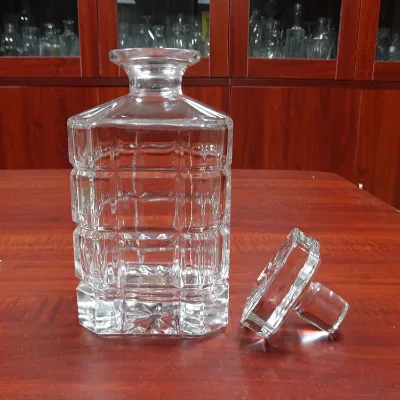


High-End Borosilicate Glass Bottles 750ml Glass Liquor Decanter Tequila Whiskey Bottle
$0.25 - $0.50
MOQ: 6000 Pieces


750ml Luxury Factory Flint Glass Whiskey Bottle Decanter Spirits Vodka Gin Tequila
$0.91 - $0.95
MOQ: 6000 Pieces


$0.45 - $0.96
MOQ: 10000 Pieces

Comprehensive Sourcing Guide
Strategic Sourcing Guide for Glass Decanter Bottles
Understanding Product Variability and Technical Specifications
When sourcing glass decanter bottles, buyers must first navigate a complex landscape of technical specifications that vary significantly across different product listings. The core keyword "Glass Decanter Bottle" encompasses a wide range of items, from high-end spirit decanters to functional beverage containers. Based on available market data, the material composition is consistently identified as glass, though some listings also reference polypropylene (PP) for specific components like sprayers or closures. The physical form factor is equally diverse, with observed models ranging from square bottles to traditional cylindrical shapes.
A critical observation in the current market is the variance in capacity. Listings indicate capacities spanning from 100ml to 450ml for certain sprayer applications, while other distinct product lines, specifically those labeled as decanters or liquor bottles, feature capacities of 750ml, 800ml, and up to 1000ml. This discrepancy suggests that buyers must clearly define their intended volume requirements before engaging with suppliers. The shape of the bottle is another defining characteristic, with square profiles and standard round profiles both available. Some products are explicitly designed for specific spirits, such as whisky, vodka, brandy, and XO, while others are marketed for general liquid or beverage usage.
The closure mechanism is a vital technical specification that dictates the functionality of the decanter. The market offers two primary types: cork stoppers and screw caps. Some suppliers provide a hybrid option, offering closures that can be either cork or screw cap depending on the order configuration. For sprayer applications, the mechanism shifts to a screw sprayer with a full cone spraying shape, designed for cosmetics or specific liquid dispensing needs. The production technology for these glass items is predominantly injection molding for plastic components, while the glass itself is formed through standard glass manufacturing processes. Buyers should verify if the specific decanter model they are interested in includes a custom label or if it arrives as a "no label" product, as this affects the final branding strategy.
Compliance, Certification, and Regulatory Standards
Navigating the regulatory landscape is essential for any B2B procurement operation involving glass containers, particularly when the end product is intended for food and beverage contact. The supplied data indicates that certain products in this category carry certifications such as FDA and CE/EU. These certifications are critical indicators that the glass material meets specific safety standards for contact with consumables. However, it is important to treat these certifications as observations of specific listings rather than universal guarantees for every Glass Decanter Bottle available. Buyers must verify that the specific supplier and model they select possess valid, current documentation for these standards.
Beyond material safety, the production standards listed include references to SGS, a globally recognized inspection, verification, testing, and certification company. The presence of SGS standards suggests that the manufacturing process adheres to rigorous quality control protocols. Additionally, some product listings mention "Customizable" standards, implying that the manufacturing process can be adapted to meet specific client requirements or regional regulations. This flexibility is a significant advantage for buyers targeting niche markets with unique regulatory hurdles.
The origin of the products is another factor influencing compliance. The data points to manufacturing locations in Jiangsu, Shandong, and general regions in China (Mainland). While these regions are known for robust manufacturing capabilities, buyers should ensure that the specific factory location aligns with their import requirements and that the shipping logistics from these ports, such as Shanghai, do not introduce unexpected regulatory delays. The payment terms observed, including PayPal, Western Union, Credit Card, and TT (Telegraphic Transfer), reflect standard international trade practices but do not inherently dictate compliance status. Buyers must explicitly request proof of certification for the specific batch they intend to purchase, rather than relying on general category claims.
Cost Drivers and Pricing Dynamics
The pricing structure for glass decanter bottles is influenced by a multitude of factors, resulting in a wide observed range of 0.1 to 45 USD per unit. This broad spectrum indicates that the cost is not determined solely by the material but by the complexity of the design, the volume of the order, and the level of customization required. The minimum order quantity (MOQ) is a significant driver of unit cost, with observed ranges spanning from 100 units to 50,000 units. Smaller orders typically incur a higher per-unit price due to the fixed costs of setup and production runs, whereas bulk orders benefit from economies of scale.
Customization is a primary cost variable. The data confirms that customization is available for these products, including options for color, weight, and specific labeling. Products with custom colors, such as black, or those requiring specific decoration techniques like decal application, screen printing, or embossing, will generally command a higher price point than standard clear or neutral glass bottles. The inclusion of additional packaging, such as "Carton + Pallet" or "1PCS Per Box, 6PCS Per Carton," also impacts the final landed cost. Buyers must consider the total cost of ownership, which includes not just the unit price but also the cost of specialized packaging and the logistics of handling palletized goods.
Production ability is another factor that can influence pricing and availability. Listings indicate a production capacity of 2000 pieces per day for certain suppliers. While this suggests a robust supply chain, it also implies that lead times may vary based on current order volumes. Buyers seeking urgent delivery may face premium pricing or limited availability if the supplier's capacity is fully utilized. Furthermore, the type of closure, whether a standard cork stopper or a specialized screw cap, can affect the overall cost. The decision to accept OEM/ODM services, which allows for custom branding and design, will also introduce additional costs that must be factored into the budget.
Typical Applications and Market Segmentation
Glass decanter bottles serve a diverse array of applications, ranging from high-end hospitality to industrial packaging. The data highlights several distinct market segments. One primary application is in the bar and restaurant industry, where decanters are used to serve spirits such as whisky, whiskey, gin, wine, vodka, rum, and tequila. These products are often designed with aesthetic appeal in mind, featuring square shapes or elegant profiles to enhance the presentation of the beverage. The "Eco-Friendly" feature noted in some listings suggests a growing market segment focused on sustainable packaging solutions for these establishments.
Another significant application is in the cosmetics and personal care industry. The presence of sprayer applications with a full cone shape and the mention of "cosmetics" as a contained liquid indicates that glass bottles are also utilized for dispensing lotions, perfumes, or other liquid beauty products. In this context, the bottle serves a functional role in product delivery, requiring specific closure types like screw sprayers to ensure precise application. The capacity range of 100-450ml is particularly relevant for this sector, offering versatility for different product volumes.
The data also points to usage in the storage and transport of various liquids, including XO and general beverages. The "Liquid Contained" attribute confirms the suitability of these bottles for a wide range of fluids. The "Application" field explicitly mentions "Bar/Restaurant/Kitchen," reinforcing the dual nature of these products as both functional storage vessels and decorative serving pieces. Buyers should align their sourcing strategy with their specific application needs, as a bottle designed for a luxury bar may not be suitable for a high-volume cosmetic manufacturing line, and vice versa. The versatility of the glass material allows it to be adapted for these varied uses, provided the technical specifications match the intended application.
Supplier Evaluation and Operational Capabilities
Evaluating potential suppliers requires a careful analysis of their operational capabilities and logistical infrastructure. The data indicates that suppliers are located in key manufacturing hubs such as Jiangsu and Shandong, with delivery points often centered around Shanghai. This geographic concentration suggests a mature supply chain ecosystem, but buyers must verify the specific capabilities of individual suppliers. Key metrics to evaluate include production ability, which is listed as 2000 pieces per day for some entities, and the ability to handle large order volumes up to 50,000 units.
The customization capabilities of the supplier are a critical evaluation point. The availability of OEM/ODM services, along with options for custom colors, weights, and decorations, indicates a supplier's flexibility. Buyers should assess the supplier's track record in handling custom orders, particularly those involving complex decoration techniques like screen printing or embossing. The "Customizable" standard mentioned in the data suggests that suppliers are willing to adapt their processes to meet client needs, but this requires clear communication and detailed specification sheets.
Logistical considerations are also paramount. The observed packing methods, ranging from "Trading Carton" to "Carton + Pallet," indicate that suppliers have experience in both small-batch and bulk shipping. The mention of "by Ocean" shipping suggests that these suppliers are equipped to handle international freight logistics. Buyers should confirm the lead times associated with different order sizes and packaging configurations. While specific lead times are not provided in the data, the production capacity and shipping methods imply that lead times will vary based on the complexity of the order and the current workload of the factory.
Quality Control and Long-Term Procurement Strategy
Implementing a robust quality control (QC) strategy is essential for maintaining product integrity in Glass Decanter Bottle procurement. Given the fragility of glass and the precision required for closures and sprayers, buyers should establish clear QC protocols. The presence of SGS standards and FDA/CE certifications provides a baseline for quality, but buyers must go further by defining their own acceptance criteria. This includes inspecting for defects such as bubbles, cracks, or uneven coloring, which can occur during the glass forming process.
Long-term procurement considerations involve building a sustainable relationship with suppliers who can consistently meet quality and delivery expectations. The "Eco-Friendly" feature observed in some products suggests a market trend toward sustainability, which buyers should consider for their own corporate social responsibility goals. Sourcing from suppliers who prioritize eco-friendly materials and processes can enhance brand value and appeal to environmentally conscious consumers. Additionally, the ability to customize products allows buyers to adapt their offerings to changing market trends, ensuring long-term relevance.
Buyers should also consider the total cost of ownership, including the cost of potential returns due to breakage or quality issues. Establishing a clear communication channel with suppliers regarding quality expectations and defect rates is crucial. Regular audits and sample testing can help maintain high standards over time. The flexibility of the supply chain, evidenced by the range of MOQs and customization options, allows buyers to scale their operations up or down as market demand fluctuates. By focusing on suppliers with proven track records in customization and quality, buyers can secure a reliable supply of glass decanter bottles that meet their specific business needs.
Comparative Analysis of Product Attributes
To facilitate informed decision-making, the following table summarizes the key attributes observed in the market for glass decanter bottles and related glass products. This comparison highlights the variability in specifications and helps buyers identify the most suitable options for their specific requirements.
| Attribute | Observed Options | Notes for Buyers |
|---|---|---|
| Material | Glass, PP (for sprayers) | Verify if the entire bottle is glass or if plastic components are used. |
| Capacity | 100-450ml, 750ml, 800ml | Define exact volume needs; 750ml is common for spirits. |
| Shape | Square, Round, Custom | Square bottles are noted for specific models; round is standard. |
| Closure | Cork Stopper, Screw Cap, Screw Sprayer | Match closure to liquid type and dispensing method. |
| Color | Any Colour, Black Color | Custom colors available; verify color consistency standards. |
| Decoration | Decal, Screen Printing, Embossed | Check if decoration is included or requires separate setup. |
| Certification | FDA, CE/EU, SGS | Request specific certificates for the batch being ordered. |
| Origin | Jiangsu, Shandong, China (Mainland) | Verify factory location for logistics and compliance checks. |
| Packing | Carton, Pallet, 1PCS/Box | Confirm packaging details to prevent damage during transit. |
| MOQ | 100 - 50,000 units | Negotiate MOQ based on order volume and budget. |
| Payment | PayPal, Western Union, Credit Card, TT | Standard terms; ensure secure payment methods are used. |
This comparative analysis underscores the importance of detailed specification verification. Buyers should not assume that all glass decanter bottles share the same attributes. Instead, they must carefully review the specific product listing and request detailed information to ensure the selected product aligns with their operational and quality requirements. By leveraging this data-driven approach, buyers can navigate the complexities of the glass decanter market with confidence and precision.
FAQs
What materials are used for glass decanter bottles?
The primary material is glass, though some components like sprayers may use polypropylene. Buyers should verify the specific material composition for each model, as listings indicate glass products alongside PP components for closures or dispensing mechanisms.
Which certifications do these bottles typically hold?
Some products carry FDA and CE/EU certifications for food contact safety. Additionally, certain listings reference SGS standards, indicating adherence to rigorous quality control protocols, though buyers must verify specific batch documentation.
Can I find decanters with custom labeling options?
Customization is available, but many products arrive with no label. Buyers can request decoration techniques like decal, screen printing, or embossing, though the default state for many listings is an unlabeled bottle requiring post-purchase branding.
What is the typical capacity range for these bottles?
Capacities vary significantly, ranging from 100ml to 450ml for sprayer applications and 750ml to 800ml for decanters. Buyers must define volume requirements early, as listings show distinct product lines for different liquid volumes.
How are these bottles typically packaged for shipping?
Packaging options include trading cartons, carton boxes, or palletized units with specific carton counts. Some listings specify 1 piece per box and 6 pieces per carton, while others use carton and pallet combinations for bulk ocean shipping.
Where are these glass decanter bottles manufactured?
Manufacturing origins include Jiangsu, Shandong, and general regions in China (Mainland). Delivery points are often centered around Shanghai, requiring buyers to consider logistics from these specific Chinese manufacturing hubs.
What closure types are available for these bottles?
Available closures include cork stoppers, screw caps, and hybrid options. Some sprayer models specifically use screw sprayers with a full cone shape, while liquor bottles may offer both cork and screw cap configurations depending on the order.