Source Glass Pharmaceutical Bottle for Medicine, Sample Storage, and Packaging
Explore 30 listings for Glass Pharmaceutical Bottle options including amber and clear variants with ISO and CE certifications. Buyers can compare specifications like thickness, closure types, and standard compliance for medicine, sample storage, and pharmaceutical packaging needs.
Key considerations
Products List




Comprehensive Sourcing Guide
Strategic Sourcing Guide for Glass Pharmaceutical Bottles
Procuring glass pharmaceutical bottles requires a rigorous approach that balances material integrity, regulatory compliance, and supply chain reliability. The market offers a diverse array of options, from amber vials designed for light-sensitive medications to clear containers for liquid storage. Buyers must navigate a landscape where product attributes vary significantly between manufacturers. This guide outlines the critical factors for sourcing these essential medical packaging components, focusing on verified technical specifications, certification requirements, and quality assurance protocols derived from current market data.
Technical Specifications and Material Properties
The foundation of any pharmaceutical packaging selection lies in understanding the specific material properties and dimensional tolerances required for the intended application. Glass remains the preferred material for many pharmaceutical applications due to its inertness and superior barrier properties against moisture and gases. In the current market, the primary material observed for these containers is glass, specifically manufactured using bottle blowing techniques. This process ensures a consistent wall thickness and structural integrity necessary for containing sensitive medical formulations.
Dimensional specifications are critical for compatibility with filling lines and secondary packaging. Available products in the sector exhibit a thickness range of 0.5mm to 9mm, allowing for customization based on the volume and fragility requirements of the product. Length dimensions can vary widely, with observed ranges extending from 10mm to 3000mm, though typical pharmaceutical vials usually fall within a much narrower band. The shape is predominantly round, which facilitates efficient stacking and handling during automated filling processes.
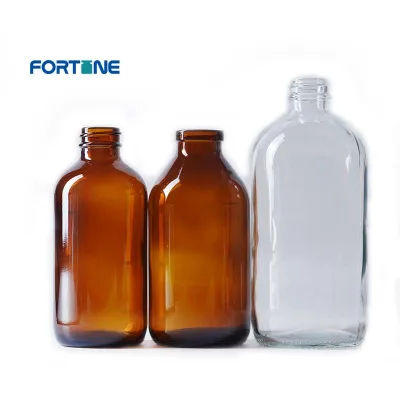
Color is a decisive factor in product selection, particularly for light-sensitive compounds. The market features both clear and amber glass options. Amber glass is specifically utilized to protect contents from UV degradation, a common requirement for many pharmaceuticals and essential oils. Conversely, clear glass is often selected for products where visual inspection of the liquid is necessary or where the formulation is not light-sensitive. The flexibility of the glass is generally hard, ensuring rigidity during transport and storage.
| Attribute | Observed Range/Option | Application Context |
|---|---|---|
| Material | Glass | Primary containment for liquids and powders |
| Shape | Round | Standard for vials and bottles |
| Color | Clear, Amber | Clear for inspection; Amber for UV protection |
| Thickness | 0.5mm - 9mm | Varies by volume and structural need |
| Neck Finish | Gl32 | Specific finish for compatibility with closures |
| Graduation | Without Graduation | Standard for bulk pharmaceutical storage |
Compliance and Certification Verification
Navigating the regulatory landscape is perhaps the most critical aspect of sourcing pharmaceutical packaging. Unlike general consumer goods, medical packaging must adhere to stringent international and regional standards to ensure patient safety. Buyers must verify that suppliers possess valid certifications that align with the target market's regulatory requirements.
In the observed market, certifications such as ISO and CE are frequently cited. These indicate that the manufacturing processes meet specific quality management and safety standards. Furthermore, specific product lines are noted to comply with norms such as ISO8362-4, which relates to the dimensions and tolerances of glass containers for medical use. Other standards referenced include the SFDA (State Food and Drug Administration) standards, which are crucial for products intended for the Chinese market or those exported to regions recognizing these certifications.
It is imperative for buyers to distinguish between general quality claims and specific regulatory compliance. While some suppliers may claim adherence to ISO 9001 or ISO 15378, these should be treated as background information unless explicitly verified in the product documentation. The primary focus should remain on the specific standard cited for the product, such as the compliance with ISO8362-4 for series-specific containers. Additionally, the origin of the product, often listed as China (Mainland) or specifically Shandong province, should be cross-referenced with the supplier's ability to provide traceable documentation for the batch being purchased.
Cost Drivers and Pricing Dynamics
Understanding the cost structure of glass pharmaceutical bottles is essential for budgeting and negotiation. The pricing in this sector is influenced by several variables, including material costs, manufacturing complexity, and order volume. The observed price range for these products spans from $0.01 to $30.00 USD per unit. This wide variance is not indicative of quality differences alone but rather reflects the diversity in product types, from simple sample storage vials to complex, multi-component containers with specialized closures.
Order volume plays a significant role in determining the final unit cost. The Minimum Order Quantity (MOQ) observed in the market ranges from 100 units to 300,000 units. Suppliers typically offer tiered pricing structures where the per-unit cost decreases as the order volume increases. Buyers with smaller requirements may face higher per-unit costs but benefit from lower upfront capital expenditure. Conversely, large-scale procurement allows for better economies of scale but requires significant inventory management capabilities.
Other cost drivers include customization options. Products that require logo printing, specific neck finishes, or custom shapes often command a premium. The availability of customization is a key factor; while many standard products are available "without logo printing," custom branding is an option for many suppliers. Additionally, the type of closure selected—such as spray pumps, screw caps, flip-top caps, or dropper caps—adds to the overall cost. The complexity of the sealing type, whether crimp neck or screw cap, also influences the manufacturing process and, consequently, the price.
Typical Applications and Usage Scenarios
Glass pharmaceutical bottles serve a wide array of applications within the medical and healthcare sectors. The versatility of these containers allows them to be used for various purposes, ranging from bulk storage to precise dosage delivery. The primary usage categories observed include medicine storage, sample storage, and pharmaceutical packaging.
For liquid medicines, essential oils, and cosmetic formulations, the bottles are often designed with specific closure types to ensure product integrity. Dropper bottles and roll-on containers are common for topical applications, while screw cap and spray pump closures are preferred for liquid dispensing. The "Tall Perfume Bottle Rollon" and similar designs highlight the adaptability of glass containers for both medical and cosmetic uses.
In laboratory settings, these bottles are utilized for sample storage. The absence of graduation marks on many standard models suggests they are intended for bulk storage or transport rather than precise measurement. However, the robust nature of the glass ensures that samples remain uncontaminated during transit. The application extends to pharmaceutical packaging for various dosages, with standard volumes ranging from 7ml to 100ml, accommodating everything from single-dose vials to multi-dose containers.
Supplier Evaluation and Origin Considerations
When evaluating potential suppliers, buyers must look beyond basic product descriptions to assess the supplier's capability to meet long-term needs. The origin of the product is a significant factor, with the majority of observed products originating from China, specifically the Shandong region. This region is known for its glass manufacturing industry, offering a concentration of suppliers with specialized expertise.
Suppliers should be evaluated based on their production capabilities, including the use of full automatic inspection systems. This technology is a key advantage for ensuring consistency and minimizing defects in high-volume production. The type of production, whether molded or blown, should align with the buyer's quality requirements. Additionally, the packing method is a critical indicator of the supplier's attention to detail. Common packing methods include shrink wrapping followed by carton or tray packaging, or direct export cartons. These methods are designed to protect the fragile glass during shipping and storage.
Branding is another consideration. While some products are unbranded, others carry specific brand names such as "Yimeng." Buyers should verify that the brand name corresponds to a legitimate manufacturer with a track record of quality. The presence of recycled content is another variable; while some products are unrecycled, others utilize recycled glass. This distinction may be relevant for buyers with sustainability goals or specific regulatory requirements regarding material sourcing.
Quality Control and Inspection Protocols
Ensuring the quality of glass pharmaceutical bottles requires a robust quality control (QC) framework. The manufacturing process must include rigorous inspection steps to detect defects such as cracks, bubbles, or dimensional inconsistencies. The use of a full automatic inspection system is a notable feature in the market, providing a high level of confidence in product consistency.
Buyers should verify the specific quality standards claimed by the supplier. References to "SFDA and ISO Standard" suggest a commitment to meeting both local and international quality benchmarks. However, it is crucial to request actual test results or certificates of analysis for the specific batch being ordered. The sealing type, whether crimp neck or screw cap, must be tested for integrity to prevent leakage or contamination.
The physical attributes of the bottle, such as its hardness and lack of flexibility, contribute to its durability. However, these properties must be maintained throughout the supply chain. The packing method, such as shrink wrapping or carton packaging, plays a vital role in protecting the bottles from impact during transit. Buyers should inspect the packing quality upon receipt to ensure that the protective measures were effective.
Long-Term Procurement Considerations
Sourcing glass pharmaceutical bottles is not a one-time transaction but a strategic partnership that requires long-term planning. Buyers must consider the scalability of their supply chain to accommodate fluctuations in demand. The wide range of MOQs, from 100 to 300,000 units, offers flexibility for businesses at different stages of growth. However, maintaining a consistent relationship with a supplier who can handle both small and large orders is beneficial.
Sustainability is an emerging consideration in procurement. While the market currently offers both recycled and unrecycled options, the trend toward sustainable packaging is growing. Buyers should inquire about the supplier's environmental policies and the potential for increasing the use of recycled materials in future orders. Additionally, the customization capabilities of the supplier should be assessed for long-term branding needs. The ability to print logos or modify designs can be a competitive advantage in the market.
Finally, buyers must plan for the lifecycle of the product. Glass bottles are durable but fragile. The lead time and reliability of the supplier are critical to avoiding stockouts, which can disrupt production schedules. While specific lead times are not provided in the general data, the complexity of the product, such as the need for specific neck finishes or closures, can impact delivery schedules. Establishing clear communication channels and quality expectations with the supplier is essential for a successful long-term procurement strategy.
FAQs
What certifications do glass pharmaceutical bottles typically have?
Glass pharmaceutical bottles typically hold ISO and CE certifications. Some specific product lines also comply with SFDA and ISO standards, ensuring they meet quality management and safety requirements for medical packaging applications.
Which materials are used for glass pharmaceutical bottles?
The primary material used is glass, manufactured via bottle blowing techniques. This process ensures structural integrity and inertness, making it suitable for storing medicines, samples, and essential oils without reacting with the contents.
Can these bottles be customized with logos?
Customization is available for logo printing on many glass pharmaceutical bottles. While some standard models come without logo printing, buyers can request branding options depending on the specific supplier and product model selected.
What is the thickness range for these glass bottles?
The thickness of these glass bottles ranges from 0.5mm to 9mm. This variation allows manufacturers to customize wall thickness based on the volume, fragility, and specific structural needs of the pharmaceutical product being stored.
How are these bottles packed for shipment?
Packaging methods vary but often include shrink wrapping followed by carton or tray packaging. Some products are packed in export cartons or pallets to ensure the fragile glass remains protected during transit and storage.
What closure types are available for these bottles?
Available closure types include spray pumps, screw caps, flip-top caps, and dropper caps. The specific sealing type, such as crimp neck or screw cap, is selected based on the intended application and product dispensing needs.
Where are these glass bottles typically manufactured?
These glass bottles are typically manufactured in China, specifically in the Shandong region. This area is a known hub for glass manufacturing, offering a concentration of suppliers with specialized expertise in medical packaging production.