Source Half Face Respirator for Gas, Dust, and Security Protection
Compare 30 Half Face Respirator options from verified suppliers in China. This collection features reusable silicone models with rubber adhesives, available in medium and cup shapes for gas, dust, and security applications.
Key considerations
Products List
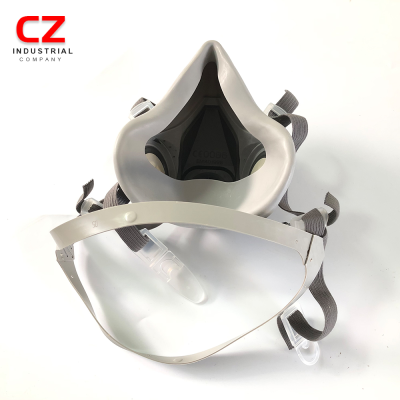


Half Face Mask Rubber Particulate Respirator Mask with Double Filters Gas Mask
$1.50 - $2.00
MOQ: 2000 Pieces


Comprehensive Sourcing Guide
Strategic Sourcing Guide for Half Face Respirators
Procuring half face respirators requires a disciplined approach that balances technical performance, regulatory compliance, and supply chain reliability. The market for these protective devices is vast, ranging from simple dust masks to complex reusable units designed for hazardous environments. Buyers must navigate a landscape where product attributes vary significantly between suppliers. This guide outlines the critical factors for sourcing half face respirators, focusing on evidence-based verification rather than marketing claims. The goal is to ensure that the selected equipment meets the specific safety requirements of the intended application while maintaining cost efficiency and supply continuity.
Technical Specifications and Material Composition
The foundation of any effective respirator lies in its material composition and physical design. When evaluating potential products, buyers should first scrutinize the mask body material. High-quality reusable units often utilize silicone, which offers superior durability, flexibility, and resistance to degradation from chemicals compared to thermoplastic alternatives. Silicone masks, such as those identified by model numbers like 6800 or 6200 in current listings, are designed to maintain a seal over extended periods. In contrast, disposable options may employ different materials, often featuring a cup-shape or flat design depending on the intended use.
The adhesive properties of the mask are equally critical. The interface between the mask and the wearer's face must be secure to prevent leakage. Some products specify an adhesive type, such as pressure-sensitive adhesives, which are typically found on filter cartridges or specific sealing components. The adhesive side configuration, whether single-sided or otherwise, dictates how the filter attaches to the mask body. Buyers must verify that the sealing mechanism is compatible with the specific filter cartridges required for their hazard profile.
Design features also play a pivotal role in usability. Attributes such as "Headloop" style versus "Safe-Type" configurations determine how the mask is secured to the head. A headloop design often provides a more uniform distribution of tension, while other styles may rely on specific strap configurations. The shape of the mask, whether described as a "Towel Mask," "Dust Mask," or "Cup-shape," directly impacts the fit and the volume of air the user can breathe. For medium-sized applications, the physical dimensions are crucial; specifications like "Medium" size must align with the demographic of the workforce to ensure a proper seal.
Compliance and Certification Verification
Navigating the regulatory landscape is perhaps the most critical step in the procurement process. Respirators are life-saving devices, and their certification status must be unambiguous. While some product listings may reference standards such as CE or EN 149, buyers must treat these references with caution and verify the actual validity of the certificates. A claim of "CE" certification implies conformity with European health, safety, and environmental protection standards, but the specific directive and the notified body involved must be confirmed.
When reviewing supplier documentation, do not accept generic assertions of compliance. Instead, request the specific certificate numbers and verify them against the issuing authority's database. The presence of a "Ce" certificate on a product listing for a model like M502 is a positive indicator, but it does not guarantee that every batch produced meets the standard. Buyers should also be aware that different regions have different mandatory standards. For instance, while CE is prominent in Europe, other markets may require NIOSH approval in the United States or GB standards in China.
It is essential to distinguish between the mask body certification and the filter certification. A Half Face Respirator is only as effective as its filtration system. The filter rating, often described in terms of layers or efficiency (e.g., "FFPLayers:2 Ply"), must be appropriate for the specific particulate or gas hazards present in the workplace. A two-ply filter may suffice for non-toxic dust but would be inadequate for organic vapors or high-concentration particulates. Buyers must cross-reference the stated filter rating with the specific hazard assessment of their facility to ensure the selected combination provides the necessary protection factor.
Cost Drivers and Pricing Structures
Understanding the cost structure of half face respirators is vital for budgeting and total cost of ownership analysis. The observed price range in the market can vary dramatically, from as low as $0.10 to $70.00 per unit. This wide disparity is not merely a reflection of brand premium but is driven by fundamental differences in product design, material quality, and intended lifespan. Disposable masks, often priced at the lower end of the spectrum, are designed for single or limited use. In contrast, reusable silicone masks, which can cost significantly more, are engineered for long-term use with replaceable filters.
The Minimum Order Quantity (MOQ) is another significant cost driver. Suppliers may offer MOQs ranging from 1 piece to 50,000 pieces. For small businesses or pilot programs, an MOQ of 1 piece allows for testing and evaluation without a large financial commitment. However, for large-scale procurement, negotiating a lower unit price by increasing the order volume is standard practice. Buyers should be aware that high MOQs often correlate with lower per-unit costs but require significant upfront capital and storage capacity.
Additional cost factors include packaging and logistics. Some suppliers offer "Carton package" or "Poly Bay + Carton" options, while others may customize packaging "as per your request." Customization typically incurs additional fees. Furthermore, the origin of the product influences shipping costs and lead times. Products originating from Guangdong or Fujian, China, are common in the global market, but the specific logistics chain from these regions to the destination country will impact the final landed cost. Buyers must calculate the total cost of ownership, including the frequency of filter replacement, to determine the true economic value of a reusable versus a disposable system.
Typical Applications and Hazard Assessment
Selecting the right respirator requires a precise understanding of the application environment. The product attributes often hint at the intended use, such as "Gas Mask," "Security Mask," or "Protective" applications. A Half Face Respirator is generally suitable for environments where the hazard is primarily airborne particulates or specific gases, provided the correct filter is used. However, it is not suitable for oxygen-deficient atmospheres or environments with immediately dangerous to life or health (IDLH) concentrations of unknown hazards.
The "Reusable" attribute is a key differentiator for long-term applications. In industrial settings where workers are exposed to consistent levels of dust or vapors over months or years, a reusable silicone mask with replaceable filters offers a more sustainable and cost-effective solution. These units are often designed for "Adult" age groups and feature an "Available Times" specification that indicates their durability. Conversely, in short-term or low-risk scenarios, such as construction dust control or general maintenance, disposable masks with a "Headloop" style may be more practical.
The shape of the mask also dictates its suitability for specific tasks. A "Cup-shape" design may offer better breathing resistance for high-volume work, while a "Towel Mask" or flat design might be preferred for tasks requiring a lower profile or compatibility with other personal protective equipment (PPE) like safety glasses. Buyers must conduct a thorough hazard assessment to match the mask's capabilities with the specific risks. For example, a "Dust Mask" application requires a different filtration standard than a "Gas Mask" application. Misalignment between the hazard and the mask's design can lead to inadequate protection and severe health consequences.
Supplier Evaluation and Quality Control
Evaluating suppliers requires a focus on transparency and consistency. The "Place of Origin" is a common data point, with many suppliers located in Guangdong or Fujian, China. While these regions are hubs for manufacturing, the quality of production can vary widely between facilities. Buyers should prioritize suppliers who provide clear documentation regarding their manufacturing processes and quality control measures. The "Sample Date" of 7 workdays mentioned in some listings indicates a standard turnaround for product evaluation, which is a useful benchmark for planning procurement cycles.
Quality control should be a continuous process, not just a pre-shipment check. Buyers should verify that the supplier adheres to consistent production standards. The "Product name" and "Model Number" should be consistent across all units in a shipment. Discrepancies in model numbers, such as variations between 6200, 620M, G005, and GM410, can indicate a lack of standardization or potential counterfeiting. It is essential to ensure that the specific model ordered matches the technical specifications required for the application.
Packaging details are another indicator of supplier professionalism. Options like "original packing," "Paper Carton," or "Poly Bay +Carton" suggest different levels of protection during transit. For sensitive equipment like respirators, proper packaging is essential to prevent damage to the sealing surfaces or filter integrity. Buyers should also consider the "Delivery Date" terms, such as "35days After We Received 30% Deposit," as these affect project timelines. Reliable suppliers will provide clear lead times and adhere to them, whereas inconsistent delivery schedules can disrupt operations.
Long-Term Procurement Considerations
Sourcing half face respirators is not a one-time transaction but a long-term commitment to worker safety. Buyers must consider the availability of replacement parts, particularly filters and sealing components. A reusable mask is only viable if the supply chain for its consumables is secure. The "Customization" availability mentioned in some product listings can be a significant advantage, allowing buyers to tailor the respirator to specific organizational needs or branding requirements.
Inventory management is another critical factor. The "Weight" of the product, such as 1.3kgs for certain units, impacts storage and shipping logistics. Buyers should calculate the total weight of their orders to optimize freight costs and warehouse space. Additionally, the "Selling Units" specification, whether "Single item" or bulk, influences how inventory is tracked and managed.
Finally, buyers must plan for the lifecycle of the equipment. Reusable masks have a finite lifespan, even with proper maintenance. Regular inspection and replacement schedules must be established to ensure that worn-out masks are not used. The "Feature" of being "Antistatic" may be relevant in specific environments where static electricity poses a risk, but this attribute must be verified for the specific application. By adopting a strategic, long-term view of procurement, organizations can ensure a continuous supply of effective respiratory protection, safeguarding their workforce and maintaining operational continuity.
Comparative Analysis of Key Product Attributes
To facilitate decision-making, the following table summarizes the key attributes observed in the market for half face respirators. This comparison highlights the diversity in specifications and helps buyers identify the features most relevant to their specific needs.
| Attribute Category | Observed Variations | Relevance to Procurement |
|---|---|---|
| Material | Silicone, Thermoplastic | Determines durability, chemical resistance, and comfort. Silicone is preferred for reusable units. |
| Model Number | 6200, 6800, M502, GM410, G005 | Critical for identifying compatible filters and replacement parts. |
| Size | Medium, One Size Fits All | Must match the wearer's face shape to ensure an effective seal. |
| Application | Gas Mask, Dust Mask, Security Mask | Dictates the required filtration efficiency and mask type. |
| Certification | CE (Verified), EN 149 (Contextual) | Essential for regulatory compliance; must be verified with certificates. |
| MOQ | 1 to 50,000 pcs | Influences upfront capital requirements and unit pricing. |
| Packaging | Carton, Poly Bay + Carton, Custom | Affects product protection during transit and storage efficiency. |
| Lead Time | 35 days (post-deposit), 7 days (sample) | Impacts project planning and inventory replenishment cycles. |
This structured approach to sourcing ensures that buyers make informed decisions based on verified data rather than marketing assertions. By rigorously evaluating technical specifications, compliance, costs, and supplier reliability, organizations can secure the right protective equipment for their workforce.
FAQs
What material is used for reusable half face respirators?
Reusable half face respirators are commonly constructed from silicone. This material offers superior durability and flexibility compared to thermoplastics, ensuring a secure seal over extended periods for adult users in protective applications.
Which certifications are available for Half Face Respirator models?
Some models like the M502 carry CE certification. Buyers must verify the specific certificate number and issuing authority to ensure compliance with European safety standards before procurement.
Can I customize the packaging for Half Face Respirator orders?
Customization is available for packaging requests. Suppliers typically offer options like paper cartons or poly bay plus carton, and can accommodate specific packaging requirements as per the buyer's request.
What is the typical lead time for Half Face Respirator delivery?
Delivery usually occurs 35 days after receiving a 30% deposit. This timeline allows for production and quality checks before the goods are shipped from the manufacturing origin.
How does the MOQ vary for Half Face Respirator purchases?
Minimum Order Quantities range from 1 piece to 50,000 pieces depending on the supplier. Small businesses can start with single items, while large orders often secure lower unit prices.
Where are half face respirators typically manufactured?
Products originate primarily from Guangdong and Fujian in China. These regions are established manufacturing hubs for protective equipment, influencing logistics and shipping costs for international buyers.
What filter rating is suitable for dust protection?
Filter ratings vary, with some options featuring 2-ply layers. The appropriate rating depends on the specific hazard profile, as a two-ply filter may suffice for non-toxic dust but not for gases.