Source Handmade Art Paper Cardboard Box for jewelry, food, and gifts
Compare 30 listings for Handmade Art Paper Cardboard Box options featuring square shapes, clamshell or pull-out openings, and customizable logos. Buyers can review specifications for arts and crafts, cosmetic, and electronic product packaging with origins in Qingdao and Guangdong.
Key considerations
Products List


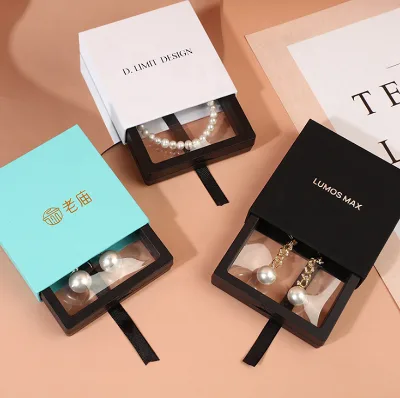


Wholesale Custom Luxury Cardboard Handmade Folding Paper Gift Packing Packaging Box
$1.15 - $1.23
MOQ: 3000 Pieces

China Custom Printed Art Paper Packing Packaging Box Manufacturer Supplier Factory
$0.15 - $0.18
MOQ: 3000 Pieces


$0.54 - $0.68
MOQ: 1000 Pieces


Comprehensive Sourcing Guide
Sourcing Guide for Handmade Art Paper Cardboard Boxes
The global demand for sustainable, aesthetically pleasing packaging has elevated the importance of handmade art paper cardboard boxes in the B2B procurement landscape. These products serve as a critical interface between brand identity and product protection, particularly for sectors ranging from cosmetics and jewelry to food and electronics. Sourcing these items requires a nuanced understanding of material properties, customization capabilities, and supply chain logistics. This guide provides a structured approach for buyers to navigate the market, ensuring that the selected packaging aligns with technical requirements and brand standards without relying on unverified claims.
Technical Specifications and Material Composition
When evaluating handmade art paper cardboard boxes, the primary focus must be on the material composition and structural integrity. The core material for these products is consistently identified as paper or cardboard, often specified as "Card Board" or "Paper/Card Board." This distinction is vital because the thickness and density of the board directly influence the box's ability to protect contents during transit and storage. Buyers should verify the specific paper grade, as "Fancy Paper" is frequently used as a covering material to enhance the visual appeal of the final product.
The shape and structure of the box are equally critical. Market observations indicate that "Square" shapes are common, though "Medium" sizing is a frequent specification. The opening mechanism varies significantly based on the intended use; "Clamshell" designs are suitable for compact items, while "Pull-out" mechanisms are often preferred for jewelry sets to provide a premium unboxing experience. Furthermore, the printing specifications must be clearly defined. Some suppliers offer "Single" page printing, while others support "Two-Sided" printing, which allows for more comprehensive branding on the exterior and interior surfaces.
The following table outlines common technical attributes observed in this product category to assist in specification drafting:
| Attribute | Common Observation | Procurement Consideration |
|---|---|---|
| Material | Paper, Cardboard, Fancy Paper | Verify board thickness and covering material quality. |
| Shape | Square, Medium | Ensure dimensions match product requirements. |
| Opening Way | Clamshell, Pull-out | Select based on product weight and user experience needs. |
| Printing | Single or Two-Sided | Confirm ink adhesion and color fidelity requirements. |
| Surface Finish | Glossy, Matte, Laminated | Request samples to test tactile feel and durability. |
| Inside Lining | Velvet, Plain Paper | Essential for high-value items like jewelry or cosmetics. |
Customization and Design Capabilities
One of the most significant advantages of sourcing handmade art paper cardboard boxes is the high degree of customization available. Suppliers generally indicate that "Customization" is available, with services explicitly described as "Acceptable" or "Customized." This flexibility extends to the physical dimensions, where "customized size or as your request" is a standard offering. Buyers are not restricted to off-the-shelf models; they can request specific dimensions to fit unique product profiles.
Design flexibility is another cornerstone of this category. The "Design" attribute often includes options for "Free Design" provided by the manufacturer or designs "Provided by The Customer." This is particularly relevant for brands with established visual identities. Additionally, "Logo Printing" is widely accepted, allowing for the application of "Customer Logo" directly onto the box surface. The branding can be integrated into the "Retro" style or other aesthetic choices, such as the "Red" color or "Various Colours" options observed in the market.
However, buyers must be cautious when interpreting "Free Design" claims. While the service is available, the complexity of the design and the number of revisions should be clarified in the initial inquiry. The "Customization Service" is noted as acceptable, but the specific turnaround time for design proofs and the cost implications of complex custom molds or die-cuts must be negotiated. The "prod_model" identifiers, such as "Packaging Box 024" or "SHPB306," often represent standard templates that can be modified, but custom models may require separate engineering validation.
Compliance, Certification, and Standards
In the B2B sector, compliance with international standards is non-negotiable, especially for products intended for food, cosmetics, or health care applications. The supply chain for paper and cardboard boxes often involves multiple certifications to ensure safety and sustainability. Observed data points to several key certifications, including "ISO91001/14001," "Fsc," and "BSCI." These certifications cover quality management, environmental management, and social compliance, respectively.
Material certification is equally important. Buyers should look for "BV," "Fsc," and "Ect" certifications to verify the origin and safety of the raw materials. The "ROHS" standard is also frequently cited, indicating compliance with restrictions on hazardous substances, which is crucial for electronic products and toys. However, it is essential to treat these certifications as observations rather than universal guarantees. Not every listed product will satisfy every certification requirement. Buyers must explicitly request current, valid certificates from the supplier before placing an order.
Furthermore, the "prod_standard" is often listed as "Customized" or "Cutomization Acceptable," which implies that the box may be built to meet specific client standards rather than a rigid industry norm. For food applications, additional food-grade safety certifications may be required beyond the general paper certifications. The "Certification" attribute also highlights the importance of verifying that the "Surface Finishing" processes, such as lamination, do not introduce prohibited chemicals.
Cost Drivers and Economic Factors
Understanding the cost structure of handmade art paper cardboard boxes is essential for effective budgeting. The price range observed in the market spans from $0.03 to $5.00 USD, a wide variance that reflects differences in material quality, customization complexity, and order volume. Several factors drive these costs. First, the "Material" type plays a significant role; "Fancy Paper" and velvet linings are more expensive than standard cardboard. Second, the "Printing Page" count and surface finishing options, such as "Glossy/Matte Finishing or Lamin," add to the production cost.
The "MOQ" (Minimum Order Quantity) is another critical economic factor. While some suppliers list an MOQ as low as 1 unit, others specify 100 pieces or even up to 5000 units. The "prod_prop.MOQ" of 100PCS is a common baseline, but buyers should verify if this applies to custom designs or standard stock items. Higher customization levels often correlate with higher MOQs to justify the setup costs for die-cutting and printing plates.
Packaging and shipping costs also impact the final landed price. The "prod_packing" is typically "Carton" or "Export Carton," sometimes with "Waterproof Film" protection. Shipping methods like "FedEx," "DHL," "TNT," "UPS," "EMS," and "Aramex" offer various speed and cost trade-offs. Buyers should calculate the total cost of ownership, including the "Bundle, Master Carton, Pallet" logistics requirements, rather than focusing solely on the unit price.
Typical Applications and Usage Scenarios
The versatility of handmade art paper cardboard boxes allows them to serve a diverse range of industries. The "Usage" attribute lists applications in "Arts and Crafts," "Electronic Products," "Jewelry," "Food," "Garment & Shoes," "Greeting Cards," "Letters," "Gifts," "Cosmetic," and "Health Care Products." This broad applicability means that buyers from any of these sectors can find suitable packaging solutions.
For the "Jewelry" sector, specific models like the "Jewelry Gift Box" or "Jewelry Set Box" are prevalent. These often feature "Velvet" interiors and "Pull-out" mechanisms to enhance the perceived value of the contents. In the "Food" and "Cosmetics" sectors, the "Application" is often listed as "Food, Cosmetics, Household," requiring boxes that are both visually appealing and safe for direct contact with consumables. The "Type" of box, such as "Combination Box" or "Packaging Box," determines its suitability for multi-item sets or single-product protection.
The "Style" of the box also influences its application. A "Retro" style might be preferred for artisanal food products or vintage clothing, while a sleek, modern design suits high-end electronics. The "Color" options, ranging from specific hues like "Red" to "Various Colours," allow brands to align packaging with their seasonal marketing campaigns or brand identity. Understanding these usage scenarios helps buyers narrow down their search to suppliers who specialize in the specific needs of their industry.
Supplier Evaluation and Quality Control
Evaluating suppliers for handmade art paper cardboard boxes requires a rigorous approach to ensure consistency and reliability. The "prod_origin" is frequently listed as "Qingdao," "Guangdong," or generally "China (Mainland)" and "China." While these locations indicate manufacturing hubs, buyers should not assume uniform quality across all suppliers in these regions. The "Brand" is often listed as "Customer Logo," indicating that the supplier operates primarily as an OEM or ODM partner.
Quality control should begin with the verification of the "prod_standard" and "Certification" documents. Buyers must request physical samples to test the "Surface Finishing," the strength of the "Cardboard," and the durability of the "Logo Printing." The "Inside" lining, such as "Velvet," should be inspected for shedding or poor adhesion. Additionally, the "Open Way" mechanism should be tested repeatedly to ensure it does not fail under normal handling conditions.
When assessing suppliers, look for those who offer "Free Design" support but also have a clear process for design approval. The ability to provide "Customized size or as your request" is a positive indicator of flexibility, but it must be backed by a robust quality assurance process. Buyers should also inquire about the "prod_packing" methods to ensure that the boxes arrive in good condition, protected by "Waterproof Film" or "Export Carton" packaging.
Long-Term Procurement Considerations
Sourcing handmade art paper cardboard boxes is not just a one-time transaction but a long-term partnership that impacts brand perception and supply chain resilience. The "Customization" aspect allows for continuous improvement and adaptation to market trends. As consumer preferences shift towards sustainability, the availability of "Fsc" certified materials becomes increasingly important. Buyers should prioritize suppliers who can demonstrate a commitment to environmental standards and offer eco-friendly alternatives.
Scalability is another critical factor. The "MOQ" range of 1 to 5000 suggests that suppliers can accommodate both small batch testing and large-scale production runs. However, buyers must verify the "Lead Time" and production capacity before committing to large orders. The "Shipping" options available, such as "FedEx" or "DHL," should be evaluated for their reliability and cost-effectiveness over time.
Finally, the "Design" flexibility allows brands to evolve their packaging without changing suppliers. Whether the need is for a "Retro" style update or a new "Color" scheme, the ability to customize ensures that the packaging remains relevant. By focusing on suppliers with strong "Certification" records and a proven track record in "Quality Control," buyers can secure a reliable supply chain that supports their long-term business goals. The "Application" diversity of these boxes means that a single supplier can often serve multiple product lines, simplifying the procurement process and fostering stronger supplier relationships.
FAQs
Can I get custom sizes for handmade art paper cardboard boxes?
Yes, suppliers offer customized sizes or dimensions as your specific request. This flexibility allows you to fit unique product profiles, though complex custom molds may require separate engineering validation and negotiation of setup costs.
What certifications are available for handmade art paper cardboard boxes?
Available certifications include ISO91001/14001, Fsc, BSCI, BV, and ROHS standards. These verify quality, environmental management, and safety, but you must explicitly request current valid certificates from the supplier before placing an order for food or electronics.
Which printing options exist for handmade art paper cardboard boxes?
Printing options include single-page or two-sided printing with glossy or matte finishing. You can also request free design services or provide your own artwork, with customer logos accepted on various colors like red or various other shades.
How much is the minimum order quantity for handmade art paper cardboard boxes?
The minimum order quantity typically starts at 100 pieces, though some suppliers accept orders as low as one unit. Higher customization levels often correlate with higher MOQs to justify the setup costs for die-cutting and printing plates.
Where are handmade art paper cardboard boxes manufactured?
Manufacturing origins are primarily located in Qingdao, Guangdong, and other parts of China. While these are known industrial hubs, you should verify the specific factory location and quality control processes for each supplier rather than assuming uniform standards.
Can I request velvet lining for handmade art paper cardboard boxes?
Yes, velvet lining is available for specific models like jewelry gift boxes or jewelry set boxes. This interior feature enhances the unboxing experience for high-value items, but you must confirm the specific box type and opening mechanism like pull-out styles.
What shipping methods are used for handmade art paper cardboard boxes?
Common shipping methods include FedEx, DHL, TNT, UPS, EMS, and Aramex. Boxes are typically packed in export cartons with waterproof film protection, and you should calculate total landed costs including bundle or pallet logistics requirements.