Source Handmade Pearl and Sequin Lace for Wedding Dress, Garment, Clothing
Compare 30 listings for Handmade Pearl and Sequin Lace featuring polyester, mesh, and tulle materials with embroidery and sequin details. Buyers can review customization options, widths, and delivery times for wedding dress, garment, and clothing applications.
Key considerations
Products List

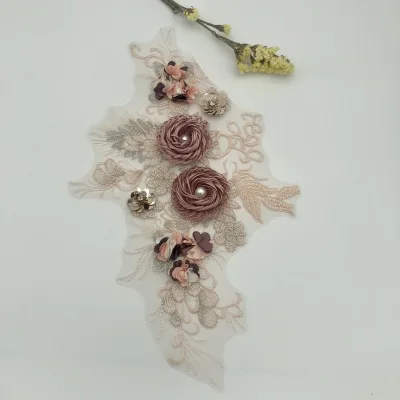


Handcrafted Embroidered Lace Fabric Featuring Sparkling Sequins and Beads
$4.00 - $9.00
MOQ: 300 Meters


Delicate Embroidery Lace with Sequins for Stylish Accessories and Apparel
$4.00 - $9.00
MOQ: 300 Meters


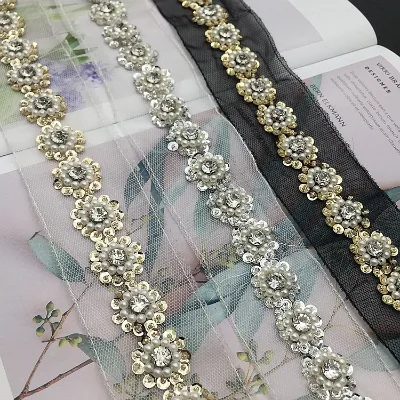


Comprehensive Sourcing Guide
Sourcing Guide for Handmade Pearl and Sequin Lace
Understanding Material Composition and Fabric Architecture
When sourcing Handmade Pearl and Sequin Lace, the first critical step is to verify the fundamental material composition, as this dictates the drape, durability, and aesthetic finish of the final garment. The market offers a diverse range of base fabrics, with Polyester and Mesh being the most prevalent options observed in current listings. Polyester variants often provide a structured yet flexible foundation, ideal for maintaining the shape of intricate embroidery while supporting heavy embellishments. In contrast, Mesh and Tulle bases offer a lighter, more airy texture, which is frequently preferred for bridal applications where a soft, floating silhouette is desired.
The technical architecture of these fabrics is defined by their specific production techniques. Buyers should expect to encounter fabrics labeled as "Embroidery Lace" or "Net Embroidery," where the base structure is created through knitting or weaving before the decorative elements are applied. The "Handmade" designation in this context often refers to the manual assembly of sequins and pearls onto the lace base, a process that requires significant labor and precision. The observed specifications indicate that these fabrics can be produced in widths ranging from 10-50cm for customized orders to standard industrial widths of 58-60 inches. This variability in width is a crucial factor for pattern matching and fabric utilization efficiency.
Furthermore, the visual texture is heavily influenced by the "Technics" employed. While some products utilize standard knitted or embroidered techniques, others feature specific attributes like "Silk Embroidery" or "Sparkle Floral Sequin Glitter." The presence of sequins and pearls adds a dimensional quality that requires careful handling during the cutting and sewing phases. Buyers must understand that the "Fashion" and "Trimming" styles observed in the market are not merely aesthetic choices but functional classifications that determine how the fabric interacts with other materials in a garment assembly.
Technical Specifications and Customization Parameters
The technical specifications for Handmade Pearl and Sequin Lace are highly variable, reflecting the custom nature of the product. A primary consideration is the width, which can be customized to fit specific design requirements. While standard rolls often measure 58 or 60 inches, specialized orders may require widths between 10 and 50 centimeters. This flexibility allows designers to create unique trims or apply the lace to specific garment sections without excessive waste.
Color production is another significant technical parameter. The market data indicates that these fabrics are available in "Dyed" finishes, with options for "Photo Colors" or fully "Customized" colorways. This level of customization is essential for brands that require exact color matching to their seasonal palettes. The "Stock Availability" of colors varies, with some suppliers offering pre-dyed stock colors for faster turnaround, while others operate on a made-to-order basis for specific custom shades.
The design complexity is a defining feature of this category. Listings suggest that over 100 customized designs are available, allowing for a vast array of patterns ranging from floral motifs to geometric arrangements. The "Key Word" attributes such as "Embroidery Lace Sequin Pearl" confirm that the decorative elements are integral to the fabric structure rather than surface-applied adhesives. This integration ensures that the sequins and pearls remain secure during wear and washing, provided the underlying embroidery is of high quality.
| Specification Category | Observed Range/Option | Procurement Implication |
|---|---|---|
| Material Base | Polyester, Mesh, Tulle | Determines drape and weight; critical for garment structure. |
| Width | 10-50cm (Custom) or 58-60" | Affects pattern layout and fabric yield calculations. |
| Color Production | Dyed, Photo Colors, Custom | Requires clear color standards to avoid batch discrepancies. |
| Design Variety | 100+ Customized Options | Allows for unique branding but requires detailed design files. |
| Embellishment | Sequins, Pearls, Floral | Adds weight and texture; impacts sewing machine settings. |
Compliance, Certification, and Quality Standards
In the B2B procurement of embellished lace, verifying compliance and quality standards is paramount to mitigate risk. The supply chain for these intricate fabrics often involves multiple stages of production, from the weaving of the base mesh to the manual application of sequins and pearls. Consequently, third-party certifications play a vital role in validating the safety and quality of the product. The market data references "SGS" as a recognized standard, indicating that reputable suppliers undergo rigorous testing for material safety and workmanship.
Buyers should explicitly request certification documentation that aligns with their target market's regulations. For instance, if the lace is intended for children's wear or direct skin contact, compliance with specific chemical restriction standards (such as REACH in Europe or CPSIA in the US) is non-negotiable. While the observed data mentions "100% QC Passed" as a quality attribute, this is an internal claim that must be substantiated by independent audit reports or third-party test results.
The "Standard" field in product listings sometimes refers to the material composition itself, such as "100% Nylon" or "Polyester Sparkle Floral Sequin Glitter Lace." Buyers must distinguish between material standards and safety certifications. A fabric may be made of high-quality polyester but still fail safety tests if the dyes or adhesives used for the sequins contain prohibited substances. Therefore, the procurement strategy must include a requirement for suppliers to provide up-to-date test reports from accredited laboratories, ensuring that the finished lace meets all relevant environmental and safety standards.
Cost Drivers and Pricing Dynamics
The pricing of Handmade Pearl and Sequin Lace is influenced by a complex interplay of factors, primarily driven by the labor intensity of the embellishment process. Unlike mass-produced plain lace, the manual application of pearls and sequins significantly increases the production cost. The observed price range in the market spans from $0.08 to $15 per unit, a wide disparity that reflects differences in material quality, design complexity, and the degree of customization.
The lower end of the price spectrum typically corresponds to simpler designs with machine-applied embellishments or standard polyester bases. In contrast, the higher price points are associated with intricate, hand-stitched details, premium materials like silk embroidery, and complex custom designs. The "MOQ" (Minimum Order Quantity) is another critical cost driver. Listings show MOQs ranging from as low as 1 meter to as high as 50,000 units, with specific color requirements often set at 200-300 yards per color.
Buyers must understand that lower MOQs often come with a higher unit price due to the setup costs for custom dyeing and design preparation. Conversely, larger orders can leverage economies of scale, reducing the per-unit cost. However, the lead time for large orders can extend to three weeks or more after the purchase order is received, which must be factored into the overall supply chain timeline. Additionally, the "Packing" method, whether rolled in bales or carded in 10-50 yard increments, can influence shipping costs and storage requirements, further affecting the total landed cost.
Typical Applications and Design Integration
The versatility of Handmade Pearl and Sequin Lace makes it a preferred choice for high-end fashion and special occasion wear. The primary applications observed include wedding dresses, bridal gowns, and general garment construction. The "Fashion" and "Trimming" attributes highlight its role in adding luxury and texture to clothing items. For bridal applications, the lightweight nature of Tulle and Mesh bases allows the lace to drape elegantly, while the sequins and pearls provide the necessary sparkle for formal events.
Beyond bridal wear, these fabrics are increasingly used in high-fashion evening gowns, cocktail dresses, and decorative home textiles. The "Usage" field explicitly lists "Garment," "Bridal," and "Home Textile," indicating a broad market reach. In home textiles, the lace might be used for decorative accents on curtains, tablecloths, or bedding, where the "Summer" seasonality suggests a preference for lighter, breathable fabrics during warmer months.
The design integration process requires careful consideration of the fabric's weight and stiffness. The "Handmade" aspect ensures that the embellishments are securely attached, but the added weight of pearls and sequins can affect the drape of the final garment. Designers must account for this when selecting the base fabric; for example, a stiffer Polyester base might be necessary to support heavy embellishments on structured garments, while a softer Tulle base is better suited for flowing, romantic silhouettes. The "Style" of "Trimming" also suggests that these fabrics are often used as edging or appliqué rather than as the primary body fabric, requiring precise cutting and sewing techniques to maintain the integrity of the design.
Supplier Evaluation and Quality Control Protocols
Evaluating suppliers for Handmade Pearl and Sequin Lace requires a rigorous approach to quality control and capability assessment. The "Quality" attribute of "100% QC Passed" is a common claim, but buyers must verify the specific protocols used to achieve this. A robust quality control process should include checks for loose sequins, uneven pearl placement, and consistent dye levels across the roll. The "Regional" attribute, such as "Embroidery" or origins in "Zhejiang/Guangzhou," can provide insights into the supplier's specialization and the local supply chain ecosystem.
Buyers should request physical samples before committing to large orders. These samples allow for a tactile and visual inspection of the "Handmade" quality, ensuring that the pearls are securely stitched and the sequins do not easily detach. The "Sample" availability is a positive indicator of a supplier's willingness to engage in the pre-production verification process. Additionally, the "Delivery Time" of 5-7 days for some products versus 3 weeks for others highlights the importance of aligning supplier capabilities with project timelines.
When evaluating suppliers, it is essential to assess their capacity for customization. The "Design" attribute noting "More 100 Available Customized" suggests a high level of flexibility, but buyers must confirm the supplier's ability to execute specific design changes without compromising quality. The "Manual Process" of "Around" implies a hands-on approach, which can be a double-edged sword; while it ensures attention to detail, it can also lead to inconsistencies if the workforce is not well-trained. Therefore, supplier audits should focus on the training and retention of skilled artisans who handle the delicate embellishment work.
Long-Term Procurement and Supply Chain Strategy
Establishing a long-term procurement strategy for Handmade Pearl and Sequin Lace involves building relationships with suppliers who can consistently deliver high-quality, customized products. The "Customization" availability is a key asset, but it requires clear communication and detailed specification sheets to ensure that every production run meets the buyer's expectations. The "prod_packing" methods, such as "10-50yds/Card" or "50meters Per Roll," should be standardized to minimize damage during transit and facilitate efficient inventory management.
Buyers should also consider the sustainability and ethical implications of sourcing handmade lace. The labor-intensive nature of the product means that fair labor practices are a critical component of the supply chain. Verifying that suppliers adhere to ethical labor standards can enhance brand reputation and mitigate reputational risks. Furthermore, the "Lead Time" variability necessitates a flexible supply chain strategy that can accommodate both urgent orders and planned production cycles.
Finally, maintaining a buffer stock of popular designs and colors can help mitigate the risks of supply chain disruptions. While the "Stock Availability" of "Stock Color" is mentioned, relying solely on stock items may limit design flexibility. A balanced approach that combines a core inventory of standard items with a robust custom order process ensures that the buyer can respond to market trends while maintaining a steady supply of high-quality lace. By focusing on these long-term considerations, buyers can secure a reliable source for Handmade Pearl and Sequin Lace that supports their brand's growth and design integrity.
FAQs
What materials are used for Handmade Pearl and Sequin Lace?
These fabrics typically use Polyester, Mesh, or Tulle as the base material. The choice of base dictates the drape and weight, with Polyester offering structure and Mesh or Tulle providing a lighter, airy texture suitable for bridal applications.
Can the width of the lace be customized for specific designs?
Yes, the width can be customized to fit specific design requirements. While standard rolls often measure 58 or 60 inches, specialized orders may require widths between 10 and 50 centimeters to reduce waste during pattern matching.
What is the minimum order quantity for custom lace orders?
Minimum order quantities vary significantly depending on the supplier and customization level. Listings show MOQs ranging from as low as 1 meter to as high as 50,000 units, with specific color requirements often set at 200 to 300 yards per color.
How long does it take to receive a custom lace order?
Delivery times depend on the order size and complexity. Some products are available within 5 to 7 days, while larger custom orders may require up to 3 weeks after the purchase order is received to complete production.
Which certifications should I look for in lace suppliers?
Buyers should look for suppliers with SGS certification to validate material safety and workmanship. While internal claims of 100% QC passed are common, independent audit reports or third-party test results are necessary to ensure compliance with target market regulations.
What are the primary applications for this type of lace fabric?
The primary applications include wedding dresses, bridal gowns, and general garment construction. These fabrics are also used for high-fashion evening gowns and decorative home textiles, leveraging their sparkle and texture for formal or luxury items.
How is the color production handled for custom orders?
Color production is available in dyed finishes with options for photo colors or fully customized colorways. This flexibility allows brands to match exact seasonal palettes, though stock availability may vary between pre-dyed colors and made-to-order shades.