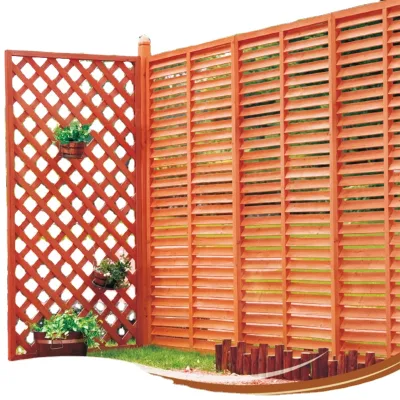
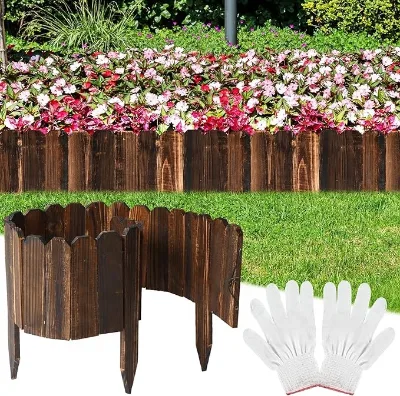
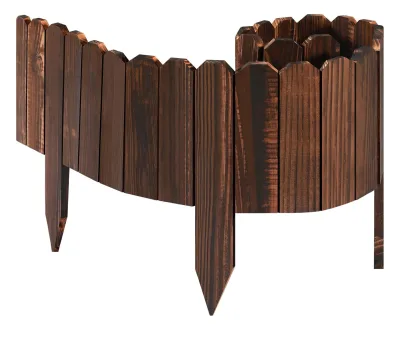
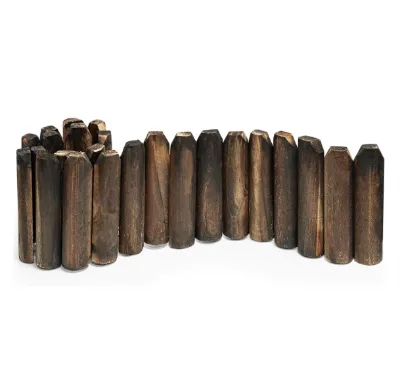
Source Handmade Wood Garden Edging Fence for landscaping, borders, and paths
Compare 30 listings for Handmade Wood Garden Edging Fence suitable for landscape engineering and flower beds. Buyers can evaluate features like waterproofing, assembly ease, and custom sizes from verified Chinese suppliers.
Key considerations
Products List






Comprehensive Sourcing Guide
Strategic Sourcing Guide for Handmade Wood Garden Edging and Fencing Solutions
The global market for landscape engineering and garden infrastructure has seen a significant shift toward materials that balance aesthetic appeal with durability and environmental responsibility. While the core search term "Handmade Wood Garden Edging Fence" suggests a specific artisanal approach, the current supply chain reality presents a complex matrix of material compositions, manufacturing processes, and customization capabilities. Buyers must navigate a landscape where "wood" often coexists with synthetic polymers, treated metals, and composite structures to meet the rigorous demands of modern landscaping. This guide provides a disciplined framework for evaluating suppliers, understanding technical specifications, and ensuring compliance with international standards without relying on unverified claims.
Material Composition and Structural Integrity
When sourcing garden edging and fencing, the first critical step is verifying the actual material composition. The term "handmade wood" in a commercial context often implies a specific aesthetic or a composite product rather than solid timber. The available product data reveals a diverse range of materials, including plastic types such as Polyethylene (PE) and Polypropylene (PP), as well as metals like Steel and Aluminum. This indicates that many suppliers offering "wood-like" edging are utilizing high-density polymers or coated metals to achieve the desired look while enhancing longevity.
Buyers must distinguish between natural wood and engineered alternatives. Products listed with attributes such as "Rot Proof," "Waterproof," and "Renewable Sources" often point to plastic-based solutions or heavily treated timber. For instance, the presence of "Pressure Treated Timbers" in feature lists suggests a hybrid approach where wood is chemically treated to resist decay. However, the explicit mention of "Plastic Type: PE" and "Plastic Type: PP" alongside "Metal Type: Steel" and "Metal Type: Aluminum" confirms that the market is saturated with non-wood alternatives that mimic the visual texture of wood.
The structural integrity of these products is heavily influenced by the finishing process. Data indicates that some units are "Not Coated," while others undergo "Powder Coated" or "Coated" surface treatments. For metal-based edging, powder coating is a standard method to prevent rust and corrosion, particularly in outdoor environments. Conversely, plastic edging relies on the inherent properties of the polymer, such as being "Rot Proof" and "Waterproof," to maintain structural integrity without additional coatings. Buyers should verify if the "handmade" aspect refers to the assembly of pre-fabricated components or the actual crafting of raw materials, as the latter is less common in high-volume B2B transactions.
Technical Specifications and Customization Capabilities
The technical requirements for garden edging and fencing vary significantly based on the intended application scene, which ranges from general landscape engineering to specific flower and plant arrangements. A key observation in the current market is the prevalence of "Custom Size" and "Custom Shape" specifications. This flexibility allows buyers to tailor products to irregular garden layouts, but it also introduces complexity in the manufacturing process.
The production methods listed include "Laser Cutting," which is typically associated with metal fabrication rather than wood. This suggests that many "wood-style" edging products are actually laser-cut steel or aluminum sheets that are then finished to resemble wood grain. The thickness of these metal components is specified as "1.5mm," a critical dimension for ensuring the edging can withstand foot traffic and soil pressure without bending. For plastic alternatives, the "Easily Assembled" feature indicates a modular design, likely utilizing interlocking mechanisms that do not require specialized tools.
Dimensional consistency is another vital technical factor. While some products offer "Customized" dimensions, others adhere to standard models such as "CQGF03," "HYCGE167," or "WL-11-2." Buyers must clarify whether their project requires bespoke dimensions or if standard models can be adapted. The "Use Type" is identified as "Floor Type," which implies that these products are designed to be installed directly into the ground or on a hard surface to define boundaries. The "Style" is generally described as "Simple," suggesting a minimalist aesthetic that complements modern landscape designs.
Compliance, Certification, and Quality Standards
In the B2B procurement of garden infrastructure, compliance with international safety and quality standards is non-negotiable. The supply data highlights several certifications, including "CE," "RoHS," and "ISOASTM." The "CE" mark is particularly relevant for products intended for the Euro and North American markets, indicating conformity with health, safety, and environmental protection standards. "RoHS" compliance ensures that the product does not contain restricted hazardous substances, which is crucial for eco-friendly claims and environmental regulations.
Quality standards vary across the supply base. Some products adhere to a "Normal" standard, while others are explicitly "OEM" (Original Equipment Manufacturer) or "customized" to meet specific client requirements. The "Quality" attribute specifically notes "CE for Euro & North American Market," reinforcing the need for buyers to verify that their target markets align with these certifications. For products claiming to be "Eco Friendly" and sourced from "Renewable Sources," buyers should request documentation supporting these claims, as the term is often used loosely in marketing materials.
The "Standard" attribute also lists "Small/Large/Medium," which may refer to packaging or product sizing rather than a formal industry standard. Buyers must ensure that the "prod_standard" aligns with the specific regulatory requirements of their destination country. Additionally, the "After-Sales Service" is listed as "24h After Sales Service," which suggests a commitment to rapid response for any quality issues, though the scope of this service should be clearly defined in the contract.
Cost Drivers and Economic Considerations
The economic landscape for garden edging and fencing is influenced by several factors, including material costs, customization levels, and order volume. The observed price range in the market spans from $0.2 to $130 USD, a wide disparity that reflects the difference between simple plastic stakes and complex, custom-fabricated metal or composite systems. The Minimum Order Quantity (MOQ) ranges from 1 to 1200 units, with specific listings showing an MOQ of 500 PCS for certain custom models.
Cost drivers are primarily tied to the production method and material. "Laser Cutting" of steel or aluminum is generally more expensive than injection molding of plastic, yet it offers superior precision and durability. The "Custom Size" and "Custom Shape" options inevitably increase costs due to the need for specialized tooling and reduced production efficiency. Buyers should be aware that "Handmade" processes, if they involve significant manual labor, will carry a premium compared to automated manufacturing lines.
Packaging also plays a role in the total landed cost. Options include "PP Bag," "Carton Box," "Pallet," and "Shrinking Film." The choice of packaging affects shipping efficiency and protection during transit. For large orders, palletized shipping is often more cost-effective, while smaller orders may utilize carton boxes. The "Delivery" lead time is noted as "15 Days" for certain products, which is a critical factor in supply chain planning. Buyers must account for this lead time when scheduling installation projects to avoid delays.
Supplier Evaluation and Operational Verification
Evaluating suppliers requires a rigorous approach to verifying their capabilities and reliability. The supply data indicates that suppliers are located in "China," with specific mentions of "Wenling, Zhejiang, China." This region is known for its manufacturing prowess, but buyers must conduct due diligence to ensure the supplier has the capacity to meet their specific quality and volume requirements.
Key evaluation criteria include the supplier's ability to handle "ODM/OEM" requests, which is listed as "Accept" in the product data. This indicates a willingness to customize products for specific clients, a crucial capability for buyers with unique design needs. The "Production Method" of "Laser Cutting" suggests a level of technical sophistication that should be verified through site audits or video calls.
Buyers should also assess the supplier's quality control processes. The presence of "CE," "RoHS," and "ISOASTM" certifications is a positive indicator, but these should be validated with current certificates. The "After-Sales Service" of "24h After Sales Service" is a strong selling point, but the practical implementation of this service must be clarified. Does it cover technical support, replacement of defective units, or both?
Quality Control and Long-Term Procurement Strategy
Ensuring long-term value requires a robust quality control strategy. The "Feature" list includes "Eco Friendly," "Renewable Sources," and "Rot Proof," which are critical for the longevity of garden edging. However, these attributes must be verified through independent testing or third-party certification. For metal products, the "Frame Finishing" of "Powder Coated" and "Surface Treatment" of "Coated" are essential for preventing corrosion, especially in wet or coastal environments.
Buyers should implement a sampling protocol before committing to large orders. Given the "Custom" nature of many products, a prototype or sample batch is essential to verify dimensions, finish quality, and assembly ease. The "Product Packing" details, such as "Carton" or "Pallet," should be inspected to ensure that the packaging protects the product during shipping.
Long-term procurement considerations also involve the scalability of the supply chain. The "MOQ" of 500 PCS for custom items suggests that suppliers may be less flexible with smaller orders. Buyers planning for future expansion should negotiate terms that allow for incremental order increases without significant price hikes. The "Lead Time" of 15 days is a baseline that should be confirmed for each order, as customizations may extend this period.
Comparative Analysis of Product Attributes
To facilitate decision-making, the following table summarizes the key attributes observed in the current market, highlighting the diversity of options available to buyers.
| Attribute Category | Observed Options | Implications for Buyers |
|---|---|---|
| Material | Plastic (PE, PP), Metal (Steel, Aluminum), Pressure Treated Timber | Verify actual composition; "Wood" may be a visual finish on metal/plastic. |
| Finish/Coating | Not Coated, Powder Coated, Coated | Essential for corrosion resistance; Powder Coating preferred for metal. |
| Customization | Custom Size, Custom Shape, Custom Color, OEM/ODM | High flexibility but may increase cost and lead time. |
| Certifications | CE, RoHS, ISOASTM | Required for Euro/North American markets; verify validity. |
| MOQ | 1 to 1200 (Specific: 500 PCS) | Lower MOQs available for standard items; higher for custom. |
| Lead Time | 15 Days (Baseline) | Confirm for custom orders; plan for potential delays. |
| Application | Landscape Engineering, Flowers/Plants, Floor Type | Ensure product matches the specific use case (e.g., soil pressure). |
| Assembly | Easily Assembled, Portable | Check for required tools and assembly complexity. |
Final Procurement Recommendations
Sourcing handmade wood garden edging and fencing solutions requires a nuanced understanding of the modern supply chain, where traditional materials often blend with advanced composites and metals. Buyers must prioritize verification of material composition, ensuring that "wood" claims are supported by evidence rather than marketing. The availability of certifications like CE and RoHS provides a baseline for quality, but ongoing due diligence is necessary to maintain compliance.
When evaluating suppliers, focus on their ability to deliver custom solutions within the specified lead times and MOQs. The "Laser Cutting" and "Powder Coated" processes indicate a high level of manufacturing capability, which should be leveraged for projects requiring precision and durability. By adhering to a disciplined approach to specification, compliance, and supplier evaluation, buyers can secure high-quality garden edging and fencing that meets both aesthetic and functional requirements. The wide range of options, from simple plastic stakes to complex metal systems, offers significant potential for innovation in landscape engineering, provided that the procurement process is grounded in verified facts and rigorous quality control.
FAQs
What materials are used for handmade wood garden edging fences?
Products often use plastic types like PE and PP, or metals such as steel and aluminum. Some listings mention pressure-treated timbers, but many items are engineered to mimic wood while offering rot-proof and waterproof properties.
Can I find custom sizes and shapes for these garden edging fences?
Yes, many suppliers offer custom sizes, custom shapes, and customized colors. These products typically utilize laser cutting for metal components or modular assembly for plastic units to fit specific landscape engineering layouts.
Which certifications are available for garden edging fence suppliers?
Available certifications include CE, RoHS, and ISOASTM. The CE mark is specifically noted for Euro and North American markets, ensuring compliance with safety and environmental protection standards for the finished products.
How long is the delivery lead time for custom orders?
The standard delivery lead time is 15 days for certain products. Custom orders may vary, so buyers should verify specific timelines based on the chosen customization level and current production capacity of the supplier.
What is the minimum order quantity for custom garden edging?
The observed MOQ ranges from 1 to 1200 units, with specific custom models requiring 500 pieces. Buyers should check individual product listings as the MOQ depends on whether the item is a standard model or fully customized.
Where are these garden edging fence manufacturers located?
Manufacturers are primarily located in China, with specific origins noted in Wenling, Zhejiang. This region is a known manufacturing hub, but buyers must verify the specific factory location for each supplier they contact.
How are these products packaged for shipping?
Packaging options include PP bags, carton boxes, pallets, and shrinking film. The choice of packaging depends on the product type and order size, with pallets often used for larger shipments to ensure protection during transit.