Source Heat Resistance Titanium Dioxide for Paint Rubber Coating
Find 30 listings for Heat Resistance Titanium Dioxide suitable for paint, rubber, and coating applications. Compare specifications, prices, and supplier details from manufacturers in China to identify the best industrial grade options for your needs.
Key considerations
Products List


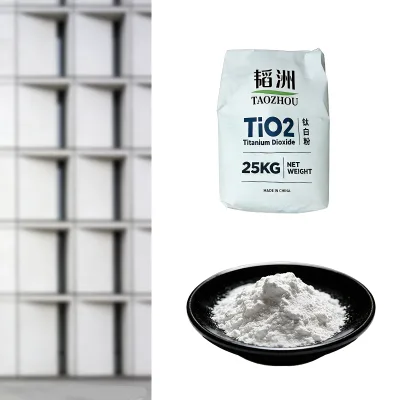


$2050.00 - $2100.00
MOQ: 22 Tons

$2050.00 - $2100.00
MOQ: 22 Tons

$1250.00 - $1350.00
MOQ: 22 Tons


$2200.00 - $2230.00
MOQ: 1 Tons


Titanium Dioxide Classification and 95% Purity Titanium Dioxide (TiO2)
$1500.00 - $1800.00
MOQ: 1 Tons


Comprehensive Sourcing Guide
Strategic Sourcing Guide for Heat-Resistant Titanium Dioxide Procurement
Sourcing titanium dioxide (TiO2) with specific heat resistance capabilities requires a disciplined approach that bridges technical material science with rigorous supplier verification. For buyers in the rubber, paint, coating, and plastic industries, the selection of the correct grade is not merely a matter of color opacity but of thermal stability under processing conditions. The market offers a diverse array of classifications, from industrial grades to specialized formulations, each carrying distinct performance profiles. This guide outlines the critical parameters for evaluating heat-resistant titanium dioxide, ensuring that procurement decisions are grounded in verified product attributes rather than unverified marketing claims.
Technical Specifications and Material Classification
The foundation of any successful procurement begins with a precise understanding of the material's physical and chemical properties. Titanium dioxide is fundamentally an inorganic compound with the molecular formula TiO2. In the context of heat resistance, the crystal structure and surface treatment are paramount. The supplied data indicates that the product is classified as Titanium Dioxide, appearing as a white powder with a specific gravity of 4.05 g/cm³. This density is a critical benchmark for buyers to verify against their own processing requirements, as it influences the final weight and volume of the composite material.
When evaluating heat resistance, buyers must look beyond the generic "white powder" description. The material's behavior under thermal stress is often dictated by its specific model and manufacturing process. The available data lists several product models, including R218, R1930, CR-81, A-51, and A-126. These model numbers often correspond to specific surface treatments or crystal structures (such as anatase or rutile) that determine thermal stability. For instance, the presence of a "Sulphate Process" in the manufacturing data suggests a specific production route that can influence purity and particle size distribution.
Furthermore, the chemical nature of the oxide is a key differentiator. The data notes that the product can be categorized as a "No Salt Oxide," "Acidic Oxide," or "Amphoteric Oxide." While the primary classification is Titanium Dioxide, the amphoteric or acidic nature can impact how the pigment interacts with other resin systems at high temperatures. Buyers should verify the "Kind" attribute for each specific SKU to ensure compatibility with their specific polymer matrix. Additionally, the "Molecular Principal Chain" is listed as a "Carbon Chain Polymer" in some contexts, which may refer to surface treatments or additives applied to the TiO2 to enhance dispersion and thermal stability. It is essential to confirm that the "TiO2 Content" meets the minimum threshold, with data indicating a requirement of 93% Min for certain grades. This purity level directly correlates with the material's ability to withstand thermal degradation without discoloration or loss of opacity.
Compliance, Certification, and Regulatory Standards
In the global B2B market, compliance is not optional; it is a prerequisite for market access and liability protection. The supplied facts highlight several critical certifications that buyers must verify. The product data explicitly mentions "REACH" certification, which is the European Union's regulation on the Registration, Evaluation, Authorisation and Restriction of Chemicals. For any buyer targeting the European market, REACH compliance is non-negotiable.
Beyond REACH, the data lists "ISO," "SGS," and "BV" (Bureau Veritas) as available certificates. These represent third-party validation of quality and safety. ISO certification typically refers to quality management systems (such as ISO 9001), ensuring the manufacturer has consistent processes. SGS and BV are renowned for providing independent testing and inspection services, offering buyers confidence that the "First Class" or "Special Class" quality claims are substantiated by laboratory results.
Buyers must also scrutinize the "Grade Standard." The data identifies "Industrial Grade" as a standard classification, but also mentions "excellent grade" and "Special Class." This variation suggests that heat resistance capabilities may vary between standard industrial applications and high-performance sectors. For heat-resistant applications, relying solely on "Industrial Grade" without verifying specific thermal test data is risky. Buyers should request the specific test reports associated with the "ISO," "SGS," or "BV" certificates to confirm that the thermal stability meets the requirements of their specific end-use application, such as high-temperature curing in coatings or extrusion in plastics.
Cost Drivers and Pricing Dynamics
Understanding the cost structure of titanium dioxide is vital for budgeting and negotiation. The observed price range in the market spans from 0.6 to 3900 USD. This wide disparity is not indicative of a single product but reflects the vast differences in grade, purity, packaging, and order volume. The lower end of the spectrum likely corresponds to bulk industrial grades with minimal surface treatment, while the higher end represents specialized, high-purity, or heat-stabilized formulations with additional certifications.
Several factors drive these costs. The "TiO2 Content" is a primary driver; a grade with 93% Min content will generally command a higher price than lower purity variants. The manufacturing process also plays a role; the "Sulphate Process" mentioned in the data may have different cost implications compared to the Chloride process, affecting the final price. Furthermore, the "Customization" availability allows for tailored surface treatments that enhance heat resistance, which inevitably adds to the unit cost.
Packaging is another significant cost component. The data lists various packaging standards, including "25kg/Bag," "25kg/Kraft Paper Bag," "50 kg/barrel," "200 kg/barrel," and "1 ton/IBC barrel." The choice of packaging affects logistics costs and product integrity. For heat-sensitive applications, specialized packaging that prevents moisture ingress or clumping during transport is crucial. Buyers should evaluate the "Selling Units" and "MOQ" (Minimum Order Quantity) ranges, which span from 1 to 5000 units. Higher MOQs often correlate with lower unit prices, but they also tie up capital and storage space. The "Delivery Time" of 7-10 days is a standard lead time, but buyers must account for potential delays in international shipping, especially given that the "Mode of Transport" is primarily "Sea Transportation."
Typical Applications and Performance Requirements
The versatility of titanium dioxide makes it suitable for a broad range of industries, but heat resistance is particularly critical in specific sectors. The data explicitly lists the "Scope of Application" as "Rubber/Paint" and "Application" as "Paint, Coating, Plastic, Rubber, etc." In the rubber industry, TiO2 is used as a pigment and reinforcing agent. During the vulcanization process, rubber compounds are exposed to high temperatures; therefore, the TiO2 must not degrade or release volatiles that could compromise the rubber's integrity.
Similarly, in the paint and coating sector, the material is often subjected to high-temperature curing ovens. A heat-resistant grade ensures that the coating retains its whiteness and opacity without yellowing or chalking. The "Masterbatch Use" standard mentioned in the data suggests that this TiO2 is also suitable for use in masterbatches, which are concentrated mixtures of pigments and additives used in plastics processing. In plastic extrusion and injection molding, where temperatures can exceed 200°C, the thermal stability of the TiO2 is essential to prevent the degradation of the polymer matrix.
The "Kind" attribute also provides clues about application suitability. For example, "Plastic Flame Retardant" indicates a specific formulation designed to enhance fire resistance, which often correlates with high thermal stability. Buyers must match the specific "prod_model" to their application. For instance, model R1930 or CR-81 might be optimized for specific resin types, while A-51 or A-126 could be tailored for different processing temperatures.
Supplier Evaluation and Manufacturing Capabilities
Selecting the right supplier is as important as selecting the right product. The data identifies the "Company Proper" as a "Manufacturer," which is a significant advantage. Manufacturers typically offer better control over quality, customization options, and pricing compared to trading companies. The "Place of Origin" is listed as "HEIBEI, CHINA" and "Shanghai, China (Mainland)," indicating a concentration of production facilities in these regions.
Buyers should verify the manufacturer's capacity to handle "Customization" requests. The ability to tailor the surface treatment or particle size is crucial for achieving optimal heat resistance in specific applications. The "Free Sample" availability is a strong indicator of supplier confidence and allows buyers to conduct their own internal testing before committing to a large order.
When evaluating suppliers, buyers should look for evidence of the "Sulphate Process" capability if that is the preferred method for their application. They should also verify the consistency of the "Quality" claims, such as "First Class" or "Eligible," by reviewing past performance records or client testimonials. The "Mode of Transport" being "Sea Transportation" implies that the supplier must have robust logistics partnerships to ensure timely delivery, especially given the "7-10 days" delivery time which likely refers to production lead time rather than total transit time.
Quality Control and Long-Term Procurement Considerations
Ensuring consistent quality over the long term requires a proactive approach to quality control. Buyers should implement a rigorous incoming inspection protocol that verifies the "Appearance" (White Powder), "Color" (White), and "Specific Gravity" (4.05 g/cm³) against the agreed specifications. The "prod_packing" should be inspected for integrity to prevent moisture contamination, which can affect the flowability and dispersion of the powder.
For long-term procurement, establishing a clear specification sheet is essential. This sheet should include the required "TiO2 Content" (e.g., 93% Min), the specific "prod_model," and the necessary certifications (REACH, ISO, SGS, BV). Buyers should also define the acceptable range for "Kind" (e.g., Amphoteric Oxide vs. Acidic Oxide) based on their chemical compatibility needs.
The "Standard" of "25kg/Bag" or "25kg/bags" is common, but buyers should negotiate for flexible packaging options like "200 kg/barrel" or "1 ton/IBC barrel" if their production volume justifies it. This can reduce handling costs and improve efficiency. Additionally, buyers should maintain a relationship with the supplier to monitor any changes in the "Manufacturer Process" or raw material sources that could impact the thermal stability of the product.
In conclusion, sourcing heat-resistant titanium dioxide requires a meticulous evaluation of technical specifications, certifications, and supplier capabilities. By focusing on the verified attributes provided in the product data and adhering to a structured procurement process, buyers can secure a reliable supply of high-performance TiO2 that meets the demanding requirements of modern industrial applications. The wide range of models and grades available offers flexibility, but the key to success lies in matching the specific product attributes to the precise needs of the end application.
FAQs
What certifications ensure heat resistance for titanium dioxide?
The product data confirms REACH, ISO, SGS, and BV certifications are available. These third-party validations verify quality and safety standards, ensuring the material meets regulatory requirements for industrial and specialized applications like rubber and paint.
How does the manufacturing process affect thermal stability?
The supplied facts indicate a Sulphate Process is used for production. This specific route influences purity and particle size distribution, which are critical factors in determining how the titanium dioxide performs under high-temperature processing conditions in plastics and coatings.
Which product models offer specialized heat-resistant properties?
Several models including R218, R1930, CR-81, A-51, and A-126 are listed in the data. These specific model numbers often correspond to distinct surface treatments or crystal structures that determine the material's thermal stability and compatibility with various polymer matrices.
Can buyers request customization for enhanced heat resistance?
Yes, customization is explicitly available according to the product facts. Buyers can request tailored surface treatments or specific packaging like 25kg bags or IBC barrels to optimize the titanium dioxide for high-temperature applications in rubber and plastic industries.
What is the minimum titanium dioxide content for quality grades?
The data specifies a minimum TiO2 content of 93% for certain grades. This purity level is a key indicator of quality, directly correlating with the material's ability to withstand thermal degradation without discoloration or loss of opacity during processing.
How does specific gravity impact composite material calculations?
The observed specific gravity is 4.05 g/cm³, which serves as a critical benchmark for buyers. This density value influences the final weight and volume of the composite material, helping manufacturers accurately calculate formulation requirements for heat-resistant applications.
What are the standard packaging options for bulk orders?
Standard packaging includes 25kg bags, 25kg kraft paper bags, 50kg barrels, and 1-ton IBC barrels. These options ensure product integrity during transport and allow buyers to select the most efficient unit for their specific production volume and logistics needs.