Source Heat Resistant Bamboo Skewers for BBQ, Picnic, and Cooking
Compare 30 listings of Heat Resistant Bamboo Skewers from verified Chinese manufacturers. Buyers can evaluate specifications like length, diameter, and eco-friendly features for tableware, BBQ, and camping needs.
Key considerations
Products List


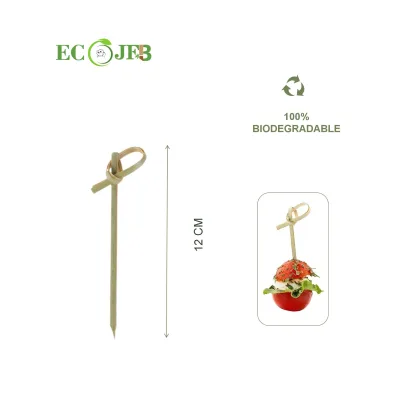


$21.00 - $25.00
MOQ: 600 Boxes


Comprehensive Sourcing Guide
Strategic Sourcing Guide for Heat Resistant Bamboo Skewers
Understanding Product Specifications and Technical Attributes
When sourcing Heat Resistant Bamboo Skewers, buyers must first distinguish between the various technical attributes that define product performance. The core keyword implies a specific functional requirement: the ability to withstand high temperatures without charring, breaking, or releasing harmful substances during cooking. Based on available market data, the product category encompasses a wide range of physical dimensions and material grades. The observed product standards indicate that skewers are manufactured in specific diameters and lengths, such as 2.5mm x 15cm, 3.0mm x 250mm, and 4.0mm x 300mm. Other listings specify a broader range of 2.5mm to 6mm in diameter with lengths extending from 150mm to 500mm. Additionally, some suppliers offer customizable sizes, including lengths between 15cm and 45cm, or specific increments like 7cm, 9cm, 10cm, 12cm, 15cm, and 18cm.
The material composition is a critical differentiator in this category. High-quality heat resistant skewers are typically derived from natural bamboo, with some specifications explicitly stating "100% 3~5 Years Natural Bamboo" or "Mao Bamboo." The age of the bamboo is significant; older bamboo generally possesses higher density and better structural integrity, which directly correlates to heat resistance. The surface finish is another vital technical parameter. Products are often described as having a "Smooth & Polished" surface, which not only improves aesthetics but also reduces the risk of splinters and ensures even heat distribution. The finishing process for these items is frequently noted as "Not Coated," which is a crucial observation for buyers seeking natural, food-grade solutions. Coatings can sometimes degrade under high heat, so uncoated, polished bamboo is often the preferred choice for direct flame cooking.
Compliance, Certification, and Food Safety Verification
For any product intended for food contact, verifying compliance with food safety standards is non-negotiable. The sourcing landscape for bamboo skewers often highlights "Food Grade" as a primary material attribute. Buyers must ensure that the supplier can substantiate this claim through recognized testing protocols. While specific certification names are not universally standardized in the provided data, the presence of "Eco-Friendly" and "Biodegradable" attributes suggests that the manufacturing process adheres to environmental sustainability principles, which often aligns with stricter food safety controls.
When evaluating a supplier, the buyer should request documentation proving that the bamboo has been treated to prevent pest infestation and mold growth, which are common issues in organic materials. The "Nature" or "Natural" color of the skewers indicates a lack of artificial dyes, a positive sign for food safety, as dyes can sometimes leach into food under heat. However, the absence of a coating does not automatically guarantee safety; the raw material must be free from mycotoxins and heavy metals. Buyers should verify that the supplier adheres to international food contact regulations relevant to their target market, such as FDA guidelines in the United States or EU Framework Regulation (EC) No 1935/2004. The "Sample Free, Freight Collect" option mentioned in some listings allows buyers to physically test the product for compliance before committing to a large order, a vital step in the verification process.
Cost Drivers and Pricing Dynamics
The pricing structure for Heat Resistant Bamboo Skewers is influenced by several variable factors, including material grade, dimensions, and order volume. The observed price range in the market spans from $0 to $611.4, though this wide range likely reflects the difference between unit prices and bulk lot prices, or the inclusion of packaging and shipping costs in the total figure. The Minimum Order Quantity (MOQ) is a significant cost driver, with observed ranges extending from a single unit to 2,000,000 units.
Smaller MOQs, such as 100 cartons or 200 cartons, are common for buyers testing the market or those with specific customization needs. However, larger orders often benefit from economies of scale. The material cost is directly tied to the bamboo grade; "3~5 Years Natural Bamboo" commands a premium over younger, less dense bamboo due to its superior heat resistance and durability. Packaging also impacts the final cost. Options range from "Standard Carton" and "Carton" to more specialized "OPP, Bulk, Snake Bag, Carton" configurations. The choice of packaging affects both the unit price and the logistics cost, as bulk packaging is cheaper per unit but requires more handling space, while individual cartons or boxes increase the cost but offer better protection.
Typical Applications and Usage Scenarios
The versatility of Heat Resistant Bamboo Skewers makes them suitable for a diverse array of applications. The data indicates usage in "BBQ, Meat, Fruit, Cooking, Picnic, Camping," as well as general "Tableware, Household, Dining" contexts. The "Heat Resistance" feature is specifically tailored for grilling and roasting, where the skewer must maintain structural integrity over an open flame or hot coals. The "Round" shape is standard, providing a uniform grip and even cooking surface for food items.
For commercial buyers, the "Disposable Cutlery Set" classification suggests that these skewers are often part of a broader range of disposable tableware, particularly for catering services, food festivals, and outdoor events. The "Folded: Unfolded" attribute, while seemingly contradictory for rigid skewers, may refer to packaging configurations or specific product lines that include collapsible components, though the primary function remains rigid support for food. The "Adult" age specification confirms that these products are intended for general consumption rather than specialized children's use, which might require different safety standards. The ability to customize the product allows manufacturers to tailor skewers for specific culinary needs, such as longer lengths for large cuts of meat or specific diameters for delicate fruits.
Supplier Evaluation and Geographic Considerations
Geographic origin plays a pivotal role in the sourcing strategy for bamboo products. The majority of the observed data points to "China" as the primary manufacturing hub, with specific mentions of "Jiangxi, China" and "Jiangxi Province, China." Jiangxi is a well-known region for bamboo cultivation, which provides a natural advantage in terms of raw material availability and cost efficiency. When evaluating suppliers, buyers should prioritize those with a proven track record in this specific region, as local supply chains are often more robust and cost-effective.
Supplier evaluation should go beyond location to include an assessment of their production capabilities. The availability of "Customization" is a key indicator of a supplier's flexibility. Some suppliers offer "Customized" options, while others provide "Non-Customized" standard products. Buyers should assess whether the supplier can accommodate specific model numbers, such as "BS-093," "ZQ-002," "tp-005," "zq-001," "HY-BS," "bambu8," "AC-024," or "bambu6." The presence of multiple model numbers suggests a diverse product line, which can be advantageous for buyers looking to source different sizes or specifications from a single source. Additionally, the "Sample Free, Freight Collect" policy is a strong signal of supplier confidence and willingness to engage in a transparent evaluation process.
Quality Control and Long-Term Procurement Strategy
Maintaining consistent quality is essential for long-term procurement success. The "Surface: Smooth & Polished" attribute should be a baseline requirement for all incoming shipments. Buyers must implement a rigorous quality control protocol that includes visual inspection for splinters, uniformity in diameter, and consistency in length. The "Eco-Friendly" and "Biodegradable" claims should be verified through third-party testing to ensure they are not merely marketing terms.
For long-term procurement, establishing a clear specification sheet is crucial. This document should detail the exact diameter, length, material grade, and surface finish required. The observed standards, such as "2.5mm15cm" or "3.0mm30cm," should be used as reference points, but buyers must confirm that the supplier can consistently meet these tolerances. The "Standard Carton" or "Carton / Woven Bag" packaging should be agreed upon to prevent damage during transit. Furthermore, buyers should consider the lead time implications of customization. While standard products may be readily available, customized orders with specific model numbers like "HY-BS" or "AC-024" may require longer production cycles.
To mitigate risks, buyers should diversify their supplier base within the Jiangxi region rather than relying on a single source. This strategy ensures continuity of supply in case of production disruptions or logistical issues. Regular audits of the supplier's facilities and quality control processes are also recommended to ensure ongoing compliance with food safety and environmental standards. By focusing on these strategic elements, buyers can secure a reliable supply of high-quality, heat-resistant bamboo skewers that meet their specific operational and culinary requirements.
Comparison of Key Product Attributes
| Attribute Category | Standard Observation | Customization Option | Material Grade | Surface Finish |
|---|---|---|---|---|
| Dimensions | 2.5mm x 15cm to 6mm x 500mm | Accept custom sizes | 3~5 Years Natural Bamboo | Smooth & Polished |
| Packaging | Standard Carton / Woven Bag | Carton / Woven Bag / OPP | Food Grade | Not Coated |
| Origin | Jiangxi, China | N/A | 100% Natural Bamboo | Eco-Friendly |
| Usage | BBQ, Dining, Picnic | Customized / Non-Customized | Biodegradable | Heat Resistance |
This table summarizes the core attributes observed in the market. It highlights the flexibility available to buyers regarding dimensions and packaging while emphasizing the consistent material and finish standards that define high-quality Heat Resistant Bamboo Skewers. Buyers should use this framework to compare potential suppliers and ensure that their specific needs are met without compromising on quality or safety.
FAQs
What material grade ensures heat resistance for bamboo skewers?
The material grade is typically Food Grade 100% Natural Bamboo aged 3 to 5 years. Older bamboo provides higher density and structural integrity, which directly correlates to better heat resistance during cooking without charring or breaking.
Which dimensions are standard for Heat Resistant Bamboo Skewers?
Standard dimensions include diameters from 2.5mm to 6mm and lengths ranging from 15cm to 500mm. Specific models often list sizes like 2.5mm x 15cm, 3.0mm x 30cm, or 4.0mm x 300mm depending on the supplier.
How are the skewers finished to ensure safety during use?
The skewers are finished with a Smooth and Polished surface and are Not Coated. This uncoated, polished finish reduces splinters and prevents harmful substances from degrading under high heat during direct flame cooking.
Can buyers request custom sizes for their specific cooking needs?
Yes, customization is available for many products with specific model numbers like AC-024. Buyers can request custom sizes, though some suppliers offer non-customized standard options with fixed dimensions like 90mm or 150mm.
What packaging options are available for bulk orders of skewers?
Packaging options include Standard Carton, Carton, Box, and Woven Bags. Some suppliers offer specialized configurations like OPP, Bulk, or Snake Bag to protect the skewers during transit while managing logistics costs effectively.
Where are these Heat Resistant Bamboo Skewers primarily manufactured?
The products originate primarily from Jiangxi, China, a region known for bamboo cultivation. This location offers a natural advantage in raw material availability and cost efficiency for manufacturing high-quality bamboo skewers.
What is the typical minimum order quantity for these skewers?
The minimum order quantity varies significantly, ranging from 1 unit up to 2,000,000 units. Common bulk orders often start at 100 or 200 cartons, depending on whether the buyer needs standard or customized products.