Source High-Capacity Steam Cooking Production Line for Dairy, Pet Food, and Sauce
Explore 30 listings for the High-Capacity Steam Cooking Production Line designed for dairy, pet food, and sauce processing. Buyers can compare specifications like power, capacity, and automation levels to find suitable suppliers; compare the available evidence and request quotations based on your requirements.
Key considerations
Products List


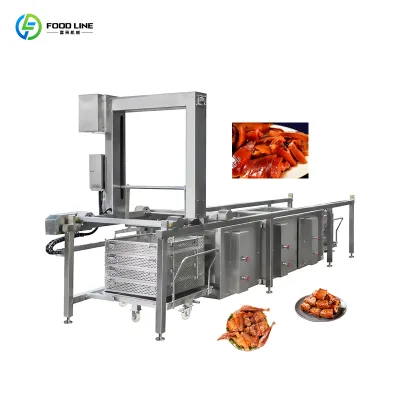
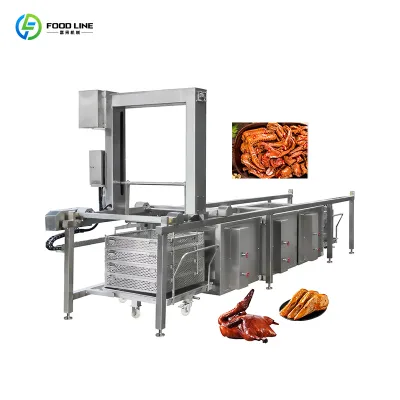
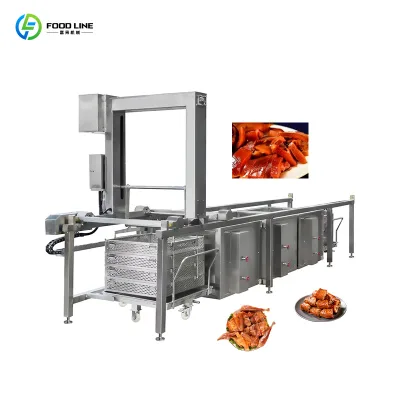
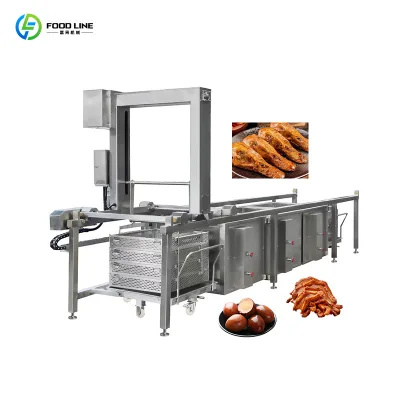


Factory High Quality Automatic Fried Instant Noodle Production Line
$80000.00 - $2090000.00
MOQ: 1 Sets


Oil Gas Fired Steam Boiler Cooks Poultry Feed Mixing Manufacturing Lines
$5900.00 - $56855.00
MOQ: 1 Pieces


Rice Cooker Production Line Aluminum Stainless Steel Steamer Forming Machine
$27645.00 - $29219.00
MOQ: 1 Pieces


Rice Cooker Inner Pot Machinery Making Machine Rice Cooker Production Line
$27645.00 - $29219.00
MOQ: 1 Pieces


Efficient Steam Cooking and Air Cooling Meatball Complete Production Line
$24000.00 - $35000.00
MOQ: 1 Sets
Comprehensive Sourcing Guide
High-Capacity Steam Cooking Production Line Sourcing Guide
Procuring a High-Capacity Steam Cooking Production Line requires a strategic alignment of thermal processing capabilities with your specific throughput demands. Buyers must first evaluate whether the available equipment supports the necessary volume for their operational scale, noting that observed listings indicate a wide variance in pricing and specifications. The core keyword suggests a focus on efficiency and scale, yet the actual product count reveals a diverse market where some units are tailored for semi-automatic operations while others offer comprehensive automation. Understanding this spectrum is critical before initiating supplier outreach, as the distinction between a simple thermal processing unit and a fully integrated line significantly impacts both capital expenditure and long-term operational flexibility.
It is equally important to recognize that not all listed products share identical technical attributes, even when grouped under similar search terms. For instance, while some configurations emphasize flexible production lines with lean manufacturing principles, others may focus on specific material handling or customized cylinder dimensions. Buyers should approach the initial screening process with a clear definition of their non-negotiable requirements, such as power source type or automation grade, to filter out incompatible options. This disciplined approach prevents misalignment between supplier capabilities and internal production goals, ensuring that the subsequent technical verification phase focuses only on viable candidates that match the intended application scope.
Product Scope and Observed Listing Signals
The observed market signals indicate a broad range of capabilities, with prices spanning from approximately $1,027 to over $2.5 million USD, reflecting the disparity between basic components and fully integrated systems. The minimum order quantity is consistently listed as one unit, suggesting that suppliers are accustomed to handling individual project-based orders rather than bulk commodity transactions. This structure allows for greater customization but requires buyers to engage in detailed specification negotiations early in the process. The presence of both semi-automatic and automatic grades in the listings highlights the need for buyers to clearly define their labor constraints and desired level of operational autonomy before evaluating specific machine models.
Further analysis of the product attributes reveals that many listings support customization, with options for specific models like STB-Sauce or St-688, indicating that the equipment can be adapted for various processing needs. The production scope is described as a product line with a flow production rhythm, which implies a continuous or semi-continuous processing capability rather than batch-only operations. Buyers should pay close attention to the transmission type, which is noted as flexible, as this may influence how easily the line can be reconfigured for different product formats. Additionally, the use of container or wooden case packing suggests that logistics planning must account for significant dimensional constraints, with some standards listed at dimensions like 75008401500mm.
Technical Specifications to Verify
When evaluating technical specifications, buyers must prioritize the verification of cylinder dimensions and material composition, as these directly impact pressure handling and durability. The supplied facts indicate cylinder thicknesses ranging from 2.65 to 4 mm and diameters between 200 and 400 mm, constructed from HP295 or equivalent materials. These parameters are critical for ensuring that the equipment can withstand the nominal working pressure of 2.1 MPa and operate within the specified temperature range of -40 to 60 degrees Celsius. Buyers should request detailed engineering drawings to confirm that these specifications are met for their specific high-capacity requirements, as deviations could lead to premature failure or safety hazards during continuous operation.
Power and control systems are another vital area for verification, with total power ratings observed at 500 kW and voltage requirements at 380V. The integration of high-quality components, such as Rexroth inverters and Siemens touch screens, suggests a focus on precision and reliability, which are essential for maintaining consistent thermal processing outcomes. Buyers should also verify the compressed air pressure requirements, typically listed between 0.6 and 0.8 MPa, to ensure their facility infrastructure can support these demands. Furthermore, the adjustable heating temperature feature allows for process flexibility, but buyers must confirm the control accuracy and response time to ensure it meets their specific product quality standards.
Compliance and Safety Documentation
Compliance with international standards is a prerequisite for sourcing high capacity steam cooking equipment, with CE and ISO certifications frequently cited in the market. Buyers must verify that the supplier holds valid certificates for both safety and quality management systems, ensuring that the manufacturing process adheres to recognized global benchmarks. The presence of ISOCE certification in some listings indicates a combined adherence to these standards, but buyers should request current, unexpired documentation to confirm ongoing compliance. This verification step is crucial for mitigating legal and operational risks, particularly when the equipment will be used in regulated industries such as food processing or pharmaceutical manufacturing.
Safety documentation should also include detailed operational manuals and maintenance guidelines that align with the specific model being purchased. Buyers should ensure that the equipment features food-grade contact parts, as indicated by the "Touch Food Part: Food Grade Use" attribute, to prevent contamination and ensure product integrity. Additionally, the automatic grade of the equipment, whether semi-automatic or fully automatic, should be accompanied by clear safety interlocks and emergency stop procedures. Buyers must review these safety protocols to ensure they integrate seamlessly with their existing facility safety management systems, reducing the risk of workplace accidents and ensuring regulatory adherence.
Cost Drivers and Commercial Terms
The cost of a High-Capacity Steam Cooking Production Line is influenced by several key factors, including the level of automation, material quality, and customization requirements. The wide price range observed in the market reflects these variables, with fully automatic, comprehensive production lines commanding higher prices due to their advanced control systems and integrated components. Buyers should analyze the total cost of ownership, considering not just the initial purchase price but also the energy consumption associated with the 500 kW power rating and the maintenance costs linked to the specific mechanical components. Understanding these drivers allows for more accurate budgeting and prevents unexpected financial burdens during the operational phase.
Commercial terms, such as packing and transportation methods, also play a significant role in the overall procurement cost. Listings indicate various packing options, including containers, wooden cases, and maritime transportation, each with different implications for logistics and handling. Buyers should negotiate clear terms regarding delivery responsibilities, insurance, and installation support to avoid hidden costs. The customizable nature of many products means that additional fees may apply for specific modifications, so it is essential to obtain a detailed quotation that itemizes all customization charges. This transparency ensures that the final contract reflects the true cost of the tailored solution.
Supplier Qualification and Quality Control
Supplier qualification is a critical step in ensuring the reliability and performance of the procured equipment. Buyers should assess the supplier's production capabilities, noting that many operate on a flow production line with flexible transmission types, which indicates a mature manufacturing process. The ability to customize products, as highlighted by the "Customization: Available" attribute, suggests that the supplier has the engineering resources to adapt the equipment to specific buyer requirements. Buyers should request references or case studies from previous clients to verify the supplier's track record in delivering high-quality, high-capacity steam cooking lines.
Quality control measures should be explicitly defined in the procurement agreement, including pre-shipment inspection protocols and performance testing requirements. Buyers should verify that the supplier conducts rigorous testing on key components, such as the cylinders and heating systems, to ensure they meet the specified technical parameters. The use of reputable brands for critical components, like Rexroth and Siemens, can serve as an indicator of the supplier's commitment to quality. Additionally, buyers should establish clear acceptance criteria based on the observed specifications, such as cylinder thickness and working pressure, to ensure that the delivered equipment matches the agreed-upon standards before final payment is released.
Long-Term Procurement Checks
Long-term procurement success depends on establishing a robust framework for ongoing supplier performance monitoring and equipment maintenance. Buyers should implement regular audits of the supplier's quality management systems to ensure continued compliance with CE and ISO standards. This proactive approach helps identify potential issues early, allowing for timely corrective actions before they impact production. Additionally, buyers should maintain open communication channels with the supplier to address any technical challenges or upgrade needs that may arise during the equipment's lifecycle, ensuring that the production line remains efficient and competitive.
Maintenance and spare parts availability are also critical considerations for long-term operational continuity. Buyers should verify that the supplier offers a comprehensive spare parts program, particularly for high-wear components like seals and heating elements. The customizable nature of the equipment means that spare parts may need to be specific to the configured model, so buyers should secure a long-term supply agreement for these items. Furthermore, buyers should invest in training for their operational staff to ensure proper use and maintenance of the equipment, maximizing its lifespan and performance. This holistic approach to long-term procurement ensures sustained value and reliability from the High-Capacity Steam Cooking Production Line.
FAQs
How does a High-Capacity Steam Cooking Production Line achieve semi-automatic operation?
A semi-automatic High-Capacity Steam Cooking Production Line combines automated heating and conveying stages with manual loading, monitoring, or unloading by operators. This arrangement reduces labor while keeping investment lower than fully automated lines. Control elements such as adjustable heating temperature and component brands like Rexroth inverters and Siemens touch screens support consistent production output.
What certifications should suppliers of steam cooking production lines provide?
Buyers should request CE and ISO certification documentation before placing an order, as these are commonly listed credentials for this equipment category. Certification confirms compliance with safety and quality management requirements for food processing machinery. Always verify certificate validity, applicable scope, and whether the certificate covers the exact production line model being quoted.
Can a steam cooking production line be customized for specific products?
Yes, customization is available for high capacity steam cooking production lines, and model specifications are listed as customizable. Suppliers can adapt configuration to products such as sauces, dairy applications, or processed agricultural and animal raw materials. Provide your product type, capacity target, and layout requirements early so the supplier can quote an appropriate flow production line design.
What is the capacity of a semi-automatic steam cooking production line?
Capacity varies by configuration, so confirm throughput with each supplier during quotation. Comparable lines in this category list ratings such as 50-90 pieces per minute for food forming equipment, while production scope is organized as a comprehensive flow production line. State your required hourly or per-shift output and processing material so suppliers propose a matching line.
How are steam cooking production lines packed and shipped from China?
Equipment originating from China is typically packed in wooden cases or loaded into containers, with maritime transportation used for export shipments. Confirm packing method, container type, and loading arrangement before shipment to protect heavy machinery in transit. Ask the supplier to specify shipping terms, dispatch schedule, and any site installation support included with delivery.
What voltage and power requirements apply to these production lines?
Listed configurations use 380V electric power sources, and total power ratings can reach 500kW for comprehensive lines. Verify your facility's electrical supply, transformer capacity, and wiring before installation. Also confirm compressed air requirements, which typically fall in the 0.6-0.8MPa range, so utilities on site match the line's operating specifications.
Which food contact standards apply to steam cooking production line equipment?
Parts touching food should use food grade materials, which is listed as a specification for equipment in this category. This is essential for processing dairy, sauces, and other consumable products safely. Request material certificates for all food contact surfaces, confirm cleanability of the design, and check how the supplier validates hygiene during manufacturing and testing.
Can heating temperature be adjusted on a steam cooking production line?
Yes, heating temperature is adjustable, allowing the line to handle different products and processing stages. Adjustable temperature supports thermal processing of items such as sauces, dairy applications, and various agricultural raw materials. Confirm the temperature range, control method, and whether the Siemens touch screen interface allows recipe storage for repeatable production runs.