Source High Flow Exhaust Downpipe for Cars, Trucks, SUVs
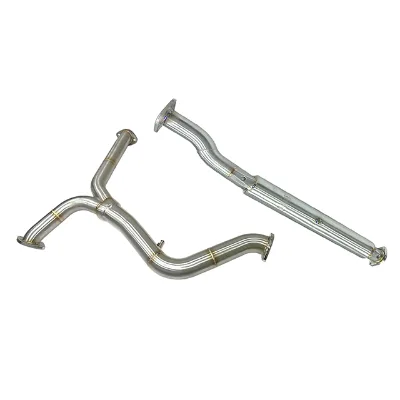
Compare 30 listings for High Flow Exhaust Downpipe components suitable for Toyota, Mercedes Benz, and Chevrolet vehicles. Buyers can evaluate steel and stainless steel options with CE and ISO certifications from suppliers in China and Taiwan.
Key considerations
Products List




Comprehensive Sourcing Guide
Strategic Sourcing Guide for High Flow Exhaust Downpipes
The procurement of high flow exhaust downpipes represents a critical decision point for buyers in the automotive aftermarket and original equipment manufacturing (OEM) sectors. These components are engineered to reduce backpressure, thereby enhancing engine efficiency and power output. However, the market is characterized by a wide variance in material composition, manufacturing standards, and certification compliance. This guide synthesizes available product data and industry knowledge to provide a disciplined framework for sourcing these components. Buyers must navigate a landscape where attributes such as material grade, connection methods, and thermal resistance are paramount. The following sections detail the technical specifications, compliance requirements, cost structures, and supplier evaluation criteria necessary for a successful procurement strategy.
Technical Specifications and Material Composition
The performance of a High Flow Exhaust Downpipe is inextricably linked to its material composition and physical dimensions. Based on observed product attributes, the primary materials utilized in these components include steel, iron, and specifically stainless steel grades 201 and 304. The selection between these materials dictates the component's longevity and resistance to corrosion. Stainless steel 304 is generally preferred for high-performance applications due to its superior resistance to high temperatures and oxidation compared to standard steel or iron. The data indicates that the material of the main body is a critical variable, with specific references to stainless steel 201 or 304. Buyers must verify the exact alloy composition, as lower-grade materials may degrade under the extreme thermal conditions typical of high-flow systems.
In addition to material, the manufacturing technique plays a significant role in structural integrity. The observed data points to "Casting" as a primary technic, though welding is also a documented connection method. The connection type, specifically welding, suggests that many downpipes are assembled or joined to the engine manifold or catalytic converter housing via welded seams. This requires a high degree of precision to ensure a leak-free seal. Furthermore, the thermal operating range is a vital specification. Observed data specifies a temperature range of -20 to 650 degrees, which serves as a benchmark for the thermal limits of the component. Buyers should confirm that the specific supplier's product meets or exceeds this range to prevent warping or failure under heavy load.
The physical dimensions of the downpipe vary significantly to accommodate different engine configurations. Observed specifications list overall lengths ranging from 4 inches to 12 inches and beyond, with specific model identifiers such as "2"X6"" and "Exhaust Flexible Pipe." The inclusion of flexible pipes with nipples indicates that some suppliers offer components designed to absorb vibration and misalignment, which is crucial for engine mounts. The discharge standard is another technical consideration, with references to Euro II standards. While this specific standard may be legacy, it highlights the importance of verifying that the component meets the current emissions regulations of the target market, whether it be North America, Europe, or other regions.
Compliance, Certification, and Regulatory Standards
Navigating the regulatory landscape is essential for any B2B procurement involving automotive exhaust systems. The data reveals a mix of certifications and standards that buyers must verify. Common certifications observed include CE and CCC, which are critical for market access in Europe and China, respectively. Additionally, the ISO 9001-2000 standard is noted as a quality management benchmark. However, buyers must exercise caution, as the presence of a certification on a listing does not guarantee that every unit produced by that supplier adheres to it. The "ISOTS" designation, likely referring to ISO/TS 16949 (now IATF 16949), is a specific automotive quality standard. If a supplier claims this, the buyer must request valid, current documentation.
The discharge standard is a particularly sensitive area. While one data point mentions "Euro II," modern markets often require compliance with stricter standards such as Euro 5 or Euro 6, or specific EPA regulations in North America. The "Standard Component" classification suggests that some items are generic, while others are "Customized." Customization often implies that the product is tailored to meet specific regional emissions requirements. Buyers targeting the North American market should verify that the component does not violate local laws regarding emissions tampering, as high-flow downpipes can sometimes be classified as illegal if they remove catalytic converters or alter emissions control systems.
Furthermore, the "Main Market" attribute varies between North America and Europe, indicating that suppliers often tailor their compliance efforts to specific regions. A product certified for the European market may not automatically satisfy North American requirements, and vice versa. The "Factory" designation confirms that the supplier is a manufacturer, which can be beneficial for ensuring that compliance standards are integrated into the production process rather than being added as an afterthought. Buyers should insist on a Certificate of Conformity (CoC) that explicitly lists the applicable standards and certifications for the specific batch of goods being purchased.
Cost Drivers and Pricing Dynamics
The pricing of high flow exhaust downpipes is influenced by a complex interplay of factors, including material costs, manufacturing complexity, and order volume. The observed price range in the market spans from $0.09 to $500 USD, a vast disparity that reflects the difference between small components, such as flexible pipes or nipples, and complete, custom-engineered downpipe assemblies. The lower end of the spectrum likely corresponds to simple, standard components made from less expensive materials like iron or standard steel. In contrast, the higher price points are associated with custom-fabricated units made from high-grade stainless steel 304, featuring complex welding, and potentially including catalytic converters or high-flow sensors.
Material selection is the primary cost driver. Stainless steel 304 is significantly more expensive than stainless steel 201 or iron. Consequently, a downpipe constructed from 304 stainless steel will command a premium price. The manufacturing process also impacts cost; components requiring precise casting or complex welding techniques will incur higher labor and tooling costs. The "Customization" attribute is another significant factor. Customized models, such as those with specific model numbers like "Z12VB. 09.01A," require unique tooling and engineering time, which increases the unit cost compared to standard off-the-shelf items.
Order volume, defined by the Minimum Order Quantity (MOQ), also affects the final price. The observed MOQ range is from 1 to 2000 units. Suppliers often offer tiered pricing, where the per-unit cost decreases as the order volume increases. For buyers with high demand, negotiating an MOQ closer to the upper limit of the observed range can yield substantial savings. However, for buyers requiring low volumes or prototype units, the higher per-unit cost is often unavoidable. The "Selling Units" attribute, noting "Single item," suggests that some suppliers are willing to sell small quantities, albeit at a higher price point. Buyers should balance the need for inventory against the cost per unit to optimize their procurement budget.
Typical Applications and Market Segmentation
High flow exhaust downpipes serve a diverse range of applications, primarily within the automotive sector. The data indicates suitability for major car brands including Toyota, Mercedes Benz, and Chevrolet. This broad compatibility suggests that these components are used in both mass-market vehicles and performance-oriented models. The "After Market" designation highlights a significant segment of the market where vehicle owners seek to upgrade their exhaust systems for improved performance, sound, or aesthetics. In this segment, the "Product Keywords" such as "Exhaust Flexible Pipe Hks Muffler" suggest a focus on performance tuning and aftermarket customization.
The "OEM" (Original Equipment Manufacturer) segment is equally important. In this context, downpipes are integrated into the vehicle assembly line or produced as replacement parts for service centers. The "Factory" status of the supplier is particularly relevant here, as OEM contracts often require strict adherence to quality standards and consistent supply chains. The "Warranty" attribute, ranging from "Other" to "3 Years," indicates that suppliers in the OEM space often provide longer warranties to ensure reliability and customer satisfaction.
The "Noise Source" attribute, specifically "Mechanical Noise" and "The Noise of Engine," points to the acoustic characteristics of these components. High flow downpipes are often designed to alter the engine sound, providing a more aggressive tone while maintaining compliance with noise regulations. The "Component" classification as an "Exhaust Pipe" and "Auto Parts" confirms their role within the broader exhaust system. Buyers should consider the specific application of the downpipe, whether it is for a high-performance street car, a race vehicle, or a commercial fleet, as this will influence the required specifications and material grades.
Supplier Evaluation and Quality Assurance
Evaluating a supplier for high flow exhaust downpipes requires a rigorous assessment of their capabilities and quality control processes. The data indicates that suppliers can be classified as either "Factory" or "Trading Company," with factories generally offering more direct control over the manufacturing process. A key metric for supplier evaluation is the "Employee" count, with some suppliers reporting "More Than 200" employees. This suggests a level of operational scale that can support large production runs and consistent quality.
Quality control is paramount, and buyers should verify the supplier's adherence to standards such as ISO 9001-2000. The "Certification" field, listing CE, CCC, and ISOTS, provides a starting point for verification, but buyers must ensure these certifications are current and applicable to the specific product. The "Standard Component" classification implies that some products are generic, while "Customized" items require a deeper level of engineering collaboration. Buyers should request samples to test for material thickness, weld quality, and dimensional accuracy before committing to a large order.
The "Delivery Time" is another critical factor, with observed lead times of "10-15 Days After Receiving Deposit." This timeline is relatively short, indicating efficient production capabilities. However, buyers should confirm if this lead time applies to standard stock items or if customized orders require longer periods. The "Place of Origin" varies, with products originating from China (Mainland), Zhejiang, and Taiwan. While these regions are known for manufacturing prowess, buyers should verify the specific factory location to ensure it aligns with their logistics and compliance requirements. The "Packing" methods, ranging from "Wooden Box" to "Plywood Box" and "Neutral Pack," also indicate the level of protection provided during shipping, which is crucial for preventing damage to the components.
Long-Term Procurement and Operational Considerations
Sourcing high flow exhaust downpipes is not merely a transactional activity but a strategic partnership that impacts long-term operational efficiency. The "Warranty" terms, such as the "3 Years" warranty observed, are indicative of the supplier's confidence in their product's durability. Buyers should prioritize suppliers who offer robust warranty coverage, as this reduces the risk of costly replacements and downtime. The "Working Pressure" range of 0-5 MPa and the "Temperature Range" of -20 to 650 degrees are critical performance metrics that must be maintained over the product's lifecycle.
Supply chain resilience is another consideration. The "Main Market" attributes, including North America and Europe, suggest that suppliers are experienced in exporting to diverse regions. Buyers should assess the supplier's ability to handle fluctuations in demand and their capacity to scale production. The "MOQ" flexibility, ranging from 1 to 2000, allows buyers to adjust their order sizes based on market conditions. However, relying on a single supplier for all needs can be risky; diversifying the supplier base can mitigate supply chain disruptions.
Finally, the "Product Keywords" and "Component" classifications highlight the evolving nature of the exhaust system market. As emissions regulations tighten and performance demands increase, the specifications of downpipes will continue to evolve. Buyers must maintain a proactive approach to procurement, staying informed about new standards and technologies. By selecting suppliers with strong technical capabilities, verified certifications, and a commitment to quality, buyers can ensure a steady supply of high-performance exhaust downpipes that meet the demands of their customers and the regulatory environment.
FAQs
What materials are used for high flow exhaust downpipes?
High flow exhaust downpipes are typically made from steel, iron, or stainless steel grades 201 and 304. Stainless steel 304 offers superior resistance to high temperatures and oxidation compared to standard steel or iron, making it ideal for performance applications.
Which certifications should I verify for these components?
Common certifications include CE, CCC, and ISO 9001-2000, with some products noting ISOTS compliance. Buyers must request valid documentation to ensure these certifications are current and applicable to the specific batch of goods being purchased for their target market.
Can I find customized high flow exhaust downpipes?
Yes, customization is available for specific model numbers and regional requirements. Customized models require unique tooling and engineering time, which increases the unit cost compared to standard off-the-shelf items but allows for tailored emissions compliance.
What is the typical delivery time for these orders?
The standard delivery time is 10 to 15 days after receiving the deposit. This timeline indicates efficient production capabilities, though buyers should confirm specific lead times with the supplier before finalizing the purchase agreement.
How does the price range vary for these products?
Prices range from 0.09 to 500 USD depending on material and complexity. Lower costs apply to simple components like flexible pipes, while higher prices reflect custom-fabricated units made from high-grade stainless steel 304 with complex welding.
What is the minimum order quantity for these parts?
The minimum order quantity ranges from 1 to 2000 units depending on the supplier. Some suppliers offer single item sales, while others require larger volumes, often providing tiered pricing where the per-unit cost decreases as order volume increases.
Where are these products typically manufactured?
Products originate from locations such as China, specifically Zhejiang, and Taiwan. Buyers should verify the specific place of origin as it influences shipping logistics and potential compliance requirements for different regional markets.