Source high-performance petrol engine crankshaft bearing for Cars, Trucks, Tractors
Find and compare 30 listings for high-performance petrol engine crankshaft bearing suitable for automotive, heavy machinery, and agricultural applications. Review specifications, pricing, and supplier details to identify the best fit for your project needs.
Key considerations
Products List


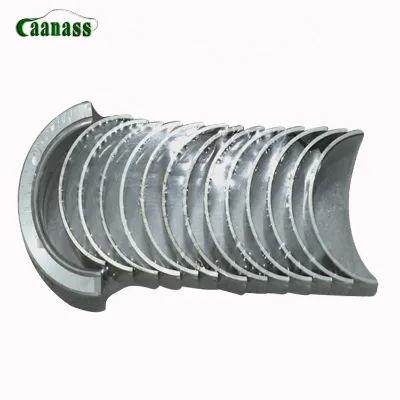
Taiho Bearings Factory Truck Car Engine Parts Diesel Engine Crankshaft
$80.00 - $150.00
MOQ: 10 Pieces



Comprehensive Sourcing Guide
Strategic Sourcing Guide for High-Performance Petrol Engine Crankshaft Bearings
Understanding Technical Specifications and Material Integrity
When sourcing high-performance petrol engine crankshaft bearings, buyers must navigate a complex landscape of technical attributes that define reliability and operational efficiency. The core component in this category is the bearing shell, which serves as the critical interface between the rotating crankshaft and the engine block. Based on observed market data, the material composition is a primary determinant of performance. The supplied facts indicate that Bushing Material often utilizes Self-Lubrication properties, which is essential for maintaining a stable friction coefficient under high thermal loads. Furthermore, the Material specification lists both Bearing Steel and Rubber, suggesting a diverse range of applications where the bearing shell must withstand specific mechanical stresses or environmental conditions.
The structural design of these bearings is equally critical. The Bearing Structure is frequently identified as a Split Plain Bearing, a configuration that allows for installation without removing the crankshaft, a vital feature for maintenance and assembly in high-performance engines. The Bearing Direction is consistently Radial, and the Load Direction is also defined as Radial Bearing, confirming that these components are engineered to support loads perpendicular to the shaft axis. For high-performance applications, the Contact Angle is observed at 15°, a specific geometric parameter that influences load distribution and stability. The Rows Number is typically Single, indicating a standard configuration for most petrol engine crankshafts, though the Aligning attribute notes the availability of both Non-Aligning and Aligning options, requiring buyers to verify the specific alignment needs of their engine design.
Lubrication systems are the lifeblood of these components. The Lubricant & Load category specifies Hydrodynamic Bearing characteristics, relying on a film of oil to separate moving surfaces. The Type of Lubricant is explicitly Oil-Lubricated Bearing, and the Lubricating Way is often Maintenance-Free Bearing, implying designs that retain lubrication or utilize self-lubricating materials to reduce service intervals. The Lubricating Film Thickness is described as Thin Film Lubrication, a state that requires precise manufacturing tolerances to prevent metal-to-metal contact while minimizing friction losses. The Rolling Body is listed as Ball Bearings in some contexts, though for crankshaft applications, the Split Plain Bearing description is more dominant, suggesting that the term "Ball Bearings" may refer to related components or specific sub-assemblies within the broader product line. Buyers must ensure the specific prod_model matches the engine requirements, with observed models including SMCC, 914 Model Parts, 5313645, 195-04011, and ZJ.
Compliance, Certification, and Standard Verification
In the B2B procurement of engine components, verifying compliance with international and industry-specific standards is non-negotiable. The supplied data reveals a mix of standard designations and certification marks that buyers must scrutinize. The prod_standard field lists specific numerical codes such as 6200, 6201, 6202, 6203, 6204, 6205, 6206, 6207, 6208. These codes typically correspond to deep groove ball bearing series, and while they appear in the context of crankshaft bearings, buyers must confirm if these standards apply directly to the split plain bearing shells or if they represent a broader product family. The Standard Component attribute is marked as Standard Component, indicating that many parts adhere to established dimensional and performance norms rather than being entirely custom.
Certification plays a pivotal role in validating the quality and safety of the supply chain. The observed Certification attributes include CE and TS16949. The CE mark indicates conformity with health, safety, and environmental protection standards for products sold within the European Economic Area, a crucial check for export-oriented procurement. TS16949 (now IATF 16949) is the specific quality management standard for the automotive industry, signifying that the supplier has a robust system for managing quality risks, particularly for Diesel Engine Parts and Car, Truck, Tractor, Excavator applications. The Industry Focus is explicitly noted as Agricultural, suggesting that a significant portion of these bearings are designed for heavy-duty machinery where reliability is paramount.
Buyers should also verify the prod_packing standards, which range from Industrial Packaging Carton + Pallet to Wooden Case Packing and Carton/Wooden Box. Proper packaging is a proxy for the supplier's attention to detail and their ability to protect components during long-distance shipping. The Place of Original and prod_origin are listed as Shandong China, Beijing, and Chengdu, indicating a concentration of manufacturing in specific industrial hubs in China. While the origin is known, the Standard field also notes as per drawings, highlighting that custom engineering is a viable option where standard models do not suffice. The Trading Mark Antaios is observed, but buyers should treat this as an example of branding rather than a recommendation, ensuring that the brand aligns with their specific quality expectations.
Cost Drivers and Economic Factors in Procurement
The economics of sourcing high-performance crankshaft bearings are influenced by a variety of factors, including material costs, manufacturing complexity, and logistical requirements. The observed Observed listed price range in USD spans from 0.3 to 2000, a vast range that reflects the diversity of products available, from simple bushings to complex, high-tolerance assemblies. This variance underscores the importance of defining precise specifications before requesting quotes to avoid confusion between low-cost commodity items and high-performance engineered solutions.
The MOQ range of 1 to 1000 units provides flexibility for buyers with different volume needs. Small buyers can source single units for prototyping or emergency replacement, while larger fleets or manufacturers can leverage economies of scale by ordering in bulk. The Customization attribute is marked as Available, which introduces a variable cost component. Customized parts, such as those with specific prod_model numbers like 195-04011 or ZJ, often require dedicated tooling or production runs, potentially increasing the unit cost and extending lead times. The Technics involved, such as Casting and Press, also impact pricing. Casting processes may be more cost-effective for complex shapes, while pressing techniques might offer tighter tolerances for standard components, influencing the final price point.
Logistics and packaging add another layer to the total cost of ownership. The prod_packing options, including Customized and as Required, suggest that buyers can negotiate packaging to minimize shipping volume or maximize protection, directly affecting freight costs. The Location of the suppliers, primarily in Shandong, Beijing, and Chengdu, places them in major manufacturing regions, which can reduce inland transportation costs but may involve international shipping fees depending on the buyer's location. Buyers should also consider the Lead Time, which is not explicitly provided in the facts but is a critical variable in procurement planning. High-performance parts with specific Certification like TS16949 may have longer lead times due to rigorous quality control processes.
Typical Applications and Industry Focus
The versatility of high-performance petrol engine crankshaft bearings is evident in their application across multiple sectors. The Application field explicitly lists Car, Truck, Tractor, and Excavator, indicating that these components are integral to both light and heavy-duty transportation and construction equipment. The Industry Focus on Agricultural machinery suggests a strong presence in the farming sector, where engines operate under sustained high loads and varying environmental conditions. The Item Type is identified as Diesel Engine Parts, yet the core keyword focuses on petrol engine bearings. This discrepancy highlights the need for buyers to carefully distinguish between diesel and petrol specifications, as the thermal and lubrication requirements can differ significantly despite the shared mechanical principles.
The The Engine Model 914 is a specific reference point, likely associated with vintage or specific industrial engines. The Item No. 195-04011 and prod_model 195-04011 point to standardized part numbers used in the industry, facilitating easier identification and replacement. The prod_model SMCC and ZJ represent other specific series, potentially tailored for different engine architectures. Buyers must ensure that the Bearing Structure and Lubricating Film Thickness match the specific engine model's requirements. For instance, a Split Plain Bearing with Thin Film Lubrication might be ideal for high-speed petrol engines, whereas a Hydrodynamic Bearing with Oil-Lubricated systems might be preferred for heavy-duty diesel applications. The Separated attribute being Unseparated indicates that the bearings are supplied as complete units, which simplifies installation but requires careful handling to avoid damage.
Supplier Evaluation and Manufacturing Capabilities
Evaluating potential suppliers requires a deep dive into their manufacturing capabilities and operational history. The Technics listed as Casting and Press suggest that suppliers possess diverse production methods. Casting is often used for creating the bearing shells or housings, while Press techniques are employed for forming or assembling components. The prod_packing variety, ranging from Industrial Packaging Carton + Pallet to Wooden Case Packing, indicates that suppliers have the logistical infrastructure to handle different order sizes and shipping requirements. The Standard Component status implies that many suppliers produce parts that meet general industry norms, but the as per drawings option suggests that custom manufacturing is also a core competency.
Buyers should verify the Certification status of suppliers, specifically looking for CE and TS16949 marks. These certifications are not merely badges but indicators of a supplier's commitment to quality management systems. The Place of Original being Shandong, Beijing, and Chengdu provides geographical context, allowing buyers to assess the proximity of suppliers to logistics hubs. The Trading Mark Antaios serves as an example of branding, but buyers should focus on the supplier's track record and technical documentation rather than brand name alone. The Customization availability is a key differentiator, allowing suppliers to adapt products to specific engine requirements, which is crucial for high-performance applications where off-the-shelf solutions may not suffice.
Quality Control and Long-Term Procurement Considerations
Quality control is paramount in the procurement of crankshaft bearings, as failures can lead to catastrophic engine damage. The Lubricating Film Thickness of Thin Film Lubrication requires precise manufacturing to ensure the oil film remains intact under high loads. The Bearing Structure as a Split Plain Bearing must be machined to exact tolerances to prevent misalignment and uneven wear. The Material composition, whether Bearing Steel or Self-Lubrication bushings, must be verified through material testing to ensure it meets the required hardness and durability standards. The Contact Angle of 15° is a specific geometric constraint that must be maintained during production to ensure proper load distribution.
Long-term procurement considerations involve building a sustainable relationship with suppliers who can provide consistent quality and support. The MOQ range of 1 to 1000 allows for flexible ordering, enabling buyers to start with small batches and scale up as demand grows. The Customization option provides a pathway for developing proprietary solutions, which can offer a competitive advantage. Buyers should also consider the prod_packing standards, ensuring that the packaging protects the bearings during storage and transport, preserving their integrity over time. The Certification status, particularly TS16949, offers a level of assurance that the supplier follows rigorous quality control processes, reducing the risk of defects.
| Feature | Standard Specification | High-Performance Requirement |
|---|---|---|
| Bearing Structure | Split Plain Bearing | Split Plain Bearing with precise fit |
| Lubrication | Oil-Lubricated, Thin Film | Hydrodynamic, optimized film thickness |
| Material | Bearing Steel, Self-Lubrication | High-grade Bearing Steel, specialized alloys |
| Certification | CE, TS16949 | IATF 16949, ISO 9001 |
| Application | Car, Truck, Tractor, Excavator | High-speed Petrol, Heavy-duty Diesel |
| Customization | Available | Tailored to specific engine models |
In conclusion, sourcing high-performance petrol engine crankshaft bearings requires a meticulous approach that balances technical specifications, compliance, cost, and supplier reliability. By leveraging the observed facts and applying rigorous evaluation criteria, buyers can secure components that ensure optimal engine performance and longevity. The diversity of models, materials, and certifications available in the market offers ample opportunities for strategic procurement, provided that buyers remain vigilant in their verification processes and maintain clear communication with their suppliers.
FAQs
What material options exist for high-performance petrol engine crankshaft bearings?
Bushing material often utilizes self-lubrication properties to maintain stability under thermal loads. The product specifications also list bearing steel and rubber as available material choices for diverse mechanical stress requirements.
Which bearing structure is most common for split plain bearing applications?
The bearing structure is frequently identified as a split plain bearing to allow installation without removing the crankshaft. This configuration supports radial load directions and is typically designed as an unseparated unit.
Can these bearings operate with maintenance-free lubrication systems?
Yes, the lubricating way is often described as maintenance-free bearing to reduce service intervals. They utilize hydrodynamic bearing characteristics with oil-lubricated systems and thin film lubrication to separate moving surfaces effectively.
What certifications should buyers verify for automotive engine parts?
Buyers should verify CE and TS16949 certifications to ensure quality management and safety compliance. These marks indicate conformity with European standards and automotive industry quality risks for diesel and petrol engine applications.
How does the MOQ range affect procurement for small orders?
The observed MOQ range spans from 1 to 1000 units, providing flexibility for different volume needs. Small buyers can source single units for prototyping while larger fleets can leverage economies of scale by ordering in bulk.
Which specific product models are available for engine replacement parts?
Observed product models include SMCC, 914 Model Parts, 5313645, 195-04011, and ZJ series. Buyers must ensure the specific model matches the engine requirements to guarantee proper fit and performance.