Source High Productivity Rice Destoner for Grain, Seed, Spice
Find 30 High Productivity Rice Destoner models with capacities from 1 to 5 tons per hour. Compare specifications including power, weight, and stone removal rates to select the right equipment for grain, seed, and spice processing applications; compare the available evidence and request quotations based on your requirements.
Key considerations
Products List


Destoner Wheat Stone Removing Machine Destoner Grain Paddy Rice Destoner
$350.00 - $550.00
MOQ: 7 Pieces


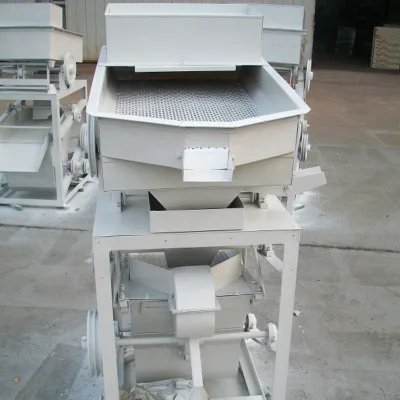


Comprehensive Sourcing Guide
High Productivity Rice Destoner Sourcing Guide
Procuring a High Productivity Rice Destoner requires a strategic approach that balances throughput capacity with the delicate nature of grain processing. Buyers must prioritize machines that effectively separate stones, glass, and metal contaminants without damaging the rice kernels. The core challenge lies in selecting equipment that maintains a high stone removal rate, ideally around 98%, while ensuring minimal breakage of the final product. This balance is critical for maintaining grain quality and meeting strict export standards.
The sourcing landscape for these machines is dominated by manufacturers in China, particularly in regions like Shijiazhuang City, Hebei Province. These hubs offer a wide range of options, from small-scale units to large industrial systems. Buyers should focus on verifying the specific capacity claims, such as one ton per hour for wheat or five tons per hour for larger operations. Understanding the distinction between different models, such as the 5XQS-1 versus the 5XQS-5, is essential for aligning machine capabilities with actual production volume requirements.
Product Scope and Observed Listing Signals
The market for rice destoners presents a diverse array of options, with observed prices ranging from $350 to $12,000 USD. This wide variance reflects differences in capacity, power consumption, and build quality. Smaller units, often weighing around 65 kg and powered by 0.37 kW motors, are suitable for small-scale mills or pilot operations. In contrast, larger industrial machines can weigh up to 700 kg and require significantly more power, such as 7 kW or 3.5 kW systems, to handle higher throughput volumes efficiently.
Minimum order quantities (MOQ) typically range from one to seven sets, offering flexibility for both individual buyers and larger procurement teams. Most suppliers offer customization options, allowing buyers to tailor voltage specifications to their local grid, whether it is 220-415V at 50 or 60Hz. The physical dimensions of these machines also vary greatly, from compact units measuring 830x590x760 mm to large industrial footprints of 2500x1660x1600 mm, necessitating careful planning of factory floor space and logistics.
Technical Specifications to Verify
When evaluating technical specifications, buyers must verify the sieve size and machine dimensions to ensure compatibility with their existing processing lines. For instance, some models feature a scale sieve size of 250x480 mm, which is crucial for effective separation efficiency. The overall machine size, such as 2550x1560x1600 mm for larger units, impacts installation requirements and maintenance access. It is vital to confirm that the physical footprint aligns with the available space in the processing facility to avoid logistical bottlenecks.
Power consumption and voltage requirements are critical technical factors that must match the local electrical infrastructure. While some units operate on standard voltages, others may require customized electrical setups. Buyers should also check the productivity claims, such as 100 sets per month for the manufacturer, which indicates production capacity but does not guarantee individual machine output. Verifying the actual throughput, whether it is one ton per hour or five tons per hour, ensures that the machine meets the specific processing demands of the rice mill.
Compliance and Safety Documentation
Compliance with international standards is a non-negotiable aspect of sourcing industrial machinery. Buyers should insist on certifications such as ISO9001, CE, TUV, and SGS, which indicate adherence to quality management and safety protocols. These certifications provide assurance that the manufacturing processes meet recognized global benchmarks for quality and safety. Additionally, standards like SONCAP may be required for specific export markets, so buyers must verify which certifications are mandatory for their destination country.
Safety features and operational documentation are equally important for long-term reliability and worker safety. Machines should come with clear operational manuals and safety guidelines, especially given the high-speed mechanical components involved in stone removal. Buyers should also inquire about the warranty terms, typically one year, and the availability of spare parts. Ensuring that the supplier provides comprehensive documentation helps in maintaining the machine and troubleshooting issues efficiently, reducing downtime and operational risks.
Cost Drivers and Commercial Terms
Several factors influence the total cost of ownership for a rice destoner, including power consumption, material quality, and customization options. Machines made from carbon steel offer durability but may vary in thickness and finish, affecting longevity. Customization, such as specific voltage requirements or color preferences like green or white, can impact the final price. Buyers should also consider the packing method, whether wooden cases or containers, as this affects shipping costs and protection during transit.
Commercial terms, including lead times and payment conditions, play a significant role in procurement planning. Typical delivery times range from five to ten days after receiving an advance payment, which is relatively fast but requires careful scheduling. Buyers should negotiate clear terms regarding discounts and payment structures to manage cash flow effectively. Understanding these commercial dynamics helps in budgeting accurately and avoiding unexpected costs associated with shipping, insurance, and customs clearance.
Supplier Qualification and Quality Control
Supplier qualification involves assessing the manufacturer’s production capacity and workforce size. Many suppliers boast over 100 workers and a monthly production capacity of 100 sets, indicating a robust manufacturing infrastructure. Buyers should verify these claims through site visits or third-party audits to ensure that the supplier can consistently meet quality standards and delivery schedules. A strong workforce and high production capacity are indicators of a supplier’s ability to handle large orders and provide reliable after-sales support.
Quality control processes should be transparent and rigorous, with suppliers providing detailed inspection reports and test results. Buyers should inquire about the specific quality checks performed on each machine before shipment, including performance tests for stone removal efficiency and mechanical integrity. Establishing a clear quality assurance protocol with the supplier helps in maintaining consistency across multiple units. This diligence ensures that the purchased destoners meet the required performance standards and operate reliably in the field.
Long-Term Procurement Checks
Long-term procurement success depends on establishing strong relationships with suppliers and ensuring continuous support. Buyers should prioritize suppliers who offer comprehensive warranty services and readily available spare parts. A one-year warranty is standard, but buyers should negotiate extended coverage options for critical components. Regular maintenance and timely access to replacement parts are essential for minimizing downtime and extending the lifespan of the destoner.
Continuous monitoring of supplier performance and market trends is also crucial for long-term procurement strategies. Buyers should stay informed about advancements in destoner technology and emerging standards in the grain processing industry. Building a diversified supplier base can mitigate risks associated with single-source dependencies. By maintaining open communication and fostering collaborative relationships, buyers can ensure a steady supply of high-quality rice destoners that meet evolving operational needs.
FAQs
What is the capacity of the High Productivity Rice Destoner?
The machine offers a capacity of 1 ton per hour when counting wheat, while other models reach 5 tons per hour. This high productivity ensures efficient stone removal for rice and other grains in commercial processing lines.
Can the voltage be customized for different regions?
Yes, the voltage is customized to meet specific regional power requirements. The standard range includes 220-415V at 50 or 60Hz, ensuring the destoner operates reliably in various international electrical environments without modification.
Which certifications does the destoner machine hold?
The product holds multiple international certifications including ISO9001, TUV, SGS, CE, and SONCAP. These standards verify the machine meets global safety and quality requirements for industrial grain processing equipment used worldwide.
How long is the delivery time after payment?
Delivery typically takes 5 to 10 days after receiving the advance payment. This fast lead time allows buyers to quickly integrate the destoner into their production schedules without significant operational delays.
What is the minimum order quantity for this machine?
The minimum order quantity is 1 set, allowing small buyers to purchase a single unit. This low MOQ makes the High Productivity Rice Destoner accessible for small-scale mills and individual agricultural operations.
What is the stone removing rate of the machine?
The machine achieves a stone removing rate of 98 percent for effective cleaning. This high efficiency ensures that rice and other grains are thoroughly cleaned of stones, glass, and metal before further processing.
What is the warranty period for the destoner?
The product comes with a one-year guarantee covering manufacturing defects. This warranty provides buyers with confidence in the machine's durability and ensures support is available for the first year of operation.