Find High Productivity Potato Chip Plant for snack, candy, and biscuit lines
Source 30 verified options for a High Productivity Potato Chip Plant designed for snack, candy, and biscuit manufacturing. Buyers can compare specifications like power requirements, material grades, and capacity ranges to identify the most suitable equipment for their production needs.
Key considerations
Products List


High Efficiency Potato Chips Machine Production Line for Food Processing Plant
$5800.00 - $12000.00
MOQ: 1 Sets

Refined Control Medium Potato Chips Production Line for Food Manufacturing Plant
$5800.00 - $12000.00
MOQ: 1 Sets


Premium Quality 500kg/H Potato Chips Production Line with Advanced Technology
$20999.00 - $121999.00
MOQ: 1 Pieces
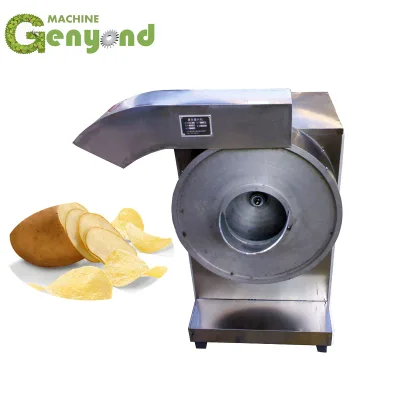


$14000.00 - $100000.00
MOQ: 1 Pieces


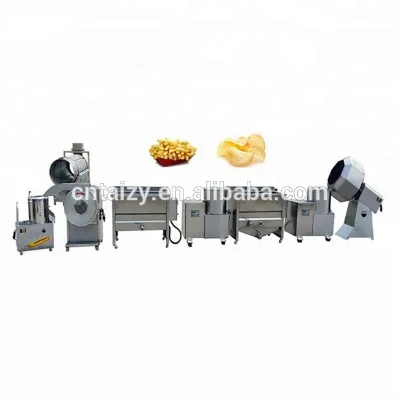


Comprehensive Sourcing Guide
Strategic Sourcing for High Productivity Potato Chip Plants
Procuring a High Productivity Potato Chip Plant represents a significant capital investment that demands rigorous due diligence. The market offers a diverse array of processing lines, ranging from compact units to massive industrial complexes capable of handling multiple tons of raw material per hour. Buyers must navigate a landscape where specifications vary widely, often customized to specific production goals. This guide provides an evidence-based framework for evaluating these complex systems, focusing on technical specifications, compliance, cost drivers, and long-term operational viability. The goal is to equip procurement teams with the knowledge to select machinery that aligns with their production capacity and quality standards without relying on unverified marketing claims.
Technical Specifications and Production Capacity
The core of any potato chip plant lies in its processing capabilities and physical dimensions. When evaluating a high productivity unit, the buyer must first scrutinize the production model and the associated capacity metrics. Available data indicates that capacity can vary significantly, with some lines designed for outputs of 50kg, 100kg, 200kg, and 300kg, while others, particularly those for frozen French fries, may scale up to 1000kg or 2000kg per hour. It is critical to distinguish between the capacity of the potato chip line and the frozen French fry line, as they often share similar machinery but serve different product streams.
The physical footprint of the equipment is another vital technical parameter. Large-scale automated lines, such as those designated by models like FPCL or PRPL, can occupy substantial floor space. For instance, one observed standard configuration measures approximately 40 meters in length, 5 meters in width, and 4.3 meters in height. In contrast, other configurations may be sized at 28 meters by 6 meters by 3 meters. These dimensions directly impact factory layout planning and utility infrastructure requirements.
Power consumption is a major operational cost driver. The electrical requirements for these plants are substantial, with specific models listing power ratings ranging from 45kw to a customized range of 100kw-390kw. Some smaller or specialized units may operate on 1.5KW, while others require a robust 380V/220V 50Hz/60Hz 3-phase electricity supply. Furthermore, the operating mode is typically automatic, requiring a compressed air supply within the range of 0.6-0.8MPa to function correctly. The material of construction is predominantly 304 Stainless Steel, ensuring durability and hygiene, though some listings specify the grade as Stainless Steel 304# or simply SS 304. Understanding these exact specifications is essential for calculating the total cost of ownership and ensuring the facility can support the machinery's utility demands.
Compliance, Certification, and Safety Standards
In the food processing industry, compliance with international standards is non-negotiable. Buyers must verify that the machinery meets specific certification requirements before finalizing a purchase. The market data shows a variety of certifications, including CE, which is a standard requirement for equipment entering the European market. Some suppliers may also offer ISOCustomized certifications or ISOSAMET, indicating a level of adherence to specific organizational or safety protocols.
When evaluating a supplier, the buyer should not assume that all listed products possess every certification mentioned in the catalog. Instead, the procurement process must include a direct request for current, valid certification documents for the specific model being purchased. The presence of a "CE" mark suggests compliance with European health, safety, and environmental protection standards, while other certifications may indicate adherence to ISO management systems.
Safety and operational standards are further reflected in the equipment's design. The use of 304 Stainless Steel is a standard for food-grade equipment, preventing corrosion and ensuring that the machinery does not contaminate the product. Additionally, the standard for the equipment itself may be listed as "customize," which implies that the buyer must define the specific safety and operational parameters during the design phase. It is also important to verify the "Guarantee of Quality," which is often cited as a one-year period, and to understand the scope of the "After-Sales Service Provided," which may include engineers available to service machinery overseas.
Cost Drivers and Financial Considerations
The financial landscape of sourcing a potato chip plant is influenced by several key variables. The primary cost driver is the production capacity and the level of automation. High productivity lines with capacities reaching 2000kg per hour and fully automatic operating modes command a higher price point compared to smaller, semi-automatic units. The power rating is another significant factor; a line requiring 390kw will have higher initial costs and ongoing energy expenses than a 45kw unit.
The customization level also plays a crucial role in pricing. Many listings indicate that the model, standard, and power supply are "Customized." This flexibility allows the buyer to tailor the line to specific needs but inevitably increases the manufacturing time and cost. The weight of the equipment, ranging from 500kg for smaller units to 20t for large industrial lines, also impacts shipping and installation costs.
Packaging and logistics are additional cost considerations. The equipment is typically shipped in a "Wooden Box" or "Export Wooden Case," which adds to the overall weight and volume. The origin of the equipment, often listed as Foshan, Shandong China, or generally China, influences freight costs and lead times. Buyers should also account for the "Accessory" costs, such as the inclusion of an oil tank and extra oil, which may be bundled or sold separately. The "Transport" method, whether by truck or sea, will further affect the final landed cost.
Typical Applications and Product Versatility
While the core keyword focuses on potato chips, the versatility of these production lines is a significant advantage for many buyers. The application scope for these machines is broad, extending beyond just potato chips to include candy, biscuits, popcorn, ice cream, donuts, and chocolate. This multi-functionality allows a single facility to diversify its product portfolio, mitigating market risks associated with fluctuations in a single product category.
The process involved is primarily "Thermal Processing," which is essential for frying and drying operations. The machinery is designed to handle different sized potato chips, offering flexibility in product presentation. The "New Condition Fresh Potato Chips Processing Line" and "Different Sized Potato Chips Production Line" examples highlight the ability to produce fresh, high-quality snacks. The "Equipment Name" often explicitly mentions "French Fries and Potato Chips Production Line," confirming the dual capability of many units.
Buyers should verify the specific application capabilities of the model they are considering. While the general category covers a wide range of snacks, the specific configuration of the heating elements, conveyor speeds, and oil filtration systems will determine the final product quality. The "Video Outgoing-Inspection" provided by some suppliers allows buyers to visually verify the machine's performance and application capabilities before shipment, ensuring that the equipment can handle the intended product mix.
Supplier Evaluation and Quality Assurance
Selecting the right supplier is as critical as selecting the right machine. The evaluation process should go beyond the basic product listing and delve into the supplier's track record and support infrastructure. Key indicators of a reliable supplier include the provision of a "Video Outgoing-Inspection," which demonstrates transparency and confidence in the manufacturing process.
The "After-Sales Service Provided" is a crucial metric. Buyers should look for suppliers who explicitly state that "Engineers Available to Service Machinery Overseas." This capability is essential for minimizing downtime and ensuring that the high productivity plant remains operational. The "Guarantee of Quality" of one year is a standard benchmark, but buyers should negotiate terms that cover critical components and labor costs during the warranty period.
When evaluating the "prod_origin," buyers should be aware that major manufacturing hubs in China, such as Foshan and Shandong, are known for their industrial capabilities. However, the specific factory location should be verified to ensure it matches the claimed origin. The "prod_packing" method, whether "Wooden Box" or "Export Wooden Case," should be inspected to ensure it meets international shipping standards to prevent damage during transit.
Long-Term Procurement and Operational Sustainability
Sourcing a High Productivity Potato Chip Plant is a long-term commitment that requires careful planning for future scalability and maintenance. The "Customized" nature of many models means that the buyer has the opportunity to design a system that can grow with their business. However, this also requires a clear understanding of the "Electricity Requirement" and "Compressed Air Supply" to ensure that the facility can support future expansions without major infrastructure overhauls.
The "Weight" and "Standard" dimensions of the equipment must be considered in the context of the factory's long-term layout. A 20t machine requires a reinforced floor and specific crane access, which are long-term infrastructure investments. The "Process" of thermal processing requires consistent maintenance of heating elements and oil filtration systems to maintain product quality and energy efficiency.
Buyers should also consider the "Transport" logistics and the "Port" of origin, such as Guangzhou, when planning the supply chain. The lead time for customized equipment can vary, and the "MOQ" of 1 suggests that even single-unit orders are feasible, but the production schedule must be aligned with the buyer's launch timeline. Finally, the "Application" versatility ensures that the plant can adapt to changing market demands, making it a sustainable investment for the long term. By focusing on these strategic elements, buyers can secure a potato chip plant that not only meets current production needs but also supports future growth and operational excellence.
FAQs
What power sources can a High Productivity Potato Chip Plant use?
These plants typically use electric power, though some models support steam, gas, or electricity. Specific units may require 45kw or a customized range of 100kw to 390kw depending on the production capacity and configuration selected.
Which certifications are available for high productivity potato chip plants?
Available certifications include CE, ISOSAMET, and customized options like ISOCustomized. Buyers must verify the specific certification for the chosen model, as not every listed product satisfies all certification requirements mentioned in general catalogs.
How large is the standard footprint for a High Productivity Potato Chip Plant?
Standard configurations can measure approximately 40 meters by 5 meters by 4.3 meters, while other models may be 28 meters by 6 meters by 3 meters. These dimensions vary based on the specific production model and customization level.
Can a High Productivity Potato Chip Plant produce other snack types?
Yes, these machines can process candy, biscuits, popcorn, ice cream, donuts, and chocolate in addition to chips. The thermal processing capability allows for versatile production of different sized snacks within the same facility.
What is the typical weight range for a High Productivity Potato Chip Plant?
Equipment weight varies significantly, ranging from 500kg for smaller units to 20 tons for large industrial lines. The weight depends on the model, capacity, and whether the unit is designed for fresh chips or frozen fries.
Which materials are used to construct high productivity potato chip plants?
The primary material is 304 Stainless Steel, often specified as SS 304 or Stainless Steel 304#. This material ensures durability and hygiene, meeting food-grade standards for thermal processing applications.
How is a High Productivity Potato Chip Plant packaged for shipping?
The equipment is typically packed in a wooden box or an export wooden case. This packaging method protects the machinery during transport by truck or sea from the origin port to the destination.