Source High Support Seamless Running Leggings and Bra Set for gym, marathon, yoga
Compare 30 listings for High Support Seamless Running Leggings and Bra Set featuring moisture-wicking and four-way stretch. Buyers can evaluate suppliers in Guangdong and Zhejiang offering custom OEM services with various colors and sizes.
Key considerations
Products List
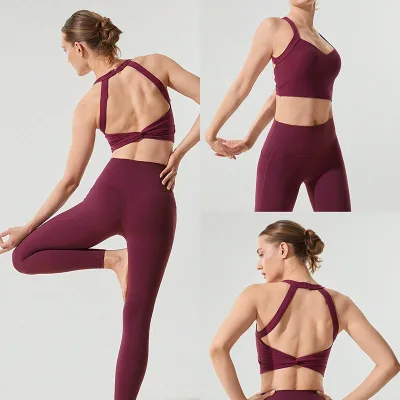
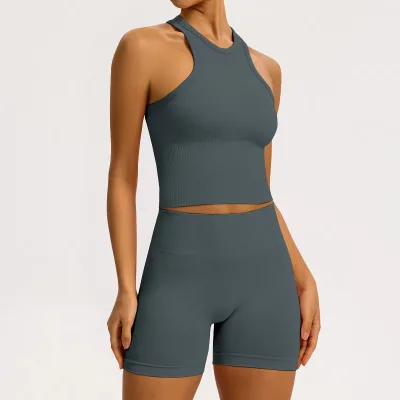
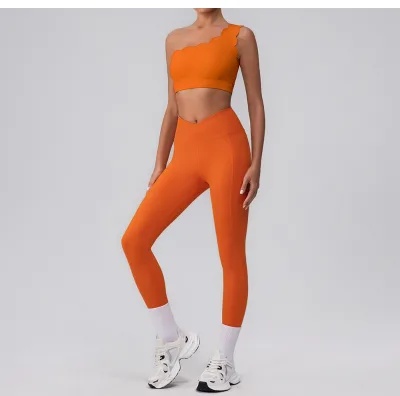
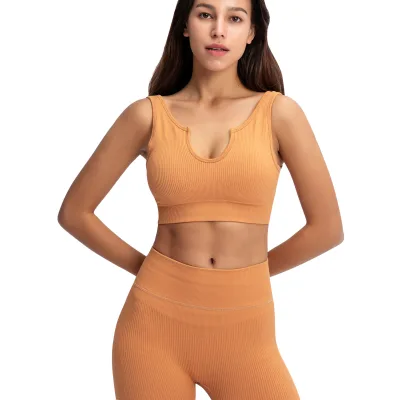




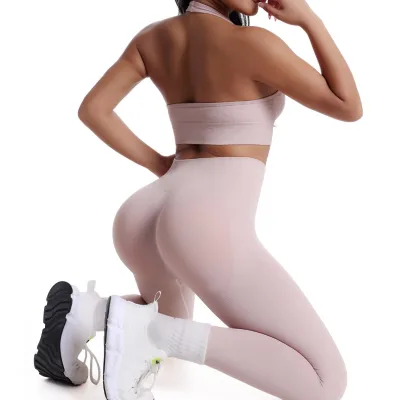


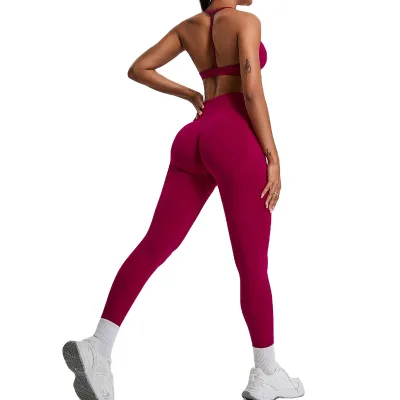
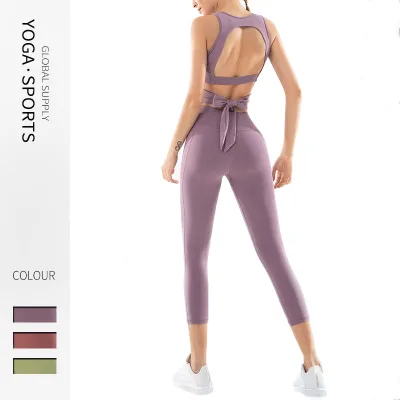


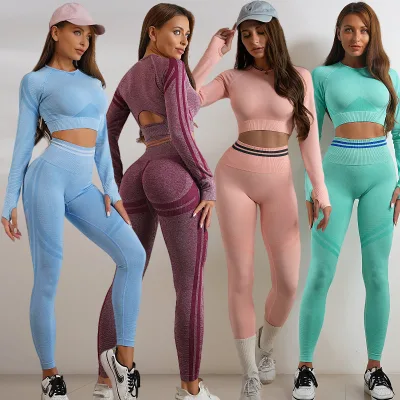


Comprehensive Sourcing Guide
Strategic Sourcing Guide for High Support Seamless Running Leggings and Bra Sets
Understanding Product Construction and Technical Specifications
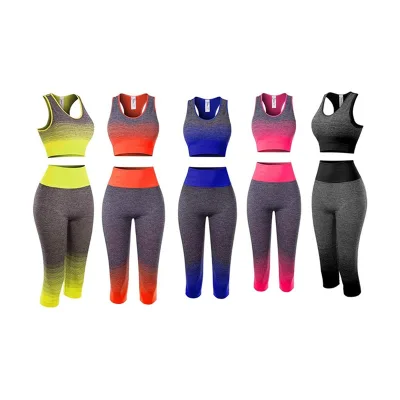
When sourcing high support seamless running leggings and bra sets, the primary differentiator lies in the manufacturing technique and material composition. The core technology involves seamless knitting, which eliminates side seams to reduce chafing and improve aerodynamic efficiency during high-intensity movement. Based on observed industry data, the material composition for these garments typically relies on a blend of Spandex and Nylon. This combination is critical because Nylon provides durability and a soft hand feel, while Spandex offers the necessary elasticity for a compression fit that supports muscle stability.
The fabric weight is a significant indicator of the garment's intended use. For running applications, a fabric weight around 220 grams is often observed, providing a balance between coverage and breathability. The construction must also account for the "Four-Way Stretch" capability, ensuring the fabric moves with the athlete in all directions without losing its shape. The "Seamless" attribute is not merely a marketing term but a technical specification that dictates the knitting process, often utilizing automated cutting and seamless knitting machines to create a single-piece structure.
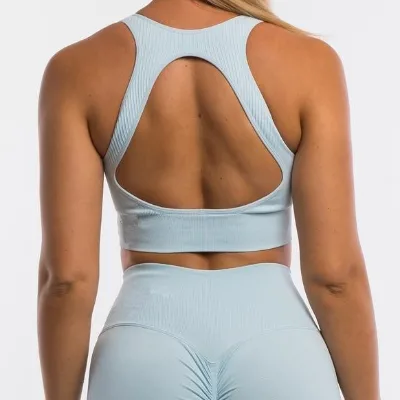
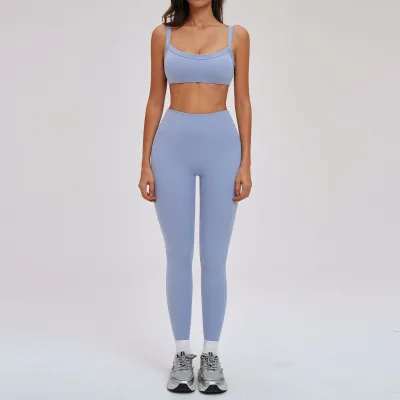
In terms of design elements, the fashion elements observed in this category include ribbed textures, cut-outs, and contrast stitching. These features are not just aesthetic; ribbing can provide targeted compression zones, while cut-outs may serve ventilation purposes. The waist type is predominantly high-rise, which is essential for core support during running. The closure type for these sets is typically an elastic waist, relying on the fabric's tension rather than hardware like zippers or buttons to maintain fit. For the bra component, strap types vary from non-adjusted to one-shoulder designs, though the high-support requirement often necessitates wider, non-adjusted straps to distribute weight evenly across the shoulders.
Material Performance and Functional Attributes
The performance of a running set is defined by its functional attributes. Buyers must verify that the selected products possess specific features such as "Quick Dry," "Breathable," and "Sweat-Wicking." These properties are non-negotiable for high-intensity sports to prevent moisture buildup, which can lead to discomfort and skin irritation. The "Anti-static" and "Waterproof" attributes, while less common in standard running gear, may be relevant for specific weather conditions or training environments, though they should be verified against the specific use case.
The "Reversible" feature is another technical aspect to consider, offering versatility in a single garment. However, the primary focus for high-support running gear remains on the "Seamless" construction and "Lightweight" nature of the fabric. The absence of seams reduces friction points, which is crucial for long-distance running. Additionally, the "Plus Size" availability ensures inclusivity, but the engineering challenge remains consistent: maintaining the same level of support and compression across all size ranges.
Color options such as White and Blue are standard, but the availability of specific colorways like "Cherry Red," "Glazed Purple," or "Peach Pink" indicates a broader inventory range. Buyers should note that color fastness is a critical quality metric, especially for garments that undergo frequent washing and high-temperature drying. The "Digital Print" and "Heat-Transfer Printing" methods observed in the supply chain suggest that branding and design elements are applied with precision, but the durability of these prints under stretch conditions must be validated.
Compliance, Certification, and Quality Control Standards
In the B2B procurement of athletic wear, compliance and quality control are paramount. While specific certification names are not universally mandated by the provided data, the presence of "Needle detection: Yes" is a critical quality control checkpoint. This process ensures that no metal fragments from the manufacturing machinery remain in the finished product, a standard safety requirement for children's and general apparel, and a best practice for all athletic wear.
The "Automated cutting" and "Seamless" technics indicate a high level of manufacturing precision. However, buyers must verify that the production facilities adhere to relevant labor and safety standards. The "OEM/ODM" supply type suggests that many suppliers offer custom branding, which requires a robust intellectual property framework. The "Needle detection" feature serves as a proxy for a broader quality management system, implying that the supplier has processes in place to detect foreign materials and maintain product integrity.
When evaluating suppliers, buyers should look for evidence of a "Needle detection" system in their quality assurance protocols. This is a tangible metric that reflects the supplier's commitment to safety. Furthermore, the "Printed" and "Other" technics suggest that customization is possible, but the consistency of the print quality across large batches must be tested. The "Single gross weight" of 0.500 kg to 0.700 kg per package provides a baseline for logistics planning, but the actual weight of the product itself is a key factor in determining shipping costs and carbon footprint.
Cost Drivers and Pricing Dynamics
The pricing of high-support seamless running sets is influenced by several factors, including material costs, manufacturing complexity, and order volume. The observed price range of $2.98 to $23.50 USD reflects the diversity of the market, from basic stock items to premium, custom-designed sets. The lower end of the spectrum likely corresponds to standard "In-Stock Items" with minimal customization, while the higher end represents "Oem Service" products with custom branding, complex patterns, and specialized fabric blends.
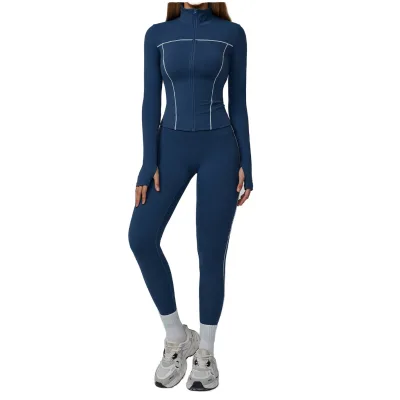
The "Number of Pieces" is a significant cost driver. A "2 Piece Set" (leggings and bra) is the standard configuration, but "3 piece sets" (adding a jacket or shorts) will naturally increase the unit cost. The "Supply Type" also plays a role; "Oem Service" typically involves higher setup costs for tooling and design, which are amortized over larger order quantities. The "MOQ" (Minimum Order Quantity) ranges from 1 to 600 units, offering flexibility for small startups while requiring larger commitments for bulk buyers to achieve the most favorable unit prices.
Lead times are another critical cost factor. The "7 days sample order lead time" indicates a responsive supply chain, but bulk production lead times will vary based on the complexity of the design and the current capacity of the factory. The "Place of Origin" in Guangdong and Zhejiang, China, suggests a mature manufacturing ecosystem with established logistics networks, which can help mitigate shipping costs. However, buyers must account for the "Single package size" variations, which range from compact 10x10x5 cm for simple sets to larger 34x24x7 cm for more complex items, directly impacting freight charges.
Supplier Evaluation and Selection Criteria
Selecting the right supplier requires a rigorous evaluation process that goes beyond price. The "Brand Name" field often shows "custom for you" or "OEM/ODM," indicating that the supplier is a manufacturer capable of private labeling. Buyers should prioritize suppliers who demonstrate a clear understanding of the "High Support" requirement, as this involves specific knitting patterns and tension controls that differ from standard activewear.
The "Model Number" (e.g., YJ178, 8022 Suit) serves as a reference point for product consistency. When evaluating suppliers, buyers should request samples of specific model numbers to verify the "Four-Way Stretch" and "Seamless" construction. The "Logo position" data, which includes locations like "back," "Waist," "Right Sleeve," and "Front," highlights the customization capabilities of the supplier. A supplier with a proven track record of precise logo placement and consistent branding across multiple batches is essential for maintaining brand integrity.
The "Technics" listed, such as "Automated cutting" and "Seamless," are indicators of the supplier's technological capability. Buyers should verify that the supplier's equipment is up-to-date and capable of producing the required fabric weight and stretch properties. The "Needle detection" feature is a strong indicator of a supplier's commitment to quality, and it should be a mandatory requirement in the supplier selection criteria. Additionally, the "Place of Origin" in Guangdong and Zhejiang suggests a concentration of expertise in textile manufacturing, but buyers should still conduct on-site audits or third-party inspections to ensure compliance with their specific standards.
Long-Term Procurement and Market Considerations
Long-term procurement of high-support seamless running sets requires a strategic approach to inventory management and supplier relationships. The "Selling Units" being "Single item" suggests that the market is moving towards individual sales, but B2B buyers often need to manage bulk inventory. The "7 days sample order lead time" is a positive indicator of supply chain agility, allowing for rapid iteration and testing of new designs.
The "Feature" list, including "Anti-static," "Breathable," and "Quick Dry," indicates that the market is evolving towards multifunctional garments. Buyers should anticipate a trend towards more specialized fabrics that offer enhanced performance in specific conditions. The "Color" options, ranging from standard White and Blue to vibrant shades like "Cherry Red" and "Glazed Purple," suggest that color trends play a significant role in product selection. Buyers should monitor fashion trends to ensure their inventory remains relevant.
The "Size" range of S, M, L, and Xl is standard, but the "Plus Size" feature indicates a growing demand for inclusivity. Long-term success depends on the ability to scale production across all size ranges without compromising the "High Support" quality. The "Supply Type" of "Oem Service" and "In-Stock Items" offers a hybrid model where buyers can maintain a core inventory of stock items while customizing new lines. This flexibility is crucial for adapting to market changes and consumer preferences.
Comparative Analysis of Product Configurations
To facilitate decision-making, the following table compares key attributes of different product configurations observed in the market. This comparison highlights the variations in material, design, and supply type that buyers should consider.
| Attribute | Configuration A (Standard Set) | Configuration B (Premium Set) | Configuration C (3-Piece Set) |
|---|---|---|---|
| Number of Pieces | 2 Piece Set | 2 Piece Set | 3 Piece Set |
| Material | Spandex / Nylon | Spandex / Nylon | Spandex / Nylon |
| Technics | Seamless, Automated cutting | Seamless, Automated cutting | Automated cutting, Printed |
| Waist Type | High | High | High |
| Closure Type | Elastic Waist | Elastic Waist | Zipper Fly (Jacket) |
| Neckline | V-neck | Stand | V-neck / Stand |
| Strap Type | Non-adjusted Straps | One-Shoulder | Other |
| Feature | Breathable, Quick Dry, Sweat-Wicking | Breathable, Quick Dry, Seamless | Breathable, Quick Dry, Seamless |
| Supply Type | Oem Service | Oem Service | In-Stock Items |
| Place of Origin | Guangdong, China | Zhejiang, China | Guangdong, China |
| Single Package Size | 10X10X5 cm | 1X1X1 cm | 34X24X7 cm |
| Single Gross Weight | 0.500 kg | 0.500 kg | 0.700 kg |
This table illustrates that while the core material and features remain consistent, the configuration of the set (2-piece vs. 3-piece) and the specific design elements (strap type, neckline) vary significantly. Buyers should use this data to align their procurement strategy with their specific market needs, ensuring that the selected products meet the functional requirements of high-support running gear while optimizing for cost and logistics efficiency. The "Needle detection" and "Automated cutting" attributes are consistent across most configurations, underscoring their importance as baseline quality standards in this category.
FAQs
What material composition is standard for these sets?
The standard material composition is a blend of Spandex and Nylon. This combination ensures durability and softness while providing the necessary four-way stretch for high-intensity running activities.
How is the waist type designed for support?
The waist type is predominantly high-rise to provide core support during movement. Most items feature an elastic waist closure rather than hardware like zippers to maintain a secure fit.
Which manufacturing techniques ensure seamless construction?
Automated cutting and seamless knitting techniques are used to create a single-piece structure. These methods eliminate side seams to reduce chafing and improve aerodynamic efficiency during exercise.
Can buyers request custom branding on the products?
Yes, custom branding is available through OEM and ODM supply types. Buyers can place logos on the back, waist, sleeves, or front depending on the specific design requirements.
What is the typical lead time for sample orders?
A seven-day sample order lead time is supported by many suppliers. This allows for rapid iteration and testing of new designs before committing to larger bulk production runs.
Which features indicate high performance for running?
Key performance features include quick dry, breathable, and sweat-wicking capabilities. These attributes prevent moisture buildup and ensure comfort during high-intensity athletic activities.