Source High Temperature Resistant Welding Glove for Welding, Construction, and Driving
Compare 16 High Temperature Resistant Welding Glove options from Chinese suppliers featuring cowhide and nylon materials. These gloves offer heat insulation, puncture resistance, and customization for welding, construction, and driving applications.
Key considerations
Products List




Comprehensive Sourcing Guide
Strategic Sourcing Guide for High Temperature Resistant Welding Gloves
Selecting the right protective equipment for high-temperature environments requires a meticulous approach that balances technical performance with supply chain reliability. For buyers researching high-temperature resistant welding gloves, the procurement process must begin with a clear understanding of the specific operational hazards and the material properties required to mitigate them. The market offers a diverse array of options, ranging from heavy-duty leather to composite materials, each designed for specific thermal challenges. This guide outlines the critical factors for evaluating these products, ensuring that procurement decisions are grounded in verified specifications and practical application needs rather than marketing assertions.
Technical Specifications and Material Composition
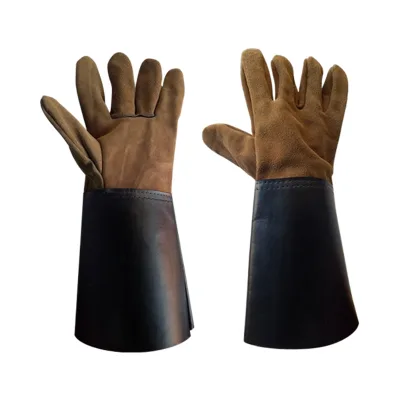
The foundation of any effective welding glove lies in its material composition and structural design. Based on observed product attributes, high-performance gloves in this category frequently utilize a combination of cowhide and nylon. Cowhide provides the necessary durability and heat resistance, while nylon adds flexibility and structural integrity. The weight of these gloves is a significant indicator of their protective capacity; observed data indicates a weight range of 280-330g, with some specific models weighing exactly 300g. This substantial mass suggests a thickened construction designed to withstand prolonged exposure to radiant heat and occasional direct contact with hot surfaces.
When evaluating technical specifications, buyers should look for specific design features that enhance safety. The "Thickened" attribute is a primary observation for high-heat applications, indicating an increased barrier against thermal transfer. Furthermore, the "Full Lining" attribute suggests that the interior is fully covered, which is crucial for preventing burns from hot metal shards or sparks that might penetrate outer layers. The "Full Palm" style is another common specification, offering maximum coverage and protection for the most vulnerable part of the hand during welding operations.
The cuff design also plays a vital role in thermal protection. Observations show a variance in cuff tightness, with options available in both "Loose" and "Tight" configurations. A loose cuff may be preferred for tasks requiring high dexterity or where the glove needs to slide over sleeves easily, while a tight cuff offers better protection against sparks entering the glove. Additionally, the "Wing" thumb design is a notable feature in several models, providing extra material and protection around the thumb joint, a common point of wear and impact. The length of the glove is equally critical; specifications range from "Medium" to "Long," with "Long" being the preferred choice for welding to ensure the forearm is protected from radiant heat and falling debris.
Compliance and Certification Verification
In the realm of industrial safety, compliance with recognized standards is non-negotiable. While general background knowledge suggests various international standards, buyers must rely on the specific certifications provided by the manufacturer for each product lot. Observed data explicitly mentions "CE Certificate" compliance with "En 388" and "En420." EN 388 is the European standard for mechanical risks, covering abrasion, blade cut, tear, and puncture resistance. EN 420 covers general requirements for protective gloves, including sizing, ergonomics, and chemical protection.
It is imperative for buyers to verify that the specific batch of gloves being purchased carries these certifications. The presence of a CE mark is not merely a label but a declaration that the product meets the essential health and safety requirements of the European Economic Area. Buyers should request the specific test reports associated with these certificates to confirm that the "Anti-scratch," "Heat Insulation," and "Puncture-Proof" attributes are backed by empirical data. While some background sources mention standards like EN 407 (thermal risks) or ASTM F1060, these should not be assumed to apply unless explicitly stated on the product documentation. Procurement teams must demand proof of testing for thermal resistance, specifically looking for data related to contact heat, convective heat, and radiant heat, as these are the primary hazards in welding.
Cost Drivers and Pricing Dynamics
Understanding the cost structure of high-temperature resistant gloves is essential for budgeting and supplier negotiation. The observed price range for these products spans from 0.74 to 5.7 USD per unit. This wide variance is driven by several factors, including the quality of the leather, the complexity of the lining, the length of the glove, and the level of customization required. Lower-priced items in this range may correspond to standard models with basic cowhide construction and minimal lining, while the higher end likely reflects premium materials, specialized treatments for heat resistance, and complex designs like the "Wing" thumb or "Full Lining."
The Minimum Order Quantity (MOQ) is another significant cost driver. The observed MOQ range is extensive, spanning from 1 to 12,000 units. Buyers seeking small quantities or samples will face higher per-unit costs due to the fixed costs of production setup, whereas large-volume orders can leverage economies of scale to reduce the unit price. The "Customization" attribute is available, which allows for branding and specific design modifications. However, OEM/ODM services often come with a higher MOQ threshold and potentially longer lead times, which must be factored into the total cost of ownership. Additionally, the "Grade" of the material, observed as "Ab" and "Bc," influences cost; higher-grade leather with fewer defects and better thermal properties will command a premium price.
Typical Applications and Operational Context
High-temperature resistant welding gloves are designed for a variety of demanding industrial applications. The primary application is, of course, welding, where the gloves must protect against intense heat, sparks, and molten metal spatter. However, the observed "Usage" attributes indicate a broader utility. These gloves are also suitable for "Pet Care," "Household Electrical Appliances," "Cleaning," and "Gardening." This versatility suggests that the gloves offer a robust barrier against a range of hazards beyond just thermal risks, including chemical exposure and mechanical abrasion.
In the context of welding, the "Heat Insulation" and "Temperature Resistance" features are paramount. The gloves must maintain their structural integrity and protective capabilities even when exposed to high thermal loads. The "Anti-scratch" and "Cut Tear Resistance" features are equally important, as welding often involves handling sharp metal edges, grinding wheels, and rough surfaces. The "Textured Grip" and "Slide Resistance" observed in some models are critical for maintaining control over hot workpieces, ensuring that the operator can manipulate materials safely without the risk of dropping them due to heat or sweat.
For applications involving "Driving," "Operation of Construction," or "Truck/Tractor" work, the gloves provide a secondary layer of protection against heat generated by engines and machinery. The "Powder-free" attribute is a significant consideration for hygiene and user comfort, preventing skin irritation and ensuring a clean grip. The "Non-Disposable" nature of these gloves indicates they are designed for long-term use, requiring proper maintenance and inspection to ensure continued safety.
Supplier Evaluation and Production Capabilities
When evaluating potential suppliers, buyers must look beyond the product specifications to the manufacturer's capabilities and reliability. The "Place of Origin" for the observed products is consistently "Shandong, China," a region known for its manufacturing base. However, the specific location should be verified to ensure it aligns with the buyer's logistical and compliance requirements. The "Brand Name" "HUARUI" is observed, but buyers should not limit their search to a single brand; instead, they should evaluate the supplier's ability to meet the specific technical and quality requirements of their operation.
Key evaluation criteria include the supplier's capacity for customization, their quality control processes, and their ability to meet delivery timelines. The "Customized" attribute indicates that OEM/ODM services are available, allowing buyers to tailor the gloves to their specific needs. However, the "Delivery Time" of 45-60 days after receiving the deposit is a critical factor for supply chain planning. Buyers must ensure that this lead time aligns with their production schedules and inventory requirements. The "Payment Term" of 30% deposit and 70% balance before shipment is standard, but buyers should negotiate terms that protect their interests and ensure product quality before final payment.
The "Trade Term" options, including FOB, CFR, and CIF, offer flexibility in logistics management. Buyers should choose the term that best suits their risk tolerance and logistical capabilities. For instance, FOB (Free on Board) places the responsibility for shipping and insurance on the buyer once the goods are on board the vessel, while CIF (Cost, Insurance, and Freight) includes these costs in the price, simplifying the logistics process for the buyer.
Quality Control and Long-Term Procurement Considerations
Ensuring consistent quality is paramount in the procurement of safety equipment. Buyers should implement a robust quality control strategy that includes pre-shipment inspections and post-delivery testing. The "Feature" attributes such as "Textured Grip," "Slide Resistance," and "Cut Tear Resistance" must be verified through physical testing to ensure they meet the claimed standards. The "Puncture-Proof" and "Insulation" ratings should be confirmed against the relevant test reports, particularly for the EN 388 and EN 420 certifications.
Long-term procurement considerations involve building a sustainable relationship with suppliers who can consistently deliver high-quality products. The "Customization" and "OEM/ODM" capabilities suggest that suppliers are willing to adapt to changing needs, which is valuable for long-term partnerships. Buyers should also consider the "prod_packing" specifications, such as "12pairs/Polybag, 120pairs/Carton" or "12pairs/Dozen in Polybag, 240pairs / CTN," to ensure that the packaging is suitable for storage and distribution. The "CTN" (Carton) packing is standard, but the dimensions, such as "412766cm" or "362473cm-14"," should be verified to optimize shipping costs and warehouse space.
Finally, buyers should maintain a proactive approach to inventory management and product lifecycle tracking. Since these gloves are "Non-Disposable," they require regular inspection for wear and tear. Establishing a protocol for replacing gloves that show signs of degradation is essential for maintaining safety standards. By focusing on verified specifications, robust supplier evaluation, and rigorous quality control, buyers can secure a reliable supply of high-temperature resistant welding gloves that meet the demanding requirements of their operations.
Summary of Key Product Attributes
| Attribute Category | Observed Specifications |
|---|---|
| Material | Cowhide, Nylon |
| Grade | Ab, Bc |
| Weight | 280-330g (Specific: 300g) |
| Length | Medium, Long |
| Thickness | Thickened |
| Lining | Full Lining |
| Cuff Tightness | Loose, Tight |
| Thumb Style | Wing |
| Palm Style | Full Palm |
| Function | Anti-Static, Anti-scratch, Heat Insulation |
| Certification | CE (En 388, En420) |
| Origin | Shandong, China |
| MOQ Range | 1 - 12,000 |
| Price Range | 0.74 - 5.7 USD |
| Lead Time | 45-60 Days (After Deposit) |
| Payment Terms | 30% Deposit, 70% Balance |
| Trade Terms | FOB, CFR, CIF |
| Customization | Available (OEM/ODM) |
| Powder Free | Yes |
| Disposable | Non-Disposable |
This comprehensive overview provides a structured framework for buyers to navigate the complex landscape of high-temperature resistant welding gloves. By adhering to these guidelines and focusing on verified data, procurement teams can make informed decisions that prioritize safety, quality, and cost-effectiveness.
FAQs
What materials are used in high temperature resistant welding gloves?
These gloves are constructed from a combination of cowhide and nylon to ensure durability and flexibility. The cowhide provides essential heat resistance while the nylon adds structural integrity for demanding welding operations.
Which certifications do these gloves meet for safety compliance?
The gloves carry CE certification compliant with EN 388 and EN 420 standards. These certifications verify resistance to mechanical risks and general safety requirements for protective equipment used in industrial environments.
How long is the delivery time for bulk orders of these gloves?
The standard delivery time is 45 to 60 days after receiving the deposit. This lead time applies to custom orders and bulk shipments from manufacturers located in Shandong, China.
Can I customize the packaging and branding for these gloves?
Yes, customization is available for both OEM and ODM requirements including specific packaging. Buyers can request custom cartons or polybags with dimensions tailored to their logistical needs and branding preferences.
What is the typical weight range for these thickened welding gloves?
The gloves typically weigh between 280 and 330 grams per pair. This substantial weight indicates a thickened construction designed to provide robust protection against heat and punctures during heavy industrial tasks.
What is the minimum order quantity for purchasing these gloves?
The minimum order quantity ranges from 1 unit up to 12,000 units depending on the supplier. Buyers can source small sample quantities or large bulk orders to leverage economies of scale.
Are these gloves suitable for applications beyond welding?
Yes, they are also suitable for pet care, cleaning, gardening, and operating household electrical appliances. The durable design offers protection against heat, scratches, and mechanical hazards in various non-welding contexts.