Source Halogen Oven for Home Kitchen and Picnic Use
Compare 30 halogen oven listings from Guangdong suppliers with prices ranging from 1 to 3391.09 USD. Buyers can evaluate specifications like 1200W power, 12L capacity, and mechanical timer controls for household or commercial applications; compare the available evidence and request quotations based on your requirements.
Key considerations
Products List


56 Liter Home Appliance Baking Multi-Purpose Electric Oven Electric Oven
$149.00 - $151.00
MOQ: 100 Boxes

$123.00 - $125.00
MOQ: 100 piece


Home Appliance 60cm Multi-Function with Digital Control Built in Electric Oven
$175.00 - $200.00
MOQ: 100 Pieces


Home Application Baking Machine Pizza Oven Baking Oven Kitchen Application
$149.00 - $152.00
MOQ: 200 Pieces

Advanced Home Appliance Featuring Innovative Halogen Heating Technology
$1.00 - $14.50
MOQ: 1000 Pieces


Comprehensive Sourcing Guide
Home Appliance Halogen Oven Sourcing Guide
Product Scope and Observed Listing Signals
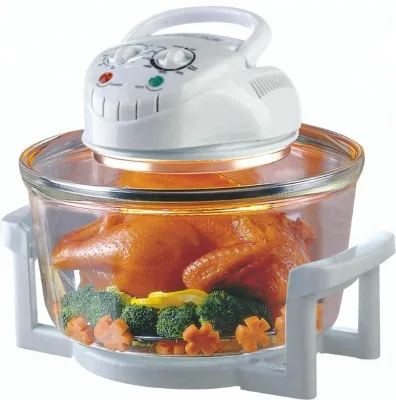
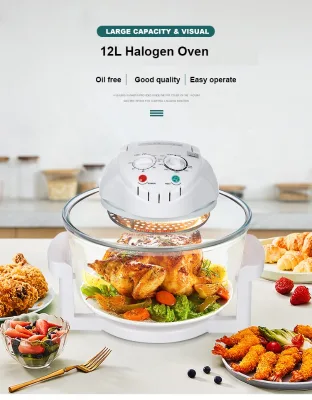
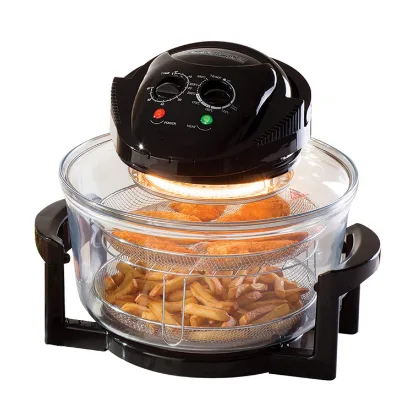
The Home Appliance Halogen Oven market presents a distinct category of countertop cooking devices that utilize halogen lamps for rapid, efficient heating. These units are primarily designed for household use, though some listings indicate suitability for commercial, picnic, kitchen, or garden applications. The observed product count of thirty items suggests a niche but active supply chain, with prices ranging from $1 to $3,391.09 USD. This wide variance likely reflects differences in material quality, brand positioning, and included accessories rather than fundamental functional differences. Buyers should note that the majority of these units are marketed as turbo ovens or flavor wave ovens, emphasizing their convection capabilities.
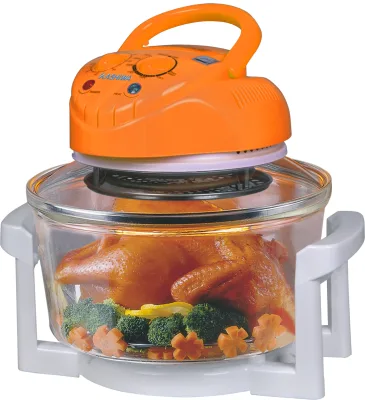
Listing signals reveal a strong emphasis on customization and private labeling, with many suppliers offering OEM services under brands like ASKOY. The typical unit features a single oven configuration with mechanical timer control, operating on a 220V electric power source with a 1200W rating. Materials commonly include a combination of glass, plastic, and stainless steel, with housing often made of plastic for durability and heat resistance. The color palette is diverse, including white, black, orange, red, and yellow, allowing for aesthetic integration into various kitchen decors. Buyers must carefully distinguish between standard retail models and bulk industrial variants, as the latter may have different packaging and logistical requirements.
Technical Specifications to Verify
When evaluating technical specifications, the capacity of the halogen oven is a critical factor, with observed ranges typically falling between 11 and 20 liters, specifically noting a 12L capacity in many listings. The heating element is predominantly a halogen tube or stainless steel, providing the core thermal energy for cooking. Temperature control is a key feature, with ranges extending from 0 to 250 degrees Celsius, allowing for versatile cooking methods from slow roasting to high-heat searing. Buyers should verify the presence of an adjustable thermostat and overheat protection mechanisms, which are standard safety features in these units. The inclusion of an observation window and light indicator enhances user experience by allowing monitoring without heat loss.
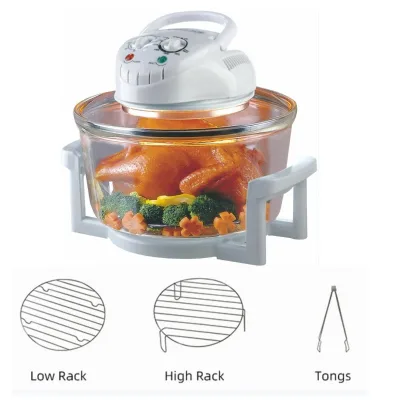
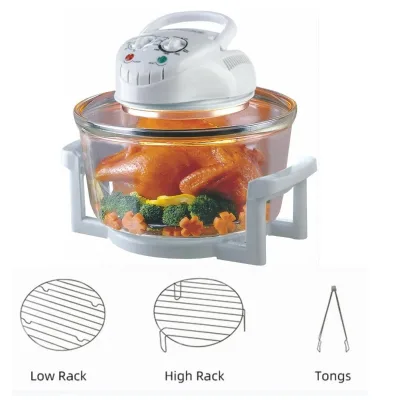
Physical dimensions and weight are essential for logistics and storage planning. Single package sizes vary, with some units measuring 37x37x25 cm and others 44x44x31 cm, impacting shipping volume calculations. The gross weight per unit is approximately 6.000 kg, which influences freight costs and handling requirements. Accessories such as high racks, low racks, and tongs are commonly included, adding value to the purchase. Buyers must confirm the plug type compatibility, as options include AU, EU, UK, and US standards, ensuring the unit can be safely connected to local electrical infrastructure without additional adapters or modifications.
Compliance and Safety Documentation
Compliance with international safety and environmental standards is non-negotiable for importing home appliances. The observed product attributes list a comprehensive set of certifications, including CB, CE, EMC, GS, LFGB, RoHS, SAA, REACH, ETL, and A13. These certifications indicate adherence to specific regional regulations, such as the European Union’s CE marking for safety and the US ETL listing for electrical safety. Buyers must verify that the provided certificates are valid and issued by recognized testing bodies for the specific model and batch being purchased. The presence of LFGB certification is particularly important for food-contact materials, ensuring that the glass and plastic components do not leach harmful substances.
Electromagnetic compatibility (EMC) and radio interference standards are also critical, especially for units with electronic controls, although many observed models use mechanical timers. The RoHS directive ensures that hazardous substances like lead and mercury are minimized in the manufacturing process. Buyers should request copies of these certificates and cross-reference them with the supplier’s factory audit reports. It is advisable to confirm that the certification covers the exact voltage and frequency specifications of the order, as variations in power input can affect compliance status. Maintaining a complete dossier of these documents is essential for customs clearance and retail compliance in the destination market.
Cost Drivers and Commercial Terms
The cost structure of halogen ovens is influenced by several factors, including material composition, certification requirements, and order volume. The observed minimum order quantity (MOQ) ranges from 1 to 1,060 pieces, with a specific mention of 500 pcs in some listings. Higher volumes typically unlock better pricing tiers, but buyers must balance inventory costs against cash flow constraints. The supply ability is noted as 10,000 pieces per month, indicating that suppliers can handle large orders without significant lead time delays. Packaging details vary, with options for gift boxes or standard cartons, which can affect the final unit cost and retail presentation.
Commercial terms such as payment methods, shipping terms, and warranty policies are crucial for risk management. Most suppliers offer a one-year warranty and provide free spare parts, which reduces long-term maintenance costs for the buyer. The port of dispatch is typically XIAOLAN or SHENZHEN, which are major logistics hubs in Guangdong, China. Buyers should negotiate clear terms for defective unit replacement and return shipping responsibilities. Additionally, the availability of private molds allows for unique product differentiation, but this may involve additional tooling costs and longer initial lead times. Understanding these commercial nuances helps in creating a realistic total landed cost model.
Supplier Qualification and Quality Control
Supplier qualification is the first line of defense against procurement risks. Buyers should prioritize suppliers with verified manufacturing capabilities, as indicated by the presence of private molds and consistent supply abilities. The place of origin is consistently Guangdong, China, a region known for its robust electronics and appliance manufacturing ecosystem. Due diligence should include verifying the supplier’s business license, export history, and financial stability. Requesting samples before placing bulk orders is essential to assess build quality, material durability, and functional performance. The sample evaluation should include testing the halogen lamp’s lifespan, the accuracy of the thermostat, and the stability of the glass dome.
Quality control processes must be clearly defined and enforced throughout the production cycle. Buyers should implement pre-shipment inspections to check for cosmetic defects, packaging integrity, and accessory completeness. The inspection should also verify that the product labels and warning stickers are in the correct language and comply with local regulations. Establishing a clear acceptance criteria for defects, such as cracks in the glass or malfunctioning timers, is vital. Suppliers offering OEM services should be evaluated on their ability to maintain brand consistency and quality standards across different production batches. Regular communication and clear specifications help minimize misunderstandings and ensure consistent product quality.
Long-Term Procurement Checks
Long-term procurement success depends on continuous monitoring of supplier performance and market trends. Buyers should establish key performance indicators (KPIs) such as on-time delivery rates, defect rates, and responsiveness to issues. Regular audits, whether virtual or on-site, can help identify potential quality or compliance drifts before they become significant problems. The halogen oven market is subject to evolving energy efficiency standards and consumer preferences for smart features. Although current listings show no app-controlled units, buyers should stay informed about technological advancements that may impact product relevance. Adapting to these changes ensures that the product portfolio remains competitive.
Sustainability and end-of-life management are increasingly important considerations for global supply chains. Buyers should inquire about the recyclability of materials and the supplier’s environmental policies. The use of RoHS-compliant materials is a positive step, but further initiatives like reduced packaging waste or energy-efficient manufacturing processes add value. Building a strong relationship with the supplier can lead to better pricing, priority production, and collaborative innovation. Regular review of contract terms and compliance documentation ensures that both parties remain aligned with legal and ethical standards. Proactive management of these long-term factors mitigates risks and supports sustainable business growth.
FAQs
What certifications does this halogen oven have?
This halogen oven holds multiple certifications including CB, CE, EMC, GS, LFGB, RoHS, SAA, REACH, ETL, and A13. These ensure compliance with international safety and environmental standards for both household and commercial applications.
How is the temperature controlled in this oven?
The oven features mechanical timer control with an adjustable thermostat and overheat protection. It operates within a temperature range of 0 to 250 degrees Celsius, allowing precise cooking control for various food types.
What is the power consumption of this appliance?
This halogen convection oven consumes 1200 watts of power and operates on 220 volts. It uses a halogen tube or stainless steel heating element to ensure efficient and rapid heating for your cooking needs.
Can I get free spare parts for this oven?
Yes, the supplier provides free spare parts as part of the after-sales service. This warranty support ensures long-term usability and helps maintain the performance of the appliance for both home and commercial users.
What is the capacity of this halogen oven?
The oven has a capacity of 12 liters, falling within the 11 to 20 liter range. This size is suitable for picnics, kitchens, and gardens, offering ample space for cooking various meals efficiently.
Which plug types are available for this product?
The product supports AU, EU, UK, and US plug types to match local electrical standards. This flexibility allows for easy installation and use in different regions without requiring additional adapters or converters.
What materials are used to construct this oven?
The housing is made of plastic while the interior includes glass and stainless steel components. These durable materials ensure safety and longevity, making the unit suitable for frequent use in various kitchen environments.