Find Home Bathroom Toilet Paper Holder for Bathrooms, Offices, Living Rooms
Source 30 options for the Home Bathroom Toilet Paper Holder with features like wall mounted or free standing designs. Compare stainless steel and bamboo models from Guangdong and Fujian suppliers with customizable sizes and modern styles.
Key considerations
Products List


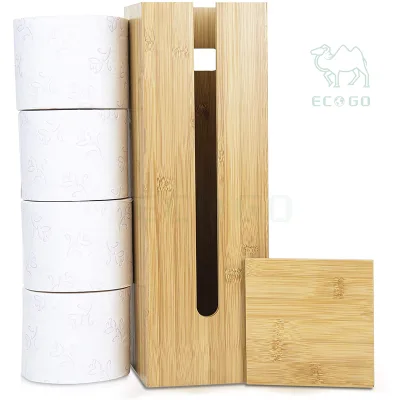
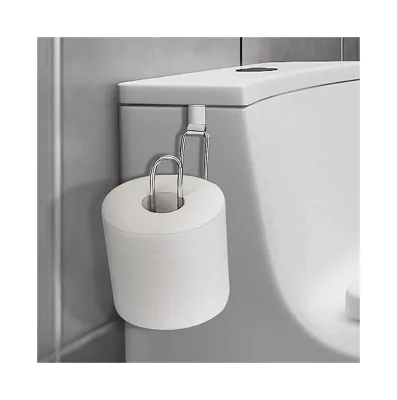
Modern Design Tissue Paper Roll Holder Bathrooms Standing Toilet Paper Holder
$0.99 - $2.99
MOQ: 500 Pieces






Comprehensive Sourcing Guide
Strategic Sourcing Guide for Home Bathroom Toilet Paper Holders
Understanding Product Variants and Technical Specifications
When sourcing home bathroom toilet paper holders, buyers must first navigate a diverse landscape of product configurations that directly impact installation, durability, and aesthetic integration. The core keyword "Home Bathroom Toilet Paper Holder" encompasses a wide range of functional designs, from wall-mounted units to free-standing structures. Based on observed market data, the product category includes distinct models identified by specific model numbers such as BTH020, BTH093, BTH035, BTH051, BTH064, and BTH052. These identifiers often correspond to specific dimensional standards and material compositions.
Technical specifications are critical for ensuring the product fits the intended space. Dimensions vary significantly across the catalog. For instance, one observed standard specification is a diameter of 21.5 cm with a height of 68.5 cm, while another model features a diameter of 16 cm and a height of 56 cm. A third variation lists dimensions of 23 cm by 18 cm with a height of 69.5 cm. These measurements are not merely aesthetic; they dictate the spatial requirements for the installation area. Buyers must verify the "prod_standard" field for each potential supplier to ensure the unit does not obstruct other bathroom fixtures or exceed the available wall space.
The physical form factor is equally important. The market offers both circular and round shapes, with some units explicitly described as having a "Side Shed" style. Installation types are bifurcated into "Wall Mounted" and "Free Standing" categories. A free-standing unit, often referred to as a "Side Shed" or "Free Standing" type, requires floor space and does not necessitate drilling, which is a key differentiator for rental properties or temporary installations. Conversely, wall-mounted units typically require "Hole Drilling" capabilities, though some product listings indicate "Without Hole Drilling" options, suggesting adhesive or alternative mounting mechanisms. The material composition is predominantly stainless steel, which offers corrosion resistance in humid bathroom environments, though some variations utilize "Other" frame materials or bamboo, indicated by specific model numbers like EG-Bamboo Toilet Paper Holder.
Compliance, Certification, and Material Standards
In the B2B procurement of bathroom fixtures, compliance and material integrity are paramount. The primary material observed in this category is stainless steel, a choice driven by its resistance to rust and water damage. However, buyers must verify the specific grade and finish of the steel, as "ISOColor:White" and "ISOColor:Silver" indicate distinct surface treatments that affect both aesthetics and maintenance requirements. The "Eco Go" brand and "Natural" color options suggest a segment of the market focusing on eco-friendly or organic aesthetics, potentially utilizing bamboo or treated wood alongside metal components.
Certification status requires careful scrutiny. The supplied data indicates that certifications are often "Customized," meaning they are not universal across all SKUs but are available upon request or specific to certain production runs. While "ISO" is mentioned in the context of color and general certification, specific standards like FSC or BSCI appear in low-confidence background data and should not be assumed as standard features without direct verification from the supplier. Buyers should explicitly request proof of certification for any claims regarding environmental sustainability or social compliance. The "prod_standard" field often includes dimensional tolerances, but explicit material safety standards (such as heavy metal limits or finish durability) must be confirmed through technical data sheets.
When evaluating the "Frame Material," buyers should note that while stainless steel is common, some listings specify "Other" materials. This ambiguity necessitates a request for a material breakdown. For bamboo or wooden variants, the treatment process against moisture is a critical compliance factor. The "Technics" field lists "Welding" as a primary manufacturing method, which implies structural integrity checks are necessary to ensure joints are secure and do not fail under the weight of paper rolls.
Cost Drivers and Minimum Order Quantity Analysis
The pricing structure for toilet paper holders is influenced by a complex interplay of material costs, customization levels, and order volume. The observed listed price range in the market spans from $0.42 to $44.60 USD. This wide disparity is not indicative of a single product line but rather reflects the diversity of the category, ranging from basic, mass-produced units to high-end, custom-designed fixtures. The lower end of the price spectrum likely corresponds to simple, stock paper models with minimal customization, while the upper end reflects units with complex designs, premium finishes, or specific branding requirements.
Minimum Order Quantity (MOQ) is a significant cost driver and logistical constraint. The observed MOQ range extends from 1 unit to 5,000 units. This flexibility allows buyers to test the market with small orders or commit to large-scale distribution. Specific models show distinct MOQ thresholds; for example, one listing specifies an MOQ of 1,000 units, while another indicates an MOQ of 500 units. Buyers must align their procurement strategy with these thresholds to avoid excessive per-unit costs associated with small batches or to ensure they meet the volume requirements for pricing tiers.
Customization is a primary factor influencing both price and MOQ. The attribute "Customization: Available" and "Customized" suggests that buyers can request specific logos, colors, or dimensions. However, customization typically increases the MOQ and the unit price. The "Logo: Laser Engraving" option indicates a specific branding method that may require a higher volume to be cost-effective. Additionally, the "Packing" specifications, such as "1 PC/Color Box, 12 PCS/ Carton" or "Polybag+White Box," affect the shipping volume and cost. Bulkier packaging increases freight charges, which must be factored into the total landed cost.
Typical Applications and Functional Requirements
The application scope for these holders extends beyond the traditional bathroom, although "Bathroom" remains the primary use case. The data explicitly lists "Home Office, Living Room" as valid applications, indicating that the design aesthetic is versatile enough for multi-room use. The "Modern" design style supports this versatility, allowing the fixtures to blend seamlessly into contemporary interior schemes. The "Product name" descriptions, such as "Toilet paper storage standing toilet paper holder," highlight the dual function of storage and support, which is essential for maintaining a clutter-free environment.
Functional requirements vary based on the installation type. For wall-mounted units, the "Installation Type" must be verified against the wall surface material (e.g., tile, drywall, concrete) to ensure the mounting hardware is compatible. The "Without Hole Drilling" attribute suggests a specific subset of products designed for non-invasive installation, which is highly valued in rental markets or historic buildings where structural modifications are prohibited. For free-standing units, the "Feature: Free Standing" attribute implies stability is a key design consideration. The "Single gross weight" of 2.0 kg for certain models provides insight into the stability and material density required to prevent tipping.
The "Tissue Type: Stock Paper" attribute confirms compatibility with standard toilet paper rolls, but buyers should verify if the holder accommodates jumbo rolls or multi-ply variations, which are increasingly common in commercial and high-traffic residential settings. The "Set: Sets" attribute suggests that some suppliers offer coordinated collections, allowing buyers to purchase matching units for multiple bathrooms or rooms, which can streamline the procurement process and ensure design consistency.
Supplier Evaluation and Operational Capabilities
Evaluating suppliers requires a focus on their operational capabilities, specifically regarding origin, lead times, and after-sales support. The "Place of Origin" is consistently listed as "Guangdong, China" for many models, with some originating from "Fujian, China." These regions are known for their manufacturing clusters in hardware and home fixtures, offering a competitive advantage in terms of supply chain efficiency. However, buyers should verify the specific factory location to assess logistics costs and potential geopolitical risks.
Lead times are a critical component of supplier evaluation. The "SAMPLE TIME" is observed to be 7-10 days, which serves as a baseline for initial product evaluation. However, bulk production lead times are not explicitly stated in the provided data and must be negotiated. Buyers should inquire about the production schedule for custom orders, as "Customized" items often require longer lead times due to the need for tooling or specific finishing processes.
After-sales service is another vital metric. The attribute "After-Sale Service: Free Spare Parts" indicates a commitment to product longevity and customer satisfaction. This is particularly important for metal fixtures that may suffer from wear or damage over time. Buyers should clarify the scope of "Free Spare Parts" to ensure it covers critical components like mounting brackets or internal mechanisms. The "mail packing: Y" attribute suggests that some suppliers offer specific mailing or shipping options, which should be clarified to ensure safe transport of fragile items.
Quality Control and Long-Term Procurement Strategy
Quality control in the bathroom fixture sector must address both aesthetic and functional durability. The "Technics: Welding" process requires inspection for weld integrity, ensuring that joints are smooth and secure. The "Shape: Circular" and "Shape: Round" attributes imply a need for dimensional consistency; buyers should request samples to verify that the curvature is uniform and that the finish is free from scratches or discoloration. The "Single package size" of 20x18x10 cm provides a benchmark for packaging quality, which must be sufficient to protect the product during transit.
For long-term procurement, buyers should establish a relationship with suppliers who offer "Customized" solutions. This flexibility allows for brand alignment and product differentiation. The "prod_model" variations (BTH020, BTH093, etc.) suggest a modular approach to product development, enabling buyers to mix and match features. However, maintaining consistency across large orders is essential. Buyers should implement a rigorous inspection protocol that includes checking the "prod_standard" dimensions against the physical product and verifying the "Certification" status for each batch.
Finally, buyers must consider the total cost of ownership, which includes not only the purchase price but also shipping, installation, and potential replacement costs. The "MOQ" of 1 to 5,000 units offers flexibility, but buyers should aim for a volume that balances inventory costs with the need for variety. By focusing on suppliers with clear specifications, robust after-sales support, and a history of consistent quality, buyers can secure a reliable supply chain for home bathroom toilet paper holders that meets both functional and aesthetic demands.
FAQs
What are the available installation types for these holders?
The available installation types include wall-mounted and free-standing options. Some models feature a side shed design that does not require hole drilling, making them suitable for rental properties or surfaces where drilling is prohibited.
Which materials are commonly used for bathroom toilet paper holders?
Stainless steel is the predominant material used due to its corrosion resistance in humid environments. Some variations utilize other frame materials or bamboo, often finished in white or silver colors to match modern bathroom aesthetics.
Can buyers request custom certifications for these products?
Yes, certifications are available as customized options rather than universal standards across all SKUs. Buyers must explicitly request proof of certification for specific environmental or social compliance claims like ISO standards during the procurement process.
What is the typical minimum order quantity for these items?
The minimum order quantity ranges from one unit to five thousand units depending on the supplier and model. Specific listings show thresholds of 500 or 1000 units, with customization often increasing the required volume for cost-effective pricing.
How long does it take to receive a product sample?
The sample time is typically observed to be between seven and ten days for initial product evaluation. Bulk production lead times are not fixed in the data and must be negotiated directly with the supplier based on order volume and customization needs.
What dimensions are standard for these toilet paper holders?
Standard dimensions vary significantly, with examples including a diameter of 21.5 cm by 68.5 cm height or 16 cm by 56 cm height. Buyers must verify the specific prod_standard field for each model to ensure it fits the intended installation space.
Where are these products primarily manufactured?
These products are primarily manufactured in Guangdong and Fujian provinces in China. These regions offer competitive supply chain advantages for hardware and home fixtures, though buyers should verify specific factory locations to assess logistics costs.