Source Home Appliances Rotary Switch for Vehicles, Machinery, Toys
Compare 30 Home Appliances Rotary Switch options from verified Chinese manufacturers. Buyers can evaluate specifications like voltage, material, and customization support for use in vehicles, communication devices, and electrical appliances.
Key considerations
Products List


Electrical Rotary Switches for Electric Gas Stove/Oven/Household Appliances
$0.20 - $0.60
MOQ: 500 Pieces


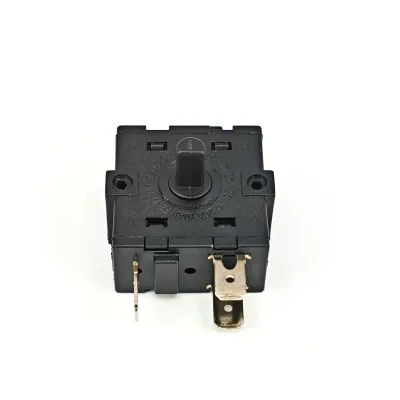


Not More Than 150 Degrees Rotary Home Appliance Oven Push Button Switch
$1.00 - $1.80
MOQ: 1000 Pieces


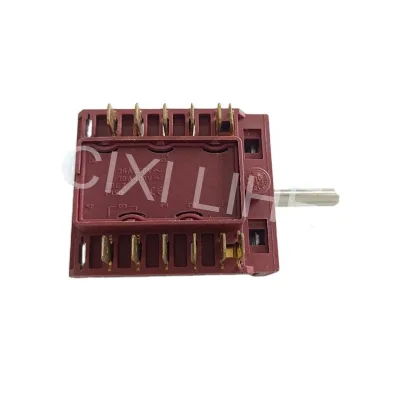
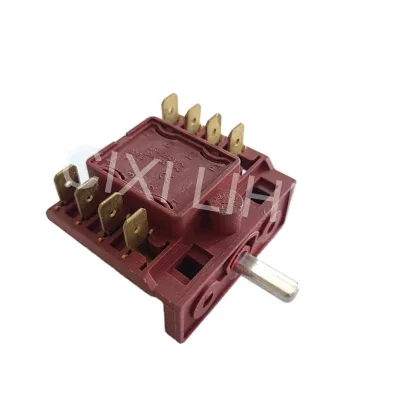
Electrical Appliance Rotary Switch for Cooker Stove Oven Button with ISO
$1.00 - $1.80
MOQ: 1000 Pieces


Good Price Electrical Appliance 5 Position 16A Rotary Switch for Oven with ISO
$1.00 - $1.80
MOQ: 1000 Pieces

Electrical Appliance Rotary Switch for Cooker Stove Oven Button with GS
$1.00 - $1.80
MOQ: 1000 Pieces




Comprehensive Sourcing Guide
Strategic Sourcing Guide for Home Appliances Rotary Switches
Understanding Technical Specifications and Operational Variability
When sourcing rotary switches for home appliances, buyers must first navigate a complex landscape of technical attributes that vary significantly across product listings. The core keyword "Home Appliances Rotary Switch" encompasses a broad spectrum of components, ranging from simple single-button mechanisms to complex multi-position units designed for specific electrical loads. Based on observed market data, the operational mechanics of these switches are defined by distinct parameters such as the number of positions, the type of operation, and the structural design.
A critical observation in the current market is the variance in switch configurations. Some units are characterized by a "Single Button" rotary number, while others offer multiple positions, specifically ranging from 2 to 3 positions. This distinction is vital for procurement teams, as the number of positions directly correlates to the functionality required in the end product. For instance, a 2-position switch might suffice for a simple on-off application in a small electrical appliance, whereas a 3-position switch could be necessary for selecting different heat settings on a cooking device.
The physical structure of the switch also presents diverse options. Buyers may encounter "Self-Reset" structures, which automatically return to a neutral or default position after actuation, or "Mushroom-Head" designs, which often imply a specific tactile feel or safety requirement. The operation type further diversifies the selection, with "Knob" operation being a standard method for user interaction, contrasted against "Open Type" mechanisms that may be designed for specific mounting or accessibility needs.
Electrical parameters are equally critical. The maximum voltage rating observed in the market is 250V, with specific units rated for AC 250V at 16A. This indicates that while many switches are suitable for standard household voltage, the current handling capacity varies. Some listings explicitly state a maximum current of 16A, while others provide a generic "Max Voltage" of 250 without specifying the amperage. Buyers must verify the specific current rating against the load requirements of the appliance to prevent overheating or contact failure. Furthermore, the mechanical life is a key durability metric, with some high-performance units boasting a mechanical life of 100,000 cycles. This figure serves as a benchmark for long-term reliability, though it is not a universal standard for all rotary switches in the category.
Compliance and Certification Verification
In the global B2B market, compliance is not merely a formality but a prerequisite for market access and safety. The supply chain for rotary switches is heavily influenced by international and regional certification standards. Observed product data indicates a prevalence of CE and ISO certifications. The CE mark signifies conformity with health, safety, and environmental protection standards for products sold within the European Economic Area, while ISO certification suggests adherence to international quality management standards.
However, buyers must exercise caution when interpreting certification claims. While some listings explicitly state "CE, ISO" together, others list "RoHS" alongside CE, indicating compliance with the Restriction of Hazardous Substances directive. The presence of RoHS is particularly important for electronic components, ensuring that the switch does not contain restricted materials like lead or mercury. It is essential to note that not every product in the category may possess all these certifications. The data shows a mix of "Standard" and "Nonstandard" classifications, which implies that some products may not meet the rigorous requirements of international standards bodies.
Buyers should verify the specific certification documents provided by the supplier rather than relying solely on the product title. The distinction between "Standard" and "Nonstandard" in product attributes often relates to whether the item meets a specific industry standard or is a custom modification. For home appliances intended for export, verifying that the switch carries the necessary CE marking for the target region is non-negotiable. Additionally, the material composition plays a role in compliance; for example, switches made from "Bakelite" or "Stainless Steel" may have different flammability or environmental compliance profiles compared to those made from "Plastic."
Cost Drivers and Pricing Dynamics
The pricing structure for rotary switches is influenced by a combination of material costs, customization levels, and order volume. The observed price range in the market spans from $0.08 to $3.00 USD. This wide variance suggests that the cost is not linear but is driven by specific product attributes. Lower-priced items in the $0.08 range are likely to be standard, non-customized units with basic materials such as plastic or simple metal components. In contrast, items approaching the $3.00 mark may feature premium materials like stainless steel, specialized coatings, or complex internal mechanisms that offer higher durability or specific electrical ratings.
Material composition is a primary cost driver. Listings indicate the use of "Bakelite," "Stainless Steel," and "Plastic." Stainless steel components generally command a higher price due to the cost of raw materials and the manufacturing processes required to shape and finish them. Similarly, switches with "Eco-Friendly" features or those adhering to strict RoHS standards may carry a premium over standard plastic alternatives.
Customization is another significant factor affecting price. The market data confirms that "Customization" and "ODM" (Original Design Manufacturing) services are available. Products that support "Support Customization" often require tooling changes, design adjustments, or specific packaging solutions, all of which increase the unit cost. The "prod_standard" attribute, which ranges from "17mm" to "Customized," further illustrates how dimensional specifications impact pricing. Non-standard dimensions or custom lengths often require dedicated production runs, reducing economies of scale and increasing the per-unit cost.
Order volume also plays a crucial role in the final price. The observed Minimum Order Quantity (MOQ) ranges from 100 to 2,000 units. Suppliers typically offer tiered pricing structures where the unit cost decreases as the order volume increases. Buyers purchasing at the lower end of the MOQ range (e.g., 100 units) may face prices closer to the upper limit of the observed range ($3.00), while those placing orders near the 2,000-unit threshold may secure prices closer to the lower limit ($0.08). Understanding this relationship is essential for budgeting and negotiating effectively with suppliers.
Typical Applications and Usage Scenarios
Rotary switches for home appliances are utilized across a diverse array of sectors, each with unique operational demands. The observed usage data highlights applications in "Vehicle," "Communication," "Machinery," "Electrical Appliance," "Digital Products," and "Toys." However, for the specific context of home appliances, the focus narrows primarily to "Electrical Appliance" and "Machinery" applications.
In the realm of electrical appliances, these switches are integral to controlling power and function. For example, the "Self-Reset" structure is often found in safety-critical appliances where a switch must return to a safe state after a specific action. The "Mushroom-Head" design is frequently associated with emergency stop functions or high-visibility control points in kitchen machinery. The "Open Type" operation might be preferred in appliances where the switch is integrated into a larger control panel, requiring a flush or semi-recessed installation.
Specific product models provide insight into specialized applications. The "RS17040V02" and "RS07" models are associated with general electrical appliance usage, while the "XQ-025" and "SNDW-3708" models are linked to more complex machinery. Notably, some listings mention "Fuel Type: Natural Gas" and "Ignition Mode: Electronic Ignition," indicating that these rotary switches are used in gas-powered home appliances such as cookers or water heaters. The "Type: Free Standing Gas Cooker" attribute confirms that these components are essential for the operation of major kitchen appliances.
The versatility of these switches is further demonstrated by their application in "Digital Products" and "Toys," suggesting that the technology is adaptable to various consumer goods. However, for home appliance procurement, the focus remains on reliability and safety. The "Mechanical Life" of 100,000 cycles is particularly relevant for appliances that undergo frequent use, such as washing machines or ovens, where the switch must withstand repeated actuation without failure.
Supplier Evaluation and Selection Criteria
Selecting the right supplier for rotary switches requires a rigorous evaluation process that goes beyond price comparison. The market data indicates that suppliers are located in "China," with specific mentions of "Guangdong, China" as a manufacturing hub. This concentration suggests a mature supply chain with established logistics and manufacturing capabilities. However, buyers should not assume that all suppliers in this region offer the same level of quality or reliability.
Key evaluation criteria include the supplier's ability to provide "ODM" services and support "Customization." Suppliers that offer ODM capabilities are better positioned to assist buyers in designing switches that meet specific product requirements, such as unique dimensions or specialized electrical ratings. The "Customized" attribute in product listings indicates that the supplier is willing to adapt their standard offerings to fit the buyer's needs.
Certification status is another critical factor. Buyers should prioritize suppliers who can provide verifiable documentation for "CE," "ISO," and "RoHS" certifications. The presence of these certifications in the product data is a positive indicator, but buyers must request copies of the actual certificates to ensure they are valid and applicable to the specific batch of goods. Additionally, the "Condition: New" attribute is a basic requirement, but buyers should also inquire about the supplier's quality control processes to ensure that all products meet the "Standard" or "Nonstandard" specifications as agreed.
Packaging and logistics are also important considerations. The "prod_packing" attribute mentions "Carton" and "Packaging Suitable for Shipping," indicating that suppliers generally provide standard protective packaging. However, for international shipments, buyers should verify that the packaging meets the specific requirements of the destination country and can withstand the rigors of transit. The "Location" and "Origin" details should be cross-referenced with the supplier's business license to ensure transparency and legitimacy.
Quality Control and Long-Term Procurement Strategies
Ensuring the quality of rotary switches is paramount to the reliability of the final home appliance. Buyers should implement a robust quality control strategy that includes pre-shipment inspections and post-delivery testing. The "Mechanical Life" of 100,000 cycles is a key performance indicator that should be verified through independent testing or third-party certification. This metric ensures that the switch can withstand the expected usage patterns of the appliance over its lifespan.
Electrical safety is another critical aspect of quality control. The "Max Voltage" and "Max Current" ratings must be strictly adhered to. Buyers should verify that the switches are tested for dielectric strength and insulation resistance to prevent electrical failures. The "Material" composition, whether "Bakelite," "Stainless Steel," or "Plastic," should be consistent with the product specifications to ensure durability and resistance to environmental factors.
Long-term procurement strategies should focus on building a sustainable relationship with suppliers who demonstrate consistency in quality and delivery. The "MOQ" range of 100 to 2,000 units offers flexibility for buyers to scale their orders based on demand. However, buyers should aim to establish a stable order volume that allows for better pricing and prioritization by the supplier. Regular communication regarding production schedules, lead times, and any changes in specifications is essential to maintain a smooth supply chain.
Finally, buyers should consider the "Eco-Friendly" features of the switches as part of their long-term strategy. As environmental regulations become more stringent, sourcing switches that comply with RoHS and other environmental standards will be increasingly important. By prioritizing suppliers who demonstrate a commitment to sustainability and quality, buyers can ensure the long-term success and reliability of their home appliance products. The combination of technical expertise, rigorous quality control, and strategic supplier relationships will form the foundation of a successful procurement program for rotary switches.
FAQs
What certifications are available for home appliances rotary switches?
Common certifications include CE, ISO, and RoHS. While many listings show these marks, not every product satisfies all standards, so buyers must verify specific documents for their target market before ordering.
Which electrical ratings apply to these rotary switches?
The maximum voltage is typically 250V, with some units rated for AC 250V at 16A. Buyers should check the specific current rating against their appliance load to ensure safety and prevent overheating during operation.
Can I request customization for home appliances rotary switches?
Yes, suppliers support customization and offer ODM services. This allows for unique dimensions or features, but it often increases the unit cost and may require higher minimum order quantities than standard items.
What is the typical mechanical life of these switches?
Some high-performance units boast a mechanical life of 100,000 cycles. This durability metric is crucial for appliances with frequent use, though it is not a universal standard for all listed rotary switch models.
How does material affect the price of rotary switches?
Materials like stainless steel or Bakelite influence the cost significantly. Stainless steel components generally command higher prices due to raw material costs, while plastic options are often found at the lower end of the price range.
What is the minimum order quantity for these switches?
The observed minimum order quantity ranges from 100 to 2,000 units. Buyers purchasing at the lower end of this range may face higher per-unit costs compared to those placing larger volume orders.