Source Home Air Conditioner Support for brackets, vents, and valves
Compare 30 Home Air Conditioner Support options including brackets, ventilation units, and valves. Buyers can review specifications, materials like PVC and stainless steel, and customization features from verified Chinese manufacturers.
Key considerations
Products List


Hot Sell AC Installation Air Conditioner Floor Support From China Manufacturer
$1.00 - $10.00
MOQ: 1000 Pieces


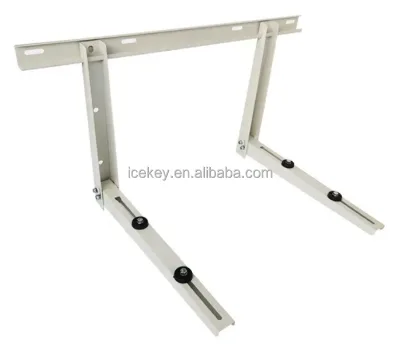
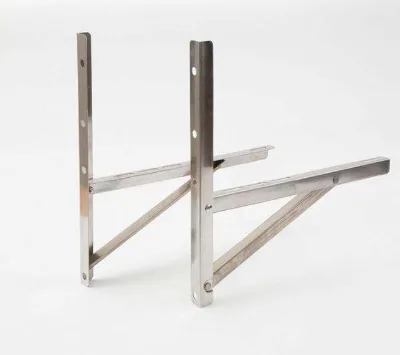


Professional OEM Air Conditioner Support Bracket with Quick Sample Service
$2.80 - $3.50
MOQ: 1000 Pieces

AC Support Outdoor Window Air Conditioner Bracket Air Conditioner Mount Bracket
$2.80 - $3.50
MOQ: 1000 Pieces


Comprehensive Sourcing Guide
Strategic Sourcing Guide for Home Air Conditioner Support Systems
Understanding Product Categories and Technical Specifications
When sourcing support systems for home air conditioning units, buyers must first distinguish between structural brackets, mounting hardware, and auxiliary components like ventilation or control interfaces. The market offers a diverse array of products, ranging from simple metal brackets to complex valve systems. A primary observation in the current supply landscape is the prevalence of products designated as "Air Conditioner Bracket" or "Bracket," often featuring a "Triangle Bracket" structure designed for stability. These units are frequently manufactured using "Metal" arts, with specific material compositions varying between "Stainless Steel" and "PVC" depending on the application and environmental exposure.
Technical specifications are critical for ensuring compatibility with existing home infrastructure. Dimensions vary significantly across product lines. Some units adhere to standard sizes such as "380x400" or "390*430mm," while others offer custom dimensions like "700x450x350mm" or "750x450x350mm." The "Standard" attribute often dictates the physical footprint, with some listings specifying "350/400/450" or "300 degree" rotation capabilities. For buyers focusing on ventilation integration, "natural ventilation" modes are a common feature, often paired with fittings such as "Bolts and Nuts" to ensure secure assembly. It is essential to verify that the "prod_model" aligns with the specific load-bearing requirements of the intended air conditioner. Models such as "AS O," "SUBO40," "FS1," and "RTK-108B" represent different design iterations, each potentially serving distinct mounting or functional needs.
Compliance, Certification, and Regulatory Standards
Navigating the regulatory landscape is a non-negotiable aspect of B2B procurement for home appliances and their supports. Buyers must verify that suppliers provide valid documentation for certifications that ensure safety and environmental compliance. The observed supply chain includes products carrying "CE" certification, which is a mandatory conformity mark for products sold within the European Economic Area. Additionally, "ISO9001" and "ISOCCC" standards are frequently cited, indicating adherence to quality management systems and specific Chinese certification requirements.
Environmental regulations also play a pivotal role. Products often list "RoHS" compliance, which restricts the use of specific hazardous materials in electrical and electronic equipment. When sourcing brackets or valves, the presence of "CCC" (China Compulsory Certification) is a strong indicator of domestic market readiness, while "ISOventilation mode" suggests adherence to specific airflow standards. However, buyers should treat these certifications as observations of specific listings rather than universal guarantees for all products in a category. The "Certification" field in product data often lists combinations such as "CE, ISOCCC, RoHS" or "CCC, CE, ISO9001." It is imperative to request current, verifiable certificates from the supplier before finalizing orders, as regulatory landscapes can shift, and a product's compliance status is not static.
Cost Drivers and Economic Factors in Procurement
The economic structure of sourcing air conditioner supports is influenced by several key variables, including material composition, customization levels, and order volume. The observed price range for these products in the market spans from 1 to 20 USD, a wide variance that reflects differences in material quality and manufacturing complexity. "Stainless Steel" components typically command higher price points compared to "PVC" alternatives due to superior durability and corrosion resistance. Similarly, products with "Customized" attributes or specific "prod_standard" dimensions often incur higher unit costs than those with "Common" sizing.
Order volume is another significant cost driver. The Minimum Order Quantity (MOQ) varies considerably across suppliers, with observed ranges spanning from 100 to 2000 units. Specific listings indicate an MOQ of "100PCS" for certain bracket models, while others require "500PCS" for specialized items like remote controls or specific valve assemblies. Buyers must balance the need for inventory against the financial burden of high MOQs. Additionally, the "Delivery Time" is a critical factor in total cost of ownership. A standard lead time of "30 Days" is common, but this can impact cash flow and project timelines. Packaging costs also contribute to the final price; options range from simple "Carton" packing to more robust "Carton and Pallet" or "Seaworthy Export Cartons" solutions, which are essential for international logistics but add to the unit cost.
Typical Applications and Functional Requirements
The application of air conditioner support systems extends beyond simple wall mounting. While the primary function is to provide a stable "Triangle Bracket" for indoor or outdoor units, the scope of usage includes integration with ventilation systems and remote control interfaces. Products labeled as "Top Quality Refrigeration Unload Valve" suggest applications in the maintenance and operational efficiency of the cooling system itself, rather than just structural support. These valves, often made of "Stainless Steel," are designed to be "With Adjusted" for precise pressure control.
For residential applications, the "Home" use case is dominant. Buyers should consider the "Style" of the support system, with options like "New Classical" or "Pure" color finishes available to match interior design aesthetics. The "Color" attribute, often listed as "White" or "Pure," is relevant for indoor units where visibility is a concern. Furthermore, the "Folded" attribute indicates products that may be collapsible for easier shipping or storage, a feature beneficial for logistics. The "Also Use for" field highlights versatility, with some brackets designed for dual purposes or specific compatibility with "Air Conditioner Bracket" systems. Understanding the specific operational environment—whether it requires natural ventilation or specific dimensional constraints—is crucial for selecting the right product.
Supplier Evaluation and Verification Protocols
Evaluating suppliers requires a rigorous approach to verifying the authenticity of product claims and capabilities. The supply origin is predominantly "China," with specific regions like "Zhejiang" noted as manufacturing hubs. While this provides a geographic context, buyers must look beyond location to assess the supplier's reliability. The "Condition" of the products is consistently listed as "New," but this should be verified through sample requests. The "Lifetime" of the products is estimated at "5~10 years," a claim that should be backed by warranty terms and material testing data.
Buyers should prioritize suppliers who demonstrate transparency in their "prod_packing" and "prod_model" details. A supplier offering "Carton Box" or "Seaworthy Export Cartons" demonstrates an understanding of international shipping requirements. The availability of "Customization" is a key differentiator; suppliers offering this service can tailor products to specific "prod_standard" requirements, such as the "390*430mm" or "700x450x350mm" dimensions. When evaluating a supplier, request evidence of their "Manufacturing Arts" and "Material" sourcing. For instance, if a supplier claims "High Quality Materials," they should be able to provide material certificates or third-party test results. The "Brand Name," such as "Retekool," can serve as a reference point for market reputation, but buyers should not rely solely on brand recognition without independent verification.
Quality Control and Long-Term Procurement Considerations
Ensuring long-term reliability involves establishing robust quality control (QC) protocols. The "Feature" of "High Quality Materials" is a common selling point, but it must be validated through inspection. Buyers should implement a QC strategy that includes visual inspections for structural integrity, checking for defects in the "Metal" or "PVC" surfaces, and verifying the tightness of "Bolts and Nuts." The "Standard" dimensions must be measured against the actual product to ensure they match the "380x400" or "350/400/450" specifications listed.
Long-term procurement considerations also involve the scalability of the supply chain. As demand fluctuates, the ability of the supplier to maintain consistent "Delivery Time" and "MOQ" levels is vital. The "30 Days" lead time is a baseline, but buyers should negotiate flexibility for larger orders or urgent requests. The "Lifetime" of 5 to 10 years suggests that these products are durable, but this longevity depends on proper installation and maintenance. Buyers should consider the "Ventilation mode" and "Adjusted" features when planning for future maintenance needs. A product that allows for easy adjustment or has a modular design may reduce long-term operational costs.
Comparative Analysis of Product Attributes
To facilitate decision-making, the following table summarizes key attributes observed in the market for Home Air Conditioner Support systems. This comparison highlights the variance in specifications, certifications, and logistical requirements that buyers must navigate.
| Attribute Category | Product A (Bracket) | Product B (Valve/Control) | Product C (Ventilation Unit) |
|---|---|---|---|
| Primary Material | Stainless Steel / Metal | Stainless Steel | PVC |
| Standard Size | 390*430mm / 380x400 | 700x450x350mm | 350/400/450 |
| Certifications | CE, ISO9001 | CCC, CE, ISO9001 | CE, RoHS, ISOCCC |
| MOQ | 100 PCS | 500 PCS | 100-2000 PCS |
| Delivery Time | 30 Days | 30 Days | 30 Days |
| Packing | Carton / Carton Box | Seaworthy Export Cartons | Carton and Pallet |
| Customization | Available | Customized | Customized |
| Application | Home / Air Conditioner | Home / Refrigeration | Natural Ventilation |
| Lifetime | 5~10 Years | 5~10 Years | 5~10 Years |
This table illustrates that while core attributes like delivery time and lifetime are consistent, material and certification requirements vary significantly. Buyers must align these attributes with their specific project needs. For instance, a project requiring high corrosion resistance might prioritize the "Stainless Steel" options with "CE" and "ISO9001" certifications, while a cost-sensitive project might opt for "PVC" units with "RoHS" compliance.
Final Procurement Recommendations
Sourcing Home Air Conditioner Support systems requires a balanced approach that weighs technical specifications against economic and regulatory factors. Buyers should begin by defining their exact dimensional and material requirements, referencing the observed standards such as "390*430mm" or "Stainless Steel." Next, they must verify the supplier's certification status, ensuring that "CE," "CCC," and "RoHS" marks are valid and current. Cost analysis should account for the full spectrum of expenses, including the unit price, MOQ constraints, and packaging logistics.
Finally, establishing a long-term relationship with a reliable supplier is crucial. This involves clear communication regarding customization needs, quality control expectations, and delivery timelines. By adhering to these evidence-based guidelines, buyers can mitigate risks and secure high-quality support systems that meet the rigorous demands of the home air conditioning market. The diversity of available products, from simple brackets to complex valves, offers ample opportunity for tailored solutions, provided that the procurement process remains disciplined and verification-focused.
FAQs
What certifications are available for Home Air Conditioner Support systems?
Available certifications include CE, ISO9001, CCC, ISOCCC, and RoHS depending on the specific product listing. Buyers must verify these marks on individual items as compliance varies by model and manufacturer rather than being universal across all support systems.
Can I customize the dimensions of Home Air Conditioner Support brackets?
Customization is available for specific models to meet unique dimensional requirements like 390*430mm or 700x450x350mm. Buyers should confirm the customized standard with the supplier before ordering to ensure the product fits their specific installation needs.
What is the typical delivery time for Home Air Conditioner Support orders?
The standard delivery time for these products is 30 days from the order date. This lead time applies to most listings but may vary based on order volume and specific supplier capacity, so early planning is recommended for project timelines.
Which materials are commonly used for Home Air Conditioner Support brackets?
Common materials include Stainless Steel and PVC, with some units featuring Metal manufacturing arts. Stainless Steel offers higher durability while PVC is often used for specific applications, and the choice depends on the required corrosion resistance and environmental exposure.
What is the minimum order quantity for Home Air Conditioner Support products?
Minimum order quantities range from 100 to 2000 pieces depending on the specific product model and supplier. Some brackets require 100 pieces while specialized items like valves may require 500 pieces, so buyers must check the specific MOQ for their selected item.
How long is the expected lifetime of Home Air Conditioner Support systems?
The expected lifetime for these support systems is estimated between 5 to 10 years under normal conditions. This duration assumes proper installation and maintenance, and buyers should request warranty details to confirm the durability claims for their specific purchase.