Source Skin Friendly Gel Forefoot Pads for Basketball Football Tennis
Compare 30 listings of Skin Friendly Gel Forefoot Pads from verified Chinese manufacturers. These silicone and gel options offer pain relief and cushioning for adults in various sports and daily activities.
Key considerations
Products List
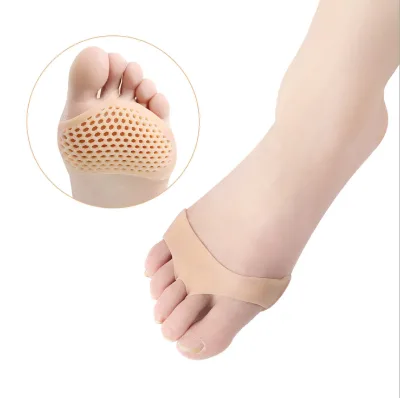




Comprehensive Sourcing Guide
Strategic Sourcing Guide for Skin Friendly Gel Forefoot Pads
Understanding Product Composition and Material Standards
When sourcing skin-friendly gel forefoot pads, the primary focus must be on the material composition that ensures direct contact safety and long-term durability. The core product category typically utilizes silicone or TPE (Thermoplastic Elastomer) as the base material, both of which are selected for their hypoallergenic properties and ability to conform to the foot's natural contours. In the current market, specific product listings indicate the use of silicone as a primary material, often described as providing a "foot shoe cushion" effect. This material choice is critical for users with sensitive skin, as silicone generally offers a non-irritating surface that resists bacterial growth.
Another significant material variant observed in the sector is TPE, which is often marketed for its flexibility and cost-effectiveness. Buyers must verify the specific material specification for each supplier, as the term "gel" can sometimes be used loosely to describe soft foam or hydrogel blends. The supplied data highlights a specific product specification of "TPE" alongside "Silicone," indicating that the market offers distinct material options. For skin-friendly applications, the material must be non-toxic and free from harmful plasticizers. While some listings mention "OEKO-TEX" as a background standard, this should be treated as a verification point rather than a guaranteed attribute unless explicitly certified by the supplier. The buyer's first technical check should be to request a Material Safety Data Sheet (MSDS) or a specific declaration confirming the absence of latex, phthalates, and other common allergens.
Technical Specifications and Dimensional Consistency
Precision in manufacturing is paramount for forefoot pads to function effectively without causing friction or blisters. The technical specifications for these products often revolve around size, thickness, and weight. A common observation in the market is the "One Size Fits" or "One Fits All Foot" sizing strategy, which relies on the inherent elasticity of the gel material to accommodate various foot dimensions. However, this does not imply a lack of standardization; rather, it requires strict control over the thickness range. Data indicates a typical thickness specification between 2mm and 4mm. This range is crucial because pads that are too thin may fail to provide adequate shock absorption, while those that are too thick can alter the fit of the shoe and cause instability.
The physical dimensions of the individual product unit are also a key procurement metric. Standard packaging dimensions often appear around 10x8x3 cm or 10x8.7x1 cm, suggesting a compact, portable design suitable for retail and travel. The weight per pair is another critical specification, with observed values ranging from approximately 34 grams to 0.5 kg depending on the packaging and inclusion of accessories. Buyers should note that the "Single gross weight" can vary significantly based on whether the product is sold as a single pair or in bulk cartons. When evaluating suppliers, request detailed dimension drawings that specify the exact length and width of the pad itself, not just the package. Variations in the "Model Number," such as JS-010-7 or IHCF-SM series, often correspond to these dimensional differences. Ensuring that the supplier adheres to a consistent thickness tolerance (e.g., +/- 0.5mm) is essential for maintaining the product's performance in high-impact scenarios.
Compliance, Certification, and Safety Verification
Navigating the compliance landscape for medical-grade or healthcare-adjacent products like forefoot pads requires rigorous verification. The supplied context lists "CE" and "ROHS" as certifications associated with specific product models. The CE mark indicates conformity with health, safety, and environmental protection standards for products sold within the European Economic Area, while ROHS (Restriction of Hazardous Substances) ensures the product is free from specific hazardous materials like lead and mercury. However, the presence of these certifications in a general product listing does not guarantee that every batch or every model from a supplier meets these standards.
Buyers must treat these certifications as verification targets rather than automatic inclusions. The "High-confidence facts" section confirms that specific models carry these certificates, but the "Low-confidence background" notes that "OEKO-TEX" is a background standard that should not be assumed. Therefore, the procurement strategy must involve requesting valid, up-to-date certification documents for the specific model number being ordered. For products marketed as "Healthcare & Rehabilitation" items, the regulatory bar is higher. Buyers should verify if the product is classified as a Class I medical device in the target market, which would require specific registration with local health authorities. Additionally, while "BSCI" is mentioned in the background, it relates to social compliance in the supply chain rather than product safety. The primary focus for skin-friendly pads should remain on chemical safety (ROHS) and product safety (CE), ensuring that the "Skin Type: Applied on All Skin" claim is backed by actual dermatological testing or material safety data.
Cost Drivers and Minimum Order Quantity Analysis
The pricing structure for skin-friendly gel forefoot pads is influenced by several variables, including material type, certification status, and order volume. The observed market price range in USD is between $0.20 and $1.50 per unit. This wide range suggests that significant cost differences exist between basic silicone pads and those with advanced features or certifications. The lower end of the spectrum likely corresponds to standard TPE or basic silicone models with minimal packaging, while the higher end may reflect premium silicone, custom branding, or certified medical-grade products.
Minimum Order Quantity (MOQ) is another critical cost driver. The observed MOQ range spans from 2 pairs to 5,000 pairs. This flexibility allows buyers to start with small test orders, such as the "Free Sample (for One Pair)" option noted in the data, before committing to larger volumes. For buyers testing a new market, an MOQ of 2-500 pairs is ideal for validating product quality and market fit. However, for established procurement needs, negotiating an MOQ closer to the lower end of the bulk range (e.g., 500-1,000 pairs) can yield better unit economics. It is important to note that customization options, such as custom packaging or branding, often increase the MOQ and unit cost. Buyers should be aware that "Customization: Available" does not imply a low-cost addition; it typically requires a dedicated production run, which may push the MOQ higher. When calculating the total landed cost, buyers must also factor in the "Single package size" and "Carton" packing standards, as these affect shipping volume and freight costs.
Typical Applications and Performance Expectations
The versatility of gel forefoot pads extends across various activities and user demographics. The supplied data explicitly lists "Protection Projects" including Basketball, Football, Tennis, Badminton, and Table Tennis, indicating that these products are designed to withstand high-impact sports. The "Feature" list further emphasizes "Support," "Heat Treatment," and "Health Care," suggesting a dual purpose of injury prevention and therapeutic relief. For athletes, the primary function is to reduce pressure on the metatarsal heads, thereby preventing pain and blisters during intense physical activity. The "Waterproof" attribute is a significant performance feature, ensuring that the pads remain effective even in sweaty conditions or when exposed to moisture.
Beyond sports, the "Usage: footcare" and "Function: Moisturizing, Foot Support and Foot Care" attributes point to a broader application in daily life and rehabilitation. The "Age Group: Adults" and "Unisex" specifications confirm that the product is suitable for a wide demographic. The "Shelf Life: 3 Years" indicates a stable product formulation that maintains its gel properties over time, which is crucial for inventory management. Buyers should ensure that the supplier's quality control processes maintain this shelf life, as gel degradation can lead to stickiness or loss of cushioning. The "Washable" and "Reuseable" features are also key selling points, allowing users to clean the pads and extend their lifespan, which adds value to the product proposition. When marketing these pads, buyers should align the application claims with the specific model's capabilities, ensuring that the "One Size Fits" claim is supported by the actual elasticity and dimensions of the product.
Supplier Evaluation and Quality Control Protocols
Selecting a reliable supplier for skin-friendly gel forefoot pads requires a multi-faceted evaluation process that goes beyond price comparisons. The "Place of Origin" data indicates that many suppliers are located in Guangdong and Jiangsu, China, which are known manufacturing hubs for silicone and TPE products. However, location alone does not guarantee quality. Buyers should prioritize suppliers who can provide detailed production process documentation and quality control records. The "Product Name" and "Brand Name" (e.g., Lee-Mat) can be indicators of established manufacturers, but buyers must verify that the brand is not merely a trading company reselling generic goods.
Quality control should focus on the consistency of the gel material and the precision of the molding process. Buyers should request samples that match the exact "Model Number" they intend to order, as variations between models (e.g., IHCF-SM-03 vs. IHCF-SM-20) can result in different material densities or thicknesses. The "Package" specification, which may include "Individual PP Bag or Custom Design," is another area for quality assessment. Poor packaging can lead to product deformation or contamination. A robust quality control protocol should include visual inspection for defects, dimensional checks against the 2mm-4mm thickness range, and adhesion testing to ensure the gel does not separate from the backing. Furthermore, buyers should verify the supplier's ability to handle "Customization" requests without compromising the core material integrity. Establishing a clear communication channel for addressing quality issues and defining acceptable defect rates is essential for a successful long-term partnership.
Long-Term Procurement and Market Sustainability
Sourcing skin-friendly gel forefoot pads is not just a one-time transaction but a strategic decision that impacts long-term supply chain stability. The "Reuseable" and "Washable" nature of the product suggests a lower replacement frequency for end-users, which can influence market demand dynamics. Buyers should consider the sustainability of the materials used; while silicone and TPE are durable, the environmental impact of disposal should be evaluated, especially if the product is marketed as "Health Care" or "Eco-friendly." The "Standard" specifications, such as "24203.5cm" for carton packing, provide a baseline for logistics planning, but buyers should remain flexible to adapt to changing shipping regulations or packaging trends.
Long-term procurement also involves monitoring the evolution of certifications and standards. As regulations tighten regarding medical devices and consumer safety, suppliers must stay compliant with updated CE, ROHS, or local standards. Buyers should establish a schedule for periodic re-verification of supplier certifications and product quality. The "Sample: Free" option is a valuable tool for ongoing quality assurance, allowing buyers to test new batches against previous standards. Finally, the "Customization" availability offers a pathway for brand differentiation. By investing in custom packaging or unique model designs, buyers can create a loyal customer base and protect their market position against generic competitors. The goal is to build a supply chain that is resilient, compliant, and capable of delivering consistent value to the end consumer over the product's three-year shelf life.
FAQs
What materials are used for Skin Friendly Gel Forefoot Pads?
The pads are primarily made from silicone or TPE materials. These materials are selected for their hypoallergenic properties and ability to conform to foot contours while resisting bacterial growth for sensitive skin users.
Which certifications do these products typically hold?
Specific models carry CE and ROHS certifications to ensure safety and compliance. Buyers must verify valid documents for the exact model number, as these standards confirm the absence of hazardous substances like lead and mercury.
How thick are the gel forefoot pads available?
The typical thickness specification ranges between 2mm and 4mm. This range ensures adequate shock absorption without altering shoe fit, though strict tolerance control is required to maintain performance in high-impact scenarios.
Can buyers customize the packaging or branding?
Customization is available for packaging and branding options. However, this typically requires a dedicated production run which may increase the Minimum Order Quantity and unit cost compared to standard individual PP bag packaging.
What is the price range for these pads?
The observed market price range is between 0.20 and 1.50 USD per unit. Costs vary based on material type, certification status, and order volume, with lower prices often corresponding to basic TPE or silicone models.
Where are these products manufactured?
Products originate from manufacturing hubs in Guangdong and Jiangsu, China. Buyers should prioritize suppliers in these regions who can provide detailed production process documentation and quality control records for consistent gel material quality.
Are these pads reusable and washable?
Yes, the pads are designed to be washable and reusable. This feature allows users to clean the pads and extend their lifespan, adding value to the product proposition for both sports and daily foot care applications.