Find Homemade Baking Pizza Docker for Home, Restaurant, and Bakery
Source 30 verified listings for Homemade Baking Pizza Docker to compare features like food-grade materials and custom colors. Buyers can evaluate options from suppliers in Guangdong with MOQs starting at 1 piece for kitchen and commercial use.
Key considerations
Products List
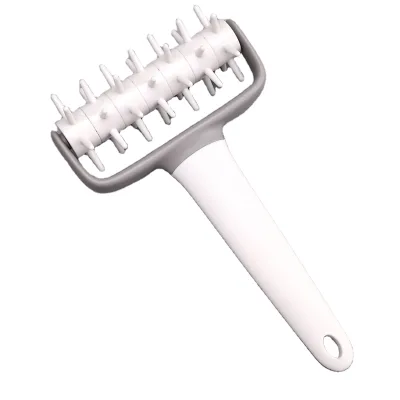



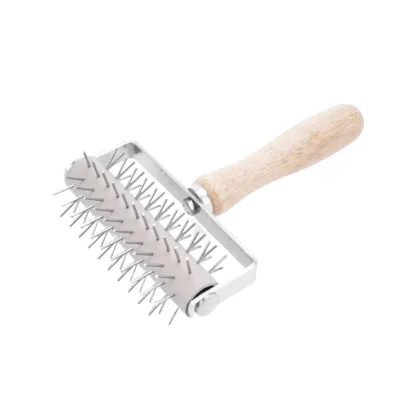
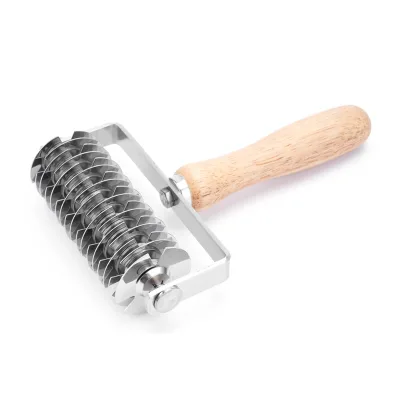

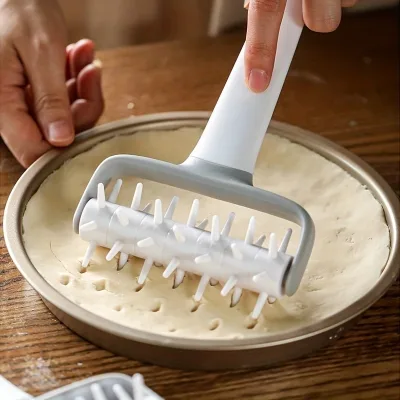
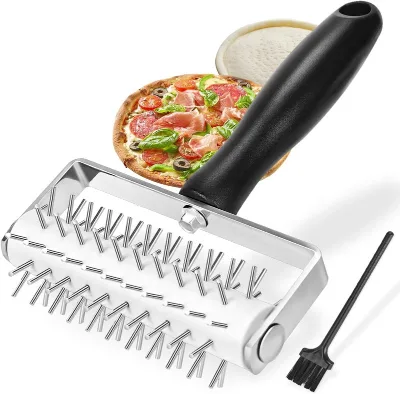
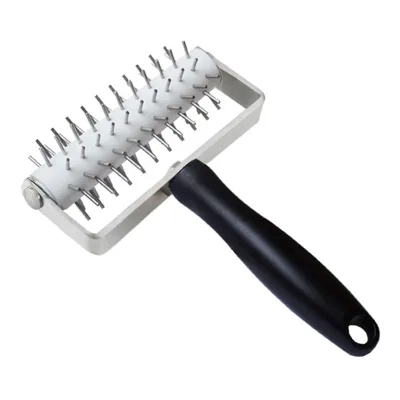

Roller Pizza Dough Machine Pizza Docker Roller Machine with High Efficiency
$300.00 - $599.00
MOQ: 1 Sets


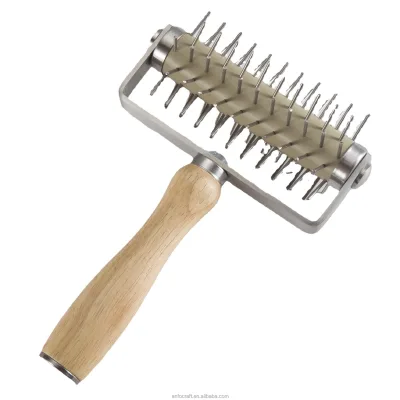


Pizza Dough Roller Pizza Moulder Pizza Dough Pressing Machine Bakery Machine
$1500.00 - $1590.00
MOQ: 1 Pieces


Comprehensive Sourcing Guide
Strategic Sourcing Guide for Homemade Baking Pizza Docker Solutions
The global market for specialized baking equipment has seen a significant shift toward tools that bridge the gap between professional bakery efficiency and home kitchen utility. For buyers seeking a "Homemade Baking Pizza Docker," the procurement landscape requires a nuanced understanding of product specifications, material safety, and supply chain reliability. A pizza docker, technically defined as a dough docker or dough roller docker, is an essential implement designed to pierce dough to prevent air pockets during the baking process. This guide synthesizes available market data to provide a structured approach for sourcing these specific tools, ensuring that procurement decisions are grounded in verified attributes rather than speculative claims.
Technical Specifications and Product Variants
When evaluating potential suppliers for pizza docker tools, the first step is to categorize the product by its specific functional design and physical dimensions. The market offers distinct variations, ranging from simple rolling pins to specialized docker wheels. Based on observed product data, the "Dough Roller Docker" is a primary category, often associated with the "Baking & Pastry Tools" classification. These items are frequently marketed under specific model numbers, such as PB4426, which indicates a standardized production run.
The physical dimensions of these tools are critical for both storage and functional efficacy. Observed specifications indicate a standard size of 125x215mm (approximately 4.92x8.46 inches), with alternative dimensions like 70x195mm also present in the market. The single package size for a typical unit is recorded as 25x15x6 cm, with a single gross weight of 0.500 kg. This weight profile suggests a solid build, likely incorporating a handle and a weighted roller or docker head.
Buyers must distinguish between different types of docker mechanisms. Some products are listed under "Pizza Tools" or "Pizza Cutters & Wheels," suggesting a dual-functionality where the tool may also serve as a cutter. The "Dough Roller Cutter" variant, for instance, combines piercing and cutting capabilities. The handle material is predominantly plastic, specifically ABS (Acrylonitrile Butadiene Styrene), which offers durability and resistance to heat and moisture. The color options vary, with "Sky Blue" and "White" being common observations, though "Custom Color" is frequently available for bulk orders.
Material Safety and Compliance Standards
For any product intended for food contact, particularly in a baking context, material safety is the paramount compliance consideration. The supplied data explicitly references "Food Grade" as a standard attribute for these tools. This designation implies that the materials used, including the ABS plastic handles and any metal components, must meet specific regulatory requirements for food safety. However, buyers should not assume that all listed products automatically satisfy every jurisdiction's food safety laws without verification.
The standard "Food Grade" claim must be backed by specific certifications depending on the target market. In the United States, this often relates to FDA compliance, while the European Union requires compliance with EU Regulation No 10/2011 regarding plastic materials. The data mentions "Standard" as a category, with specific dimensions listed as 125x215mm and 70x195mm, but it does not explicitly list third-party testing bodies like SGS or Intertek. Therefore, procurement teams must request current test reports to confirm that the "Food Grade" assertion is valid for the specific batch of goods.
Furthermore, the "Eco-Friendly" attribute observed in the product listings adds another layer of compliance complexity. If a supplier claims eco-friendliness, buyers should verify if this refers to the recyclability of the ABS plastic, the absence of BPA, or sustainable packaging practices. The packaging details indicate options such as "Poly Bag," "White Box," "Color Box," "Blister Card," and "Display Box," with "Export Carton" being the standard for bulk shipping. The sustainability of these packaging materials should be evaluated against the buyer's corporate environmental goals.
Cost Drivers and Pricing Dynamics
Understanding the cost structure of baking tools is essential for budgeting and margin analysis. The observed price range in the market is extensive, spanning from $0.69 to $3,000 USD. This wide variance indicates that the category includes both low-cost, single-unit retail items and high-value, industrial-grade equipment or large bulk orders. For a typical "Homemade Baking Pizza Docker," the unit price is likely to fall on the lower end of this spectrum, especially when purchased in quantities that leverage economies of scale.
The Minimum Order Quantity (MOQ) is a significant driver of unit cost. The data shows an MOQ range from 1 piece to 500 pieces. Some suppliers offer an MOQ of just 1 piece, which is ideal for sampling or small boutique orders, while others require a minimum of 300 pieces. This disparity suggests that the unit price will fluctuate inversely with the order volume. Buyers seeking to minimize per-unit costs should aim for the higher MOQ tiers, provided they have the storage capacity and sales velocity to absorb the inventory.
Additional cost factors include customization. The market data confirms that "Custom Logo," "Custom Color," and "OEM/ODM" services are available. These value-added services invariably increase the unit price due to the setup costs for mold creation, color mixing, and branding. The "Factory Direct Sales" advantage mentioned in the listings suggests that buyers can potentially bypass intermediaries to secure better pricing, but this requires direct engagement with the manufacturing facility.
Supplier Evaluation and Verification
Selecting the right supplier requires a rigorous vetting process that goes beyond the product listing. The data indicates that the place of origin for these products is primarily "China GuangDong" or "Guangdong, China." This region is a known hub for plastic manufacturing and kitchenware production. While this provides access to a robust supply chain, it also necessitates careful due diligence regarding the specific factory's capabilities and reputation.
Buyers should verify the supplier's ability to handle "Samples," which are listed as available with a sample time of 5-7 days. This short lead time for samples is a positive indicator of operational efficiency. However, the transition from sample to mass production must be managed carefully. The "Advantage" field lists "Easy Clean" and "Factory Direct Sales & High End Products" as key selling points. Buyers should request evidence to support these claims, such as videos of the cleaning process or testimonials from other clients regarding product quality.
The "Application" field lists "Home Kitchen," "Restaurant," "Hotel," "Buffet Equipment," and "Bakery." This versatility suggests that the product is suitable for a wide range of clients. When evaluating a supplier, buyers should ask for case studies or references from clients in the specific sector they intend to serve. For instance, a supplier experienced in supplying "Restaurant and Buffet Equipment" may have different quality control protocols compared to one focused on "Home Kitchen" goods.
Quality Control and Performance Metrics
Quality control is the final gatekeeper in the procurement process. The "Easy Clean" attribute is a functional claim that directly impacts the user experience and the longevity of the tool. In a commercial setting, such as a restaurant or bakery, tools that are difficult to clean can become hygiene hazards. Buyers should test samples for their ability to withstand repeated washing cycles without degrading the plastic or loosening the handle.
The "Weight" of the product is another critical metric, with observed values of 83.6g (0.18lb) and 84g. Consistency in weight is a proxy for manufacturing precision. Variations in weight could indicate inconsistencies in the molding process or the use of substandard materials. Buyers should request a quality control plan from the supplier that includes weight tolerance limits and visual inspection criteria.
Furthermore, the "Single package size" and "Single gross weight" data points are essential for logistics planning. Accurate packaging dimensions ensure that the buyer can optimize container space and reduce shipping costs. The "Export Carton" standard implies that the packaging is designed for international shipping, but buyers should verify the durability of the carton to prevent damage during transit.
Long-Term Procurement and Scalability
For buyers looking to establish a long-term relationship with a supplier, scalability and customization capabilities are key. The availability of "OEM" and "ODM" services indicates that suppliers are willing to tailor products to specific brand requirements. This flexibility is crucial for buyers who wish to differentiate their product line through unique branding or design features.
The "Customization" availability extends to both the product itself and the packaging. Buyers should consider the long-term implications of these customizations, such as the lead time required for mold changes and the potential for minimum order quantities to increase with custom orders. The "Sample Time" of 5-7 days is a good baseline, but buyers should confirm if this timeline extends for custom orders.
Finally, the "Advantage" of "High End Products" suggests a focus on quality. However, buyers must define what "High End" means in their specific context. Is it the durability of the ABS plastic, the precision of the docker pins, or the aesthetic finish? Clear communication of these expectations is necessary to ensure that the final product meets the buyer's standards. By focusing on these technical, compliance, and operational factors, buyers can navigate the complex market of baking tools and secure a reliable supply of high-quality pizza docker solutions.
FAQs
What is the standard size for a Homemade Baking Pizza Docker?
The standard size is typically 125x215mm or 70x195mm depending on the model. Specific units like the Dough Roller Docker often measure 125x215mm, while other variants may be 70x195mm. Buyers should verify the exact dimensions in the product specification before ordering to ensure compatibility with their dough preparation needs.
Can I get a custom logo on the Homemade Baking Pizza Docker?
Yes, custom logo services are available for this product category. Suppliers accept OEM requests allowing buyers to brand the tool with their own design. This customization is typically offered alongside options for custom colors and packaging, making it suitable for businesses looking to create a unique brand identity.
Which material is used for the handle of these baking tools?
The handle material is predominantly plastic, specifically ABS. This material is chosen for its durability and resistance to heat and moisture during kitchen use. The product listings confirm that ABS is the standard material used for the handle component of these dough docker and roller tools.
How long does it take to receive a sample of the product?
Sample delivery typically takes 5 to 7 days from the time of request. Suppliers list samples as available with this specific lead time for initial evaluation. This short turnaround allows buyers to quickly assess product quality and functionality before committing to a larger bulk order.
What is the minimum order quantity for purchasing these tools?
The minimum order quantity ranges from 1 piece to 500 pieces depending on the supplier. Some vendors offer an MOQ of just 1 piece for sampling, while others require a minimum of 300 pieces for bulk transactions. Buyers should check specific supplier terms to find an MOQ that matches their inventory needs.
Where are these Homemade Baking Pizza Docker tools manufactured?
These tools are primarily manufactured in Guangdong, China. The place of origin is consistently listed as China GuangDong or Guangdong, China across multiple product entries. This region is a known hub for plastic manufacturing and kitchenware production, offering a robust supply chain for these baking accessories.
Can I find eco-friendly options for the Homemade Baking Pizza Docker?
Yes, eco-friendly attributes are observed in the product listings for these tools. Some suppliers highlight eco-friendly features, though buyers should verify specific sustainability claims like BPA-free status or recyclable packaging. The product data confirms that eco-friendly options exist within the available market inventory.