Source Honda Civic Door Hinge Bushing for Repairs and Restorations
Find and compare 30 Honda Civic Door Hinge Bushing options from verified suppliers. Buyers can evaluate semi-automatic and automatic variants, rubber and iron materials, and OEM standards for Honda Civic Es1 Ep and other models.
Key considerations
Products List


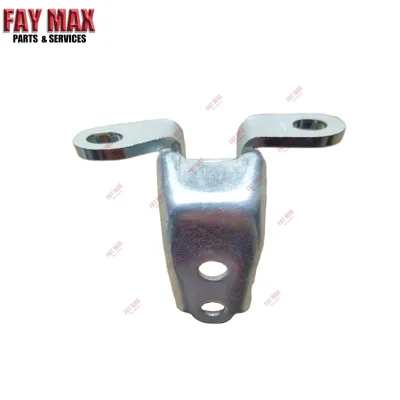
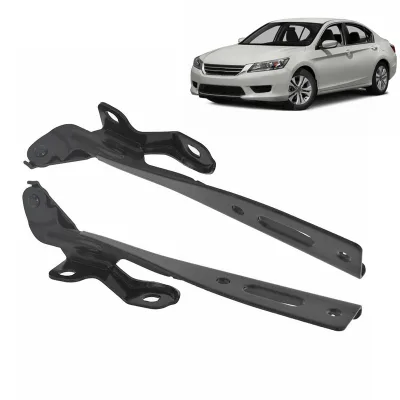
Car Door Hinge Front and Rear Door Upper Lower Hinges Fit for All Four Doors
$1400.00 - $1500.00
MOQ: 10 Tons






Comprehensive Sourcing Guide
Strategic Sourcing Guide for Honda Civic Door Hinge Bushings
Understanding Component Variability and Technical Specifications
When sourcing replacement parts for the Honda Civic, specifically door hinge bushings, buyers must first recognize that "door hinge bushing" is often a functional description rather than a single, universal part number. The supplied product data reveals a complex landscape where similar components serve different suspension and steering functions under various part numbers. For instance, the data lists items identified as "Steering Knuckle Bushing" with part number 52366-S5A-024, alongside "Control Arm Bushing" (51391-SNA-305) and "Control Arm Bushing" (51341-S04-000). While these are technically suspension components, the sourcing logic for door hinge bushings remains identical: precise identification of the OE number is critical because the Civic has been manufactured across multiple generations, each with distinct chassis architectures.
The technical specifications observed in the available inventory highlight specific material and dimensional requirements that buyers must verify. The materials listed include Rubber, Iron, and Steel, with specific mentions of "Shock-Reducing Rubber Material: Nr" (Natural Rubber). For a door hinge application, the primary material of interest is typically high-grade rubber or polyurethane designed to absorb vibration and prevent metal-on-metal contact. The data indicates that some products adhere to "Standard" or "OEM" standards, with sizes described as "Standard, Same as Original." This implies that a successful procurement strategy requires matching the physical dimensions and material hardness of the original equipment exactly.
Buyers should note that the supplied data includes part numbers like 51455-S04-050 and 51392-Ts4-T01, which are associated with Honda Civic applications ranging from 1990 to 2000 models. If a buyer is sourcing for a specific generation, such as the 1990-2000 Honda Civic 1.6L Sohc L4, they must cross-reference their vehicle's VIN or current part number against these specific identifiers. The "Position" attribute listed as "Front" in the data suggests that many of these bushings are located in the front suspension or steering assembly. While a door hinge bushing is a distinct component, the sourcing process for it involves the same rigorous verification of fitment data found in the control arm and steering knuckle listings. The "Car Model" attribute specifically cites "Honda Civic Es1 Ep," indicating that even within the Civic lineup, there are specific sub-models (Es1, Ep) that dictate the exact bushing geometry.
Compliance, Certification, and Quality Standards
In the B2B automotive aftermarket, compliance is not merely a formality but a fundamental requirement for liability protection and product reliability. The supplied product facts provide a clear framework for what constitutes a compliant item in this sector. Several entries explicitly mention "OEM" as a standard, while others reference "SGS" or "ISOOEM:Yes" certifications. For a buyer sourcing door hinge bushings, the presence of an OEM standard is the baseline expectation. This ensures that the replacement part meets the original manufacturer's engineering tolerances and performance criteria.
The data also highlights "ISOOEM:Yes" as a specific certification attribute. This suggests that suppliers may offer parts that are certified to meet international organization standards for original equipment manufacturing. When evaluating potential suppliers, buyers should verify if the specific door hinge bushing they intend to purchase carries this certification or an equivalent ISO standard. The absence of such certification does not necessarily disqualify a product, but it requires a deeper investigation into the supplier's quality management systems. The "Standard/ OEM" designation found in the data further reinforces that compliance can be achieved through adherence to either general industry standards or specific Original Equipment Manufacturer specifications.
Furthermore, the "Condition" of the products is consistently listed as "New." This is a critical compliance factor for B2B buyers, as the automotive industry generally rejects refurbished or used components for safety-critical applications like door hinges. A door hinge bushing that has been previously used may have compromised structural integrity, leading to premature failure. The "Stock" attribute indicating "Big Stock Availability" is also relevant to compliance, as it suggests a supply chain capable of meeting immediate demand without resorting to non-compliant, unverified stock.
Buyers must also scrutinize the "Certification" field for any mention of specific testing bodies. While the data lists "SGS," a globally recognized inspection and verification company, it does not list every possible certification. Therefore, buyers should not assume that all products in a category automatically possess these certifications. Instead, the procurement strategy should involve requesting proof of certification for the specific batch of door hinge bushings being ordered. This due diligence ensures that the parts meet the necessary safety and quality benchmarks required by the end-user market.
Cost Drivers and Pricing Dynamics
The pricing structure for automotive bushings is influenced by a complex interplay of material costs, manufacturing complexity, and supply chain logistics. The observed price range in the supplied data spans from $0.10 to $1,500.00 USD. This wide variance is not indicative of a single product type but rather reflects the diversity of the inventory, which includes everything from small rubber bushings to larger, more complex assemblies or bulk orders. For a specific component like a door hinge bushing, the price is likely to be on the lower end of this spectrum, but it can fluctuate based on several key factors.
Material composition is a primary cost driver. The data lists "Rubber," "Iron," and "Steel" as materials. Natural Rubber (Nr), specifically mentioned in the context of shock-reducing applications, often commands a different price point than synthetic alternatives or metal-reinforced bushings. The complexity of the molding process for rubber bushings, especially those requiring precise dimensional tolerances to match "Standard, Same as Original" specifications, adds to the manufacturing cost. Additionally, the "Automatic" or "Semi-Automatic" nature of the production line, as noted in the data, can influence labor costs and, consequently, the final price.
Order volume is another significant determinant of cost. The Minimum Order Quantity (MOQ) ranges from 6 to 5,000 units, with a specific entry noting an MOQ of 10 PCS. Buyers purchasing small quantities may face a higher unit price due to the fixed costs of production setup and packaging. Conversely, bulk orders that meet higher MOQ thresholds often benefit from economies of scale. The "Qty/Box" attribute, listed as "1PC/Box" for some items, indicates that packaging costs are factored into the unit price. For door hinge bushings, which are often sold individually or in small sets, the packaging method (e.g., "Eep Plastic Bag & Eep Box" vs. "Neutral Plastic Bag + Outer Carton") can also impact the final cost.
Lead time is a hidden cost driver that buyers must consider. The data shows delivery times ranging from "1-5 Days for Stock" to "30-45 Days for Production Item." Rush orders or expedited shipping for stock items may incur additional logistics costs. Conversely, production items with longer lead times allow for more efficient manufacturing scheduling, potentially lowering the unit cost. The "Sample: Free" attribute suggests that buyers can test the product before committing to a large order, which helps mitigate the financial risk of purchasing non-compliant or low-quality items.
Typical Applications and Fitment Verification
The application of door hinge bushings is specific to the vehicle model and generation. The supplied data provides concrete examples of fitment, such as "1990-2000 Honda Civic 1.6L Sohc L4" and "Honda Civic Es1 Ep." These details underscore the importance of precise fitment verification. A door hinge bushing from a 1990 model may not be compatible with a 2000 model, even if both are Civics, due to changes in chassis design and hinge geometry. The "Car Make" is consistently listed as "Honda," and the "Car Application" is specified as "Honda Civic," but the specific model codes (Es1, Ep) are crucial for narrowing down the search.
The data also lists "Used for: Aftermarket," indicating that these components are designed to replace original parts in the secondary market. This is a common scenario for door hinge bushings, which are wear items that degrade over time. The "Position" attribute, listed as "Front," suggests that many of the listed bushings are for front suspension components. While door hinges are not suspension parts, the sourcing logic remains the same: the buyer must ensure the part is designed for the specific location on the vehicle. The "Part No." and "OE Number" fields are the most reliable indicators of fitment. For example, 52366-S5A-024 and 51391-SNA-305 are specific identifiers that buyers must match against their vehicle's requirements.
Buyers should also consider the "Type" of the component. The data lists "Control Arm" and "Steering Knuckle Bushing" as types. While these are not door hinge bushings, they illustrate the variety of bushing types available in the Honda Civic ecosystem. A door hinge bushing is a distinct component, but the procurement process for it involves the same attention to detail regarding part numbers and model compatibility. The "Product Name" field, such as "Control Arm Bushing," helps categorize the item, but the buyer must ensure they are selecting the correct "Product Name" for a door hinge application.
Supplier Evaluation and Operational Capabilities
Evaluating a supplier for door hinge bushings requires a thorough assessment of their operational capabilities, inventory management, and commitment to quality. The data indicates that "Big Stock Availability" is a key attribute, suggesting that reliable suppliers maintain significant inventory levels to meet demand. This is particularly important for aftermarket parts, where downtime for vehicle repairs can be costly. Suppliers with "Instock: Yes" status are preferable for buyers seeking immediate delivery.
The "Delivery" time, ranging from 1-15 days to 30-45 days, is another critical factor in supplier evaluation. Buyers should prioritize suppliers who can offer the shorter lead times for stock items, especially for urgent repairs. However, for production items, a lead time of 30-45 days is acceptable if the quality and price are competitive. The "Warranty" of "1 Year" is a standard offering in the industry and serves as a guarantee of the supplier's confidence in their product. Buyers should verify that the warranty covers defects in materials and workmanship.
Packaging is also a key indicator of supplier professionalism. The data lists various packaging options, including "Eep Plastic Bag & Eep Box," "Neutral Plastic Bag + Outer Carton," and "Neutral/ Korop/Customized." Professional suppliers use packaging that protects the product during transit and clearly identifies the contents. The "prod_packing" attribute, which includes "Eep Brand Packing or as Customer's Requirements," suggests that suppliers are flexible and can accommodate custom packaging needs. This flexibility is valuable for buyers who require specific branding or labeling for their distribution channels.
The "Location" of the supplier, listed as "China," is a common origin for automotive parts. Buyers should be aware of the logistical implications of sourcing from this region, including shipping times and potential tariffs. However, the "Standard" and "OEM" compliance mentioned in the data suggests that Chinese suppliers are capable of meeting international quality standards. Buyers should verify the supplier's track record and request references to ensure they are dealing with a reputable partner.
Quality Control and Long-Term Procurement Strategy
Quality control is paramount when sourcing automotive bushings, as these components are subject to significant stress and wear. The data mentions "SGS" and "ISOOEM:Yes" certifications, which are indicators of a robust quality control system. Buyers should insist on seeing test reports or quality certificates for the specific batch of door hinge bushings they are purchasing. The "Condition: New" attribute is a basic requirement, but buyers must also verify that the rubber material is free from defects such as cracks, bubbles, or uneven curing.
The "Material" attributes, including "Rubber," "Iron," and "Steel," highlight the need for material verification. Buyers should ensure that the rubber used is of high quality and suitable for the intended application. The "Shock-Reducing Rubber Material: Nr" specification suggests that natural rubber is a preferred material for its durability and shock-absorbing properties. Buyers should request material data sheets to confirm the composition and properties of the rubber used in the bushings.
Long-term procurement strategy involves building a relationship with a reliable supplier who can consistently provide high-quality parts. The "Warranty: 1 Year" and "Sample: Free" attributes suggest that suppliers are willing to stand behind their products and allow buyers to test them before committing to large orders. Buyers should leverage these opportunities to build trust and ensure consistent quality over time. The "Big Stock Availability" and "Instock: Yes" attributes indicate that suppliers with strong inventory management are better positioned to support long-term procurement needs.
Finally, buyers should consider the "Standard" and "OEM" compliance as a long-term strategy. By sourcing parts that meet or exceed OEM standards, buyers can ensure that their customers receive high-quality replacements that perform as well as the original parts. This approach not only reduces the risk of returns and complaints but also enhances the buyer's reputation in the market. The "Delivery Time" flexibility, with options for both stock and production items, allows buyers to manage their inventory levels effectively and respond to market demand without overstocking.
FAQs
What materials are used for Honda Civic door hinge bushings?
These bushings are typically made from rubber, iron, or steel. Some products specifically use natural rubber for shock reduction to ensure durability and vibration absorption during operation.
Which certification standards apply to these automotive parts?
Products often adhere to OEM standards or carry SGS certification. Some listings explicitly confirm ISOOEM compliance, ensuring the parts meet international original equipment manufacturing requirements.
Can I find free samples for Honda Civic door hinge bushings?
Yes, free samples are available for many listed products. This allows buyers to verify quality and fitment before committing to a larger order or bulk purchase agreement.
How long is the delivery time for stock items?
Delivery for stock items typically takes 1 to 5 days. Production items require a longer lead time of 30 to 45 days depending on manufacturing schedules and order volume.
What is the minimum order quantity for these bushings?
The minimum order quantity ranges from 6 to 5000 pieces. Specific listings may require a minimum of 10 pieces, while others offer flexible bulk purchasing options.
Which Honda Civic models are compatible with these parts?
These parts fit models like the 1990-2000 Honda Civic 1.6L Sohc L4 and the Es1 Ep series. Buyers must verify specific part numbers against their vehicle's chassis architecture.
What packaging options are available for these bushings?
Packaging includes neutral plastic bags with outer cartons or branded Eep boxes. Customized packaging is also available to meet specific customer requirements and branding needs.