Source Honda Engine Leaf Sweeper for Schools Stations Roads
Find 30 Honda Engine Leaf Sweeper models with ride-on and semi-automatic options for schools, stations, and road maintenance. Compare specifications like cleaning width, battery capacity, and brush types to select the right industrial cleaning solution for your facility.
Key considerations
Products List


a Compact and Convenient Leaf Sweeper
$945.00 - $1155.00
MOQ: 1 Pieces
Shandong Roadway Construction Machinery Manufacturing Co., Ltd.

Effective Leaf Sweeper for Quick Yard Cleanup
$945.00 - $1155.00
MOQ: 1 Pieces
Shandong Roadway Construction Machinery Manufacturing Co., Ltd.

Small Integrated Operation Leaf Sweeper
$945.00 - $1155.00
MOQ: 1 Pieces
Shandong Roadway Construction Machinery Manufacturing Co., Ltd.


Leaf Sweeper with Ergonomic Design
$945.00 - $1155.00
MOQ: 1 Pieces
Shandong Roadway Construction Machinery Manufacturing Co., Ltd.


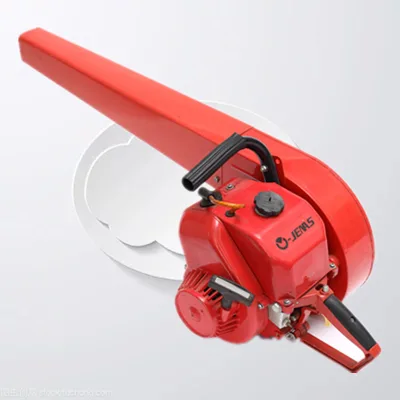

One-Touch Control Driving Type Leaf Dust Garbage Cleaning Floor Sweeper
$2100.00 - $2700.00
MOQ: 1 Pieces

S1600 Driving Electric Road Park Sweeping Leaf Dust Fruit Peel Paper Dust Sweeper
$2100.00 - $2700.00
MOQ: 1 Pieces

High-Power Driving Type Road Leaf Sweeper with Shed Four-Wheel Sweeper
$1400.00 - $1800.00
MOQ: 1 Pieces


Leaf Suction Hose Road Cleaning/Highway Sweeper/Street Truck Sweeper
$5000.00 - $26000.00
MOQ: 1 Pieces


Multi-Functional Three-Wheel Electric Leaf Cleaning Street Road Sweeper
$999.00 - $5000.00
MOQ: 1 Pieces


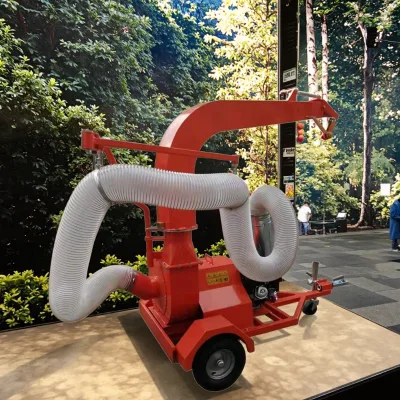


Portable Mechanical Sweeper for Lawn and Road Leaf Cleaning Equipment
$1700.00 - $2100.00
MOQ: 1 Pieces
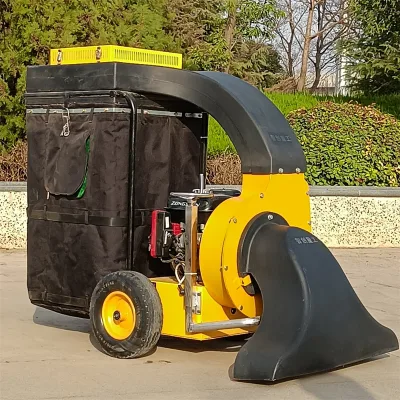
Comprehensive Sourcing Guide
Strategic Sourcing Guide for Honda Engine Leaf Sweepers
When procuring industrial cleaning equipment, specifically Honda engine leaf sweepers, buyers must navigate a landscape defined by specific mechanical configurations, operational environments, and rigorous compliance requirements. The market offers a diverse array of ride-on and semi-automatic units designed for large-scale outdoor maintenance. This guide synthesizes observed product attributes, technical specifications, and supply chain realities to provide a disciplined framework for procurement professionals. The focus remains on evidence-based evaluation rather than speculative claims, ensuring that sourcing decisions are grounded in verifiable data points such as engine specifications, brush configurations, and certification status.
Technical Architecture and Operational Specifications
The core of any effective leaf sweeper lies in its mechanical architecture, particularly the engine, brush system, and power delivery. In the current market, Honda engines are a prevalent choice for ride-on sweepers due to their reliability and torque output. Observed specifications indicate that units equipped with Honda engines often deliver power ratings around 4.3HP at 3600rpm. This power level is critical for driving the main brush and side brushes under load, ensuring consistent debris collection in demanding environments. The engine's placement and integration must be evaluated to ensure accessibility for maintenance while maintaining the vehicle's center of gravity.
Brush configuration is equally vital. The data reveals a spectrum of brush structures, including drum types and disc types, with varying hardness levels ranging from medium to specific diameters. For instance, some models feature main brush lengths of 490mm or 800mm, while side brushes may vary from 380mm to 600mm in diameter. The distinction between "Lifting V Brush" and "Wafer Brushes" suggests different approaches to debris capture, with the former likely offering superior lift for heavier materials. Buyers should verify the exact brush diameter and length against their specific debris profile; a 600mm side brush is suitable for wide-area sweeping, whereas a 380mm unit might be optimized for tighter spaces or lighter debris.
Furthermore, the power supply system varies significantly. While some units rely on battery power with capacities like 48V45ah or 48V150ah, the Honda engine variant operates independently of battery constraints for propulsion, though it may still utilize batteries for auxiliary systems. The water tank capacity, observed at 60L or 200L, plays a crucial role in dust suppression. A larger tank reduces the frequency of refilling, enhancing operational efficiency during long shifts. The dustbin capacity, ranging from 80L to 200L, dictates the maintenance interval; a 200L bin allows for extended operation before disposal is required, which is essential for high-volume cleaning tasks.
Compliance, Certification, and Safety Standards
Navigating the regulatory landscape is a non-negotiable aspect of B2B procurement. The presence of CE certification is a standard observation across the product listings, indicating conformity with health, safety, and environmental protection standards for products sold within the European Economic Area. Some units also carry RoHS certification, which restricts the use of specific hazardous materials in electrical and electronic equipment. When sourcing a Honda Engine Leaf Sweeper, buyers must explicitly request and verify these certificates for the specific model being purchased. The absence of a certificate in the product listing does not imply non-compliance, but it necessitates a direct inquiry to the supplier to confirm the status.
Safety standards extend beyond certification to include operational controls. The automation level is a key differentiator, with options ranging from fully automatic to semi-automatic systems. Semi-automatic units often provide the operator with more direct control over brush engagement and water flow, which can be advantageous in complex environments. The control mechanism, described as "Artificial" in some contexts, likely refers to manual control inputs rather than autonomous navigation. Buyers should assess whether the control interface aligns with the skill level of their operators and the specific demands of the application site.
Additionally, the physical dimensions of the machine must be verified against site constraints. Observed standard dimensions include configurations such as 130016001000mm, 210020002030mm, and 2300x980x1160mm. These measurements are critical for determining storage requirements, transport logistics, and the ability to navigate through gateways or narrow aisles. The cleaning width, observed at 1250mm, 1880mm, or 2200mm, directly impacts the efficiency of the operation. A wider cleaning width reduces the number of passes required to cover a large area, but it may require more maneuvering space.
Cost Drivers and Pricing Dynamics
The pricing of industrial sweepers is influenced by a complex interplay of factors, including engine brand, brush technology, tank capacity, and customization options. The observed price range in the market spans from $35 to $26,000 USD, reflecting the vast difference between small, manual, or battery-operated units and large, ride-on, engine-powered machines. A Honda Engine Leaf Sweeper, given the premium associated with the Honda brand and the robustness of the engine, typically falls on the higher end of this spectrum.
Customization is a significant cost driver. The availability of customized options allows buyers to tailor the machine to specific needs, such as modifying brush hardness, adjusting tank capacity, or altering the brush structure. However, customization often incurs additional costs and may extend lead times. The minimum order quantity (MOQ) is observed to be as low as 1 unit, which is favorable for small-scale procurement or pilot testing. However, buyers should be aware that bulk orders may offer volume discounts, though specific pricing tiers are not universally standardized.
Packaging and transportation methods also impact the total cost of ownership. Units are typically packed in wooden boxes or wooden cases to ensure safe transit, which adds to the shipping weight and cost. The transportation method, whether sea or air, further influences the final price. Air freight is faster but significantly more expensive, while sea freight is cost-effective for large volumes but requires longer lead times. Buyers must factor in these logistics costs when comparing total landed costs across different suppliers.
Application Scenarios and Operational Fit
Selecting the right sweeper for the application is paramount to achieving operational efficiency. The observed applications for these machines include schools, stations, and other large public or industrial spaces. In a school environment, the noise level, safety features, and ease of operation are critical. A ride-on sweeper with a Honda engine offers the power needed to clear leaves and debris quickly, but the operator must be trained to handle the machine safely around children.
For station environments, such as train or bus stations, the focus shifts to high-volume debris removal and durability. The large dustbin capacity and water tank size observed in some models (200L) are particularly beneficial here, allowing for continuous operation without frequent interruptions. The semi-automatic control mode may be preferred in these settings to allow operators to adapt to changing debris conditions quickly. The brush hardness, described as medium, is suitable for a mix of dry leaves, dirt, and light litter, making it versatile for various outdoor surfaces.
The specific model number, such as G1880, G100, TJ-12A, TJ-G22B, or RWQS11, often correlates with specific application requirements. For example, the G1880 model features a cleaning width of 1880mm, making it ideal for wide avenues, while the TJ-G22B with a 2200mm width is suited for massive open areas. Buyers should match the model's specifications to the physical layout and debris profile of their site. The origin of the product, noted as China or specifically Jining, China, can also influence the supply chain dynamics, including shipping times and import regulations.
Supplier Evaluation and Quality Assurance
Evaluating suppliers requires a disciplined approach to verifying claims and ensuring product consistency. The presence of specific product attributes, such as the "Honda" engine brand, must be confirmed through documentation rather than assumption. Buyers should request proof of engine authenticity and warranty coverage. Similarly, the condition of the product is listed as "New," but this should be verified upon delivery to ensure no prior use or damage occurred during transit.
Quality control measures should be a prerequisite for any procurement agreement. This includes verifying the manufacturing standards, such as the specific dimensions and brush configurations listed in the product specifications. The delivery lead time is observed to be around 15 days, which is a critical factor in supply chain planning. Buyers must confirm this lead time with the supplier, as it can vary based on order volume and customization requirements.
Transportation logistics are another area of focus. The specified transportation methods, sea or air, should be aligned with the buyer's timeline and budget. The packaging, whether wooden box or wooden case, must be robust enough to protect the machine during transit. Inspecting the packaging upon receipt is essential to ensure the machine has not been compromised. Additionally, the origin location, such as Jining, China, should be cross-referenced with the supplier's business license to ensure legitimacy.
Long-Term Procurement and Maintenance Considerations
Sourcing a Honda Engine Leaf Sweeper is not just a one-time transaction but a long-term investment. The availability of spare parts, service support, and the ease of maintenance are critical factors for long-term success. The Honda engine, known for its durability, should have a robust supply chain for parts, but buyers must confirm the availability of specific components like brushes, belts, and filters. The brush structure, whether drum or disc type, should be compatible with readily available replacement parts.
Maintenance schedules should be established based on the machine's usage intensity. The water tank and dustbin capacities, along with the engine's power output, dictate the frequency of refilling and emptying. Regular cleaning of the brush system is necessary to prevent clogging and maintain efficiency. The automation level, whether automatic or semi-automatic, affects the complexity of maintenance; semi-automatic units may require more frequent manual adjustments.
Finally, the total cost of ownership (TCO) should be calculated over the lifespan of the machine. This includes the initial purchase price, fuel or electricity costs, maintenance expenses, and potential downtime. The observed price range of $35 to $26,000 USD highlights the importance of selecting a machine that balances upfront cost with long-term performance. By focusing on verified specifications, certified compliance, and reliable supplier partnerships, buyers can ensure a successful procurement experience that meets their operational needs effectively.
FAQs
What engine power is typical for ride-on Honda leaf sweepers?
Typical units deliver around 4.3HP at 3600rpm. This power rating ensures the main brush and side brushes operate effectively under load for debris collection.
Which certifications are commonly found on these industrial sweepers?
CE certification is standard across listings, with some units also carrying RoHS certification. Buyers must verify these certificates for the specific model to ensure compliance.
How large are the water and dustbin capacities for these machines?
Water tanks range from 60L to 200L, while dustbins vary between 80L and 200L. Larger capacities reduce refilling frequency and extend operation time during long shifts.
What is the standard delivery lead time for these sweepers?
The observed delivery lead time is approximately 15 days. This duration may vary based on order volume and specific customization requirements requested by the buyer.
Can these sweepers be customized for specific operational needs?
Yes, customization is available for various configurations. Buyers can tailor brush hardness, tank capacity, or brush structure to match their specific site requirements and debris profiles.
Which brush structures are available for Honda engine leaf sweepers?
Available structures include drum types and disc types with medium hardness. Specific models feature main brush lengths of 490mm or 800mm depending on the unit.
What is the minimum order quantity for purchasing these sweepers?
The minimum order quantity is one unit. This allows for small-scale procurement or pilot testing without requiring a bulk commitment from the buyer.