Source Honda Legend Brazed Radiator for Cr-V Jade Spirior
Compare 30 Honda Legend Brazed Radiator options from verified Chinese manufacturers. These water-cooled units feature direct-flow and cross-flow designs with aluminium bodies, available in various sizes for Honda Cr-V, Jade, and Spirior applications.
Key considerations
Products List


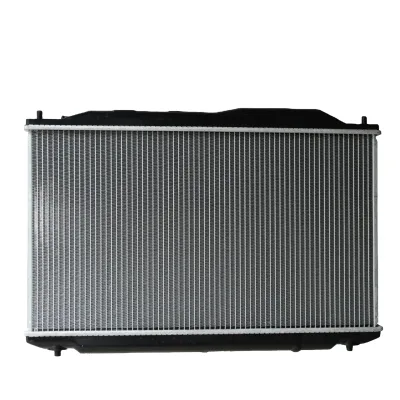


Engine Cooling Radiator OEM 19010-P72-901 Aluminum Car Radiator for Honda
$15.00 - $20.00
MOQ: 50 Pieces


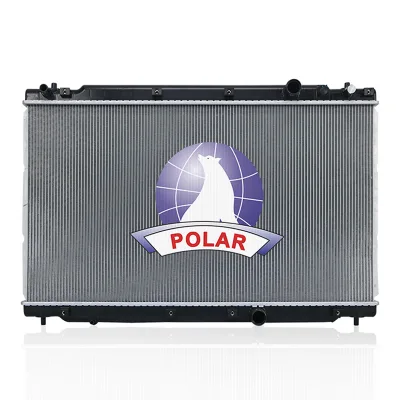
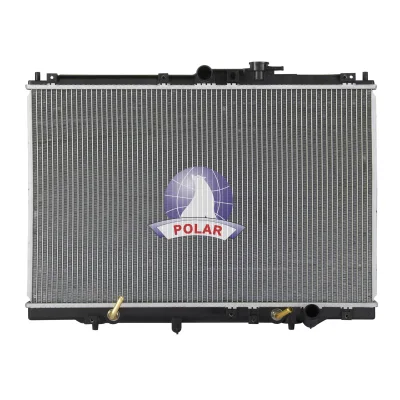
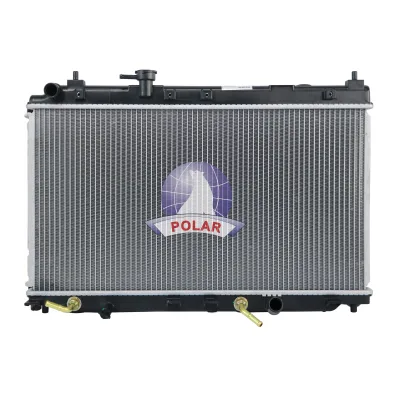
Factory New Aluminum Radiator for Honda Saber 3.2G Model 19010P5G901 & 17017
$25.50 - $32.64
MOQ: 10 pieces



Comprehensive Sourcing Guide
Strategic Sourcing Guide for Honda Legend Brazed Radiators
Technical Specifications and Core Design Architecture
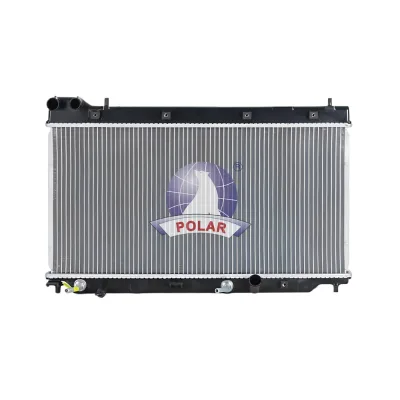
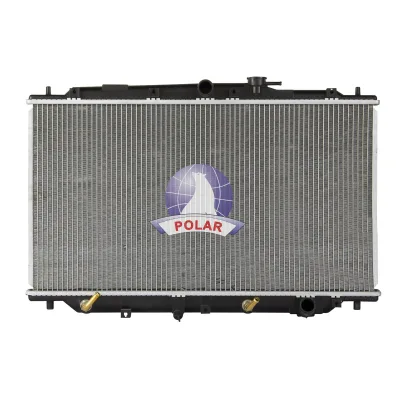
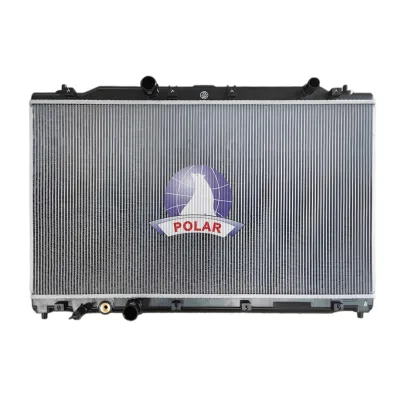
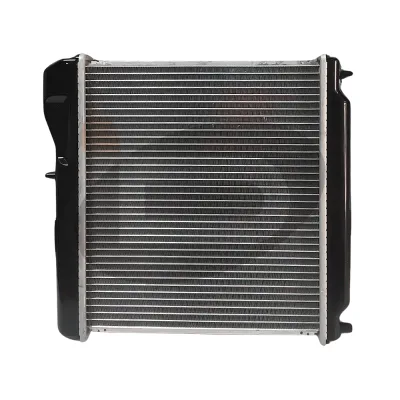
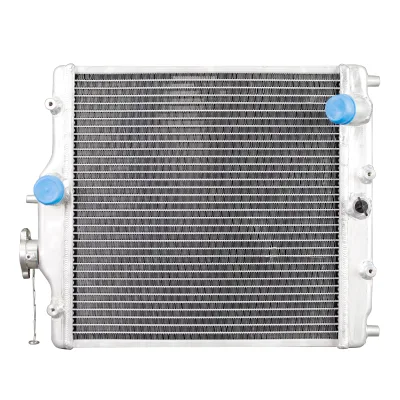
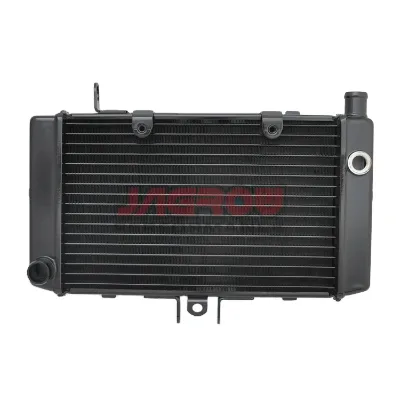
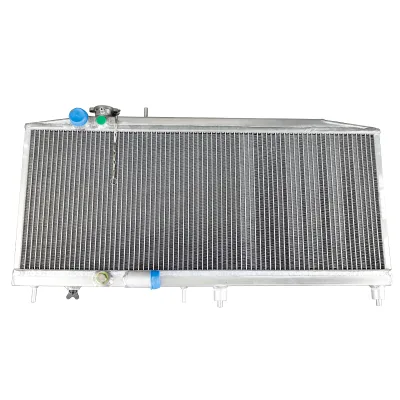
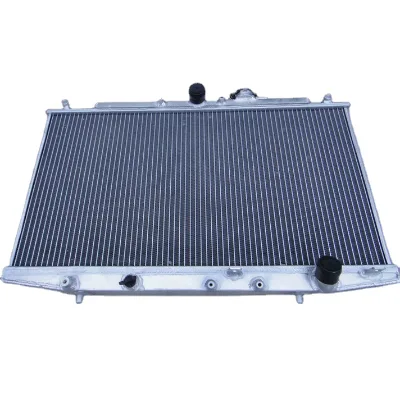
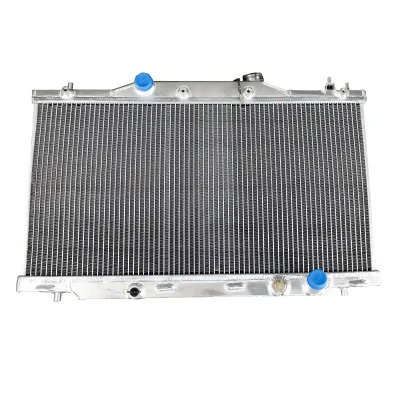
When sourcing a brazed radiator specifically for the Honda Legend or compatible Honda platforms, buyers must first establish a rigorous understanding of the component's physical and thermal architecture. The product data indicates a primary focus on water-cooled systems designed for high-efficiency heat dissipation. The core construction typically utilizes an aluminium body material, which is critical for balancing weight reduction with thermal conductivity. The structural design is predominantly an open type, allowing for direct airflow across the core, which is essential for maintaining optimal operating temperatures under load.
The radiator core itself is a focal point of technical evaluation. Two distinct core types appear in the available specifications: the tube-fin configuration and the pipe belt (or pipe belt) design. The tube-fin type is often associated with high-performance applications where surface area maximization is required for rapid heat transfer. Conversely, the pipe belt type suggests a specific flow path architecture that may be optimized for different pressure tolerances or fluid dynamics. The density of the core fins is a critical variable, with observed specifications ranging from wave 8mm to combinations of 8mm and 5mm. This variation directly impacts the radiator's ability to dissipate heat; a higher density generally offers better thermal performance but may increase airflow resistance.
Dimensions are non-negotiable in the procurement process. The core size specifications provided in the market data show variations such as 72840016 mm and 76840016 mm. The water tank size also varies, with observed measurements including 75633/48 mm, 79433/48 mm, and 75633/40 mm. These dimensional variances are not merely cosmetic; they dictate the physical fitment within the engine bay and the alignment of mounting points. Buyers must verify that the specific radiator model matches the vehicle's chassis requirements, particularly for models like the Honda Cr-V Re4 2.4L (2007 onwards) or the Honda Jade 1.8L (2013 onwards), as the mounting interfaces and tank thicknesses differ significantly between these applications. The standard size reference often cited as 77041016 mm or similar variations (e.g., 668375*16 mm) serves as a baseline, but the exact fitment must be confirmed against the vehicle's original equipment (OE) codes, such as 19010RZAA51 or 19010-50W-H51.
Compliance, Certification, and Manufacturing Standards
In the B2B automotive aftermarket, compliance is as vital as the physical specifications of the part. The sourcing guide must emphasize the verification of international quality management standards. The available data references the IATF ISO standard, which is the global benchmark for automotive quality systems. For a brazed radiator to be considered compliant for major automotive applications, it must meet the rigorous requirements of IATF 16949, which ensures that the manufacturing process maintains consistent quality control. The presence of "OEM Standard Size" in the product attributes suggests that the manufacturing tolerances are intended to match the original equipment manufacturer's specifications, but this claim requires independent verification through third-party testing.
The manufacturing process itself, specifically the brazing technique, is a key compliance indicator. The data lists "Brazed" and "Braze" as the primary craftsmanship methods. This process involves joining the aluminium tubes and fins using a filler metal with a lower melting point than the base metal. The integrity of these joints is paramount; a failure in the brazing process can lead to coolant leaks, overheating, and catastrophic engine failure. Buyers should request documentation proving that the brazing process is controlled, including data on the flux used, the temperature profiles during the brazing cycle, and the post-brazing cleaning procedures to remove corrosive residues.
Furthermore, the product origin is listed as China, a major hub for automotive component manufacturing. While this offers cost advantages, it necessitates a strict verification of the supply chain's transparency. Buyers should ensure that the supplier can trace the raw aluminium material back to certified mills and that the production facility adheres to environmental and labor standards. The "Grade a" designation in the material specifications implies a high-quality aluminium alloy, but this is an internal classification. Procurement teams should demand material test reports (MTRs) that confirm the alloy composition and mechanical properties, such as tensile strength and elongation, to ensure they meet the specific demands of the Honda Legend's cooling system.
Cost Drivers and Pricing Dynamics
Understanding the cost structure of a brazed radiator is essential for effective budgeting and negotiation. The observed price range in the market spans from 2 to 160 USD, a wide variance that reflects differences in specifications, order volumes, and supplier positioning. Several key factors drive these costs. First, the complexity of the brazing process is a primary cost driver. Radiators with complex core geometries, such as the tube-fin or pipe belt designs with varying densities (8mm/5mm), require more precise tooling and longer processing times, increasing the unit cost.
Second, the dimensions of the radiator significantly impact material costs. Larger core sizes, such as 76840016 mm compared to 66837516 mm, require more aluminium and more filler metal, directly increasing the bill of materials. The water tank size also plays a role; tanks with specific thicknesses (e.g., 33mm vs. 48mm) or unique configurations (e.g., 33/48mm split tanks) may require more complex molding or welding, adding to the production cost.
Third, the level of customization requested by the buyer affects the final price. The product data confirms that customization is accepted, with options for packing (Carton, Wooden Box, Stretch Film) and potentially custom dimensions or branding. Customization often incurs setup fees and higher per-unit costs due to the disruption of standard production lines. Additionally, the Minimum Order Quantity (MOQ) is a critical cost lever. The observed MOQ range is 1 to 100 units, with a specific listing noting an MOQ of 5 PCS. While low MOQs offer flexibility for small buyers, they often come with a higher per-unit price due to the lack of economies of scale. Conversely, larger orders can negotiate better pricing, but the buyer must balance this against inventory holding costs and the risk of obsolescence.
Typical Applications and Vehicle Compatibility
The Honda Legend is a flagship model, but the sourcing data reveals a broader ecosystem of compatible Honda vehicles. The radiator is not exclusive to the Legend but is designed for a range of Honda models with similar cooling system requirements. The data explicitly lists applications for the Honda Cr-V Re4 2.4L (2007 onwards), the Honda Jade 1.8L (2013 onwards), and the Honda Spirior Cu2 2.4L (2009 onwards). This indicates that the cooling architecture for these models shares commonalities in terms of flow rate, pressure requirements, and physical dimensions.
The compatibility is further defined by specific OE codes. For instance, the code 19010RZAA51 is associated with the Honda Cr-V, while 19010-50W-H51 and 19010-RNC-T51 are linked to other specific variants. The presence of multiple model numbers (e.g., 19010RL9H51/19010RL9H52) suggests that there are subtle variations in the radiator design for different model years or engine configurations within the same vehicle family. Buyers must be extremely careful to match the OE code of the vehicle they are servicing with the exact model number of the radiator being sourced. A mismatch in the water tank size or core dimensions can lead to installation failures or inadequate cooling performance.
The "Silver & Black" color specification is a visual identifier, but the underlying engineering is what matters. The radiator is designed for a "New" condition, implying it is a replacement part rather than a refurbished unit. The "Suitable for Car Brands: Honda" attribute confirms the targeted application, but buyers should verify that the specific radiator model is approved for the exact engine displacement and year of the Honda Legend or compatible vehicle. The data suggests a high degree of specificity, with codes like AA036-16 and AA058-16 serving as internal identifiers for specific configurations.
Supplier Evaluation and Quality Control Protocols
Selecting the right supplier is the most critical step in the procurement process. The data indicates that the products are manufactured in China, and the supplier base includes entities capable of offering customization and large-scale production (capacity up to 1,500,000 PCS). However, capacity alone does not guarantee quality. Buyers should evaluate suppliers based on their ability to provide comprehensive documentation, including material test reports, process control charts, and quality assurance certificates.
Quality control should be a continuous process, not just a final inspection. The "Brazed" craftsmanship requires strict monitoring of the brazing temperature and time to ensure joint integrity. Buyers should inquire about the supplier's in-process quality control measures, such as leak testing, pressure testing, and visual inspection of the brazed joints. The "Open Type" structure and "Direct-flow" or "Cross-flow" radiator types each have specific failure modes; for example, cross-flow radiators are more susceptible to blockage in the tanks, while direct-flow radiators may have issues with uneven heat distribution. The supplier should have protocols to detect these defects before shipment.
Inventory availability is another key factor. The data notes that stock is "Available & Large," which is beneficial for reducing lead times. However, buyers should verify the freshness of the inventory, as aluminium radiators can degrade if stored in poor conditions. The "In Stock" status should be confirmed with real-time data from the supplier to avoid delays. Additionally, the supplier's ability to handle custom packaging (Carton, Wooden Box, Stretch Film) is important for protecting the product during transit and meeting the buyer's logistical requirements.
Long-Term Procurement Considerations and Risk Management
Sourcing a brazed radiator is not a one-time transaction but a long-term partnership that requires strategic planning. The "Customization" attribute suggests that buyers may need to adapt the product to specific requirements over time. This flexibility is a double-edged sword; while it allows for tailored solutions, it also introduces complexity in the supply chain. Buyers should establish clear communication channels with the supplier to manage changes in specifications or order volumes.
Risk management is essential, particularly regarding the "High-density" and "Wave 8mm" specifications. These features, while offering superior cooling, may be more prone to damage during handling or installation. Buyers should implement strict handling guidelines for their logistics partners to prevent physical damage. Furthermore, the "Digital Type" and "Switch Type" water temperature sensor types indicate that the radiator may be integrated with complex electronic systems. Buyers must ensure that the supplier can provide compatible sensors or that the radiator design allows for easy integration with the vehicle's existing electronic control unit (ECU).
Finally, the "MOQ" of 5 PCS to 100 PCS offers flexibility, but buyers should plan for volume scaling. As demand grows, the buyer should negotiate volume-based pricing tiers to optimize costs. The "Large" inventory capacity of the supplier (1,500,000 PCS) suggests that they can support significant growth, but buyers should verify the supplier's ability to maintain consistent quality as production scales. Long-term contracts with clear quality clauses and performance metrics can help mitigate risks and ensure a stable supply of high-quality brazed radiators for the Honda Legend and compatible models.
| Feature | Observation from Data | Procurement Verification Requirement |
|---|---|---|
| Cooling Style | Water-cooled | Verify flow rate and pressure ratings for specific engine. |
| Body Material | Aluminium | Request Material Test Report (MTR) for alloy grade. |
| Craftsmanship | Brazed / Braze | Inspect joint integrity and request brazing process logs. |
| Core Type | Tube-fin / Pipe Belt | Confirm core density (8mm/5mm) matches thermal load. |
| Dimensions | Core: 728-768mm; Tank: 756-794mm | Measure against vehicle bay and OE specifications. |
| Certification | IATF ISO / OEM Standard | Verify valid IATF 16949 certificate and OEM approval. |
| MOQ | 1-100 PCS (e.g., 5 PCS) | Negotiate tiered pricing for volume scaling. |
| Customization | Accepted (Packing, Dimensions) | Define clear specs for custom orders to avoid errors. |
FAQs
What is the core size for the Honda Legend Brazed Radiator?
The core size is typically 728*400*16 mm or 768*400*16 mm depending on the specific model variant. Buyers must verify the exact dimensions against the vehicle's OE code to ensure proper fitment within the engine bay.
Which certification standards apply to these aluminium radiators?
The products comply with IATF ISO standards and are manufactured to OEM standard sizes. This ensures the brazing process meets global automotive quality management requirements for safety and performance.
Can buyers request customization for packaging and specifications?
Yes, customization is accepted for packing methods like cartons, wooden boxes, or stretch film. Suppliers also offer custom dimensions and branding options to meet specific procurement needs.
What is the minimum order quantity for sourcing these parts?
The minimum order quantity ranges from 1 to 100 units, with some listings specifying an MOQ of 5 pieces. Lower quantities may incur higher per-unit costs due to limited economies of scale.
How is the radiator core constructed for heat dissipation?
The core uses a tube-fin or pipe belt design with a wave density of 8mm or 5mm. This brazed aluminium structure ensures efficient heat transfer for water-cooled Honda engine systems.
Where are these Honda radiators manufactured and shipped from?
The products originate from China and are available in large inventory quantities. Suppliers have a production capacity of up to 1,500,000 pieces to support bulk orders.