Source Household Washer Agitator for Commercial Laundry, Household Washing, and Chemical Mixing
Find 30 listings for Household Washer Agitator components suitable for commercial laundry, household washing, and chemical mixing applications. Buyers can compare specifications including material, installation type, and certification standards from verified Chinese manufacturers.
Key considerations
Products List


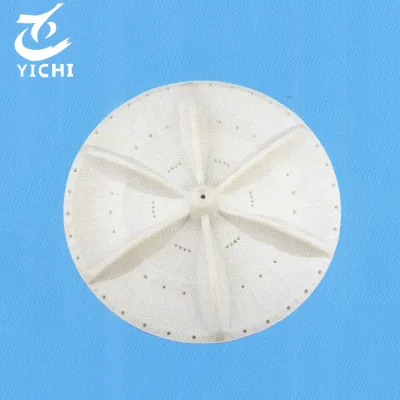


$666.00 - $6666.00
MOQ: 1 Pieces
Comprehensive Sourcing Guide
Strategic Sourcing Guide for Household Washer Agitators
The global market for household washing machine components continues to evolve, with the agitator serving as a critical mechanical element in top-loading washing systems. For procurement professionals and B2B buyers, sourcing a Household Washer Agitator requires a nuanced understanding of material science, mechanical compatibility, and supply chain reliability. This guide synthesizes available market data to provide a disciplined approach to identifying, evaluating, and procuring high-quality agitators for commercial laundry and household applications. The focus remains on evidence-based criteria derived from current product specifications and industry standards, ensuring that procurement decisions are grounded in verifiable facts rather than speculative claims.
Technical Specifications and Material Compatibility
The foundation of a successful procurement strategy lies in the precise definition of technical specifications. The agitator, often referred to as a pulsator in specific regional markets, is designed to create the necessary water turbulence to clean fabrics effectively. Current market data indicates that the primary material used for these components is plastic, selected for its durability, resistance to corrosion, and cost-effectiveness in mass production. However, buyers must verify that the specific plastic formulation meets the mechanical stress requirements of high-speed mixing operations.
Compatibility is a paramount specification. The available data points to a "Universal" compatibility profile, suggesting that many agitators are designed to fit a broad range of washing machine models. Nevertheless, "Universal" does not imply a one-size-fits-all solution without verification. Buyers must cross-reference the physical dimensions, specifically the "Standard Size" mentioned in product listings, against the internal drum geometry of the target appliance. The model designation, such as "Washing Machine Pulsator," serves as a primary identifier, but the specific model number (e.g., BLD09-11-0.75KW or JNJ) is crucial for ensuring mechanical alignment with the drive shaft and motor assembly.
Furthermore, the operational environment dictates the material requirements. While plastic is the standard, some industrial-grade applications may require stainless steel components to withstand higher pressures or more aggressive chemical environments. The data notes a "High Speed Mixer" application and "Vertical" layout type, which implies that the agitator must be engineered to handle significant rotational forces without structural failure. Buyers should request detailed engineering drawings that confirm the "Layout Type" and "Mixer Type" (Agitator) to ensure the component will function correctly within the specific vertical configuration of their washing machines.
Compliance, Certification, and Regulatory Standards
In the B2B procurement landscape, compliance is not merely a formality but a risk mitigation strategy. The sourcing of washing machine agitators requires rigorous verification of certifications that validate the manufacturer's adherence to international quality and safety standards. The observed market data highlights several key certifications, including ISO, CE, and ISO 9001. These certifications indicate that the supplier has established processes for quality management and product safety, which are essential for maintaining brand reputation and ensuring consumer safety.
Specifically, the presence of ISO 9001 certification suggests a commitment to consistent quality control, while CE marking is a mandatory requirement for products entering the European Economic Area, confirming compliance with health, safety, and environmental protection standards. Buyers must verify that the certification documents are current and directly linked to the specific product batch being ordered. The data also references ISO 9001:2008 and SGS, which are older but still relevant standards for quality assurance and third-party inspection. It is critical for buyers to understand that while these certifications are listed, they must be validated for the specific model and production run to avoid receiving non-compliant goods.
Additionally, the "Standard" field in product listings often contains conflicting or ambiguous information, such as "plastic" or "500pcs/set." These entries likely refer to packaging standards or material classifications rather than regulatory compliance. Buyers should not rely on these entries as proof of regulatory adherence. Instead, they must explicitly request copies of the ISO, CE, and SGS certificates and verify the scope of these certifications to ensure they cover the manufacturing of washing machine agitators. The absence of clear, verifiable certification data should be treated as a red flag, prompting a deeper due diligence process before proceeding with any order.
Cost Drivers and Pricing Structures
Understanding the cost structure of household washer agitators is essential for budgeting and negotiation. The observed price range in the market is exceptionally wide, spanning from $0.03 to $6,666. This vast disparity indicates that the market encompasses everything from low-cost, single-unit replacements to high-value, complete industrial mixing systems or bulk procurement packages. The lower end of the spectrum likely represents individual plastic pulsators for standard household units, while the higher end may include complex assemblies, custom-engineered components, or large-scale industrial mixers.
The Minimum Order Quantity (MOQ) is a significant factor influencing the unit cost. The data shows an MOQ range from 1 to 5,000,000 units, with a specific observation of an MOQ of 100 for certain listings. This suggests that suppliers offer tiered pricing models where the unit price decreases significantly as the order volume increases. For buyers sourcing for commercial laundry operations or large-scale manufacturing, negotiating based on volume is crucial. However, for smaller procurement needs, the high MOQ of 5,000,000 units may be prohibitive, necessitating a search for suppliers with lower entry thresholds.
Other cost drivers include the customization options available. The data confirms that "Customization" is available, which can impact the final price. Custom molds, specific color requirements (White, Yellow, Blue), or tailored packaging (Carton, Wooden Case) will incur additional costs compared to standard off-the-shelf products. Buyers must balance the need for customization against the budget constraints, ensuring that the added value of a custom solution justifies the premium. Additionally, the origin of the product, primarily noted as China (with specific mentions of Ningbo and Hebei), influences logistics costs and potential tariffs, which should be factored into the total landed cost calculation.
Typical Applications and Usage Scenarios
The versatility of the Household Washer Agitator extends beyond simple residential use. The market data identifies applications in both "Commercial Laundry" and "Household Washing," indicating that the same component may be suitable for a wide range of operational environments. In household settings, the agitator is designed for gentle yet effective cleaning of various fabric types, including underwear, all clothes, maternal and child clothing, ramie cotton, cashmere, and silk. The "High" quality attribute suggests that these components are engineered to minimize fabric damage while maximizing cleaning efficiency.
In commercial settings, the requirements shift towards durability and high-volume processing. The data mentions applications in "Chemical" industries and "Liquid with Suspended Solids," which implies that some agitator designs are robust enough to handle harsher conditions and more complex fluid dynamics. The "Working" attribute of "High Speed Mixer" further supports the use of these components in industrial mixing applications where rapid agitation is required. Buyers must carefully assess the specific application environment to select the appropriate agitator. A component designed for delicate household fabrics may not withstand the rigors of a commercial chemical processing line, and vice versa.
The "Use" is explicitly defined as "Washing Machine Operation," confirming the primary function. However, the "Application Area" of "Chemical" and "Liquid" suggests potential secondary uses or cross-industry applications. Buyers should verify that the agitator's material and design are suitable for the specific liquids and chemicals it will encounter. For instance, if the washing machine will be used with strong detergents or sanitizing agents, the plastic material must be resistant to chemical degradation. The "Feature" of "Strong Decontamination" and "Strong Oil-Removal" further highlights the performance expectations, requiring the agitator to facilitate effective cleaning cycles.
Supplier Evaluation and Operational Logistics
Selecting the right supplier is as critical as selecting the right product. The data indicates that suppliers are primarily located in China, with specific hubs in Ningbo and Hebei. These regions are known for their manufacturing capabilities, but buyers must evaluate suppliers based on their operational reliability and logistical capabilities. The "Installation" attribute lists both "Professional Installation" and "DIY Installation," suggesting that the supplier may offer varying levels of support or that the product design accommodates different installation methods. Buyers should clarify the installation requirements and ensure that the supplier provides adequate technical support or documentation.
Packaging is another critical logistical factor. The data shows a variety of packaging options, including "Carton," "Carton Package," "Wooden Case," and "Export Packing." The choice of packaging depends on the fragility of the product and the shipping distance. For international shipments, "Export Packing" and "Carton" are standard, while "Wooden Case" may be required for heavier or more delicate industrial components. The "Selling Units" are listed as "Single Item," but the "Standard" field mentions "16pcs/ctn" and "500pcs/set," indicating that bulk packaging is common. Buyers must confirm the packaging specifications to ensure that the goods arrive undamaged and that the packaging meets the destination country's import regulations.
Trade terms such as CFR, CIF, and FOB are also observed, providing flexibility in how the shipment is managed. Buyers should select the trade term that best aligns with their logistics capabilities and risk tolerance. For example, FOB (Free on Board) places the responsibility of shipping and insurance on the buyer once the goods are on the vessel, while CIF (Cost, Insurance, and Freight) includes these costs in the price. Understanding these terms is essential for accurate cost estimation and risk management.
Quality Control and Long-Term Procurement Considerations
Maintaining consistent quality is a continuous challenge in B2B procurement. The "Condition" of the products is listed as "New," which is a basic requirement, but buyers must go further to ensure long-term reliability. The "Quality" attribute is described as "High," but this is a subjective claim that must be validated through objective testing and inspection. Buyers should implement a robust quality control protocol that includes pre-shipment inspections, material testing, and performance verification. The "Certification" of ISO 9001 and SGS provides a baseline for quality management, but on-site audits or third-party testing may be necessary to verify the actual performance of the agitators.
Long-term procurement considerations involve building a sustainable relationship with suppliers. The "Customization" and "OEM" (Original Equipment Manufacturer) attributes indicate that suppliers are willing to work closely with buyers to develop tailored solutions. This flexibility is valuable for buyers looking to differentiate their products or optimize their supply chain. However, it also requires clear communication and well-defined specifications to avoid misunderstandings. Buyers should establish clear quality benchmarks and performance expectations in their contracts, ensuring that the supplier understands the critical nature of the agitator in their washing machine operations.
Finally, buyers must consider the lifecycle of the product. The "Material" of plastic suggests a finite lifespan, and buyers should plan for periodic replacement or maintenance. The "Application" in "Household Appliance" and "Commercial Laundry" implies that the agitator will undergo repeated cycles of use, making durability a key factor. By focusing on high-quality materials, verified certifications, and reliable suppliers, buyers can ensure that their washing machine operations remain efficient and cost-effective over the long term. The wide range of observed prices and MOQs offers opportunities for negotiation, but the ultimate goal should be to secure a supply chain that delivers consistent quality and performance.
FAQs
What material is used for household washer agitators?
The primary material used is plastic, selected for durability and corrosion resistance. Some industrial-grade applications may require stainless steel to withstand higher pressures or aggressive chemical environments.
Can I find universal compatibility for washing machine pulsators?
Yes, many agitators are designed with a universal compatibility profile to fit a broad range of models. However, buyers must verify physical dimensions against the specific internal drum geometry of their target appliance.
Which certifications validate the quality of these components?
Key certifications include ISO, CE, and ISO 9001, which indicate adherence to international quality and safety standards. Buyers must verify that these documents are current and linked to the specific product batch being ordered.
How does the minimum order quantity affect pricing?
The MOQ ranges from 1 to 5,000,000 units, with specific listings showing an MOQ of 100. Unit prices typically decrease significantly as order volumes increase, allowing for tiered pricing models based on bulk purchases.
Where are the main manufacturing hubs for these parts?
Suppliers are primarily located in China, with specific hubs in Ningbo and Hebei. These regions offer strong manufacturing capabilities, but logistics costs and potential tariffs should be factored into the total landed cost.
What packaging options are available for international shipping?
Options include carton, carton package, wooden case, and export packing. The choice depends on product fragility and shipping distance, with export packing and cartons being standard for international shipments.