Source Household Towel Hook for Home Hotel Apartment
Compare 30 Household Towel Hook options from Guangdong and Fujian suppliers. Buyers can evaluate stainless steel and brass models with single hook designs, V styles, and nail installation for bathroom or commercial use.
Key considerations
Products List


Hotel Bathroom Accessories Clothes Towel Robe Hooks Wall Mounted Clothes Hook
$3.00 - $6.00
MOQ: 100 Pieces

Towel Hook Hanging Hooks Stainless Steel Robe Hanger Bathroom Accessories
$6.00 - $15.00
MOQ: 100 Pieces



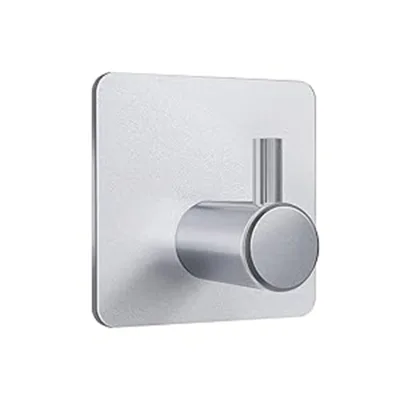
Hot Sale Towel Hooks Single Heavy Towel Stainless Steel Hanging-Bathroom Hooks
$4.70 - $5.40
MOQ: 50 Pieces

Wall Mounted Rack Towel Coat Hook Eco-Friendly Bathroom Black Round Robe Hook
$5.59 - $6.50
MOQ: 50 Pieces





Comprehensive Sourcing Guide
Strategic Sourcing Guide for Household Towel Hooks
Understanding Technical Specifications and Material Integrity
When sourcing household towel hooks, the primary objective is to identify components that balance aesthetic appeal with structural durability. The market offers a diverse array of configurations, ranging from single-hook units to multi-functional sets that include towel bars, robe hooks, and paper holders. A critical observation in the current supply landscape is the prevalence of stainless steel as the dominant material. This material choice is driven by its inherent resistance to corrosion, which is essential for the humid environments typical of bathrooms and kitchens. However, buyers must also account for listings that specify main materials as a combination of copper, brass, and stainless steel. This variation suggests a tiered market where premium finishes may incorporate base metals for specific design aesthetics, while the structural core remains stainless steel.
The physical dimensions and standard specifications vary significantly across different product models. Some listings indicate precise dimensional standards such as 4.54.50.2cm, which likely refers to the footprint or specific profile of a single hook unit. Other entries provide model identifiers like NCY-H114 or NCY-H120/BK, which serve as unique identifiers for specific design iterations. The "V Style" hook configuration is a notable design feature observed in the data, offering a specific profile that may influence towel hanging capacity and visual integration. Furthermore, the installation method is a pivotal technical specification; many products utilize a "Nail" installation type, implying a direct mounting approach that requires minimal hardware. Buyers should verify whether the product includes a cover plate, as some models are available with or without this component, affecting the final aesthetic and the ease of installation on different wall surfaces.
Compliance, Certification, and Quality Standards
Navigating the compliance landscape for bathroom hardware requires a rigorous verification of certifications and standards. The supply data indicates that ISO certification is a high-confidence attribute present in the product listings. This suggests that manufacturers are adhering to international management system standards, which is a positive indicator for process consistency. Additionally, some entries reference ISOCE, which may be a specific regional or manufacturer-specific designation, though buyers should treat this as a claim requiring direct verification against official certification bodies. It is important to distinguish between the product's own certification and broader industry standards. While background knowledge often associates hardware with ISO 9001 or OEKO-TEX, these specific standards should not be assumed to apply to every listed product unless explicitly confirmed in the supplier's documentation.
Quality assurance in this sector extends beyond mere certification to include surface treatment and finish durability. The observed "Polished" surface treatment is a common attribute, indicating a finishing process that enhances both the visual appeal and the resistance to fingerprints or minor scratches. However, the "Level" of the product is described as "High-End" in certain listings, which implies a higher tier of quality control and material selection. Buyers must understand that "High-End" is a descriptive observation rather than a guaranteed standard for all inventory. The presence of "Excellent" user reviews in the data suggests a correlation between these high-end attributes and customer satisfaction, but these reviews should be treated as historical observations rather than predictive performance guarantees for new orders.
Cost Drivers and Pricing Dynamics
The pricing structure for household towel hooks is influenced by a complex interplay of material composition, customization options, and order volume. The observed price range in the market spans from $0.04 to $25.30 USD. This wide disparity highlights the existence of distinct market segments, from basic, mass-produced single hooks to elaborate, custom-designed sets. The lower end of the price spectrum likely corresponds to standard stainless steel models with minimal customization, while the upper end reflects products featuring brass or copper accents, complex designs, or comprehensive sets that include multiple bathroom accessories.
Material costs are a primary driver of these price variations. Products listed with "Copper/Brass/Stainless Steel" as main materials will inherently command higher prices than those made solely of stainless steel due to the raw material costs and the complexity of working with multiple metals. Furthermore, the "Customization" attribute is available across many listings, which introduces a variable cost factor. Custom packaging, such as "Brown Carton" versus "Inner Box" or "Cotton Bag," adds to the unit cost. The "Sets Include" attribute, which bundles items like soap dishes, toilet brush holders, and towel bars, also significantly impacts the total price. Buyers must analyze the total cost of ownership, considering that a slightly higher unit price for a complete set may offer better value than purchasing individual components separately.
Typical Applications and Design Versatility
The application scenarios for household towel hooks are diverse, catering to both residential and commercial needs. The data explicitly lists "Home," "Hotel," "Apartment," and "Project" as valid application scenarios. This versatility indicates that the products are engineered to meet the varying demands of private residences and high-traffic commercial environments. In commercial settings, such as hotels and apartments, durability and ease of maintenance are paramount. The "Commercial" usage tag confirms that certain models are designed to withstand frequent use.
Design style is another critical factor in application suitability. The market offers "Modern," "Classic," and "Traditional" design styles, allowing buyers to match the hardware to the interior design theme of the space. The "Engineering Solution Capability" provided by suppliers, including "Graphic Design" and "Free Model Design," suggests that these products can be adapted for specific project requirements. For instance, a hotel renovation project might require a specific "Modern" style with custom dimensions, which the supplier's design capabilities can accommodate. The "Suitable for: Bathroom" attribute reinforces the primary use case, but the inclusion of "Kitchen" in the package composition suggests that these hooks are also marketed for utility areas within the home.
Supplier Evaluation and Operational Capabilities
Evaluating suppliers requires a focus on their operational capabilities and logistical strengths. The supply chain for these products is concentrated in specific regions of China, with "Guangdong," "Jiangmen," and "Fujian" appearing as key origins. Guangdong, in particular, is a hub for manufacturing, offering a robust ecosystem of suppliers. Buyers should verify the specific origin of their order, as regional clusters often imply specialized expertise in certain types of hardware.
Supplier capabilities extend beyond manufacturing to include after-sales support and customization. The "2-After-Sales Service: Free Spare Parts" attribute is a significant value proposition, indicating that suppliers are willing to support long-term product performance. Additionally, the "OEM/ODM: Welcome" tag confirms that suppliers are open to original equipment manufacturer and original design manufacturer partnerships, allowing buyers to brand products or request specific design modifications. The "MOQ" (Minimum Order Quantity) ranges from 1 to 2000, offering flexibility for both small-scale buyers and large procurement projects. This range allows buyers to test the market with small orders or commit to larger volumes for better pricing.
Quality Control and Long-Term Procurement Considerations
Implementing a robust quality control (QC) strategy is essential for mitigating risks associated with hardware procurement. Given the variation in materials and finishes, buyers should establish clear acceptance criteria for surface treatments, specifically the "Polished" finish. Visual inspection for scratches, uneven plating, or corrosion should be part of the QC process. The "Installation: Nail" method requires verification of the included hardware to ensure it is compatible with the target wall type and provides sufficient holding strength.
Long-term procurement considerations involve assessing the supplier's ability to maintain consistency. The "Custom packaging" standard suggests that packaging can be tailored, which is crucial for branding and logistics efficiency. However, buyers must ensure that the packaging protects the product during transit, especially for items with polished surfaces that are prone to scratching. The "Sets Include" attribute implies that managing inventory for multi-component sets requires careful coordination to prevent missing parts. Furthermore, the "High-End" classification suggests that buyers should implement stricter QC protocols for these items to maintain the perceived value. Regular audits of the supplier's production line and certification status, particularly the ISO certification, will help ensure that the quality remains consistent over time.
Comparative Analysis of Product Attributes
To facilitate decision-making, the following table summarizes the key attributes observed in the supply data, highlighting the variations buyers must navigate.
| Attribute Category | Observed Variations | Procurement Implication |
|---|---|---|
| Material | Stainless Steel; Copper/Brass/Stainless Steel | Verify material composition for corrosion resistance and cost alignment. |
| Design Style | Modern, Classic, Traditional, V Style | Match design to the target interior aesthetic (Home vs. Hotel). |
| Installation | Nail (Direct Mount) | Confirm wall compatibility and included mounting hardware. |
| Packaging | Carton, Brown Carton, Inner Box, Cotton Bag | Assess packaging for protection and branding needs. |
| Certification | ISO, ISOCE | Verify specific certification validity with issuing bodies. |
| MOQ | 1 to 2000 | Align order volume with budget and storage capacity. |
| Application | Home, Hotel, Apartment, Project, Commercial | Ensure product durability matches the intended usage frequency. |
| Customization | Available, Custom Packaging, OEM/ODM | Leverage supplier design capabilities for unique requirements. |
In conclusion, sourcing household towel hooks requires a balanced approach that weighs technical specifications against cost and application needs. By rigorously verifying material integrity, certification status, and supplier capabilities, buyers can secure high-quality hardware that meets the demands of both residential and commercial projects. The flexibility in customization and the wide range of price points allow for tailored procurement strategies that align with specific budgetary and design constraints.
FAQs
What materials are used for household towel hooks?
Most products use stainless steel, while some combine copper, brass, and stainless steel. Buyers should verify the specific material composition to ensure corrosion resistance for humid environments like bathrooms.
Which installation methods are available for these hooks?
The primary installation method observed is nail mounting. Some models may include a cover plate with or without the main unit, affecting the final aesthetic and ease of wall attachment.
Can I find household towel hooks with ISO certification?
Yes, ISO certification is a high-confidence attribute found in product listings. Buyers should verify the specific certification validity with the issuing body to ensure process consistency.
How does customization affect the pricing of towel hooks?
Customization is available and influences cost through packaging and design changes. Prices range from 0.04 to 25.3 USD, with higher costs often linked to complex designs or material combinations like brass.
What is the minimum order quantity for these products?
The minimum order quantity ranges from 1 to 2000 units. This flexibility allows buyers to test the market with small orders or commit to larger volumes for better pricing.
Where are these household towel hooks manufactured?
Products originate from regions like Guangdong, Jiangmen, and Fujian in China. Buyers should verify the specific origin as regional clusters often imply specialized manufacturing expertise.
What styles are available for bathroom towel hooks?
Available styles include Modern, Classic, Traditional, and V Style configurations. Buyers can match these designs to the interior theme of homes, hotels, or commercial projects.
Do suppliers offer after-sales support for these hooks?
Some suppliers provide free spare parts as part of their after-sales service. This support indicates a commitment to long-term product performance and customer satisfaction.