Source I2C Expansion Arduino Shield for Uno, Mega, and Raspberry Pi
Compare 30 I2C Expansion Arduino Shield options from verified suppliers. Listings include models for Arduino Uno R3, Mega 2560, and Raspberry Pi with various mounting types and interface standards available for immediate sourcing.
Key considerations
Products List
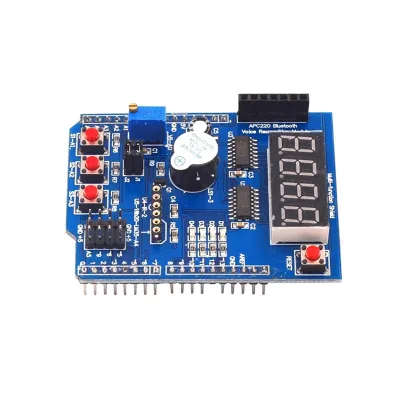
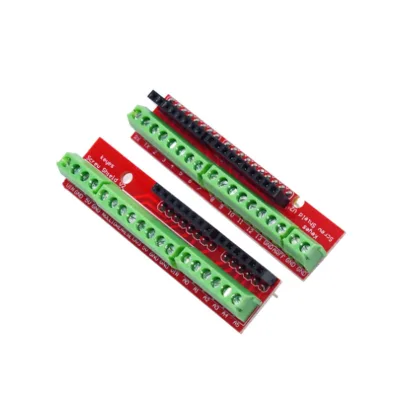
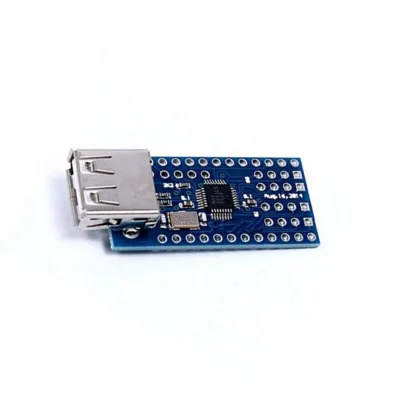
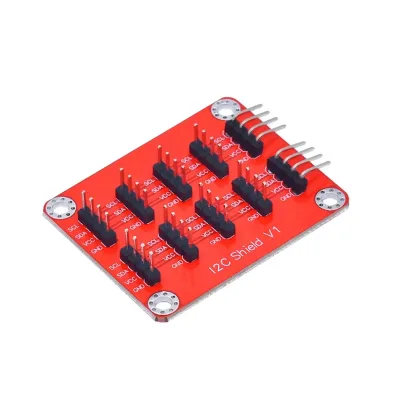
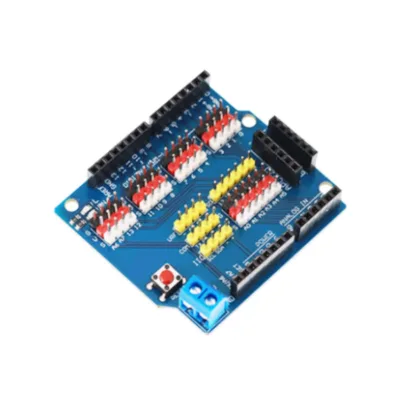


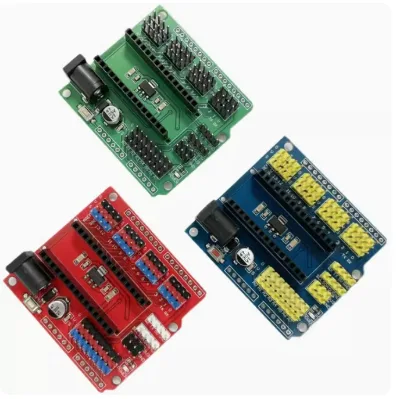
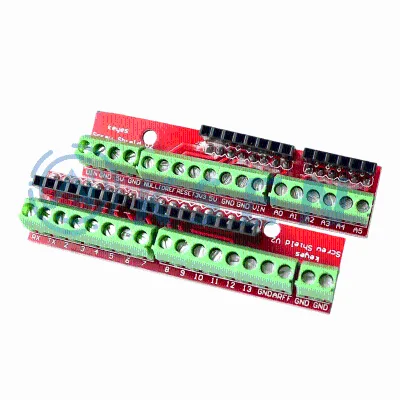
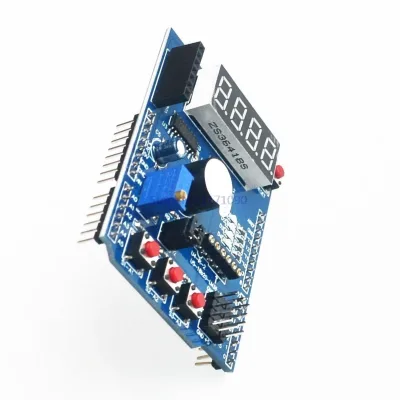
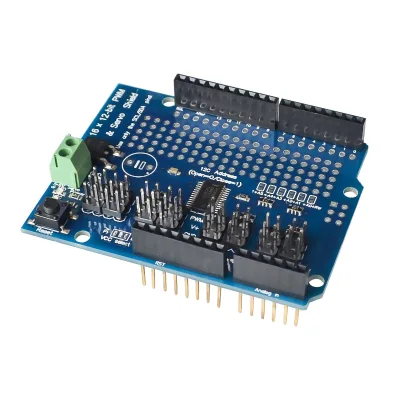
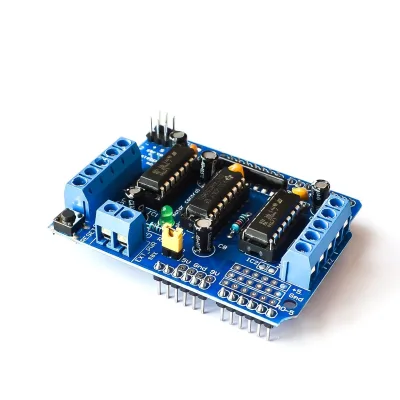
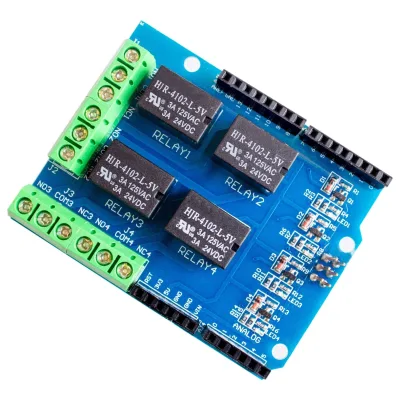
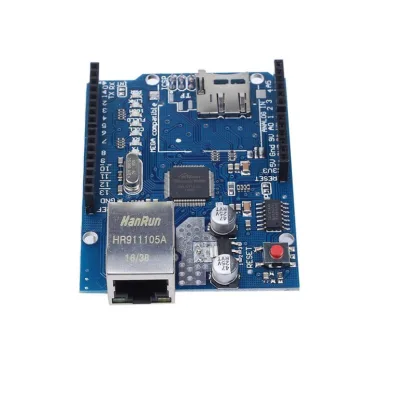

Arduino 2.4" Inch TFT LCD Touch Shield W/Ili9341. Library for Mega/Due/Uno
$4.00 - $4.50
MOQ: 2 Pieces


Comprehensive Sourcing Guide
Strategic Sourcing Guide for I2C Expansion Arduino Shields
The procurement of I2C expansion shields for Arduino platforms represents a critical decision point for engineering teams and B2B buyers seeking to enhance the connectivity and sensor integration capabilities of their embedded systems. These components, often categorized as multifunctional expansion boards or integrated circuit interfaces, serve as the bridge between the microcontroller's limited pin count and the diverse ecosystem of peripheral sensors. When sourcing these items, buyers must navigate a market characterized by a wide array of model numbers, mounting types, and application-specific configurations. The following guide outlines the essential technical, compliance, and logistical factors required to secure high-quality I2C expansion solutions without relying on unverified claims or speculative data.
Technical Architecture and Interface Specifications
The fundamental technical requirement for any I2C expansion shield is the accurate implementation of the Inter-Integrated Circuit (I2C) protocol, often referred to as the IIC interface. In the context of the available supply chain, these boards are frequently described as "IIC interface expansion" modules designed to support various Arduino architectures. Buyers must verify that the product explicitly supports the required communication protocol, as some listings may offer general expansion without dedicated I2C support. The physical interface is equally critical; specifications indicate a range of mounting types, including "CONNECTION" and "SMD" (Surface Mount Device). SMD mounting is typically preferred for compact, mass-produced applications, while through-hole or general connection types may be more suitable for prototyping or educational kits.
Furthermore, the compatibility matrix is a primary technical constraint. The observed market data highlights specific compatibility with "Arduino UNO R3," "Mega 2560," and "Leonardo" platforms. Some products are explicitly labeled as "double support" for UNO R3, suggesting a design that accommodates multiple pin configurations or voltage levels. When evaluating a potential supplier, the buyer must confirm that the model number aligns with the specific microcontroller board in use. For instance, a shield designed for the "Mega" series may not physically or logically interface with an "UNO" without modification. The presence of a "Mini USB Host Shield Support Google ADK" in the catalog indicates that some expansion boards may also offer USB host capabilities, which is a distinct feature from pure I2C expansion and requires separate verification of firmware and hardware support.
Compliance, Certification, and Origin Verification
In the B2B procurement of electronic components, verifying the origin and compliance status is paramount to ensuring supply chain integrity. The supplied data points to "China" and specifically "Guangdong, China" as the place of origin for many of these expansion boards. While "ORIGINAL" is listed as a place of origin attribute in some entries, this term is ambiguous and should be treated as a marketing descriptor rather than a certified standard. Buyers must demand explicit documentation regarding the manufacturing location to avoid counterfeit or substandard components.
Regarding certifications, the provided text does not list specific third-party certifications such as CE, RoHS, or ISO 9001. Therefore, buyers cannot assume compliance based on product descriptions alone. The presence of "ESD Package" (Electrostatic Discharge) and "ESD packing" in the product attributes indicates that the supplier acknowledges the sensitivity of the integrated circuits to static electricity. This is a positive indicator of basic handling standards, but it does not replace the need for formal compliance testing. Procurement teams should request proof of RoHS compliance to ensure the absence of hazardous substances and verify that the "Generic Package" or "Box Packing" meets the durability requirements for international shipping. Without explicit certification data in the source material, the buyer must treat all compliance claims as pending verification until official test reports are provided.
Cost Drivers and Pricing Dynamics
The pricing landscape for I2C expansion shields is influenced by several variables, including the complexity of the circuit, the mounting type, and the packaging requirements. The observed price range in the market spans from $0.31 to $9.70 USD. This significant variance suggests that the lower end of the spectrum likely corresponds to basic, single-function boards, while the higher end may include multifunctional kits with additional features like Ethernet support or specialized sensor integration.
Several cost drivers are evident in the product attributes. The "Customization: Available" attribute indicates that buyers can request tailored solutions, which typically incurs a premium over standard off-the-shelf inventory. Similarly, the "OEM: Provided" status suggests that suppliers are willing to brand the components, a service that adds value but also increases the unit cost. Packaging also plays a role; while "Generic Package" is standard, "ESD Package" or "Carton" packing for bulk orders may affect the final price. Buyers should be aware that the Minimum Order Quantity (MOQ) varies significantly, ranging from 1 to 100 units, with specific listings showing an MOQ of 50. Higher MOQs often correlate with lower unit prices, but they also increase the initial capital outlay. Understanding these drivers allows procurement teams to negotiate effectively and balance cost against volume requirements.
Typical Applications and Use Cases
The versatility of I2C expansion shields is demonstrated by their diverse application profiles. The primary use case is expanding the input/output capabilities of Arduino boards, allowing for the connection of multiple sensors via the I2C bus. Specific applications noted include support for "Arduino UNO MEGA Duemilanove Expansion Module" and "V5.0 sensor expansion board" configurations. These boards are essential for projects requiring data acquisition from temperature, humidity, pressure, or motion sensors that utilize the I2C protocol.
Beyond simple sensor expansion, some modules are designed for more complex networking tasks. The attribute "Support Network: Ethernet" indicates that certain shields can provide wired network connectivity, enabling the Arduino to communicate over a local area network or the internet. This is particularly relevant for IoT (Internet of Things) applications where data needs to be transmitted to a central server. Additionally, the "Mini USB Host Shield Support Google ADK" suggests applications involving mobile device connectivity or data logging via USB peripherals. The "CNC Shield V4 Expansion Board" points to industrial automation applications, where precise control of motors and axes is required. Buyers should align their procurement with these specific use cases, ensuring the selected shield supports the necessary interfaces, whether they be Ethernet, USB, or standard I2C sensor ports.
Supplier Evaluation and Quality Assurance
Evaluating a supplier for I2C expansion shields requires a rigorous assessment of their technical capabilities and quality control processes. The availability of "Customization" and "OEM" services is a strong indicator of a supplier's flexibility and capacity to meet specific project needs. However, buyers must look beyond these marketing claims. The "Condition: New" attribute is a basic requirement, but it does not guarantee functional reliability.
Quality assurance should focus on the physical construction and testing of the boards. The "Mounting Type" (SMD vs. CONNECTION) should be verified against the buyer's assembly line capabilities. If the buyer uses automated pick-and-place machines, SMD components are mandatory. For manual assembly, through-hole options may be more appropriate. The "Product Completion Type" is listed as "Component & Part," which implies these are ready-to-use modules rather than raw PCBs requiring further assembly. Buyers should request sample units to test the "IIC interface expansion" functionality directly. It is crucial to verify that the "Data" transmission is stable and that the board does not suffer from signal degradation, a common issue in low-cost expansion boards.
Long-Term Procurement and Supply Chain Resilience
Sourcing I2C expansion shields is not merely a transactional activity but a strategic decision that impacts long-term project viability. The "Series: Expansion Board Serial" designation suggests that these products are part of a larger family, which can be beneficial for future upgrades or scaling. However, the lack of specific standard numbers in the provided data (other than "1 Unit per pack" as a packing standard) necessitates caution. Buyers should establish a relationship with suppliers who can guarantee consistent model availability over time.
The "Place of Origin: Guangdong, China" highlights a concentration of manufacturing in a specific region. While this region is a hub for electronics, it also introduces potential supply chain risks related to logistics and geopolitical factors. Buyers should diversify their supplier base to mitigate these risks. Additionally, the "Customization: Available" feature offers a path to long-term partnership, allowing the buyer to lock in specific design parameters that prevent obsolescence. When negotiating contracts, buyers should consider lead times and the ability to scale production, especially given the observed MOQ range of 1 to 100. A supplier that can accommodate both small prototype runs and large-scale production runs provides the most value.
Comparative Analysis of Product Attributes
To facilitate decision-making, the following table summarizes key attributes observed in the market for I2C expansion shields, helping buyers compare options based on available data.
| Attribute Category | Observed Options | Procurement Consideration |
|---|---|---|
| Compatibility | Arduino UNO R3, Mega 2560, Leonardo, Duemilanove | Verify exact pinout and voltage levels for the target board. |
| Mounting Type | CONNECTION, SMD, IIC interface expansion | Match with assembly method (manual vs. automated). |
| Packaging | Generic Package, Box Packing, ESD Package, Carton | Ensure ESD protection for sensitive integrated circuits. |
| Features | Ethernet Support, USB Host, Sensor Expansion | Identify if additional interfaces (Ethernet/USB) are required. |
| Origin | China, Guangdong, ORIGINAL (unverified) | Request specific factory location and compliance certificates. |
| MOQ | 1 to 100 (specific listing: 50) | Balance inventory costs with order volume flexibility. |
| Condition | New | Confirm "New" status and request batch testing data. |
Conclusion
Sourcing I2C expansion shields for Arduino platforms requires a disciplined approach that prioritizes technical compatibility, verified origin, and robust quality control. The market offers a wide range of options, from basic sensor expansion boards to complex modules supporting Ethernet and USB host functions. Buyers must carefully navigate the discrepancies between marketing claims and verified specifications, particularly regarding certifications and origin. By focusing on the specific attributes of mounting type, compatibility, and packaging, and by maintaining a rigorous supplier evaluation process, procurement teams can secure reliable components that meet the demands of modern embedded systems. The strategic selection of these shields ensures that projects remain scalable, compliant, and technically sound throughout their lifecycle.
FAQs
What mounting types are available for I2C expansion shields?
Mounting types include CONNECTION and SMD configurations. Buyers must verify the specific type matches their assembly method, as SMD is preferred for automated lines while CONNECTION suits prototyping.
Which Arduino boards are compatible with these expansion shields?
Compatible boards include Arduino UNO R3, Mega 2560, and Leonardo. Some listings specify double support for UNO R3, but exact pinout alignment is required before purchase.
Can buyers request customization for these expansion boards?
Yes, customization is available for specific project needs. This service typically incurs a premium over standard inventory and requires direct negotiation with the supplier.
What is the typical minimum order quantity for these items?
The minimum order quantity ranges from 1 to 100 units. Specific listings may require an MOQ of 50, so buyers should check individual supplier terms.
How are these integrated circuit components packaged for shipping?
Packaging options include Generic Package, Box Packing, and ESD Package. ESD packaging is recommended to protect sensitive integrated circuits from static discharge during transit.
Where are these expansion boards manufactured?
Products originate from China, specifically Guangdong. Buyers should verify specific factory locations to ensure supply chain integrity and avoid unverified origin claims.