Source Immune Support GLP-1 Supplement Drops for immunity, fatigue, and health
Find 30 verified options for Immune Support GLP-1 Supplement Drops featuring liquid drops and capsules. Compare specifications, certifications, and customization details from suppliers in Guangdong, China to find the right fit for adult dietary needs.
Key considerations
Products List




Comprehensive Sourcing Guide
Immune Support GLP-1 Supplement Drops Sourcing Guide
Sourcing liquid dietary supplements that combine immune support mechanisms with GLP-1 related ingredients requires a nuanced understanding of regulatory boundaries and formulation realities. Buyers must recognize that while the market lists products under keywords like "immune support" and "GLP-1," the actual product attributes observed in current listings reveal a complex mix of formats. Procurement teams need to distinguish between traditional vitamin drops, such as Vitamin B12 or Magnesium Glycinate, and capsule-based formulations marketed with GLP-1 claims. The discrepancy between the core keyword and the actual available product data—where "GLP-1 Capsules" are listed alongside "Vitamin Liquid Drops"—demands rigorous verification to ensure the purchased item matches the intended therapeutic or nutritional strategy.
This guide provides a structured approach for B2B buyers to navigate these listings, verify technical specifications, and assess supplier credibility. By focusing on the observed facts, such as the presence of certifications like HACCP and ISO, and specific product attributes like "Sugar-Free" or "Organic," buyers can build a more accurate procurement strategy. The goal is to mitigate the risk of misaligned orders, where a buyer seeking liquid immune-boosting drops might inadvertently receive capsule-based weight management supplements, or vice versa. Clear communication of requirements and strict adherence to verification protocols are essential for successful sourcing in this fragmented category.
Product Scope and Observed Listing Signals
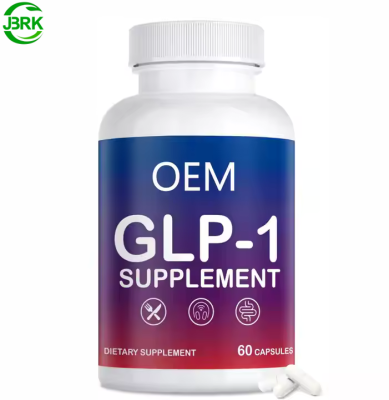
The current market landscape for immune support and GLP-1 related supplements shows a significant divergence between search keywords and actual product listings. Observed data indicates that while "Immune Support" and "GLP-1" are prominent search terms, the actual products available often include distinct categories such as "Vitamin B12 Liquid Drop," "Graviola Liquid Drop," and "Multivitamin Supplement." These items are typically categorized under "Dietary Supplements" with features like "Low-Fat," "Sugar-Free," and "Organic." Buyers must carefully review the "Product Name" and "Main Ingredient" fields to avoid confusion, as some listings explicitly name "GLP-1 Capsules" with a main ingredient of GLP-1, while others focus on liquid vitamin formulations. This distinction is critical for aligning procurement with specific health goals, whether they are focused on metabolic support via GLP-1 pathways or general immune enhancement via vitamins.
Further complicating the scope is the variation in dosage forms and target demographics. The observed listings include both "Capsules" and "Drops," with specific indications for "Adults" and explicit exclusions for "Children." For instance, one observed product is labeled as "GLP-1 Capsules" with a dosage of "2 Capsules per time," while another is a "Vitamin Liquid" with a dosage of "Take 1 Ml Twice a Day." Both are marketed for "Adult" use and claim functions like "Improve Immunity" or "Enhance Health." Buyers must verify the exact form factor required for their distribution channel, as liquid drops and capsules have different packaging, storage, and consumer usage profiles. The presence of "Customization" and "Logo Printing" options suggests that private label opportunities exist, but the base formulation must be clearly defined before engaging with suppliers.
Technical Specifications to Verify
Technical verification begins with confirming the physical specifications and packaging standards of the product. Observed data highlights a range of packaging formats, including "Box," "Cardboard Box," "Carton Box," and "Bottled" options. Buyers must specify whether they require individual retail packaging or bulk carton packaging for further distribution. The standard bottle sizes observed include "60ml per bottle" and "30ml," which directly impact the unit cost and shipping volume. Additionally, the single package size is noted as "6X6X12 cm" for certain capsule products, while liquid drops may have different dimensional requirements. Verifying these dimensions is crucial for calculating freight costs and warehouse storage efficiency, especially when dealing with high MOQs that can reach up to 600,000 units.
The formulation details and shelf-life parameters are equally critical for technical due diligence. The observed shelf life for both capsule and liquid products is consistently listed as "24 Month" or "24months," which provides a baseline for inventory planning. However, buyers must verify the specific storage methods required to maintain this shelf life, such as "Put in the shade" or "Cool and Dry Place," and "Mildew Proof" conditions. The main ingredients vary significantly, from "GLP-1" in capsules to "Vitamin B12," "Folic Acid," and "Magnesium Glycinate" in liquid drops. Buyers must confirm the exact ingredient profile and concentration, as "Vitamin Liquid" and "Fatigue Liquid Vitamin" may have different potency levels. Additionally, the "Model Number" (e.g., 1633) and "Brand Name" (e.g., JBHK) should be documented to ensure traceability and consistency in future reorders.
Compliance and Safety Documentation
Compliance verification is paramount when sourcing dietary supplements, particularly those making health claims like "Improve Immunity" or "Enhance Health." The observed listings mention several certifications, including "QS," "HACCP," "GMP," and "ISO," as well as a specific "Certificate: HACCP." Buyers must request valid, up-to-date copies of these certificates to verify that the supplier’s manufacturing facilities adhere to recognized quality management standards. GMP (Good Manufacturing Practice) certification is particularly important for dietary supplements to ensure product consistency and safety. HACCP certification indicates a systematic approach to food safety, which is relevant for liquid formulations that may be more susceptible to microbial contamination. Buyers should not assume that all listed products hold all certifications; each supplier and product line must be individually verified.
Beyond certifications, buyers must ensure that the product labeling and claims comply with the regulatory requirements of the destination market. The observed "Label: Can Be Customized" feature allows for private labeling, but the content of the label must be reviewed for compliance with local advertising and health claim regulations. Claims such as "Sugar-Free," "Organic," and "Low-Fat" must be substantiated by lab test results. Additionally, the "Not Applicable People: Children" warning must be prominently displayed on the final product packaging to prevent misuse. Buyers should also verify that the "Main Ingredient" is legally permitted for use in dietary supplements in the target country. For GLP-1 related products, it is essential to confirm that the ingredient is classified correctly and does not violate pharmaceutical regulations, as GLP-1 agonists are often prescription drugs in many jurisdictions.
Cost Drivers and Commercial Terms
Cost structures in the dietary supplement industry are influenced by several key factors, including the complexity of the formulation, the volume of the order, and the level of customization required. The observed MOQ range of 1 to 600,000 units suggests that suppliers are flexible, but pricing will likely vary significantly based on the quantity. Higher volumes typically result in lower unit costs, but buyers must balance this with storage capacity and shelf-life constraints. The presence of "Customization" and "Logo Printing" may incur additional setup fees or higher per-unit costs, especially for small to medium-sized orders. Buyers should request detailed quotations that break down costs for raw materials, manufacturing, packaging, and logistics to identify potential savings.
Commercial terms also play a crucial role in the total cost of ownership. The observed "Selling Units: Single item" indicates that pricing is often quoted per unit, but buyers should clarify whether this includes packaging materials. The "Single gross weight" of 250.000 KG for a single package size seems unusually high and may indicate a bulk carton weight rather than a single retail unit; this discrepancy must be clarified to avoid miscalculating shipping costs. Payment terms, lead times, and return policies should be negotiated upfront. Given the "Shelf life: 24 Month," buyers should ensure that the supplier guarantees fresh production dates upon shipment. Additionally, buyers should inquire about the cost of third-party testing for quality assurance, as this may be an optional or mandatory add-on depending on the supplier’s standard practices.
Supplier Qualification and Quality Control
Supplier qualification requires a thorough assessment of the manufacturer’s capabilities and quality control processes. Buyers should verify the supplier’s location, with observed data indicating origins in "Guangdong, China," a major hub for supplement manufacturing. However, the location alone does not guarantee quality; buyers must conduct on-site audits or request virtual tours to inspect the production lines, especially for liquid drop formulations which require sterile environments. The presence of "GMP" and "HACCP" certifications should be cross-referenced with the supplier’s actual operational practices. Buyers should also assess the supplier’s ability to handle "Customization" requests, including label design, bottle selection, and ingredient adjustments, to ensure they can meet specific brand requirements.
Quality control measures should be explicitly defined in the purchase agreement. Buyers should require pre-shipment inspections and third-party lab testing for potency, purity, and contaminants. The observed "Feature: Vitamins, Low-Fat, Sugar-Free, Organic" claims must be verified through analytical testing. For liquid products, microbial testing is essential to ensure safety. Buyers should also establish a clear protocol for handling non-conforming products, including returns or replacements. The "Brand Name: JBHK" and "Model Number: 1633" should be used as reference points for quality benchmarks. Consistency in product quality across batches is critical, so buyers should request batch-specific certificates of analysis (COA) for every shipment. Establishing a strong relationship with the supplier’s quality assurance team can help prevent issues before they impact the supply chain.
Long-Term Procurement Checks
Long-term procurement success depends on continuous monitoring of product performance and supplier reliability. Buyers should track customer feedback and return rates to identify any quality issues or mismatches between product claims and consumer experience. For products claiming "Improve Immunity" or "Enhance Health," monitoring market trends and regulatory changes is essential to ensure ongoing compliance. The "Shelf life: 24 Month" requires careful inventory management to avoid stockouts or expiration issues. Buyers should establish a regular review cycle with the supplier to discuss potential formulation improvements, cost reductions, or new product opportunities.
Additionally, buyers should diversify their supplier base to mitigate risks associated with single-source dependencies. While the observed data shows a range of products from "Vitamin B12 Liquid Drop" to "GLP-1 Capsules," relying on a single supplier for all needs may be risky. Building relationships with multiple qualified suppliers can provide flexibility in sourcing and negotiation. Buyers should also stay informed about emerging trends in the dietary supplement industry, such as new delivery formats or ingredients, to stay competitive. Regular audits and performance evaluations of suppliers will help maintain high standards of quality and service. By proactively managing these long-term checks, buyers can ensure a stable and profitable supply chain for their immune support and GLP-1 related supplement products.
FAQs
What certifications do the immune support GLP-1 supplement drops have?
The products hold QS, HACCP, GMP, and ISO certifications. These standards ensure quality and safety for adult dietary supplements. Buyers can verify these credentials when sourcing from Guangdong, China based manufacturers.
How is the GLP-1 supplement drop product packaged for shipping?
Items are packed in cardboard boxes or carton boxes with a standard volume of 60ml per bottle. The single package size measures 6x6x12 cm. Customized labels are available for branding purposes on these liquid drops.
Can buyers customize the logo on the immune support supplement drops?
Yes, logo printing is available and labels can be customized for buyers. This service applies to the Vitamin Liquid and GLP-1 Capsule variants. Customization allows brands to create unique packaging for their specific market needs.
What is the shelf life of the GLP-1 liquid vitamin drops?
The product has a shelf life of 24 months when stored correctly. Buyers should keep the drops in a cool, dry place away from direct sunlight. This storage method ensures the efficacy of the vitamins and minerals.
Which dosage form is used for the GLP-1 supplement drops?
The primary dosage form is liquid drops, though capsules are also listed for specific formulations. The recommended dose for the liquid version is 1 ml taken twice daily. These forms are designed for adult consumption only.
What are the main ingredients in the immune support GLP-1 drops?
Main ingredients include GLP-1, vitamins, and minerals like Magnesium Glycinate and Folic Acid. The formula is designed to improve immunity and enhance health. It is also available in low-fat and sugar-free options for specific dietary needs.
Where are the GLP-1 supplement drops manufactured and sourced from?
The products originate from Guangdong, China. This location is a known hub for dietary supplement manufacturing. Buyers can source directly from factories in this region that meet international quality standards.