Source Inflatable Bounce House with Repair Kit for Parks
Compare 30 listings for an Inflatable Bounce House with Repair Kit designed for parks, amusement centers, and kindergartens. Buyers can evaluate sizes, materials, and certifications like CE/EN14960 from suppliers in Guangdong.
Key considerations
Products List
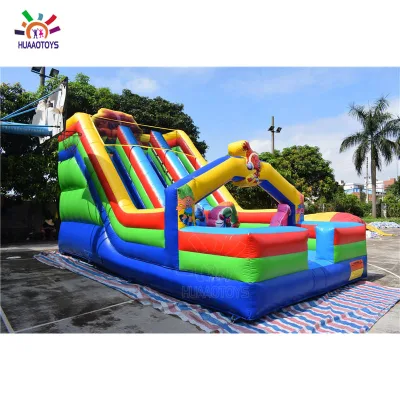
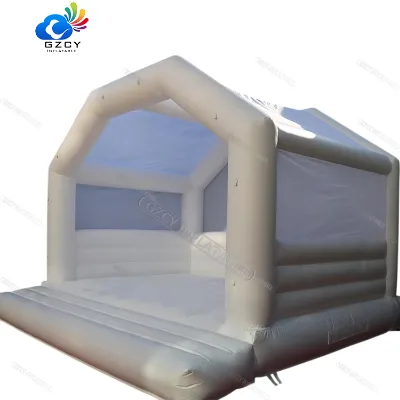


Home Huge Inflatable Bouncers with Slide Big Inflatable Jump House for Sale
$499.00 - $899.00
MOQ: 1 Pieces


Colorful Inflatable Bouncer Combo Slide Inflatable Bounce House with Slide
$1456.00 - $8000.00
MOQ: 1 Pieces

Hot Sale Inflatable Jumper Bounce House with Slide Inflatable Bouncy House Combo
$652.00 - $8000.00
MOQ: 1 Pieces

Factory Direct Sales Inflatable Bounce House for Indoor Outdoor with Slide
$973.55 - $1177.28
MOQ: 1 Pieces

Inflatable Fun City Land Inflatable Bouncer Adult Bounce House for Sale
$2700.00 - $8000.00
MOQ: 1 Pieces

Modular Panel Jumping Bounce Castle Inflatable Castle Bounce House for Rental or Sale
$1236.00 - $8000.00
MOQ: 1 Pieces


Custom Inflatable Bounce House with Slide Commercial Bouncer for Outdoor Play
$1198.00 - $1398.00
MOQ: 1 Pieces


Colorful Inflatable Bouncy Castle Bouncer Mini Inflatable Bounce House with Slide
$378.00 - $450.00
MOQ: 1 Pieces

Inflatable Adult Jumping Bouncy Castle Jumper White Bounce House with Slide
$920.00 - $1010.00
MOQ: 1 Pieces

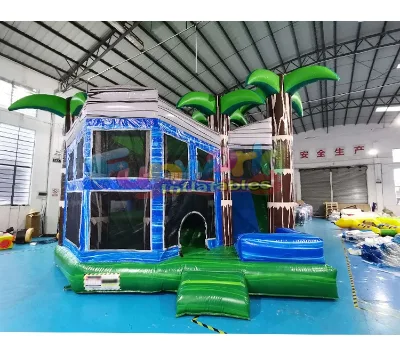
Jungle Bouncer Combo Bouncy Castle Inflatable Bounce House with Slide
$1798.00 - $1889.00
MOQ: 1 Pieces

High Quality Bouncy Castle Bouncer Mini Inflatable Bounce House with Slide
$373.00 - $454.00
MOQ: 1 Pieces

Small Jumping Bouncy Castle Inflatable White Bounce House with Ball Pit and Slide
$519.00 - $695.00
MOQ: 1 Pieces
Comprehensive Sourcing Guide
Strategic Sourcing Guide for Inflatable Bounce Houses with Repair Kits
Understanding Product Specifications and Core Attributes
When sourcing an inflatable bounce house with a repair kit, the buyer must first establish a clear understanding of the technical specifications that define the product's utility and safety. The market presents a diverse range of configurations, from standardized models to fully customized units. Based on available industry data, the physical dimensions of these structures vary significantly. Some observed specifications indicate a fixed size of 7 meters in length, 4 meters in width, and 6 meters in height, while other listings offer fully customizable dimensions, such as 5 meters by 4 meters or bespoke measurements tailored to specific venue constraints.
Material composition is a critical determinant of durability and safety. The primary material identified in high-quality listings is Polyvinyl Chloride (PVC) tarpaulin. A specific thickness of 0.55mm is frequently cited as a standard for commercial-grade units, ensuring resistance to tearing and punctures during high-traffic usage. The construction method also plays a vital role in longevity; advanced manufacturing techniques often include fourfold stitching, which reinforces seams and prevents air leakage under pressure.
Capacity and passenger limits are essential for operational planning. While some units are designed for smaller groups with allowable passenger counts ranging between 10 and 20, larger commercial models may support up to 28 individuals simultaneously. The weight of the product itself is another variable factor, with observed ranges spanning from 100 to 149 kilograms for lighter units up to 250 to 300 kilograms for heavy-duty commercial castles. The style of the bounce house also varies, with popular themes including animal designs, jungle motifs, and general commercial castle aesthetics. These attributes must be verified against the specific needs of the intended venue, whether it be a kindergarten, community square, or amusement park.
Compliance Standards and Certification Verification
Safety compliance is the non-negotiable cornerstone of sourcing inflatable bounce houses. In the international market, adherence to recognized safety standards is mandatory for commercial deployment. The EN14960 standard is a prominent benchmark referenced in product specifications, often cited alongside CE certification and TÜV approval. Buyers must verify that the supplier provides valid documentation confirming that the specific unit has been tested and certified against these rigorous safety protocols.
The certification landscape can be complex, with some suppliers listing "CE/EN14960/TUV" as a combined certification package, while others may only list "CE" or "EN14960" individually. It is imperative for the procurement team to request the actual test reports and certificates rather than relying solely on marketing claims. The presence of a "Quality: CE (En14960) Standard" attribute suggests a commitment to European safety norms, which are generally considered the global baseline for inflatable play equipment.
Furthermore, the "Customized" nature of some products implies that certification may need to be specific to the custom design. A standard certification for a pre-made model does not automatically apply to a bespoke design unless the custom unit undergoes the same rigorous testing. Buyers should explicitly ask for the certification scope to ensure it covers the exact model number and dimensions being purchased. The absence of these certifications in the product data should be treated as a red flag, necessitating a halt in the procurement process until verified.
Cost Drivers and Pricing Structure Analysis
The pricing of inflatable bounce houses is influenced by a multitude of factors, creating a wide variance in the observed market range of 40 to 8000 USD. This broad spectrum reflects differences in material quality, size, customization level, and included accessories. The base cost is driven primarily by the surface area of the PVC material required and the thickness of the fabric. Units utilizing 0.55mm PVC are generally positioned in a higher price bracket compared to thinner alternatives, reflecting the increased material cost and enhanced durability.
Customization is a significant cost driver. While some models are sold as single items with fixed dimensions, others offer "Customized" sizes and colors, which incurs additional engineering and manufacturing expenses. The inclusion of a repair kit and air blower also impacts the final price. Some listings explicitly state that the blower is included, while others list it as "Un-Included," requiring the buyer to source this component separately. The packaging method, such as PVC tarpaulin bags versus standard PVC bags, can also affect logistics costs and, by extension, the overall price.
The Minimum Order Quantity (MOQ) observed in the market is notably low, ranging from 1 to 1 unit. This flexibility allows buyers to procure single units for testing or small-scale events without the burden of bulk purchasing. However, the unit price for a single item will typically be higher than the per-unit cost for bulk orders. Buyers should also consider the "Sewing" quality and "Brand Name" reputation, as established brands like HUAAOTOYS or GZCY Inflatable may command a premium due to perceived reliability and after-sales support.
Typical Applications and Usage Scenarios
The versatility of inflatable bounce houses allows them to serve a wide array of applications, from commercial enterprises to community events. The primary usage scenarios identified include parks, amusement parks, squares, kindergartens, and community centers. The "Outdoor" and "Commercial" occasion attributes highlight their suitability for public spaces where high foot traffic and varying weather conditions are expected.
For commercial operators, the "Animal" and "Jungle" styles are particularly effective in attracting children and families, making them ideal for amusement parks and seasonal festivals. In educational settings like kindergartens, the safety features and appropriate size ranges (e.g., 5-7 years age group) are paramount. The "Eco-Friendly" and "Environmental" features noted in some product descriptions suggest a growing trend toward sustainable materials and manufacturing processes, which can be a selling point for environmentally conscious venues.
The "Function" of the unit is often described as "Environmental," implying a design that minimizes environmental impact or promotes safe, clean play. The "Shipment" method, typically by sea or air, must be aligned with the urgency of the event. For large commercial installations, sea freight is often the most cost-effective option, whereas air freight may be necessary for urgent replacements or small-scale events. Understanding the specific venue requirements is crucial for selecting the right model, ensuring that the bounce house meets both the functional and aesthetic needs of the location.
Supplier Evaluation and Quality Control Protocols
Evaluating a supplier requires a meticulous review of their production capabilities and quality control measures. The "Place of Origin" for many high-quality units is Guangdong, China, a region known for its robust manufacturing infrastructure. Buyers should verify the specific production location, such as Guangzhou, to assess the supplier's logistical capabilities and proximity to major shipping ports.
Quality control should focus on the "Sewing" technique, specifically the fourfold stitching method, which is a strong indicator of seam integrity. The "Weight" of the finished product is another quality metric; heavier units often indicate the use of more material and better construction. The "Warranty" period, such as the 3-year warranty observed in some listings, serves as a testament to the supplier's confidence in their product's durability.
Buyers must also assess the "OEM" (Original Equipment Manufacturer) capabilities. The "Welcome" of OEM services indicates that the supplier is flexible and capable of producing custom-branded units. This is particularly important for commercial operators looking to brand their bounce houses with their own logos via "digital printing." The "Repair Kit" inclusion is a critical quality control factor; a comprehensive kit should include patches, glue, and instructions for on-site repairs, ensuring minimal downtime.
Long-Term Procurement and Maintenance Considerations
Long-term procurement strategies should prioritize the total cost of ownership, which includes maintenance, storage, and potential repairs. The "Prod Packing" method, typically PVC tarpaulin bags, is designed to protect the unit during transit and storage. However, buyers must ensure that the storage conditions are appropriate to prevent mold or material degradation over time.
The "Blower" is a critical component of the system. Whether included or purchased separately, the blower must be compatible with the bounce house and of sufficient power to maintain inflation. The "Accessories" list should be scrutinized to ensure it includes not just the blower but also a complete repair kit. The "Commodity" classification as an "inflatable castle" underscores the need for regular inspections to check for wear and tear, especially in high-traffic commercial environments.
Finally, the "Customization" aspect offers long-term flexibility. As venues evolve, the ability to customize the size, color, and style of the bounce house allows for adaptation to changing trends and requirements. Buyers should establish a relationship with suppliers who can support ongoing customization and provide timely access to spare parts. The "Certification" status should be reviewed periodically to ensure continued compliance with evolving safety standards, ensuring that the equipment remains safe and legal for use over its entire lifespan.
FAQs
What certifications do inflatable bounce houses with repair kits have?
These units typically carry CE, EN14960, and TUV certifications. Buyers must verify specific documentation for custom models to ensure they meet the same rigorous safety protocols as standard commercial units before deployment.
How thick is the PVC material used for these bouncers?
Commercial-grade units often utilize 0.55mm thick PVC tarpaulin. This specific thickness ensures resistance to tearing and punctures during high-traffic usage in outdoor or commercial environments.
Which dimensions are available for inflatable bouncer houses?
Available sizes include fixed dimensions like 7m by 4m by 6m or fully customized measurements. Buyers should select dimensions that fit their specific venue constraints while ensuring adequate space for the intended number of passengers.
Can buyers customize the color and logo on the castle?
Yes, customization for color and digital printing of logos is available for these products. This allows commercial operators to brand their units effectively for specific events or venues like amusement parks and kindergartens.
What is the typical weight range for these inflatable castles?
The weight ranges from 100 to 149 kilograms for lighter units up to 250 to 300 kilograms for heavy-duty models. Heavier units often indicate the use of more material and better construction for durability.
How many passengers can these bouncers safely hold?
Allowable passenger counts typically range between 10 and 20, with some larger commercial models supporting up to 28 individuals. Operational planning must account for these limits to ensure safety during high-traffic usage.
Are air blowers and repair kits included with the purchase?
Some listings include an air blower and repair kit, while others list the blower as un-included. Buyers must verify the accessories list to ensure they receive the necessary components for immediate inflation and maintenance.