Find Infrared Wireless Weight Measuring Sensor for Hanging, Floor, Crane Scales
Source 30 Infrared Wireless Weight Measuring Sensor options from verified suppliers. Compare specifications like 0.1 g accuracy, 1200m wireless range, and 2-year warranty for hanging, floor, and crane scale applications.
Key considerations
Products List
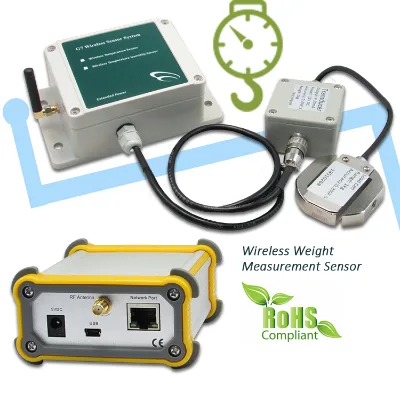
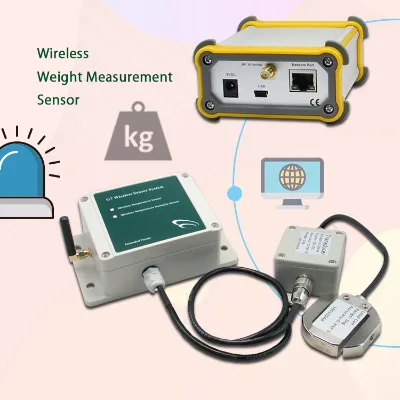


High-Precision Smart Wireless Pressure Sensor for Accurate Measurements
$100.00 - $134.00
MOQ: 1 pieces

Smart Wireless Pressure Sensors for Reliable and Accurate Pressure Measurement
$100.00 - $134.00
MOQ: 1 pieces


Comprehensive Sourcing Guide
Strategic Sourcing Guide for Infrared Wireless Weight Measurement Sensors
The procurement of infrared wireless weight measurement sensors represents a specialized segment within the industrial automation and IoT supply chain. Buyers entering this market must navigate a landscape defined by diverse connectivity protocols, varying accuracy tolerances, and specific application requirements. The core keyword "Infrared Wireless Weight Measuring Sensor" often encompasses a broader category of wireless weight measurement devices that utilize radio frequency (RF) or other wireless transmission methods to relay data from the weighing element to a central processing unit. While the term "infrared" is frequently used in search queries, the actual hardware specifications often highlight RF technologies such as 433 MHz or 4.8Kbit/s transmission rates. This guide provides a structured approach to evaluating these sensors, ensuring that procurement decisions are grounded in verified technical attributes and compliance standards rather than marketing generalizations.
Technical Architecture and Connectivity Protocols
Understanding the underlying technical architecture is the first step in sourcing the correct sensor. The market offers devices with varying operating voltages, ranging from low-power battery solutions to mains-powered units. For instance, specific models in this category operate on a voltage supply of 2.6~3.6V DC, indicating a design optimized for battery longevity, while others may support a 12V supply for continuous operation. The wireless distance is a critical performance metric; observed data suggests capabilities extending up to 1200 meters, which is essential for large-scale warehouse or industrial floor applications.
Connectivity remains a primary differentiator. Buyers must verify the specific wireless protocol supported by the sensor. The supply base includes devices utilizing 433 MHz RF technology with a data rate of 4.8Kbit/s. However, advanced systems often support a broader ecosystem of protocols including LoRa, WiFi, 4G, 4G+GPS, GSM, and LoRaWAN. The choice of protocol dictates the infrastructure required on the buyer's end. For example, a sensor supporting TCP/IP and Modbus-RTU protocols allows for seamless integration into existing SCADA systems, whereas those supporting MQTT are better suited for cloud-based IoT platforms. The display type is typically digital, providing immediate local feedback, while the output signal type is predominantly digital, ensuring high-fidelity data transmission to the host system.
Accuracy, Load Capacity, and Operational Limits
Precision and load capacity are the defining characteristics of any weighing sensor. The accuracy of these devices varies significantly based on the intended application. Some units in the current market offer an accuracy of 0.1 g, suitable for high-precision laboratory or small-batch packaging environments. In contrast, other models provide an accuracy of ±0.5%, which is often sufficient for general logistics, inventory management, or industrial weighing tasks. The rated load capacity is another critical specification; observed products frequently support a rated load of 50kg, though this can vary based on the specific model number, such as the G7-AD-LC or TP2401EX.
Buyers must also consider the physical form factor and material composition. The sensors are available in various types, including hanging scales, floor scales, and crane scales. The material of construction is often plastic for cost-effective, lightweight applications, though some specifications mention stainless steel components to ensure durability in harsh environments. The IP rating is a crucial factor for environmental resistance; while some listings indicate an IP rating associated with stainless steel construction, buyers must explicitly verify the specific IP level (e.g., IP65, IP67) to ensure the device can withstand dust, moisture, or chemical exposure in their specific facility. The mathematical model for these sensors is typically linear, simplifying calibration and data interpretation for the end-user.
Compliance, Certification, and Regulatory Standards
In the global B2B market, compliance with international standards is non-negotiable. When sourcing wireless weight sensors, buyers must verify that the products carry recognized certifications. Common certifications observed in this sector include CE and RoHS, which indicate compliance with European health, safety, and environmental protection standards. Some suppliers may also provide ISO certifications, which validate the manufacturer's quality management systems. It is imperative for procurement teams to request valid certification documents rather than relying solely on product descriptions.
The regulatory landscape for wireless devices is particularly strict due to the use of radio frequencies. Devices operating at 433 MHz or utilizing 4G/LTE connectivity must adhere to regional spectrum regulations. For instance, the 433 MHz band is widely used but subject to power output limits in different jurisdictions. Buyers should ensure that the supplier provides evidence of radio certification for the specific target market. Additionally, the warranty period is a standard indicator of manufacturer confidence; a 2-year warranty is a common benchmark in this industry, covering defects in materials and workmanship. However, the battery life, often cited as an average of 2 years, is a separate performance metric that depends heavily on usage patterns and should be verified against the specific duty cycle of the application.
Cost Drivers and Total Cost of Ownership
The pricing for wireless weight measurement sensors is influenced by several factors, including the complexity of the wireless protocol, the accuracy rating, and the build quality. The observed price range in the market spans from approximately $1.50 to $696 USD, reflecting the vast difference between basic single-item sensors and comprehensive, multi-protocol industrial systems. The minimum order quantity (MOQ) also varies, with ranges observed from 1 unit to 50 units, offering flexibility for both pilot projects and large-scale deployments.
When evaluating cost, buyers must look beyond the unit price to the Total Cost of Ownership (TCO). This includes the cost of the gateway or base station required to receive the wireless signal, the cost of the software platform for data visualization, and the ongoing cost of battery replacement or charging infrastructure. Sensors with "Long Battery Life" or those supporting 24V charging may have a higher upfront cost but lower operational expenses over time. Furthermore, the availability of customization, such as OEM or ODM support, can impact the initial investment. Customized solutions often require higher MOQs and longer lead times but provide a tailored fit for unique operational needs, potentially reducing integration costs in the long run.
Supplier Evaluation and Manufacturing Capabilities
Selecting the right supplier requires a rigorous evaluation of their manufacturing capabilities and geographic footprint. The supply base for these sensors is often concentrated in specific manufacturing hubs, with origins noted in locations such as Hong Kong S.A.R. and Shenzhen. These regions are known for their robust electronics manufacturing ecosystems, but buyers must verify the specific factory location to assess logistics and lead times. The "place of origin" can influence shipping costs and import duties, making it a critical factor in the procurement strategy.
Suppliers should demonstrate a capacity for customization, as many industrial applications require specific modifications to the sensor housing, antenna design, or software interface. The availability of OEM and ODM services indicates a supplier's ability to adapt their standard products to meet unique client requirements. Buyers should also assess the supplier's support infrastructure, including the availability of free software and phone applications for data viewing. A supplier that offers a comprehensive platform, including API support for third-party integration, adds significant value by reducing the burden on the buyer's internal IT team. The "Great Response" feature mentioned in product attributes suggests a focus on low-latency data transmission, which is vital for real-time monitoring applications.
Quality Control and Long-Term Procurement Strategy
Implementing a robust quality control (QC) process is essential to mitigate the risks associated with electronic procurement. Buyers should establish clear acceptance criteria based on the technical specifications provided, such as the specific accuracy (0.1 g or ±0.5%), the wireless distance (1200 meters), and the operating voltage range. Sampling plans should be designed to test the sensor's performance under actual operating conditions, including battery life verification and wireless signal stability in the intended environment. The "Condition: New" status of the products should be verified upon delivery to ensure that no refurbished or used units are supplied.
For long-term procurement, buyers should prioritize suppliers who offer a clear path for product evolution and support. The rapid advancement of IoT technologies means that a sensor purchased today may require firmware updates or compatibility with new network standards in the future. Suppliers that support third-party platforms and offer API access are better positioned to provide long-term value. Additionally, the availability of spare parts and the clarity of the warranty terms (typically 2 years) are critical for maintaining operational continuity. Buyers should also consider the "Selling Units" structure; while single-item sales offer flexibility, bulk purchasing may be necessary to achieve economies of scale for large deployments.
Typical Applications and Integration Scenarios
The versatility of wireless weight measurement sensors allows them to be deployed across a wide range of industries. In logistics and warehousing, these sensors are used for automated inventory tracking, where the "Check Weighing" function ensures that packages meet weight specifications before shipping. In manufacturing, they serve as critical components in process control, providing real-time data for automatic control, protection, and monitoring functions. The ability to support "Over Limit Alarm" features makes them ideal for safety-critical applications where exceeding a weight threshold could trigger a shutdown or alert.
Integration into existing systems is a key consideration. Sensors that support protocols like Modbus TCP, MQTT, and TCP/IP can be easily integrated into industrial networks. The "Function" of these devices often extends beyond simple measurement to include automatic control and protection, making them integral to smart factory initiatives. The "Output Signal Type" being digital ensures compatibility with modern PLCs and SCADA systems. Whether used as a hanging scale for crane operations or a floor scale for pallet weighing, the wireless nature of these sensors eliminates the need for complex cabling, reducing installation time and maintenance costs.
Conclusion
Sourcing infrared wireless weight measurement sensors requires a balanced approach that considers technical specifications, regulatory compliance, and total cost of ownership. By focusing on verified attributes such as accuracy, wireless distance, and protocol support, buyers can make informed decisions that align with their operational needs. The market offers a diverse range of options, from basic 433 MHz sensors to advanced multi-protocol IoT devices, each with unique cost drivers and application scenarios. Success in this procurement process depends on rigorous supplier evaluation, clear quality control standards, and a strategic approach to long-term integration. As the industry continues to evolve, maintaining a focus on verified data and compliance will ensure the selection of reliable, high-performance weighing solutions.
FAQs
What wireless protocols does the sensor support?
The sensor supports multiple protocols including LoRa, WiFi, 4G, GSM, and LoRaWAN. It also utilizes TCP/IP, MQTT, and Modbus-RTU for seamless integration with existing industrial systems and third-party platforms.
How accurate is the weight measurement capability?
Accuracy varies by model, with some units offering 0.1 g precision while others provide ±0.5% accuracy. This variation allows selection based on whether the application requires high-precision laboratory use or general industrial weighing tasks.
Can the sensor operate over long distances?
Yes, the device supports a wireless distance of up to 1200 meters. This range is suitable for large-scale warehouse or industrial floor applications where sensors need to transmit data from remote locations.
What certifications are available for these sensors?
The products carry CE and RoHS certifications to ensure compliance with European safety and environmental standards. Some listings also indicate ISO certification, validating the manufacturer's quality management systems for global procurement.
What is the typical battery life for the device?
The average battery life is approximately two years under normal operating conditions. This longevity is achieved through optimized voltage supply ranging from 2.6 to 3.6V DC, though usage patterns may affect actual performance.
Which customization options are available for buyers?
OEM and ODM support are available for customized production needs. Buyers can request specific modifications to the product, ensuring the sensor fits unique operational requirements while maintaining the core wireless weighing functionality.