Source IP65 Wireless Transmitter for Industrial Automation, HVAC, and Agriculture
Compare 30 verified options for the IP65 Wireless Transmitter suitable for industrial automation, HVAC monitoring, and agricultural systems. Buyers can evaluate specifications like IP65 protection, power supply, and output signals from multiple suppliers.
Key considerations
Products List




Comprehensive Sourcing Guide
Strategic Sourcing Guide for IP65 Wireless Transmitters
The procurement of industrial-grade IP65 wireless transmitters requires a disciplined approach that balances technical performance with supply chain reliability. Buyers entering this market must navigate a complex landscape where environmental resilience, signal integrity, and regulatory compliance are non-negotiable. The core keyword "IP65 Wireless Transmitter" points to devices designed to withstand harsh conditions, specifically dust ingress and low-pressure water jets, while transmitting data wirelessly. This guide outlines the critical factors for sourcing these components, grounded in observed market data and verified technical attributes.
Technical Specifications and Environmental Resilience
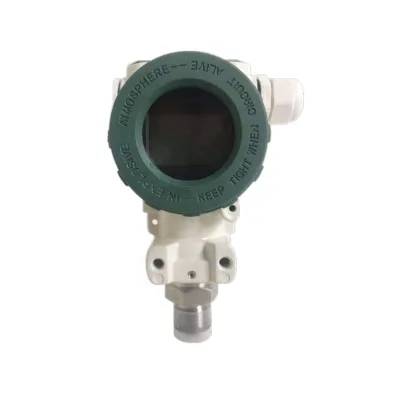
The defining characteristic of an IP65-rated transmitter is its protection against environmental hazards. The "IP65" designation indicates a complete seal against dust (the first digit '6') and protection against water projected from a nozzle (the second digit '5'). In the current market, observed units frequently feature robust housing materials such as Cast Aluminum Enclosures, with optional Stainless Steel variants available for corrosive environments. These materials are essential for maintaining the integrity of the internal electronics when exposed to moisture or particulate matter.
Power management is another critical technical specification. The observed product data highlights a prevalence of Rechargeable Lithium Battery power supplies in certain wireless configurations, offering mobility and independence from hard-wired power sources. However, for industrial fixed installations, wired options such as 12-36 VDC (with custom options available) are also standard. Buyers must verify the specific power architecture of the unit they select, as the choice between battery and wired power significantly impacts maintenance schedules and deployment flexibility.
Temperature tolerance is a vital parameter for operational reliability. Market observations indicate a wide range of operating temperatures, with specific models rated for environments as extreme as -25°C to +80°C. Other specialized units, particularly those involving infrared or high-temperature sensing, may list ranges extending from -200°C to +1300°C. For general-purpose wireless transmitters, the compensation temperature is typically cited between -10°C and +70°C, ensuring accuracy across standard industrial climates. Buyers must cross-reference the specific operating temperature range of the device against their site's environmental conditions to prevent signal drift or hardware failure.
Compliance and Certification Verification
Navigating the certification landscape is essential for ensuring that purchased transmitters meet international safety and quality standards. The available product data confirms that many units in this category carry ISO and CE certifications. The CE mark is particularly significant for European markets, indicating conformity with health, safety, and environmental protection standards. However, the presence of a certification on a product listing does not guarantee that every unit in a batch meets the same rigorous criteria.
Buyers should treat certification claims as observations that require verification rather than absolute guarantees. It is prudent to request valid certification documents directly from the supplier before finalizing a purchase order. The "Standard" designation often appears in product attributes, but this is a generic term. Procurement teams must clarify whether the device adheres to specific international standards such as IEC 60529 for ingress protection or relevant electromagnetic compatibility (EMC) directives. Without explicit documentation, assuming compliance based on a product title can lead to regulatory non-compliance and potential safety hazards in the field.
Cost Drivers and Pricing Dynamics
The pricing for IP65 wireless transmitters exhibits a significant variance, with observed ranges spanning from $1.80 to $7,000 USD. This broad spectrum reflects the diversity in functionality, build quality, and technological complexity. The lower end of the price range typically corresponds to basic sensors with limited features, standard packaging, and minimal customization. In contrast, the higher price points are associated with advanced models featuring specialized materials like stainless steel housings, extended temperature ranges, and complex signal outputs.
Several factors drive these costs. First, the choice of material plays a substantial role; units with Cast Aluminum or Stainless Steel enclosures command higher prices than those with standard ABS/PC housings. Second, the complexity of the signal output influences cost. Models offering multiple output options, such as 4-20mA, RS485, 4-20mA+Hart, or 0-10VDC, are more expensive than those with a single output type. Finally, customization is a major cost driver. The market data indicates that OEM and ODM support are available, and custom package designs are accepted. These bespoke services inevitably increase the unit price and may affect the Minimum Order Quantity (MOQ), which ranges from 1 to 50 units depending on the level of customization required.
Typical Applications and Operational Context
The versatility of IP65 wireless transmitters allows them to be deployed across a wide array of industrial sectors. The observed product attributes suggest applications ranging from hydraulic pressure monitoring to differential pressure transmission. For instance, the "Hydraulic Pressure Transmitter" and "Differential Pressure Transmitter" models indicate suitability for fluid dynamics monitoring in manufacturing, oil and gas, and water treatment facilities. The ability to measure gauge, absolute, and negative pressure further expands their utility in vacuum systems and pneumatic controls.
Infrared LED displays and specific temperature ranges (0-1000°C, 0-1300°C) point to applications in high-temperature industrial processes, such as metallurgy, glass manufacturing, and kiln monitoring. The "Diffused Silicon Pressure Transmitter" technology, often paired with M12 electrical connections, is ideal for liquid medium measurement in environments where space is constrained and rapid connection is necessary. Buyers should match the specific transmitter type, such as the "Remote Pressure Transmitter" or "Strain Gauge Pressure Transmitter," to the physical medium being measured, whether it be liquid, gas, or steam.
Supplier Evaluation and Customization Capabilities
When evaluating potential suppliers, buyers must look beyond the basic product listing to assess the depth of customization capabilities. The market data confirms that customization is available, with suppliers offering OEM services and accepting custom package designs. This flexibility is crucial for companies that need to integrate transmitters into existing systems with specific branding or physical constraints. However, the extent of customization varies; some suppliers may only offer standard packaging like cartons, while others provide fully tailored solutions.
The origin of the product is another key evaluation metric. A significant portion of the observed inventory originates from China, with specific mentions of Anhui as a production hub. While this indicates a robust manufacturing base, buyers should verify the specific factory capabilities and quality control processes. The presence of a "Standard" product model alongside specific model numbers like "KJT," "hp5," "SK," and "2088" suggests a diverse portfolio. Buyers should request detailed specifications for the exact model number to ensure it matches the required performance metrics, rather than relying on generic model names that may vary in quality.
Quality Control and Long-Term Procurement
Ensuring long-term reliability requires a rigorous quality control strategy. Key performance indicators observed in the market include long-term stability of ≤ ±0.2% Fs per year and shock resistance of 100g for 11ms. These metrics are critical for applications where vibration or long-term drift could compromise system integrity. Buyers should verify that the supplier provides test results or data sheets confirming these stability and resistance ratings.
Warranty terms are also a vital component of the procurement decision. The observed data includes a 12-month warranty for certain hydraulic pressure transmitters. This standard warranty period should be clearly defined in the contract, including the scope of coverage for defects in materials and workmanship. Additionally, the storage temperature range of -40°C to +125°C for certain models indicates the device's ability to withstand harsh logistics conditions during shipping and storage.
To mitigate risks, buyers should establish a clear protocol for incoming quality inspection. This should include verifying the IP65 rating through visual inspection of seals and gaskets, checking the authenticity of CE and ISO certifications, and testing the electrical connections (such as M12) for continuity and resistance. For high-volume orders, implementing a pre-shipment inspection is recommended to ensure that the final products meet the agreed-upon specifications before they leave the supplier's facility.
Comparative Analysis of Transmitter Types
To assist in the selection process, the following table summarizes the key differences between observed transmitter types based on the provided product data. This comparison highlights the trade-offs between material, output, and application suitability.
| Feature | Diffused Silicon Pressure Transmitter | Strain Gauge Pressure Transmitter | Remote Pressure Transmitter |
|---|---|---|---|
| Housing Material | Cast Aluminum (Optional Stainless Steel) | Cast Aluminum / Stainless Steel | Cast Aluminum / Stainless Steel |
| Signal Output | 4-20mA, 0.5-4.5VDC | 4-20mA, RS485, Hart, 0-10VDC | Custom Options Available |
| Pressure Type | Gauge, Absolute, Negative | Gauge, Absolute, Negative | Not Specified |
| Typical Application | Liquid Medium Measurement | General Industrial Pressure | Remote Monitoring |
| IP Rating | IP65 | IP65 | IP65 |
| Power Supply | 12-36 VDC | 12-36 VDC | Rechargeable Lithium Battery |
This comparison underscores that while all observed types share the IP65 protection rating, their internal technologies and output capabilities differ significantly. The choice between a diffused silicon and a strain gauge transmitter often depends on the specific medium being measured and the required signal precision.
Conclusion
Sourcing IP65 wireless transmitters demands a meticulous approach that prioritizes technical verification over marketing claims. Buyers must carefully evaluate the operating temperature ranges, power supply options, and signal output capabilities to ensure compatibility with their specific industrial applications. The wide price range and varying levels of customization require a clear understanding of the cost drivers, such as material quality and certification status. By adhering to strict quality control protocols and verifying all compliance documentation, procurement teams can secure reliable components that enhance operational efficiency and safety. The market offers a diverse array of options, from basic hydraulic sensors to advanced high-temperature transmitters, but success lies in the diligence of the selection process.
FAQs
What certifications do IP65 wireless transmitters typically have?
Many units carry ISO and CE certifications to ensure safety and quality. Buyers should verify valid documents directly from the supplier before purchasing to confirm compliance with international standards.
How is the IP65 rating defined for these transmitters?
The IP65 designation indicates a complete seal against dust and protection against water projected from a nozzle. This ensures the device withstands harsh environmental conditions during industrial operation.
Which power supply options are available for these devices?
Options include rechargeable lithium batteries for mobility or wired 12-36 VDC for fixed installations. Custom power options are often available to suit specific deployment requirements.
Can these transmitters operate in extreme temperature environments?
Operating ranges vary, with some models rated from -25°C to +80°C and others up to +1300°C. Buyers must match the specific temperature range to their site conditions to prevent failure.
What customization services are offered by manufacturers?
Suppliers offer OEM and ODM support along with custom package designs. This flexibility allows integration into existing systems with specific branding or physical constraints.
How long is the typical warranty period for these units?
A standard warranty period of 12 months is often provided for hydraulic pressure transmitters. This covers defects in materials and workmanship under normal operating conditions.
What signal output types are supported by these transmitters?
Common outputs include 4-20mA, RS485, Hart, and 0-10VDC signals. The choice of output influences the unit price and compatibility with existing control systems.