Source Knob Type Work Safety Cap for Transportation Construction
Find 30 verified options for the Knob Type Work Safety Cap designed for transportation, construction, and chemical industries. Buyers can compare models like TC13 and TC14, materials such as PE and ABS, and customization features including logos and colors.
Key considerations
Products List


$0.70 - $2.30
MOQ: 1500 Pieces


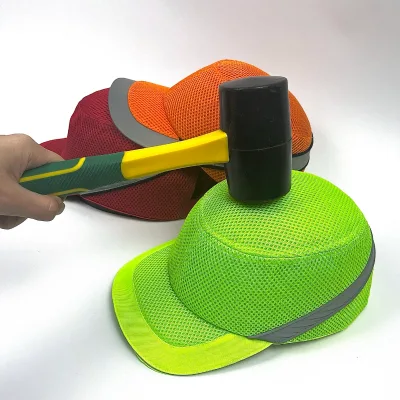


ABS Safety Hard Hats High Quality Comfortable Safety Helmet CE Certification
$1.80 - $2.30
MOQ: 200 Pieces


Comprehensive Sourcing Guide
Strategic Sourcing Guide for Knob Type Work Safety Caps
Navigating the global market for industrial head protection requires a precise understanding of component-specific designs, particularly the "knob type" configuration. This specific wear mode distinguishes the product from standard press-type caps, offering unique mechanical advantages in environments where rotational adjustment or specific mounting interfaces are required. For procurement professionals, sourcing these items involves more than identifying a generic safety helmet; it demands a rigorous evaluation of material composition, certification validity, and supply chain reliability. The following guide outlines the critical factors for acquiring knob type work safety caps, grounded in observed market data and technical specifications.
Technical Specifications and Design Variations
The defining characteristic of the Knob Type Work Safety Cap is its specific wear mode, which dictates the internal suspension system and the external interaction with the user's headgear. Unlike press-type mechanisms that rely on friction or simple clamping, the knob type often implies a threaded or adjustable interface that allows for fine-tuning of the fit. In the current market, this design is frequently associated with models such as TC12, TC13, and TC14, which represent distinct variations in structural engineering.
Material selection is paramount for durability and safety. The observed product landscape indicates a divergence in material standards, with High-Density Polyethylene (HDPE) and Acrylonitrile Butadiene Styrene (ABS) being the primary candidates. HDPE is often cited as a standard for specific cap models, offering excellent impact resistance and chemical stability, while ABS provides a harder shell suitable for high-impact scenarios. Buyers must verify the specific material grade for each order, as the application environment—ranging from chemical processing to construction—will dictate the necessary material properties.
Size and fit are equally critical. The market data reveals specific hoop size ranges, such as 51–56 cm and 57–60 cm, indicating that these caps are designed to accommodate adult users with varying head circumferences. Furthermore, the "OEM" shape attribute suggests that many suppliers offer custom molding capabilities, allowing buyers to tailor the silhouette of the cap to specific brand requirements or ergonomic needs. The standard size is often noted as "Normal Size," yet the availability of customized dimensions means that procurement teams should not assume a one-size-fits-all approach without explicit confirmation.
Compliance and Certification Verification
In the realm of industrial safety, certification is not merely a formality but a legal and operational necessity. The supply chain for knob type work safety caps is heavily influenced by compliance with international standards. The most frequently observed certifications in this sector include CE (Conformité Européenne) and ISO (International Organization for Standardization). These marks indicate that the product has undergone testing against specific safety benchmarks.
However, buyers must exercise caution regarding the specific standards referenced. While general ISO and CE markings are common, specific safety standards such as ISO 20345 or ASTM F2413 are often cited in broader industry contexts but may not be explicitly validated for every individual product listing. Procurement teams should not assume that a product bearing a generic "CE" mark automatically meets the rigorous requirements of ASTM F2413-24 or similar high-impact standards unless explicitly documented in the test reports. The verification process should involve requesting current, third-party test certificates that specifically reference the model number (e.g., TC13 or SC03) and the exact standard being met.
Additionally, the "Top Quality" attribute observed in supplier listings is a qualitative claim rather than a quantifiable metric. To substantiate quality, buyers should demand evidence of internal quality control processes, such as batch testing records or ISO 9001 certification for the manufacturing facility itself. The presence of a "CE" certification is a strong indicator of compliance with European safety directives, but it does not preclude the need for local regulatory compliance in the buyer's specific jurisdiction.
Cost Drivers and Pricing Dynamics
Understanding the cost structure of knob type work safety caps is essential for budgeting and negotiation. The observed price range in the market spans from $0.07 to $8.30 USD per unit. This wide variance is driven by several key factors, including material costs, customization levels, and order volume.
The primary cost driver is the material composition. Caps manufactured from ABS generally command a higher price point than those made from HDPE due to the raw material costs and the more complex molding processes required. Furthermore, the level of customization significantly impacts the final price. Products offering "Customized" colors, "Customised" logos, or OEM shapes will incur additional tooling and setup costs. For instance, a standard blue or red cap with a generic logo will be at the lower end of the price spectrum, whereas a cap with a custom-molded shape, specific color matching, and a custom-printed logo will approach the higher end of the observed range.
Order volume is another critical determinant. The Minimum Order Quantity (MOQ) for these products typically ranges from 100 to 5,000 units. While some suppliers may offer flexible terms for helmets with an MOQ of "Any Qty," the standard industrial cap often adheres to a higher threshold to justify production runs. Buyers should be aware that ordering below the standard MOQ may result in a significantly higher unit price or the imposition of a setup fee. The "Normal Size" standard products are generally more cost-effective due to economies of scale, whereas specialized models like the "Anti-Collision Cap-Fashionable" or "Anti-Collision Cap-Breatable" may carry a premium due to their niche design features.
Typical Applications and Industry Suitability
The versatility of knob type work safety caps makes them suitable for a diverse array of industrial sectors. The observed application data highlights their use in Transportation, Petroleum, Chemical, Construction, Metallurgy, and Electric Power industries. This broad applicability stems from the robust design of the cap, which is engineered to protect against overhead hazards, falling objects, and electrical shocks.
In the Construction and Metallurgy sectors, the cap's primary function is to serve as a head protector against impact. The "Industry Outwork Sports" feature noted in some listings suggests a design philosophy that balances safety with mobility, allowing workers to perform tasks that require a wide range of motion. For the Petroleum and Chemical industries, the material choice becomes even more critical; HDPE caps are often preferred for their resistance to chemical corrosion and solvents.
The Transportation sector utilizes these caps for maintenance and logistics personnel, where the "Knob Type" mechanism may offer advantages in adjusting the fit while wearing gloves or in varying weather conditions. The "All Seasons" attribute indicates that these caps are designed for year-round use, maintaining their structural integrity in both high and low temperatures. Buyers should match the specific cap model to the hazard profile of the job site. For example, the "Bump Cap Inserts" and "SC03" models might be better suited for environments with lower impact risks, while the "TC13" and "TC14" models may be required for high-risk areas.
Supplier Evaluation and Operational Logistics
Selecting the right supplier is as important as selecting the right product. The supply chain for these safety caps is predominantly centered in China, which is noted as the primary origin for the majority of listed products. When evaluating potential suppliers, buyers should look beyond the product listing and assess the supplier's operational capabilities.
Key logistical factors include lead time and delivery terms. The standard delivery timeline observed is 30 days after the order is determined. This lead time can vary based on the complexity of the order, the level of customization, and the current production capacity of the factory. Buyers should clarify whether this 30-day window includes packaging and shipping or if it refers solely to production time.
Packaging standards also play a role in supplier evaluation. Listings indicate various packaging methods, including "Carton," "Brown Carton and Color Box," "in Nude," and specific counts like "50PCS/Carton." The choice of packaging affects the product's condition upon arrival and the ease of storage at the destination. For large-scale procurement, standardized packaging that protects the caps from dust and damage during transit is essential.
Furthermore, the "Custom Logo" and "Customized" color options require a robust communication channel with the supplier. Buyers should verify the supplier's ability to handle small-batch customizations versus large-scale production runs. The "Any Qty Can Be Acceptable" claim for helmets suggests flexibility, but for standard safety caps, adhering to the MOQ is often necessary to maintain cost efficiency.
Quality Control and Long-Term Procurement Considerations
Ensuring consistent quality is a continuous process that extends beyond the initial purchase. The "Top Quality" claim found in listings must be validated through a structured quality control (QC) protocol. Buyers should implement a QC plan that includes pre-production sample approval, in-process inspections, and final random sampling before shipment. Given the safety-critical nature of the product, any deviation in material thickness, color consistency, or structural integrity can render the batch unusable.
Long-term procurement considerations involve building a sustainable relationship with suppliers who can guarantee consistent supply and quality. The availability of "Customization" suggests that suppliers are willing to adapt to the buyer's evolving needs, but this requires clear documentation of specifications. Buyers should maintain a detailed specification sheet for each order, referencing the specific model number (e.g., YY-106-8, XC101-7) and the exact material and certification requirements.
Additionally, the "Delivery for Order" timeline of 30 days should be factored into inventory planning. For organizations with high turnover or fluctuating demand, maintaining a safety stock of standard models is advisable to mitigate the risk of supply chain disruptions. The ability to source "Customized" products in smaller quantities may be useful for pilot programs or specific project needs, but for general workforce deployment, standard models offer the best balance of cost and reliability.
In conclusion, sourcing knob type work safety caps requires a methodical approach that balances technical requirements, compliance standards, and logistical realities. By focusing on verified certifications, understanding the nuances of material and design, and establishing clear communication with suppliers, procurement professionals can secure high-quality head protection that meets the rigorous demands of modern industrial environments. The wide range of available models and customization options provides the flexibility needed to address specific industry challenges, provided that the buyer remains vigilant in their verification and quality control processes.
FAQs
What certifications do knob type work safety caps typically have?
These caps typically hold CE and ISO certifications. Buyers should verify specific test reports for model numbers like TC13 or SC03 to ensure compliance with safety benchmarks before purchasing.
Which materials are used for knob type work safety caps?
Manufacturers primarily use HDPE and ABS materials for these caps. HDPE offers chemical stability while ABS provides a harder shell, so the choice depends on the specific industrial application environment.
Can buyers request customized colors and logos for these caps?
Yes, customization for colors and logos is available for most models. However, custom shapes and specific branding may require additional tooling costs and adherence to minimum order quantities.
What is the standard delivery lead time for these orders?
The standard delivery time is 30 days after the order is determined. This timeline applies to production and may vary based on the complexity of customization or current factory capacity.
Which industries commonly use knob type work safety caps?
These caps are used in transportation, petroleum, chemical, construction, and metallurgy sectors. The design protects against overhead hazards and electrical shocks in diverse industrial environments.
What are the typical hoop sizes for adult users?
Typical hoop sizes range from 51 to 56 cm and 57 to 60 cm. These dimensions accommodate adult users, though some models offer fully customized sizing options upon request.