Source Lab Created Gemstone Chain Ring for Wedding, Gift, Decoration
Compare 30 Lab Created Gemstone Chain Ring options from verified manufacturers. Buyers can evaluate specifications like carat, clarity, and setting types for wedding, gift, and decoration purposes.
Key considerations
Products List


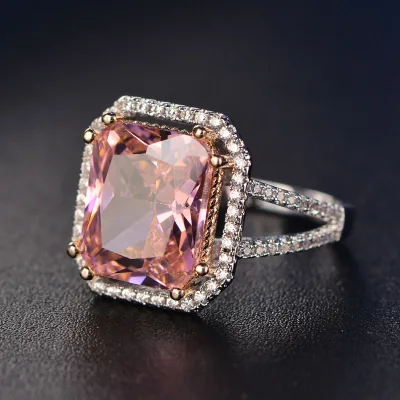
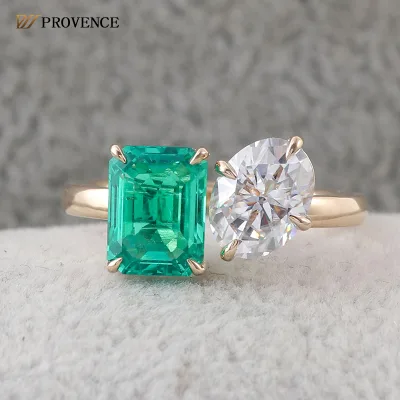
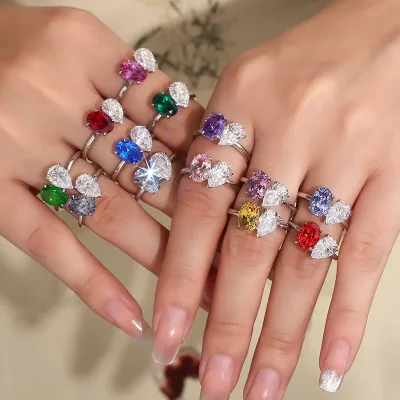
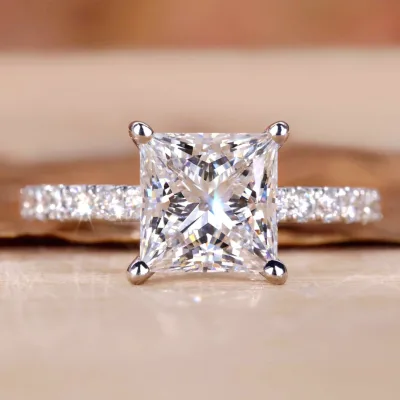
Diamond Jewelry Lab Grown Gemstone 18K Gold Ring Synthetic Diamond Ring
$580.00 - $1100.00
MOQ: 1 Pieces


Factory OEM Lab Diamond Rings Fashion Jewelry Diamond Ring Accessories
$936.00 - $1170.00
MOQ: 1 Pieces





Comprehensive Sourcing Guide
Strategic Sourcing Guide for Lab Created Gemstone Chain Rings
The global B2B market for lab-created gemstone jewelry has expanded significantly, driven by the demand for ethically sourced materials and consistent quality. For procurement professionals specializing in "Lab Created Gemstone Chain Ring" products, the sourcing landscape requires a nuanced understanding of technical specifications, certification standards, and supply chain logistics. This guide provides a disciplined framework for evaluating suppliers and products, ensuring that procurement decisions are grounded in verified data rather than marketing assertions. The following sections detail the critical attributes, compliance requirements, and cost factors that define a successful sourcing strategy in this category.
Technical Specifications and Material Composition
When sourcing lab-created gemstone rings, the primary focus must be on the precise definition of materials and construction methods. The product data indicates a diverse range of specifications that buyers must navigate. A critical observation is the variation in the stated material composition. Some listings specify "Artificial Diamonds" while others explicitly state "Lab Grown Diamond" or simply "Diamond." In a B2B context, these distinctions are vital for accurate inventory management and customer communication. Procurement teams must verify the exact nature of the stone, as "Artificial" can sometimes imply simulants, whereas "Lab Grown" refers to chemically identical synthetic stones.
The metal composition of the ring band is another decisive factor. The observed data highlights "18K White Gold" as a prevalent material, with some entries noting that this can be customized. Other listings reference "18K Gold" generally. For high-end procurement, the distinction between white gold and yellow gold, as well as the karat purity, must be confirmed against the purchase order. The setting type also varies significantly across the product pool, with "Bezel Setting," "Claw Setting," and "Four-Prong Setting" all appearing in the specifications. Each setting type offers different security levels for the stone and distinct aesthetic profiles. Bezel settings provide maximum protection, while claw and four-prong settings maximize light exposure to enhance the stone's brilliance.
Furthermore, the physical dimensions and carat weights vary widely. The data shows carat ranges from "0.50ct-0.69ct" up to "1.50-2.00ct." Buyers must align these ranges with their target market's price sensitivity and design requirements. The ring sizes observed include specific measurements like "14#" and "11#," indicating that customization or a broad size range is often necessary. The stone count is also a variable attribute, with listings showing "12" stones or "16" stones, suggesting that the complexity of the design directly impacts the manufacturing time and cost.
Certification and Quality Verification Standards
In the B2B jewelry sector, certification is not merely a formality but a fundamental requirement for risk mitigation. The provided facts list "IGI" (International Gemological Institute) and "NGTC" (National Gemstone Testing Center) as the specific certifications associated with these products. When evaluating potential suppliers, buyers must insist on seeing valid certificates from these recognized bodies for the specific batch being ordered. These certificates verify the authenticity of the lab-grown stones and confirm the metal purity.
The quality of the stones is further defined by specific grading parameters. The data indicates a "Diamond Color" grade of "E" or "D," and a "Diamond Clarity" grade of "VVS" or "Vs-Vvs." These are high-grade classifications. A procurement strategy should mandate that the supplier provides test reports matching these exact grades. For instance, if a buyer orders a ring specified as "Diamond Color: E," the supplier must be able to demonstrate that the stones meet this standard. Similarly, the "Diamond Cut" is noted as "Very Good Cut," which is a crucial metric for the stone's optical performance. Buyers should verify that the cut quality is consistent across all stones in a batch, as variations can lead to uneven sparkle and customer dissatisfaction.
The standard for the product is also listed as "0.5ct-2ct," which likely refers to the total carat weight range for the collection. However, individual stone weights and total carat weights must be cross-referenced. The "Diamond Color Grade" is further specified as "D,E,F," and "Diamond Clarity Grade" as "Vs-Vvs." This range suggests a tiered quality system. Procurement teams should establish clear acceptance criteria for these grades to avoid receiving sub-standard goods. The "Shape" of the stone, such as "Oval," is another specification that must be strictly adhered to, as it affects the overall design and setting requirements.
Cost Drivers and Pricing Dynamics
Understanding the cost structure of lab-created gemstone rings is essential for maintaining healthy profit margins. The observed price range in the market is substantial, spanning from $3.2 to $6406 USD. This wide disparity is driven by several key factors, including the carat weight, the specific metal used, the complexity of the setting, and the certification level. A ring with a 2.00ct lab-grown diamond in 18K white gold with a complex four-prong setting will naturally command a higher price than a simple 0.50ct ring with a bezel setting.
The material cost is a primary driver. The use of "18K White Gold" or "18K Gold" significantly increases the base cost compared to lower-karat alternatives or plated metals. Additionally, the "Stone Number" plays a direct role in pricing; a ring with 16 stones will cost more than one with 12 stones, assuming similar individual stone quality. The "Diamond Color" and "Clarity" grades also influence the price; stones graded D/E in color and VVS in clarity are premium products that carry a higher price point than lower-grade stones.
Lead time is another critical cost factor. The data indicates delivery times of "15-20 days" and "15-25 days." Longer lead times can impact cash flow and inventory planning, potentially increasing the cost of capital for the buyer. Suppliers offering "Factory Direct Sales" may offer more competitive pricing, but buyers must balance this against the potential for higher logistical risks or quality control challenges. The "prod_packing" specification, which includes a "Jewelry Box and Strong Carton," adds to the unit cost but is essential for protecting the product during transit and presenting it to the end consumer.
Supplier Evaluation and Operational Capabilities
Selecting the right supplier requires a rigorous evaluation of their operational capabilities and business practices. The data mentions "Factory Direct Sales" and a specific origin location: "Zhengzhou, Henan, China." While this provides a geographical anchor, buyers should not rely solely on the location but must verify the supplier's actual manufacturing capacity. A factory that produces "Inlaid Ring" styles and utilizes "Gem Mounting" processes must have the necessary technical expertise and equipment to handle the specific design requirements.
The "Design" aspect is highlighted as "3D Design" in some listings, suggesting that the supplier may offer custom design services or have advanced CAD capabilities. For buyers seeking unique products, this is a valuable attribute. However, the "Style" is also listed as "Fashion, Simple" and "European and American," indicating a need for suppliers who can adapt to different aesthetic trends. The "Usage" is diverse, ranging from "Decoration" to "Wedding" and "Gift," which implies that the supplier must be capable of producing items for various occasions and price points.
Buyers should also assess the supplier's ability to handle customization. The "Ring Band Material" is noted as "18K White Gold (Can Be Customized)," which is a strong indicator of flexibility. A capable supplier should be able to adjust the metal type, stone size, and setting style to meet specific client needs. The "prod_model" numbers (e.g., Ring-034, Ring-022, Ring-033, Ring-009) suggest a structured product line, which can simplify the ordering process. However, buyers must ensure that the supplier can maintain consistency across different models and that the "Delivery Time" remains reliable even when customizations are requested.
Quality Control and Compliance Protocols
Implementing a robust quality control (QC) protocol is essential for minimizing returns and maintaining brand reputation. The "Fabrication Processing" is listed as "Gem Mounting," a process that requires precision to ensure stones are securely set. QC checks should focus on the integrity of the setting, the symmetry of the cut, and the overall finish of the metal. The "Ring Style" is described as "Fashion, Simple," which implies that the finish should be flawless, with no visible scratches or imperfections.
Compliance with international standards is also a key consideration. While the data lists specific certifications like IGI and NGTC, buyers should verify that the supplier adheres to broader industry standards regarding conflict-free sourcing and ethical labor practices. The "prod_standard" of "0.5ct-2ct" serves as a reference for weight consistency, but buyers should establish their own tolerance levels for weight variance. The "Ring Size" specifications, such as "14#" and "11#", must be verified to ensure they meet the target market's sizing conventions.
The "prod_packing" of "Jewelry Box and Strong Carton" is part of the quality assurance process. The packaging must be durable enough to protect the ring during shipping and attractive enough for retail display. Buyers should inspect the packaging quality to ensure it meets their brand standards. Additionally, the "Usage" categories like "Wedding" and "Gift" imply a higher expectation of quality and presentation. Any defects in the stone setting or metal finish could lead to significant reputational damage, especially for wedding jewelry.
Long-Term Procurement and Market Adaptation
Sourcing lab-created gemstone rings is not a one-time transaction but a long-term strategic partnership. The market is dynamic, with trends shifting towards specific styles and stone qualities. The "Style" attributes of "Fashion, Simple" and "European and American" suggest that buyers should stay attuned to evolving fashion trends. The "Design" being "3D Design" indicates a potential for innovation, which can be a competitive advantage.
Buyers should also consider the scalability of their supply chain. The "MOQ" range of 1-30 offers flexibility for small businesses, but larger buyers may need to negotiate better terms for higher volumes. The "Delivery Time" of 15-25 days is a critical metric for inventory planning. Buyers should work with suppliers to optimize lead times and ensure that production schedules align with market demand. The "Factory Direct Sales" model can be advantageous for cost control, but it requires close communication and trust.
Finally, the "Color" attributes, including "Red," "Transparent," and "Sliver, Gold, Rose Gold," highlight the importance of color consistency. Buyers must ensure that the color of the metal and the stone remains consistent across batches. The "Stone Number" and "Carat" variations require careful planning to maintain product consistency. By focusing on these long-term considerations, buyers can build a resilient supply chain that adapts to market changes while maintaining high standards of quality and compliance.
FAQs
What certifications verify the quality of these lab grown diamond rings?
The rings are verified by IGI and NGTC certifications to ensure authenticity and quality. These certificates confirm the diamond color grades of D, E, or F and clarity grades ranging from VVS to VS. Buyers should request these specific documents to validate the stone characteristics before purchasing.
Which ring band materials are available for customization?
The primary material is 18K White Gold, which can be customized to meet specific buyer requirements. Some listings also offer 18K Gold as an alternative band material. This flexibility allows procurement teams to select the exact metal type that aligns with their design specifications and budget constraints.
How long is the typical delivery time for these custom rings?
The standard delivery time ranges from 15 to 25 days depending on the specific order and customization needs. Some products list a lead time of 15 to 20 days, while others extend to 25 days. Buyers should account for this window when planning inventory replenishment or event schedules.
What carat weight ranges are available for the lab grown stones?
The available carat weights span from 0.50ct to 2.00ct across different product models. Specific listings show ranges like 0.50ct to 0.69ct and 1.50ct to 2.00ct. This variety allows buyers to source rings for different market segments, from affordable fashion pieces to high-end collection items.
Can buyers find rings with specific stone settings like claw or bezel?
Yes, the product pool includes diverse setting types such as Bezel Setting, Claw Setting, and Four-Prong Setting. Each setting offers distinct aesthetic profiles and security levels for the stones. Buyers can select the setting that best matches their design requirements and the durability needs of the target customer.
What is the minimum order quantity for these jewelry items?
The minimum order quantity ranges from 1 to 30 pieces depending on the supplier and product model. This low MOQ allows small businesses to test the market without significant inventory risk. Larger buyers may negotiate better terms, but the baseline flexibility supports various procurement strategies.
Where are these lab created gemstone rings manufactured?
The products originate from Zhengzhou, Henan, China, where factory direct sales are conducted. This location serves as the primary hub for manufacturing and packaging. Buyers should verify the specific factory capabilities and quality control processes associated with this region to ensure consistent product standards.