Source L2 Driving Assistance Electric Car for Cargo and Gifts
Find 30 models of L2 Driving Assistance Electric Car options tailored for cargo transport, promotional gifts, and cosmetics packaging. Compare specifications like voltage, battery type, and dimensions to identify the right vehicle for your business needs; compare the available evidence and request quotations based on your requirements.
Key considerations
Products List


$52700.00 - $67600.00
MOQ: 1 Pieces

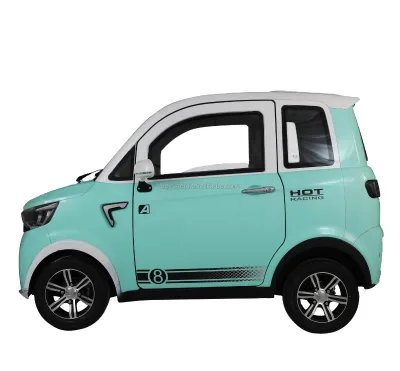


$1700.00 - $1800.00
MOQ: 1 Pieces

Popular and Best Sell Electric Car with CE Certificate for Adult Use
$1700.00 - $1800.00
MOQ: 1 Pieces
Comprehensive Sourcing Guide
L2 Driving Assistance Electric Car Sourcing Guide
The market for electric vehicles with advanced driver assistance features presents a complex landscape where specific model configurations vary significantly from standard utility vehicles. Buyers must distinguish between general cargo transport units and those equipped with semi-autonomous capabilities, as the supplied data indicates a mix of models ranging from basic three-wheeled carriers to four-wheeled passenger variants. Understanding this distinction is critical before initiating any procurement process, as the technical requirements for L2 systems differ vastly from standard electric mobility solutions.
Sourcing strategies must account for the diverse product origins and customization options available in the current supply chain. Factories in regions like Taizhou and Shandong offer varying degrees of OEM acceptance and voltage customization, which directly impacts the integration of advanced electronic control units. Procurement teams should prioritize suppliers who explicitly demonstrate the capacity to handle complex electrical architectures, ensuring that the vehicle's powertrain can support the additional sensors and processing hardware required for Level 2 functionality without compromising safety or range.
Product Scope and Observed Listing Signals
Current market listings reveal a wide spectrum of vehicle types, including closed and open body styles with voltages ranging from 60V to 72V, which influences the feasibility of integrating sophisticated assistance systems. The observed data includes models with specific dimensions and cargo capacities, suggesting that many available units are primarily designed for utility or cargo transport rather than passenger comfort. Buyers must carefully evaluate whether the listed specifications, such as the 3200mm length or 500kg loading capacity, align with the physical space required for L2 sensor arrays and computing modules.
The presence of customization options and OEM acceptance indicates that manufacturers are willing to adapt standard platforms, yet the core specifications often remain rooted in basic electric mobility. Listings show varying battery types, including lead-acid options, which may require significant upgrades to support the higher power demands of advanced driver assistance features. Procurement teams should verify if the "Available" customization status extends to the electronic architecture, ensuring that the vehicle can accommodate the necessary wiring harnesses and control units for L2 operation without structural compromise.
Technical Specifications to Verify
Verifying the electrical architecture is paramount, as the supplied facts highlight voltage options of 60V and 72V alongside power outputs exceeding 800W. L2 driving assistance systems typically require stable, high-capacity power delivery to operate sensors, cameras, and processing units reliably. Buyers must confirm that the vehicle's battery system, whether lead-acid or upgraded, can sustain the continuous load of these electronics without degrading the vehicle's primary range or performance metrics, which are currently listed with a maximum speed of 38km/h and a range of 70km per charge.
The mechanical and structural specifications also demand rigorous scrutiny to ensure compatibility with advanced hardware. The observed data includes specific dimensions like 320012501700 mm and braking systems featuring front disc and rear drum configurations. These physical attributes determine the mounting points and stability required for sensor calibration. Procurement teams must ensure that the vehicle's frame, whether steel or iron, provides the necessary rigidity to maintain sensor alignment under various driving conditions, particularly given the climbing ability limit of 15 degrees and the specific tire sizes listed.
Compliance and Safety Documentation
Navigating the regulatory landscape requires a clear understanding of the certifications currently associated with these electric vehicles, such as CE, EEC, and CCC marks. While these certifications indicate a baseline of safety and manufacturing quality, they do not automatically validate the specific safety protocols required for Level 2 driving assistance systems. Buyers must request detailed documentation proving that the vehicle's electronic systems meet the specific functional safety standards applicable to semi-autonomous driving, as standard vehicle certifications may not cover the complexities of sensor fusion and automated control logic.
Safety documentation must also address the specific operational limits of the vehicle, including its maximum speed and braking capabilities. The observed data notes a maximum speed of 38km/h and a climbing ability of 15 degrees, which are critical parameters for defining the operational design domain of any L2 system. Procurement teams should verify that the supplier provides test results demonstrating how the assistance system performs within these physical constraints, ensuring that the vehicle can safely transition between manual and assisted driving modes without exceeding its mechanical limits.
Cost Drivers and Commercial Terms
The pricing structure for these vehicles is influenced by a wide range of factors, with observed listing prices spanning from 450 to 67,600 USD, reflecting the disparity between basic utility models and more complex configurations. The significant variance in cost often correlates with the level of customization and the inclusion of advanced electronic components. Buyers should anticipate that integrating L2 capabilities will substantially increase the unit cost, as it requires specialized hardware, software licensing, and potentially more robust battery systems than the standard lead-acid options currently listed.
Commercial terms such as MOQ and lead times also play a crucial role in the total cost of ownership. The observed MOQ ranges from 1 to 12,000 units, and delivery times are typically around 15 days, though these figures may fluctuate based on the complexity of the customization. Procurement teams must negotiate terms that account for the extended development time required for L2 integration, ensuring that the supplier can meet production schedules without compromising the quality of the electronic systems. Understanding these variables is essential for accurate budgeting and supply chain planning.
Supplier Qualification and Quality Control
Selecting a qualified supplier requires a deep dive into their manufacturing capabilities and their history with complex electronic integrations. The supplied facts indicate origins in Taizhou and Shandong, regions known for electric vehicle production, but buyers must verify if these specific facilities have the engineering expertise to handle L2 system integration. It is not sufficient to rely on general OEM acceptance; the supplier must demonstrate a proven track record of managing the supply chain for advanced sensors, control units, and the necessary software calibration processes.
Quality control protocols must be strictly enforced to ensure the reliability of the L2 systems in real-world conditions. Buyers should implement rigorous inspection regimes that go beyond standard visual checks, focusing on the functionality of the electronic components and the precision of the sensor calibration. Given the observed use of steel and iron frames, it is vital to verify that the mounting structures do not introduce vibrations or misalignments that could degrade the performance of the assistance systems. Establishing clear quality benchmarks is essential for mitigating the risks associated with advanced technology adoption.
Long-Term Procurement Checks
Sustaining a successful partnership with electric vehicle suppliers requires a commitment to ongoing performance monitoring and support. The initial integration of L2 systems is just the beginning; buyers must establish protocols for regular software updates and hardware maintenance to ensure the systems remain effective and safe over time. This includes verifying that the supplier can provide long-term access to firmware updates and technical support, which are critical for addressing any emerging issues or adapting to changing regulatory requirements.
Supply chain resilience is another critical factor for long-term procurement success. Buyers should assess the supplier's ability to maintain consistent production quality and availability of spare parts, particularly for the specialized electronic components used in L2 systems. The observed data suggests a variety of models and configurations, which can complicate parts standardization. Procurement teams must develop contingency plans to ensure that the supply of critical components remains uninterrupted, safeguarding the operational continuity of the fleet and protecting the investment in advanced driver assistance technology.
FAQs
What certifications are available for these electric cars?
These electric cars come with CE, EEC, and CCC certifications to ensure compliance with international safety and quality standards. Buyers can verify these documents before placing orders. The availability of multiple certifications helps facilitate smoother customs clearance and market entry in various regions requiring strict regulatory adherence for electric vehicles.
Can I customize the color and body type of the vehicle?
Yes, customization is available for both color and body type. Buyers can choose from white, black, blue, or red finishes. The vehicles are offered in both closed and open body styles to suit different operational needs. This flexibility allows businesses to tailor the appearance and functionality of the fleet to their specific brand or usage requirements.
What is the maximum speed and range per charge?
The maximum speed is 38 km/h, providing safe and controlled operation for urban or industrial environments. The range per charge is 70 km, which is sufficient for daily short-distance logistics or transport tasks. The charging time required is between 8 to 12 hours, ensuring the battery is fully ready for the next shift.
What is the loading capacity and curb weight of the vehicle?
The vehicle has a loading capacity of 500 kg and a curb weight of 360 kg. This configuration supports efficient cargo transport while maintaining stability. The overall dimensions are 3200*1250*1700 mm, and the cargo box size is 1600×1150×420mm, offering ample space for various types of goods and materials.
How many units fit in a 40HQ container?
Ten units fit into a 40HQ container. This packing efficiency helps reduce shipping costs per unit for bulk orders. The vehicles are packed in steel frames to ensure protection during transit. Buyers planning large-scale deployments should consider this container capacity when calculating logistics expenses and delivery schedules for their international shipments.
What is the delivery time for orders?
The standard delivery time is 15 days after order confirmation. This lead time allows for efficient production planning and timely dispatch. Buyers should account for this duration when scheduling their inventory replenishment. Faster delivery may be possible for smaller quantities, but the 15-day window is the standard expectation for most orders.