Source LCD LED Panel Ad Player with Remote Control for Bus, Indoor, Semi Outdoor
Compare 30 verified options for the LCD LED Panel Ad Player with Remote Control designed for bus, indoor, and semi outdoor environments. Buyers can evaluate specifications like screen size, touch technology, and network support to find the right unit for their digital signage needs.
Key considerations
Products List


29 Inch Double-Sided Ad Player with Remote Control Advertising Display
$328.00 - $532.00
MOQ: 2 Pieces


10.1 Inch-32 Inch LCD Advertising Display Ad Media Player Digital Display
$118.00 - $235.00
MOQ: 2 Pieces


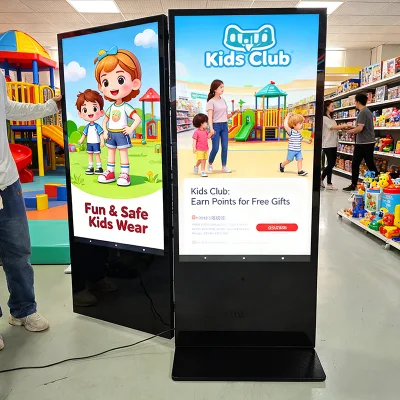


Comprehensive Sourcing Guide
Strategic Sourcing Guide for LCD and LED Panel AD Players with Remote Control
Understanding the Core Product Category and Technical Architecture
The procurement of an LCD LED Panel Ad Player with Remote Control requires a precise understanding of the underlying display technologies and their integration into digital signage ecosystems. These devices are engineered for dynamic content delivery in both indoor and semi-outdoor environments, serving as critical nodes in advertising networks. The core distinction lies in the screen technology; while the term "LCD LED" often appears in marketing, the specific product data indicates a reliance on LCD panels utilizing WLED backlighting for efficiency and longevity. The observed specifications highlight a WLED backlight type with a rated lifespan of 50,000 hours, containing an integrated LED drive. This configuration ensures consistent brightness and energy efficiency, which are paramount for devices intended for continuous operation.
The processing architecture is equally critical for performance. High-performance units in this category typically utilize a Quad-Core CPU, specifically the Rk3188 Cortex-A9 running at 1.6GHz, paired with an Android operating system version 4.2 or above. This combination allows for robust multimedia decoding, supporting resolutions up to 1050p. The memory configuration varies, with some models offering 2GB RAM and 16GB ROM, while others may feature 8GB eMMC flash memory as an optional upgrade. The choice between these configurations depends heavily on the complexity of the content being displayed and the need for local storage versus cloud-based streaming.
Critical Technical Specifications and Interface Requirements
When evaluating potential suppliers, buyers must scrutinize the specific technical parameters that define the device's capability. The resolution is a primary factor; observed models support a resolution of 1680x1050, which is suitable for standard advertising content without the high bandwidth requirements of 4K. However, the viewing angle is a specific constraint to note, with some units offering a viewing angle of 80/80/80/80 degrees. This limitation suggests that these units are best suited for fixed viewing positions rather than wide-angle public spaces where viewers approach from multiple oblique angles.
Connectivity and interface types are vital for integration into existing networks. The product data confirms the presence of USB and HDMI interfaces, alongside RJ45 ports for Ethernet connectivity. Network support is comprehensive, including 3G, WiFi, and wireless peripheral support. For environments requiring cellular connectivity, 3G and 4G options are available as optional upgrades. The brightness levels observed range from 300 nits for indoor applications to 400 nits for semi-outdoor use. This distinction is crucial; a unit rated at 300 nits may struggle in direct sunlight, whereas the 400-nit model offers better visibility in brighter conditions.
The following table summarizes the key technical variations observed in the current market data:
| Feature Category | Specification A (Indoor Focus) | Specification B (Semi-Outdoor/High Performance) |
|---|---|---|
| Screen Technology | LCD with WLED Backlight | LCD with WLED Backlight |
| Resolution | 1680x1050 | Up to 1050p Decoding |
| Brightness | 300 Nits | 400 Nits |
| Viewing Angle | 80/80/80/80 | Not Specified (Verify) |
| Operating System | Android 4.2+ | Android 4.2+ |
| CPU | Quad-Core Rk3188 1.6GHz | Quad-Core Rk3188 1.6GHz |
| Touch Interface | Infrared (Optional) | Capacitive (Optional) |
| Network | WiFi/LAN (Default) | WiFi/LAN + 3G/4G (Optional) |
| Weight | 5.4kg | Varies by Model |
Compliance, Certification, and Safety Standards
In the realm of B2B procurement, compliance with safety and environmental standards is non-negotiable, yet the available data presents a nuanced picture regarding certifications. While the product specifications list origin locations such as Guangdong Shenzhen and Fujian, and mention a standard of "22 inch screen," explicit certification marks like CE, FCC, or RoHS are not uniformly confirmed in the provided facts. One low-confidence background note mentions "reach," but this should not be treated as a confirmed attribute for all listed products.
Buyers must verify that the specific unit they intend to purchase meets the regulatory requirements of their target market. For instance, if the device is to be deployed in the European Union, it must comply with REACH regulations and CE marking standards. In the United States, FCC certification is mandatory for electronic devices emitting radio frequencies. The absence of a guaranteed certification status in the general product description necessitates a direct request for test reports and compliance certificates from the supplier before finalizing any order. Relying on general market assumptions rather than specific documentation can lead to customs delays or legal liabilities.
Furthermore, the warranty terms observed are typically set at one year. This standard warranty period should be clearly defined in the purchase agreement, including the scope of coverage for hardware failures, screen defects, and software issues. Buyers should also investigate the availability of spare parts and the lead time for replacements, as a one-year warranty is only valuable if the manufacturer can support the device throughout that period.
Cost Drivers and Procurement Economics
The pricing for LCD LED panel AD players with remote control exhibits a wide variance, with observed ranges spanning from $1 to $4,980 USD. This significant spread is driven by several key factors, including screen size, resolution, touch capabilities, and network options. The minimum order quantity (MOQ) is relatively low, ranging from 1 to 5 units, which makes these products accessible for small-scale pilots or individual deployments. However, the cost per unit often decreases with volume, a standard economic principle in electronics manufacturing.
Key cost drivers include the inclusion of a remote control, which is a standard feature in the observed data, and the customization options. Customization is explicitly listed as available, allowing buyers to tailor the device to specific branding or functional needs. This could involve custom firmware, specific mounting brackets, or unique casing colors. The installation method also impacts cost; units designed for wall-mounted or combined installation may require additional hardware or engineering support compared to standalone units.
The memory configuration is another significant variable. Models with 8GB eMMC flash memory or higher RAM configurations command a premium over base models. Similarly, the inclusion of 3G/4G modules adds to the overall cost but provides essential functionality for mobile or remote locations where wired internet is unavailable. Buyers should carefully balance these features against their budget to avoid over-specifying a device that does not require high-end processing power or cellular connectivity.
Typical Applications and Deployment Scenarios
The versatility of these AD players allows them to be deployed in a diverse range of environments. The product data explicitly identifies applications for bus and car AD players, as well as indoor and semi-outdoor advertising players. This indicates that the devices are robust enough to withstand the vibrations and temperature fluctuations associated with public transportation, while also being suitable for stationary indoor displays in retail stores, lobbies, or conference rooms.
For indoor applications, the 300-nit brightness and 1680x1050 resolution are generally sufficient to provide clear, vibrant content in controlled lighting conditions. The remote control feature is particularly valuable in these settings, allowing facility managers to quickly adjust settings or change content without accessing the device physically. In semi-outdoor environments, the 400-nit brightness becomes essential to combat ambient light and ensure visibility.
The installation flexibility is another key application driver. The data notes that installation can be wall-mounted, vertical, or combined. This adaptability allows for creative display setups, such as vertical banners in narrow hallways or wall-mounted screens in waiting areas. The packaging options, ranging from carton boxes to wooden frames and flight cases, suggest that the devices are designed for secure transport, which is critical for deployments involving multiple units across different locations.
Supplier Evaluation and Quality Assurance Protocols
Selecting the right supplier is a critical step in the procurement process. Buyers should prioritize suppliers who can provide transparent technical documentation and demonstrate a history of reliable manufacturing. The origin locations of Guangdong Shenzhen and Fujian are known manufacturing hubs for electronics, but this does not guarantee quality for every vendor. Buyers must verify the supplier's ability to deliver on the specific customization requests, such as the "Customized" attribute noted in the data.
Quality control measures should be a primary focus during the evaluation phase. Buyers should request sample units to test the durability of the touch screen, the stability of the Android operating system, and the reliability of the network connections. The observed touch screen types include both Infrared and Capacitive options, each with distinct advantages. Infrared touch screens are generally more durable and resistant to surface scratches, while capacitive screens offer a more intuitive multi-touch experience. The choice depends on the specific user interaction requirements of the deployment.
It is also essential to verify the supplier's after-sales support capabilities. A one-year warranty is standard, but the responsiveness of the support team and the availability of technical assistance are equally important. Buyers should inquire about the process for handling defective units and the lead time for replacements. Additionally, the supplier's ability to provide firmware updates and software support over the long term is crucial for maintaining the functionality of the AD players.
Long-Term Procurement Considerations and Lifecycle Management
Sourcing these devices is not merely a one-time transaction but a strategic decision that impacts long-term operational efficiency. The 50,000-hour backlight lifespan is a significant factor in the total cost of ownership, suggesting a long service life for the units. However, the obsolescence of the Android operating system version 4.2 and the Rk3188 processor must be considered. While these components are functional for basic advertising tasks, they may struggle with newer, more complex applications or security updates.
Buyers should plan for the lifecycle of the devices, including the eventual need for replacement or upgrade. The modular nature of the components, such as the optional memory and network modules, can extend the usability of the devices. However, the lack of specific certification data for newer standards means that future compliance requirements may necessitate a complete replacement of the hardware.
To mitigate these risks, buyers should establish a procurement strategy that includes regular technology assessments and a phased replacement plan. Engaging with suppliers who offer flexible upgrade paths or modular designs can help extend the lifecycle of the investment. Additionally, maintaining a stock of spare parts and accessories, such as remote controls and mounting hardware, can reduce downtime and ensure continuous operation of the advertising network.
In conclusion, the procurement of LCD LED panel AD players with remote control requires a meticulous approach to technical evaluation, compliance verification, and supplier selection. By focusing on the specific attributes observed in the market data and adhering to rigorous quality control standards, buyers can secure reliable solutions that meet their advertising and communication needs effectively.
FAQs
What screen technology do these players use?
These players use LCD technology with WLED backlighting for energy efficiency. The backlight has a rated lifespan of 50,000 hours and contains an integrated LED drive for consistent brightness during operation.
Can I get a remote control with this device?
Yes, the product includes a remote control as a standard feature. This allows facility managers to adjust settings and change content quickly without needing physical access to the unit.
Which operating system runs on these units?
The units operate on Android 4.2 or above. This version supports robust multimedia decoding and allows for flexible content management across various indoor and semi-outdoor environments.
What is the minimum order quantity for these players?
The minimum order quantity ranges from 1 to 5 units. This low threshold makes the products accessible for small-scale pilots or individual deployments without requiring bulk purchasing.
How long is the warranty period for these devices?
The standard warranty period is one year for hardware and screen defects. Buyers should verify the specific scope of coverage for software issues and spare part availability in the agreement.
Which installation methods are supported by these screens?
These screens support wall-mounted, vertical, and combined installation methods. The packaging options include carton boxes, wooden frames, or flight cases to ensure secure transport for various deployment setups.
What resolution do the 22-inch models support?
The 22-inch models support a resolution of 1680x1050 pixels. This resolution is suitable for standard advertising content and ensures clear display quality in controlled indoor lighting conditions.