Source LED Matrix Headlight Assembly for Cars, SUVs, and Trucks
Compare 30 verified LED Matrix Headlight Assembly options featuring customizable colors, IP ratings, and certifications like CCC and RoHS. Buyers can evaluate specifications including voltage, housing materials, and application types for automotive lighting needs.
Key considerations
Products List


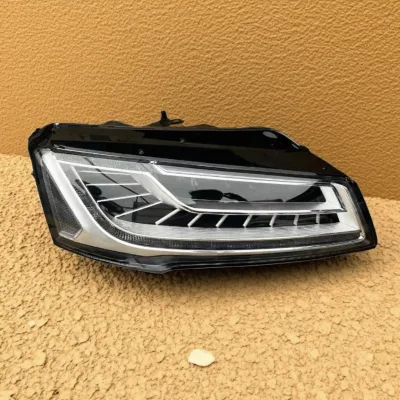


Car Accessories Headlight Headlamp Assembly with Lowers Collision Risks
$176.00 - $181.00
MOQ: 6 Pieces


Car Body Parts Headlight Projector Lens Dynamic Signal Head Lamp LED Headlights
$800.00 - $1000.00
MOQ: 10 Sets
Comprehensive Sourcing Guide
Strategic Sourcing Guide for LED Matrix Headlight Assemblies
Navigating the global market for LED matrix headlight assemblies requires a disciplined approach that balances advanced optical engineering with rigorous supply chain verification. Buyers in the automotive sector must distinguish between generic LED upgrades and true matrix systems capable of dynamic beam shaping. The following guide synthesizes observed market data and technical requirements to assist procurement professionals in identifying viable supply partners without relying on unverified claims.
Technical Specifications and Optical Architecture
The core of an LED Matrix Headlight Assembly lies in its ability to modulate light distribution in real-time. Unlike standard high-beam units, matrix systems utilize multiple individual LED segments controlled by a central processing unit to avoid dazzling oncoming traffic while maximizing visibility. When evaluating potential products, buyers must scrutinize the specific configuration of the light source. Observed market data indicates that many available units feature a "Changeable" emitting color and support "High Beam, Low Beam, and DRL" (Daytime Running Light) functions. This tri-functional capability is essential for modern compliance in various jurisdictions.
The electrical architecture is equally critical. Specifications often list a "Voltage Type" of DC, with specific units operating at 12V, which aligns with standard automotive electrical systems. However, the power consumption varies significantly across different models. Some observed listings specify power ratings in the range of 16-20W for the IP Power component, while others may differ based on the number of matrix segments. The housing material is a primary determinant of thermal management and durability. High-quality assemblies typically utilize a "Metal Alloy Housing" to dissipate heat effectively, paired with a "PC Lens" (Polycarbonate) that offers high impact resistance and optical clarity. The physical dimensions are also a key constraint; standard profiles observed in the market include dimensions such as 155mm by 120mm by 155mm, though custom sizing is often available.
Compliance and Certification Verification
In the automotive lighting sector, regulatory compliance is not merely a formality but a prerequisite for market access. Buyers must verify that suppliers possess valid certifications that align with the target export markets. The most frequently observed certifications in the current supply base include CCC (China Compulsory Certification), CE, EMC, FCC, RoHS, and FDA. The presence of CCC and RoHS is particularly common for products originating from China, indicating adherence to local safety and environmental standards.
However, buyers should not assume that a single listing covers all necessary approvals. For instance, while some products list "CCC" and "RoHS," others may include "VDE" or "ISO" standards, which are crucial for European and international markets. The "Signal" type often noted as "Low Voltage Wiring Harness" suggests that the assembly operates within safe electrical parameters, but this must be cross-referenced with the specific voltage requirements of the vehicle. Additionally, the "Interface Type" may be listed as AC/DC, requiring careful integration planning. When sourcing, procurement teams must request current certification documents for the specific model number, such as "AAT-MC3011" or "US-UKS-601," to ensure the batch being purchased is certified, not just the product line.
Cost Drivers and Pricing Structures
The pricing of LED matrix headlight assemblies is influenced by a complex interplay of factors, including the complexity of the matrix control algorithm, the quality of the optical lens, and the durability of the housing. The observed market price range is extremely broad, spanning from $0.02 to $100,000 USD. This variance reflects the difference between simple LED replacement bulbs and fully integrated, high-end matrix headlight assemblies with advanced software. Buyers must understand that the lower end of this spectrum often represents individual components or basic LED modules rather than complete, certified assemblies.
Minimum Order Quantity (MOQ) is another significant cost driver. The observed MOQ range spans from 1 to 10,000 units. Suppliers offering an MOQ of 1 are typically catering to sample testing or small-scale prototyping, while those requiring 10,000 units are likely targeting mass production contracts. The unit price will fluctuate inversely with the order volume. Furthermore, customization availability is a major factor in cost. While "Customization" is listed as available, any deviation from standard specifications—such as unique housing materials, specific lens shapes, or proprietary wiring harnesses—will incur additional tooling and engineering fees. Buyers should also consider the "Packing" requirements; standard cartons are common, but specialized packaging for high-value automotive parts can add to the logistics cost.
Typical Applications and Vehicle Compatibility
LED matrix headlight assemblies are primarily designed for the automotive sector, with a specific focus on passenger vehicles and light trucks. The "Application" field frequently cites "Automobile," "General," and specific vehicle models. Compatibility is a critical success factor; a mismatch in the base type or fitment can render an assembly useless. Observed data highlights specific compatibility with models like the "Skoda Superb," with a "Base" type of "H5W" and an "OEM" status of "Upgrade." The "Year" of applicability is also strictly defined, with many units targeting vehicles from 2018 onwards.
Beyond passenger cars, the technology extends to other sectors. Some listings indicate applications in "Electronic," "Computer," "Home Appliance," and "Motorcycle" industries, suggesting that the underlying LED matrix technology is versatile. However, for automotive procurement, the "Fits for" attribute must be verified against the specific vehicle chassis and electrical system. The "Item Type" is often described as a "Wiring Harness Kit for LED Lights," indicating that the assembly may require a dedicated harness for proper signal transmission and power delivery. The "Industry Type" is explicitly noted as "Automotive Wiring Harness," reinforcing the need for robust electrical connections capable of withstanding vibration and temperature fluctuations.
Supplier Evaluation and Service Capabilities
Selecting a supplier requires a deep dive into their service capabilities and quality assurance processes. A reliable partner should offer "ODM/OEM/Customized" services, allowing buyers to tailor the product to their specific branding and technical requirements. The "Service" attribute often includes "After-Sales Service" with a warranty period of 12 months, which is a standard benchmark for automotive components. Buyers should verify if this warranty covers both the LED modules and the electronic control units.
Quality control is another vital metric. Leading suppliers typically implement a "100% Inspection Before Shipment" protocol to ensure that every unit meets the specified tolerances. The "Quality Control" process should be transparent, with documentation available for review. Additionally, the "Sample" availability is crucial for initial validation. Suppliers that accept samples allow buyers to test the "Work Temperature" range, which is observed to be between -20℃ and 85℃, ensuring the product can withstand extreme environmental conditions. The "Delivery Time" is another operational factor, with observed lead times ranging from 10 to 15 working days. Buyers must account for this lead time in their production planning, especially when dealing with custom orders that may extend the timeline.
Quality Control and Long-Term Procurement Considerations
Ensuring the long-term reliability of LED matrix headlight assemblies involves rigorous testing and adherence to material standards. The "Material" composition is a primary indicator of durability. Common materials include "LED" chips, "Metal Alloy Housing," and "PC Lens." For wiring components, the "Wire Core Material" can vary, with options ranging from "Copper Clad Aluminum Wire" to "Tin Plated Copper Wire." The latter is generally preferred for its superior conductivity and corrosion resistance. The "Bandaging Materials" used in harnesses, such as "PVC Pipe" or "TPU/Xlpo," also play a role in protecting the wiring from abrasion and environmental damage.
Long-term procurement strategies should focus on supply chain stability and consistency. Buyers must verify that the "Connector" type is either "OEM or Equivalents for Charging Cable" to ensure seamless integration with existing vehicle systems. The "Resistance" to water is a key performance indicator, with many units marketed as "Waterproof." However, buyers should request specific IP rating documentation rather than relying on general claims. The "Standard" for the product, often listed as "cable" or specific dimensions, must be consistent across batches to maintain quality. Finally, the "General Wiring Harness" assembly classes, such as "Crimping Assembling Classes," should be reviewed to ensure the manufacturing process meets automotive-grade standards. By focusing on these tangible attributes and verifying them against the supplier's documentation, buyers can mitigate risk and secure a reliable supply of high-performance LED matrix headlight assemblies.
FAQs
What certifications are required for LED Matrix Headlight Assembly?
Required certifications include CCC, CE, EMC, FCC, RoHS, and FDA. Buyers must verify specific documents for the model, such as AAT-MC3011, to ensure compliance with target export markets.
Can I customize the LED Matrix Headlight Assembly specifications?
Customization is available for housing materials, lens shapes, and wiring harnesses. Any deviation from standard dimensions like 155mm by 120mm may incur additional engineering fees and extend lead times.
Which voltage type does the LED Matrix Headlight Assembly use?
The assembly operates on DC voltage, typically at 12V for standard automotive systems. Some units specify power ratings between 16-20W, requiring careful integration with vehicle electrical architecture.
How long is the delivery time for LED Matrix Headlight Assembly orders?
Standard delivery time ranges from 10 to 15 working days. Custom orders or large volumes may extend this timeline, so buyers should account for this in their production planning schedules.
What is the minimum order quantity for LED Matrix Headlight Assembly?
Minimum order quantities range from 1 unit for samples to 10,000 units for mass production. Pricing fluctuates inversely with volume, making bulk orders more cost-effective for large-scale procurement.
Which materials are used for the LED Matrix Headlight Assembly housing?
Housing typically consists of metal alloy for heat dissipation and durability. The lens is made of PC material for impact resistance, while wiring harnesses use tin-plated copper or copper-clad aluminum wire.