Source Lightweight Breathable Canvas Shoes for running, casual wear, and sports
Explore 30 listings of Lightweight Breathable Canvas Shoes suitable for running, casual wear, and sports. Buyers can compare customization options, materials like cotton fabric and rubber insoles, and various styles including lace-up and elastic band designs from manufacturers in China.
Key considerations
Products List


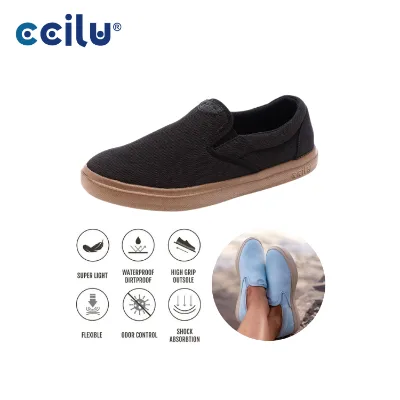
Stylish Running Shoes, Breathable Canvas Footwear for Sports Enthusiasts
$2.00 - $3.00
MOQ: 1200 Pairs




Comprehensive Sourcing Guide
Strategic Sourcing Guide for Lightweight Breathable Canvas Shoes
Understanding Product Attributes and Material Composition
When sourcing Lightweight Breathable Canvas Shoes, the primary objective is to identify products that balance durability with airflow, a critical requirement for active or warm-weather applications. Based on the available market data, the upper material is consistently identified as canvas, a woven fabric that offers the necessary breathability for spring and summer seasons. This material choice is distinct from genuine leather or synthetic alternatives often found in heavier footwear categories. The canvas construction allows for a flexible fit, which is essential for the "running shoes" and "casual shoes" classifications observed in the current supply pool.
The internal construction plays an equally vital role in the "lightweight" designation. The insole materials vary significantly across listings, with rubber and EVA (Ethylene-Vinyl Acetate) being the two dominant options. EVA is generally preferred for applications requiring superior shock absorption and reduced weight, aligning with the "Shock Absorption Spring" feature noted in specific product models. Conversely, rubber insoles provide a more durable, high-traction base, suitable for the "Anti-slip Pattern" requirements seen in certain designs. The lining material is frequently specified as cotton fabric, which enhances comfort against the skin and further supports the breathability profile of the shoe.
Heel height is a critical specification for this category. The observed data indicates a prevalence of "Flat" heel designs, which are standard for running and casual footwear where stability and ground contact are prioritized over elevation. The toe shape is predominantly "Round," offering ample room for toe splay and reducing pressure points during extended wear. The closure pattern is another variable; while "Lace-up" systems are common for adjustable fit, some listings indicate "Elastic Band" closures, which may offer a slip-on convenience but could compromise the secure fit required for high-intensity activities. Buyers must verify which closure mechanism aligns with the intended use case, as the "Lace-up" system is generally more adaptable for custom sizing.
Technical Specifications and Sizing Flexibility
The technical specifications for Lightweight Breathable Canvas Shoes often include a high degree of customization, particularly regarding size. The observed data reveals a wide range of US shoe sizes, including 5.5, 6, 6.5, 7, 7.5, 8, 8.5, 9, 9.5, 10, 10.5, 11, and even 4.5. This extensive range suggests that suppliers are equipped to handle diverse demographic needs, from youth to adult markets. Furthermore, the specification "Customized" for shoe size indicates that many manufacturers are willing to produce non-standard dimensions, a crucial capability for bulk orders targeting specific regional sizing charts or niche markets.
Model numbers serve as a primary identifier for product differentiation. The supply pool includes models such as 615, C5012, 08, and 2012269A. These alphanumeric codes often correspond to specific design iterations, material combinations, or production batches. For instance, the "Volleyball shoes" model designation suggests a specific functional adaptation of the canvas upper, likely involving reinforced stitching or specific sole geometry, even if the base material remains canvas. The "prod_model" field is essential for procurement teams to track inventory and ensure consistency across repeat orders.
Color options are another key technical specification. The market data lists White, Blue, Black, and Grey as standard colors, with "Optional" indicating that custom colorways may be available upon request. This flexibility is vital for branding purposes, allowing companies to match corporate colors or seasonal trends. However, the data also notes that "Is There Any Stock" is frequently "No," implying that these products are largely made-to-order. This "No Stock" status reinforces the need for careful planning regarding lead times and production schedules, as buyers cannot rely on immediate off-the-shelf availability for specific color or size combinations.
Cost Drivers and Pricing Dynamics
The pricing landscape for Lightweight Breathable Canvas Shoes exhibits significant variance, with observed prices ranging from $1.38 to $66 USD. This wide range is not indicative of a single product tier but rather reflects differences in material quality, manufacturing complexity, and order volume. The lower end of the spectrum likely corresponds to basic canvas constructions with standard rubber insoles and minimal customization. In contrast, the higher price points may reflect the use of EVA insoles, enhanced shock absorption features, or specialized models like the "Volleyball shoes" which may require more rigorous construction standards.
The Minimum Order Quantity (MOQ) is a substantial cost driver in this category. The observed MOQ range spans from 1 to 1200 units. An MOQ of 1 suggests that some suppliers cater to small businesses or sample procurement, though this often comes with a higher per-unit cost. Conversely, an MOQ of 1200 indicates a focus on bulk manufacturing, where economies of scale can significantly reduce the unit price. Buyers must align their order volume with the supplier's capacity to ensure cost efficiency. The "Cartons" or "Box" packing specifications also influence logistics costs; bulk packing in cartons is generally more cost-effective for shipping than individual box packaging, which adds weight and volume to the shipment.
Customization is a primary factor that elevates costs. The attribute "Customization: Available" and "Whether It Can Be Customized: Yes" confirms that bespoke orders are a standard service. However, customization typically incurs additional fees for mold creation, color matching, and size adjustments. The "High Quality Top 3A, 5A, 7A, 10A" standard mentioned in the data suggests a tiered pricing structure based on quality grading. While these grades are not universally standardized industry-wide, they indicate that suppliers may offer different price points based on the perceived quality of the finish, stitching, and material integrity. Buyers should request detailed cost breakdowns to understand how much of the price is attributed to the base material versus the customization services.
Compliance, Standards, and Quality Verification
Ensuring compliance and quality in the sourcing of canvas shoes requires a rigorous verification process, as the supply data presents a mix of specific and vague standards. The observed data includes a "prod_standard" of "High Quality Top 3A, 5A, 7A, 10A." While these labels suggest a quality hierarchy, they are not internationally recognized certifications like ISO or ASTM. Buyers must treat these as internal supplier grading systems and verify what specific physical attributes (e.g., tensile strength, colorfastness, sole adhesion) correspond to each grade. Relying solely on these alphanumeric codes without a defined quality control protocol is risky.
The "CE" certification is mentioned in the background data, but its applicability to footwear is limited and context-dependent. CE marking is mandatory for products sold in the European Economic Area, but it typically applies to safety equipment or specific regulated goods. For general canvas shoes, CE is not a standard requirement unless the shoes are marketed as Personal Protective Equipment (PPE) with specific anti-slip or safety toe features. Buyers targeting the European market should verify if the supplier has conducted the necessary testing for general footwear safety standards, such as EN ISO 20345, rather than assuming CE compliance based on the keyword.
Quality control should focus on the material integrity and construction durability. The "Feature" attributes of "Resilient" and "Breathable" are functional claims that must be validated through physical testing. For the "Resilient" claim, buyers should request samples to test the sole's ability to return to its original shape after compression. For "Breathable," visual inspection of the canvas weave density and the presence of ventilation features in the lining is necessary. The "Anti-slip Pattern" on the sole is another critical area for verification, especially for shoes marketed as "Running Shoes" or "Volleyball shoes." Buyers should conduct traction tests on various surfaces to ensure the pattern meets the safety requirements of the intended activity.
Supplier Evaluation and Operational Capabilities
Evaluating suppliers for Lightweight Breathable Canvas Shoes requires a focus on their operational flexibility and transparency. The data indicates that the "prod_origin" is primarily China, with specific mentions of Fujian, a region known for its footwear manufacturing capabilities. While the location is a positive indicator of industry expertise, buyers should verify the specific factory's capacity to handle their order volume. The "Is There Any Stock: No" attribute suggests that most suppliers operate on a Just-in-Time (JIT) or Make-to-Order (MTO) basis. This necessitates a clear understanding of lead times, which are not explicitly provided in the data but are critical for supply chain planning.
Communication and responsiveness are key indicators of supplier reliability. The attributes "Leave Your Contact Information: We Will Contact You as Soon as Possible" and "We Have More Designer Products" suggest that suppliers are eager to engage in dialogue and offer additional product lines. However, buyers should assess the depth of this engagement. A supplier that provides a "Table of Contents" for their designer products demonstrates a structured catalog, which is beneficial for long-term partnership. Conversely, vague responses or a lack of detailed product videos, despite the claim "We Have More Detailed Product Videos," should be treated as a red flag. Buyers should request video evidence of the production process and finished goods to verify the "High Quality" claims.
The "prod_packing" specifications, ranging from "Cartons" to "Box" to "Carton Box," also reflect the supplier's logistics capabilities. A supplier that offers standardized carton packing is better equipped for large-scale shipping and inventory management. Buyers should confirm the exact dimensions of the packing, such as the "322412cm" standard mentioned, to calculate shipping costs and warehouse space requirements accurately. Additionally, the "Buy The Box Separately" note implies that packaging might be an optional cost, which buyers should factor into their total landed cost calculations.
Typical Applications and Market Segmentation
The versatility of Lightweight Breathable Canvas Shoes allows them to serve multiple market segments. The "Type" attributes of "Running Shoes" and "Casual Shoes" indicate a dual application. For running and athletic use, the combination of canvas uppers and EVA insoles provides the necessary breathability and shock absorption. The "Round" toe and "Flat" heel design support natural foot movement, making these shoes suitable for gym workouts, light jogging, or daily athletic activities. The "Anti-slip Pattern" is particularly relevant for volleyball or court sports, where traction is essential to prevent injuries.
In the casual sector, the "Spring" and "Summer" season attributes highlight the shoes' suitability for warm-weather fashion. The "Unisex" and "Male" gender classifications suggest a broad target audience, though the "Male" specific listings may indicate a focus on men's sizing or style preferences. The color options of White, Blue, Black, and Grey align with versatile fashion trends, allowing these shoes to be paired with various outfits. The "Resilient" feature ensures that the shoes maintain their shape and appearance over time, a key selling point for casual wear that is subjected to frequent use.
The "Customized" size and "Optional" color attributes open opportunities for private labeling and corporate gifting. Companies seeking branded footwear for employees or promotional events can leverage the customization capabilities to create unique products. The "No Stock" status means that these items are ideal for planned campaigns rather than impulse buying, allowing brands to control the narrative and quality of their merchandise. The "High Quality" grading system can be used to differentiate product tiers, with higher grades reserved for premium collections and lower grades for entry-level casual wear.
Long-Term Procurement Considerations and Risk Management
Sourcing Lightweight Breathable Canvas Shoes involves long-term considerations that extend beyond the initial transaction. The "Customization" availability is a double-edged sword; while it offers flexibility, it also introduces complexity in quality control. Buyers must establish clear specifications for every customized order to avoid discrepancies between the sample and the bulk production. The "Is There Any Stock: No" status means that supply chain disruptions can have a significant impact on delivery schedules. Buyers should develop contingency plans, such as maintaining relationships with multiple suppliers or forecasting demand well in advance to secure production slots.
The "High Quality Top 3A, 5A, 7A, 10A" standard requires a robust quality assurance framework. Since these are not universal standards, buyers should work with suppliers to define specific acceptance criteria for each grade. This might include testing for colorfastness, sole adhesion strength, and material durability. Regular third-party inspections during production can help mitigate the risk of receiving substandard goods. The "CE" certification mention, while not a primary standard for general footwear, should be verified if the shoes are intended for markets with strict safety regulations.
Finally, the "prod_origin" in China and the "Fujian" location suggest a mature supply chain, but buyers should remain vigilant about geopolitical and logistical risks. Shipping costs and lead times can fluctuate based on global events. The "Cartons" and "Box" packing specifications should be optimized to minimize damage during transit. By focusing on clear communication, defined quality standards, and strategic inventory planning, buyers can effectively manage the procurement of Lightweight Breathable Canvas Shoes and build a resilient supply chain for their business needs.
FAQs
Can I customize the shoe size for these canvas shoes?
Yes, the shoe size can be customized to meet specific requirements. The product specifications list various US sizes including 5.5 through 11, and the data confirms that customized dimensions are available for bulk orders targeting niche markets.
What materials are used for the upper and lining?
The upper material is primarily canvas, with some options featuring genuine leather or fabric. The lining material is consistently specified as cotton fabric to enhance comfort and support the breathability profile required for spring and summer seasons.
Which closure patterns are available for these footwear options?
The available closure patterns include lace-up systems and elastic bands. Lace-up designs are common for adjustable fits suitable for running, while elastic bands offer slip-on convenience, though buyers should verify the secure fit for high-intensity activities.
How does the insole material affect shock absorption?
Insoles are made from either rubber or EVA to provide shock absorption. EVA is preferred for superior weight reduction and cushioning, while rubber insoles offer a durable, high-traction base suitable for anti-slip pattern requirements seen in specific designs.
Are these shoes waterproof for outdoor use?
No, these Lightweight Breathable Canvas Shoes are not waterproof. The product attributes explicitly state they are not waterproof, making them suitable for spring and summer seasons rather than wet weather conditions or water-based activities.
What is the typical MOQ for ordering these shoes?
The minimum order quantity ranges from 1 to 1200 units depending on the supplier. Lower MOQs allow for sample procurement, while higher volumes of 1200 units enable economies of scale to significantly reduce the per-unit cost for bulk manufacturing.
Where are these canvas shoes manufactured and shipped from?
The products originate from China, with specific manufacturing hubs located in Fujian. This region is known for its footwear capabilities, and buyers should verify the specific factory capacity to handle their order volume and manage logistics effectively.