Source XRF Fuel Oil Sulfur Analyzer for Crude, Diesel, and Jet Fuel
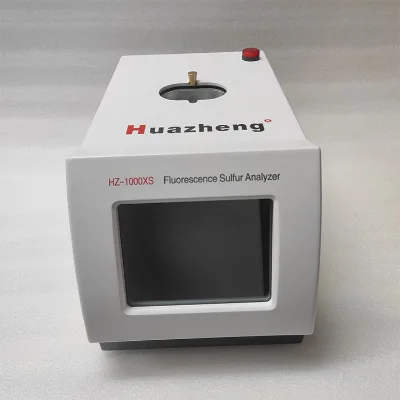
Compare 30 XRF fuel oil sulfur analyzers designed for determining sulfur content in crude petroleum, diesel, and jet fuel. These digital instruments utilize the ASTM D4294 method to measure sulfur levels ranging from 20 ppm to 5% with automated operation.
Key considerations
Products List

Xrf Method Sulfur in Oil Analyzer Sulphur Content Tester Petroleum Sulfur Analyzer
$8500.00 - $9500.00
MOQ: 1 Sets


X-ray Fluorescence ASTM D4294 Sulfur-in-Oil Analyzer Fuel Sulfur Analyzer
$7500.00 - $9000.00
MOQ: 1 Sets


Portable Xrf Sulfur Analyzer Petroleum Product Sulfur Content Test Equipment
$20000.00 - $25000.00
MOQ: 1 Pieces


Sulfur Xrf Spectrometer ASTM D4294 Oil Xrf Analyzer with Sulfur ISO 8754
$8000.00 - $14000.00
MOQ: 1 Pieces


Comprehensive Sourcing Guide
Strategic Sourcing Guide for XRF Fuel Oil Sulfur Analyzers
The global demand for precise sulfur content analysis in petroleum products has intensified due to stringent environmental regulations and the need for fuel quality optimization. Buyers seeking an X-ray Fluorescence (XRF) fuel oil sulfur analyzer must navigate a complex landscape of technical specifications, compliance standards, and supplier capabilities. This guide provides a structured approach to sourcing these critical analytical instruments, ensuring that procurement decisions are grounded in verified data and operational requirements rather than marketing assertions. The focus remains on the specific attributes observed in the current market, including the DT-4294 and BLS-4294 models, to offer actionable intelligence for procurement professionals.
Technical Specifications and Operational Parameters
When evaluating an XRF sulfur analyzer, the primary consideration is the alignment of technical specifications with the intended application. The core function of these instruments is to serve as an analytic instrument for trace elements, specifically designed to determine sulfur content in petroleum products. A critical observation in the current market is the variation in measurement ranges. Some units offer a range of 20 Ppm to 5%, while others cover 7ppm to 5%, and specific models are noted for a range of 50-10000ppm. Buyers must verify which range aligns with their specific fuel types, whether they are crude petroleum, heavy oil, diesel oil, or jet fuel.
The operational mode of these analyzers is predominantly automatic, utilizing computer control for precision. The power supply requirements are standardized in many observed listings as AC220V±22V or 220V, 50Hz, with a frequency of 50±1HZ. This indicates that these units are generally designed for fixed laboratory or industrial settings rather than portable field applications, as confirmed by the "Non Portable" attribute. The physical footprint is also a key factor; packing dimensions such as 468 mm368 mm136 mm and gross weights around 13kg suggest a compact yet robust design suitable for integration into existing laboratory workflows.
Measurement time is another variable that impacts throughput. Available options include preset times of 60, 120, 240, 300, and 600 seconds, or multi-time measurement modes of 2, 3, 5, 10, and 50 times. The choice of measurement time directly influences the trade-off between analysis speed and statistical accuracy. Furthermore, the sample quantity required is minimal, typically between 2 to 3 ml, which corresponds to a sample depth of 3 mm to 4 mm. This efficiency in sample usage is a significant advantage for laboratories handling expensive or limited-volume crude oil samples.
Compliance and Reference Standards Verification
Compliance with international standards is non-negotiable for any sulfur analyzer intended for regulatory or quality control purposes. The most frequently cited standard in the current product data is ASTM D4294, which describes the test method for determining sulfur in petroleum products using energy-dispersive X-ray fluorescence. Buyers must ensure that the specific unit they procure is explicitly validated against this standard. While other standards such as ASTM D2622, ASTM D7039, and ASTM D5453 are often associated with sulfur analysis in the broader industry, the provided data specifically highlights ASTM D4294 as the reference standard for the observed models.
Certification status is equally critical for market entry and operational legitimacy. The CE certification is explicitly mentioned for certain units, indicating compliance with European health, safety, and environmental protection standards. However, buyers should not assume that all listed units possess this certification without direct verification from the supplier. The presence of CE certification suggests a higher level of regulatory adherence, but it does not automatically guarantee performance in all jurisdictions. Additionally, while ISO 17034 and ISO 17025 are relevant for reference material and laboratory competence, the provided facts do not confirm these certifications for the specific analyzers. Therefore, procurement teams must request current certification documents rather than relying on general market assumptions.
Cost Drivers and Pricing Dynamics
The pricing for XRF fuel oil sulfur analyzers exhibits a wide variance, with observed listed prices ranging from $1 to $26,000. This broad spectrum indicates that the cost is heavily influenced by the specific configuration, brand reputation, and included features. The minimum order quantity (MOQ) is typically low, ranging from 1 to 2 units, which facilitates procurement for smaller laboratories or pilot testing phases. However, the low end of the price range may correspond to basic configurations or older models, whereas the higher end likely reflects advanced features, enhanced accuracy, or bundled services.
Several factors drive the final cost of the instrument. The inclusion of customization options can significantly alter the price structure. While some units are listed as "Non-Customized," others offer "Customization: Available," allowing buyers to tailor the software interface, language settings (e.g., English), or specific measurement protocols to their needs. The packaging also plays a role; units packed in one plywood case or wooden case may incur different logistics costs compared to standard packaging. Additionally, the condition of the unit, whether "Totally New" or refurbished, is a primary determinant of value. Buyers should scrutinize the price-to-specification ratio to ensure they are not overpaying for features they do not require or underpaying for a unit that lacks necessary performance guarantees.
Typical Applications and Sample Compatibility
The versatility of XRF sulfur analyzers makes them suitable for a wide array of applications within the petroleum and energy sectors. The primary application is the determination of sulfur content in crude petroleum, petroleum products, heavy oil, and diesel oil. The ability to measure various fuel types, including diesel fuel, jet fuel, and kerosine, underscores the instrument's utility in refineries and fuel distribution centers. The detection limit of 10 Ppm is particularly relevant for monitoring low-sulfur fuels, which are increasingly mandated by environmental agencies to reduce emissions.
The repeatability and reproducibility of the instrument are critical for maintaining quality control consistency. Observed data suggests repeatability (R) values of less than 0.02894 (X+0.1691) and reproducibility (R) values of less than 0.1215(X+0.5555). These metrics indicate the instrument's ability to produce consistent results under varying conditions. However, buyers must verify these figures against their specific operational environment, as factors such as sample homogeneity and operator technique can influence actual performance. The digital display and automatic operation mode further enhance usability, allowing for efficient data collection and analysis in high-volume testing environments.
Supplier Evaluation and Quality Assurance
Selecting a reliable supplier is as important as selecting the right instrument. The supply chain for these analyzers is primarily centered in China Mainland, with delivery lead times typically within 10 days after the order is confirmed. This rapid turnaround is advantageous for urgent procurement needs but requires careful vetting of the supplier's reliability. Buyers should evaluate suppliers based on their ability to provide detailed technical documentation, including the specific test methods and reference standards used for calibration.
Quality assurance processes should be a central part of the supplier evaluation. The "Condition: Totally New" attribute is a basic requirement, but buyers should also inquire about the warranty terms, after-sales support, and the availability of spare parts. The use of a plywood case for packing suggests a focus on protecting the instrument during transit, but buyers should confirm that the packaging meets international shipping standards for sensitive electronic equipment. Additionally, the supplier's ability to provide training on the operation of the digital display and automatic operation mode is crucial for ensuring that the laboratory staff can utilize the instrument effectively from day one.
Long-Term Procurement and Maintenance Considerations
Long-term procurement strategies for XRF sulfur analyzers must account for maintenance, calibration, and potential upgrades. The instrument's reliance on AC220V power and its non-portable nature mean that it requires a stable power supply and a dedicated laboratory space. Buyers should plan for the long-term costs associated with maintaining the instrument, including periodic calibration against known standards and the replacement of consumables.
The customization options available, such as language settings and specific measurement protocols, offer flexibility for future needs. However, buyers should ensure that the software is upgradable to accommodate new standards or regulatory changes. The digital display and computer control features suggest that the instrument is capable of data integration with laboratory information management systems (LIMS), which is essential for modern quality control workflows. By focusing on these long-term considerations, buyers can ensure that their investment in an XRF sulfur analyzer remains valuable and compliant over the life of the instrument.
Comparative Analysis of Key Models
To assist in decision-making, the following table summarizes the key attributes of the observed models, highlighting the differences in specifications and features.
| Attribute | Model DT-4294 | Model BLS-4294 | General Observation |
|---|---|---|---|
| Primary Function | Storage / Analytic Instrument | Universal Testing Machine | Both serve as Sulfur Content Testers |
| Measurement Range | 20 Ppm to 5% | 7ppm to 5% | Ranges vary; verify specific needs |
| Reference Standard | ASTM D4294 | ASTM D4294 | Consistent standard across models |
| Power Supply | AC220V±22V | AC220V | Standardized voltage requirements |
| Packing | One Plywood Case | Wooden Case | Robust packaging for protection |
| Origin | China Mainland | Made in China | Consistent manufacturing origin |
| Certification | CE (Noted for some) | CE (Noted for some) | Verify specific unit certification |
| Portability | Non Portable | Non Portable | Designed for fixed laboratory use |
This comparison underscores the importance of verifying specific model attributes before making a purchase. While the core functionality remains consistent, the nuances in measurement range and packing details can impact the suitability of the instrument for specific applications.
In conclusion, sourcing an XRF Fuel Oil Sulfur Analyzer requires a meticulous approach that balances technical specifications, compliance requirements, and supplier reliability. By focusing on the verified data provided and maintaining a critical eye on potential variations, buyers can make informed decisions that ensure the long-term success of their quality control operations. The market offers a range of options, but the key to success lies in matching the instrument's capabilities to the specific needs of the laboratory and the regulatory environment in which it operates.
FAQs
What is the measurement range for sulfur content?
The measurement range varies by model, typically spanning from 20 Ppm to 5% or 7ppm to 5%. Some specific units cover a range of 50 to 10000ppm. Buyers must verify which range aligns with their specific fuel types like crude petroleum or diesel oil.
Which reference standard does the analyzer follow?
The instrument is validated against the ASTM D4294 standard for determining sulfur in petroleum products. While other standards exist in the industry, the provided data specifically highlights ASTM D4294 as the reference standard for these observed models.
Can the device be customized for specific needs?
Customization is available for certain units, allowing buyers to tailor software interfaces or measurement protocols. However, some listed products are marked as non-customized. Buyers should confirm the specific customization options with the supplier before ordering.
How long is the delivery lead time?
The delivery lead time is typically within 10 days after the order is confirmed. This rapid turnaround applies to units originating from China Mainland. Buyers should verify current availability as lead times may fluctuate based on order volume.
What is the minimum order quantity for purchase?
The minimum order quantity ranges from 1 to 2 units, facilitating procurement for smaller laboratories. This low MOQ allows for pilot testing or immediate needs without requiring bulk purchases. Specific supplier policies may vary slightly within this observed range.
Is the analyzer portable for field use?
The analyzer is classified as non-portable and is designed for fixed laboratory or industrial settings. It requires a stable AC220V power supply and does not support mobile field applications. Users must plan for a dedicated laboratory space for operation.
What is the power supply requirement?
The power supply requirement is standardized at AC220V±22V or 220V at 50Hz. This indicates the unit is designed for fixed installations rather than portable use. Buyers must ensure their facility has compatible power sources before installation.