Source Lightweight Mobile Phone Table Holder for Home, Office, and Desk
Compare 30 listings for a Lightweight Mobile Phone Table Holder suitable for home, office, and desk applications. Buyers can review adjustable heights, foldable designs, and material options like plastic or alloy to find the right fit.
Key considerations
Products List


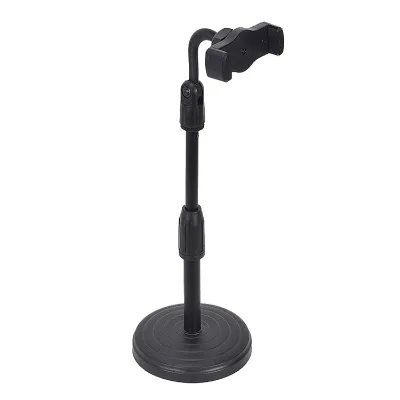


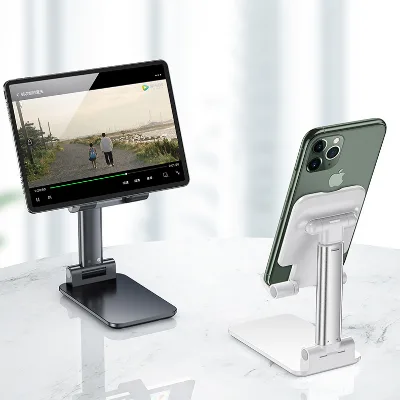
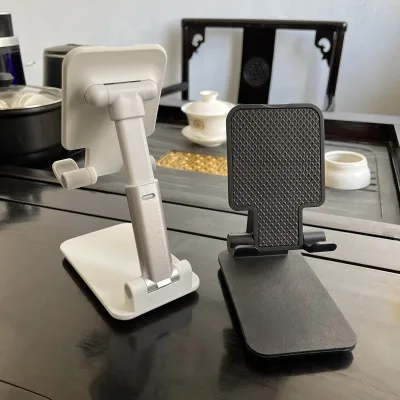
Comprehensive Sourcing Guide
Strategic Sourcing Guide for Lightweight Mobile Phone Table Holders
Defining Technical Specifications and Material Composition
When sourcing a Lightweight Mobile Phone Table Holder, the primary objective is to balance structural integrity with portability. The market offers a diverse array of designs, but the core technical specifications often revolve around the material composition and mechanical functionality. Based on available product data, the most prevalent materials for these units are plastic and various metal alloys, including aluminum and general alloy constructions. The choice between plastic and metal significantly impacts the final weight, durability, and aesthetic finish of the product.
Plastic variants, often utilizing Polypropylene (PP) for handles or structural components, are typically favored for their cost-effectiveness and ability to be molded into complex, lightweight shapes. These are frequently described as "Foldable" and designed for "Universal" compatibility, accommodating all sizes of phones. In contrast, metal options, specifically those made from aluminum or alloy, offer enhanced rigidity and a premium feel. These metal holders often feature surface processing techniques such as electroplating to prevent corrosion and improve aesthetics. The "Aluminum" and "Alloy" designations suggest a higher density material, yet the engineering focus remains on minimizing mass while maintaining the "Non-Slip" features essential for stability on a desk surface.
Mechanical specifications are equally critical. A defining characteristic of the modern lightweight holder is its "Foldable" nature, allowing for compact storage and transport. The product data indicates a "360 Degrees Rotation" capability, which is a standard expectation for high-quality table holders, ensuring the user can adjust the viewing angle from portrait to landscape seamlessly. The "Height" is often described as "Adjustable," providing flexibility for different user preferences. Furthermore, the "Mounting Type" is predominantly "Clip" or "Desktop" based, designed to secure the device firmly without the need for adhesives or permanent installation. The "Tolerances" for these mechanical parts are noted to be as tight as 0.02mm in precision manufacturing contexts, ensuring that moving parts like hinges and clips function smoothly over time without becoming loose or wobbly.
Compliance, Certification, and Regulatory Standards
Navigating the compliance landscape is a fundamental step in B2B procurement, particularly for electronic accessories that come into contact with consumer devices. The supply chain for mobile phone holders must adhere to specific international standards to ensure safety and environmental responsibility. The observed product data highlights "ISO" and "RoHS" as key certifications. ISO certification generally indicates that the manufacturer follows international standards for quality management, ensuring consistent production processes. RoHS (Restriction of Hazardous Substances) compliance is critical, as it verifies that the product does not contain specific hazardous materials like lead, mercury, or cadmium, which is a mandatory requirement for selling in many global markets, including the European Union.
Beyond general certifications, buyers must verify adherence to specific product standards. The data references "Standard Specifications or Customized" and mentions a specific standard named "Bear GREEN." While "Bear GREEN" appears as a specific designation in the provided context, it is essential for buyers to understand that this likely represents a proprietary or internal environmental standard of a specific manufacturer rather than a universally recognized global standard like ISO or RoHS. Therefore, procurement teams should request detailed documentation to confirm what "Bear GREEN" entails, ensuring it aligns with the buyer's own sustainability goals.
The "Standard and customized" nature of the product standards implies that while there is a baseline of compliance for off-the-shelf items, custom orders may have different regulatory requirements. Buyers should verify that any customized color, logo, or packaging does not introduce non-compliant materials. For instance, if a custom color involves specific dyes or inks, these must also be RoHS compliant. Additionally, the "Industry" classification of "Metal Stamping Parts" suggests that the manufacturing process involves precision metal forming, which may require specific safety protocols and quality control measures to ensure the final product meets the "Standard" or "Customized" specifications without defects that could compromise user safety.
Cost Drivers and Pricing Dynamics
Understanding the cost structure of lightweight mobile phone table holders is vital for budgeting and negotiation. The observed price range in the market spans from $0.13 to $10.71 USD, a wide variance that reflects differences in material, complexity, and order volume. The primary cost driver is the material selection. Plastic components, particularly those made from PP, generally offer the lowest unit cost, making them ideal for high-volume, low-margin applications. Conversely, holders constructed from aluminum or alloy, especially those featuring electroplating and tight tolerances, command a higher price point due to the cost of raw materials and the energy-intensive nature of metal processing.
The Minimum Order Quantity (MOQ) is another significant factor influencing the effective unit cost. The observed MOQ range varies from 2 to 1000 units. For buyers seeking small batches or samples, the lower end of the MOQ spectrum (as low as 2 units) allows for flexibility, though the per-unit price will likely be at the higher end of the observed range. Conversely, committing to larger volumes, potentially approaching the 1000-unit threshold, can drive the unit cost down significantly, potentially approaching the $0.13 mark. This economies-of-scale effect is standard in manufacturing but requires careful inventory planning.
Customization also plays a pivotal role in cost determination. The data confirms that "Customization" is available for color, logo, and packing. While these features add value and brand differentiation, they introduce additional setup costs and potentially higher per-unit prices. For example, a custom color might require a separate production run or specific dye batches, increasing the cost compared to standard colors like Black, Red, Silver, Blue, Yellow, or Green. Similarly, custom packaging, whether "Carton" or "OPP" bags, adds to the overall expense. Buyers must weigh the marketing benefits of customization against the increased procurement costs, ensuring that the added expense aligns with the projected sales volume and brand strategy.
Typical Applications and Usage Scenarios
The versatility of lightweight mobile phone table holders makes them suitable for a broad spectrum of applications. The product data explicitly lists usage scenarios including "PDA," "Universal," "GPS," "Mobile Phone," and "MPMP4" devices. This indicates that the design is not limited to modern smartphones but extends to older mobile devices, GPS navigation units, and portable media players. The "Compatible" attribute of "All Sizes of Phones" reinforces this universality, suggesting that the clip mechanism or base design is adaptable to various form factors.
In terms of physical placement, the "Application" is categorized as "Home/Office" and "Home, Gift, Office." This highlights the dual nature of the product: it serves a functional role in professional and domestic environments while also acting as a viable promotional item or gift. The "Mounting Location" is specified as "Desk," confirming that these are primarily desktop accessories. The "Type" is identified as "Desktop Holder," which often implies a clip-on design or a weighted base that sits securely on a flat surface. The "Folded" state and "Foldable" feature make these holders particularly useful for travelers or professionals who need to transport their accessories in a laptop bag or backpack without them taking up excessive space.
The "Special Function" of being a "Foldable Holder" is a key differentiator in the application space. It allows users to switch between a compact storage mode and an active usage mode instantly. This is particularly valuable in "Office" settings where desk space is often limited, and in "Home" environments where the holder might be moved between different surfaces. The "Non-Slip" feature is crucial for these applications, ensuring that the device remains stable even if the desk is bumped or if the user interacts with the phone while it is mounted. The "Single" style mentioned in the data suggests a focus on individual device mounting, which is the standard for most personal and professional use cases.
Supplier Evaluation and Origin Analysis
Selecting the right supplier requires a thorough evaluation of their capabilities, location, and production standards. The product data indicates that the primary origins for these holders are "Shanghai, China" and "Guangdong, China," both of which are major manufacturing hubs in Mainland China known for their expertise in electronics and metal fabrication. The presence of suppliers in these regions suggests access to a robust supply chain for raw materials like aluminum, PP, and plastic resins, as well as skilled labor for assembly and finishing processes.
When evaluating suppliers, buyers should look for those who explicitly state "OEM" (Original Equipment Manufacturer) capabilities, as this indicates the ability to produce custom-branded goods. The "Brand Name" field often lists "OEM," signaling that the supplier is willing to work with the buyer's brand identity. It is also important to verify the "Small Orders: Accepted" attribute, which indicates flexibility in order sizes. This is particularly useful for startups or companies testing the market with lower initial volumes.
The "Customizable" attributes, including color, logo, and packing, are strong indicators of a supplier's adaptability. A supplier that offers "Standard and customized" standards demonstrates a willingness to deviate from mass-production norms to meet specific client needs. Buyers should also assess the supplier's quality control processes, particularly regarding the "Tolerances" of 0.02mm mentioned in the data. This level of precision suggests a high degree of manufacturing control, which is essential for ensuring that the "360 Degrees Rotation" and "Clip" mechanisms function reliably. Finally, the "Surface Processing" method, such as "Electroplating," should be verified to ensure it meets the desired aesthetic and durability requirements.
Quality Control and Long-Term Procurement Considerations
Ensuring long-term success in sourcing mobile phone holders requires a robust quality control (QC) strategy and a focus on sustainable procurement practices. The "Feature: Non-Slip" and "Foldable" attributes must be rigorously tested to ensure they do not degrade over time. For foldable mechanisms, repeated opening and closing cycles can lead to wear and tear, so buyers should request data on the durability of the hinges and clips. The "Tolerances" of 0.02mm are a benchmark for precision, but in a production environment, maintaining this tolerance consistently across large batches requires strict QC protocols.
Packaging is another critical aspect of quality control. The data mentions "Carton" and "OPP" as packaging options. The choice of packaging affects the product's protection during transit and its presentation upon arrival. For "Gift" applications, high-quality packaging is essential, whereas for bulk "Office" distribution, functional and cost-effective packaging may be preferred. Buyers should verify that the "prod_packing" meets the "Standard Packaging or Customized" requirements without compromising the product's integrity.
Long-term procurement considerations also involve the stability of the supply chain. Given the "Mainland" origin of the products, buyers should consider potential logistical challenges, such as lead times and shipping disruptions. The "Standard Specifications or Customized" nature of the products means that custom orders may have longer lead times than standard items. Buyers should establish clear communication channels with suppliers to manage these timelines effectively. Additionally, the "Industry: Metal Stamping Parts" classification suggests that the supply chain involves specialized machinery and processes. Ensuring that the supplier has the capacity to scale production without compromising quality is essential for meeting future demand.
Finally, buyers should maintain a focus on compliance and environmental standards. The "RoHS" and "ISO" certifications are baseline requirements, but for long-term partnerships, buyers should encourage suppliers to adopt more advanced sustainability practices. The "Bear GREEN" standard mentioned in the data could be a starting point for such discussions, provided it is understood and verified. By prioritizing suppliers who demonstrate a commitment to quality, compliance, and flexibility, buyers can build a resilient supply chain that supports their business goals for years to come.
Comparative Analysis of Product Attributes
To facilitate decision-making, the following table summarizes the key attributes observed in the market for lightweight mobile phone table holders. This comparison highlights the variations in materials, functions, and origins that buyers should consider during the sourcing process.
| Attribute Category | Observed Options | Key Considerations for Buyers |
|---|---|---|
| Material | Plastic (PP), Aluminum, Alloy | Plastic offers lower cost and weight; Metal offers durability and premium feel. |
| Certification | ISO, RoHS | Essential for market entry; verify specific test reports for compliance. |
| Functionality | Foldable, 360° Rotation, Non-Slip | Ensure mechanisms are tested for durability and smooth operation. |
| Mounting Type | Clip, Desktop | Verify compatibility with different desk surfaces and phone sizes. |
| Origin | Shanghai, Guangdong (Mainland China) | Major hubs with established supply chains; verify logistics capabilities. |
| Customization | Color, Logo, Packing | Assess setup costs and MOQ implications for custom orders. |
| Tolerances | 0.02mm | Indicates high precision; verify QC processes to maintain consistency. |
| Packing | Carton, OPP, Standard/Custom | Choose based on product protection needs and branding requirements. |
This structured approach to evaluating product attributes ensures that buyers can make informed decisions based on concrete data rather than assumptions. By focusing on these specific variables, procurement teams can optimize their sourcing strategies to meet both immediate needs and long-term strategic goals.
FAQs
What certifications do lightweight mobile phone table holders typically have?
These holders typically hold ISO and RoHS certifications to ensure quality and safety. ISO indicates adherence to international quality management standards, while RoHS confirms the absence of hazardous substances like lead or mercury for global compliance.
Can I customize the color and logo on these holders?
Yes, customization is available for color, logo, and packaging. Buyers can select from standard options like black, red, or silver, or request specific custom branding to align with their business identity and marketing strategies.
Which materials are used for lightweight mobile phone table holders?
The holders are commonly made from plastic, aluminum, or general alloy materials. Plastic variants often use PP for cost-effectiveness, while metal options provide rigidity and may feature electroplating for enhanced durability and aesthetic finish.
How does the mounting type function for these desktop holders?
The mounting type is primarily a clip or desktop design for secure placement. This allows the holder to sit firmly on a desk surface without adhesives, featuring non-slip features to keep devices stable during use.
What is the minimum order quantity for these products?
The minimum order quantity ranges from 2 to 1000 units depending on the supplier. Lower MOQs allow for small batch testing, while larger volumes can significantly reduce the per-unit cost within the observed price range.
Where are these lightweight mobile phone table holders manufactured?
Manufacturing origins are primarily in Shanghai and Guangdong, China. These regions are major hubs for electronics and metal fabrication, offering access to robust supply chains for materials like aluminum and plastic resins.
Can the holder rotate and adjust its height?
Yes, the holder supports 360-degree rotation and features adjustable height. This mechanical flexibility allows users to switch between portrait and landscape orientations easily while accommodating different viewing preferences on a desk.