Source Low Floor Toyota Coaster Bus for Touring, Commercial, and Novice Uses
Explore 30 listings for the Low Floor Toyota Coaster Bus, comparing models with varying mileage, seating capacity, and service life from suppliers in Japan and China. Buyers can evaluate mechanical and barometric braking systems alongside diesel and gasoline options.
Key considerations
Products List


$5999.00 - $6999.00
MOQ: 1 Pieces


Toyota Coaster Bus, 20 Seats, in Excellent Condition, for Sale at a Low Price
$5999.00 - $6999.00
MOQ: 1 Pieces

High Quality Used-Toyota-Coaster-Bus Toyota Coaster Bus 30 Seater Bus
$2999.00 - $3999.00
MOQ: 1 Pieces

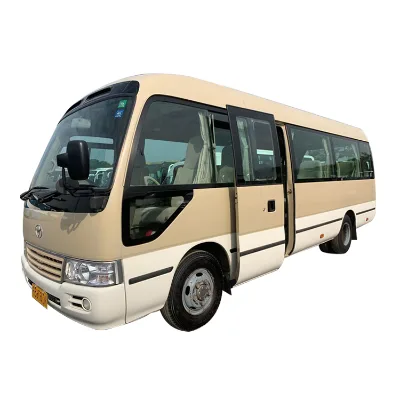
Used toyota coaster Passenger 30 Seats Second Hand Van toyota coaster Buses Used Bus for Sale
$12799.00 - $13599.00
MOQ: 1 units
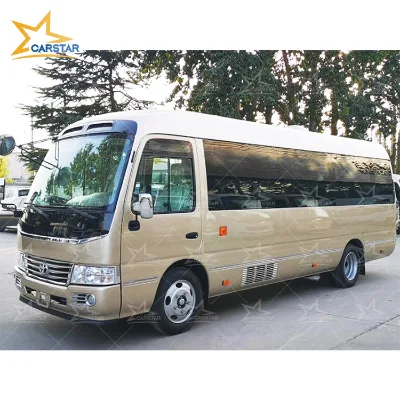
Used Cheap Price Toyo Ta Middle City Bus Coaster Used coaster Buses for Sale
$8000.00 - $12000.00
MOQ: 1 sets

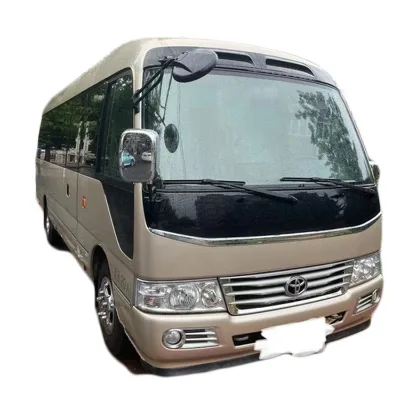
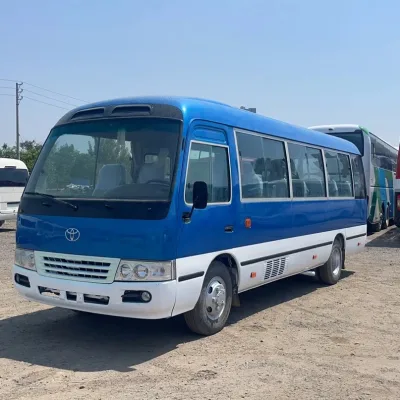
Well Conditional toyota coaster 30 Seaters Bus for Transporting Passenger
$10400.00 - $11500.00
MOQ: 1 sets
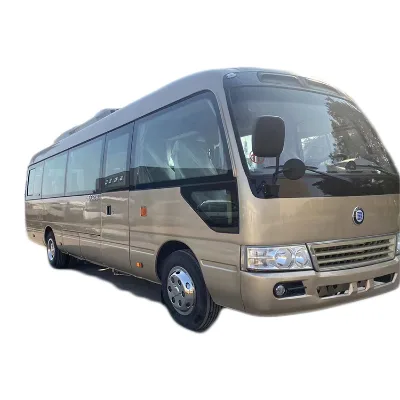
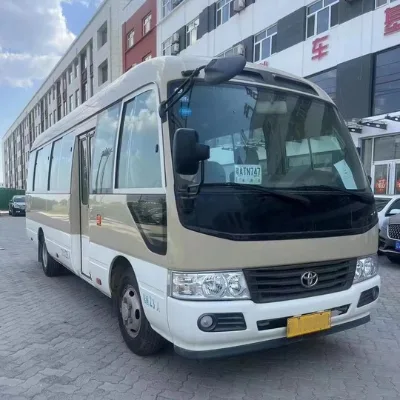
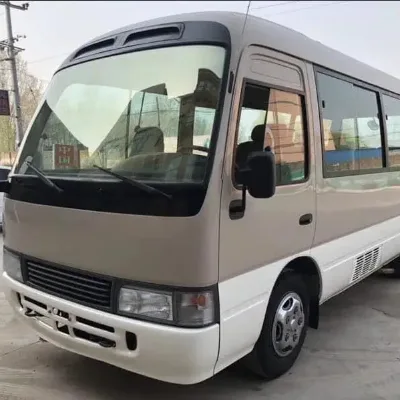


Luxury Toyota Coaster Bus 20 Places Used Coaster Buses 30 Seater Bus
$15800.00 - $21500.00
MOQ: 1 Pieces


Used Coaster Bus Trade 30 Seaters Coaches Toyota Coaster Bus for Sale
$3000.00 - $5000.00
MOQ: 1 Pieces


Comprehensive Sourcing Guide
Strategic Sourcing Guide for Low Floor Toyota Coaster Buses
Procuring a Low Floor Toyota Coaster Bus represents a significant investment in public and commercial transportation infrastructure. The "low floor" designation implies a specific structural design intended to enhance accessibility, allowing for easier boarding and alighting for passengers with mobility challenges, the elderly, and those carrying luggage. When sourcing this specific vehicle class, buyers must navigate a complex landscape of technical specifications, origin variations, and compliance requirements. The following guide synthesizes available product attributes and industry knowledge to provide a disciplined approach to procurement, ensuring that the acquired assets meet operational needs without compromising on safety or regulatory adherence.
Technical Architecture and Structural Specifications
The foundational element of any procurement decision is the technical architecture of the vehicle. In the context of the Toyota Coaster, the structural design varies significantly between standard and low-floor variants. The supplied data indicates that the "Low Floor Bus" structure is a distinct category within the market, differing from the standard "Single-Deck" configuration often found in conventional models. This structural difference is not merely cosmetic; it fundamentally alters the chassis layout, suspension geometry, and interior floor height.
Buyers must verify the specific dimensional standards of the unit they intend to purchase. Observed data points to an overall dimension of 699020252600 mm for certain models, while other references suggest a standard of 699020403645 mm. This variance in height (2600 mm vs. 3645 mm) is critical. A height of 3645 mm suggests a high-roof or double-deck configuration, which contradicts the typical low-floor profile unless it refers to a specific high-capacity variant. Conversely, a height of 2600 mm aligns more closely with standard single-deck bus profiles. The "Low Floor" attribute requires explicit confirmation of the floor height relative to the curb, as this dictates the ramp or step requirements for accessibility compliance.
Furthermore, the powertrain specifications are diverse. The data lists displacement figures exceeding 2.6 liters, with specific mentions of 4200 cc engines. Fuel types vary between Diesel and Gasoline, and transmission systems are noted as Manual (5 gears/MT) or potentially automated in newer iterations. The braking systems observed include both Mechanical and Barometric types. A buyer must rigorously match these specifications to local road conditions and regulatory mandates. For instance, a Barometric braking system may offer different performance characteristics compared to a Mechanical system, particularly in heavy-load scenarios. The maximum speed range of 111-130 km/h provides a baseline for highway capability, but the actual performance will depend on the specific engine displacement and gear ratio configuration.
Compliance, Certification, and Regulatory Alignment
Navigating the regulatory landscape is perhaps the most critical phase of sourcing a used or new commercial vehicle. The origin of the vehicle plays a pivotal role in determining its compliance status. The data indicates origins from both Japan and China, with specific mentions of Shandong province in China. Vehicles originating from Japan often adhere to strict domestic safety standards, while those from China may follow different certification protocols.
Buyers must verify the emission standards applicable to their region. The provided text references "EuroFuel:Gasoline" and "EuroFuel:Diesel," suggesting that emission compliance is a key differentiator. However, the specific Euro standard (e.g., Euro 4, Euro 5, Euro 6) is not explicitly quantified in the source data. It is imperative for the buyer to demand proof of the specific emission certification before finalizing a purchase. Importing a vehicle with a non-compliant emission standard can result in immediate rejection at customs or an inability to register the vehicle for commercial use.
Additionally, the steering position is listed as LHD (Left-Hand Drive). This is a non-negotiable attribute for markets where traffic flows on the right side of the road. Purchasing a vehicle with the wrong steering configuration is a common and costly error in international procurement. The "Low Floor" designation also triggers specific accessibility regulations in many jurisdictions, such as the Americans with Disabilities Act (ADA) in the United States or similar EU directives. Buyers must confirm that the vehicle's low-floor design includes the necessary features, such as hydraulic ramps or kneeling mechanisms, and that these features are certified for safety.
Cost Drivers and Total Cost of Ownership Analysis
The pricing for these vehicles is influenced by a complex array of factors, including age, condition, mileage, and origin. The observed price range in the market is substantial, spanning from $2,999 to $25,000. This wide disparity suggests that the market includes everything from heavily used, high-mileage units to nearly new, low-mileage vehicles with premium features. The minimum order quantity (MOQ) is consistently observed as 1, indicating that buyers can procure single units without the need for bulk purchasing agreements.
When analyzing the total cost of ownership (TCO), the service life of the vehicle is a primary consideration. The data cites service life ranges of 1-3 years and 3-6 years. This variation likely correlates with the condition of the vehicle (Used vs. New) and the intensity of its previous usage. A vehicle with a mileage of 10,000-30,000 km will naturally have a longer remaining service life than one with 60,000-100,000 km. Buyers should not rely solely on the listed price but must calculate the cost per kilometer over the expected service life.
Other cost drivers include the fuel type. Diesel engines typically offer better fuel economy and torque for heavy loads, which is beneficial for commercial transport, but they may incur higher maintenance costs or face stricter emission regulations in urban centers. Gasoline engines might offer a lower upfront cost or easier maintenance in certain regions but could result in higher fuel consumption. The "Customization: Available" attribute also adds a variable cost layer. Buyers should budget for potential modifications required to meet local accessibility standards or specific branding requirements, as the base model may not include all necessary features.
Operational Applications and Usage Scenarios
The versatility of the Toyota Coaster makes it suitable for a wide range of applications. The data lists usage categories including "Novice Car," "Experience Car," "Commercial Vehicle," and "Touring Car." However, the "Low Floor" variant is specifically optimized for "Bus" and "Coach" applications where passenger accessibility is paramount. These vehicles are ideal for airport shuttles, hotel transfers, school transport, and community transit services.
The seating capacity is another critical factor in application planning. The data indicates seat counts ranging from 20-30 seats, with specific mentions of "29+1" and "21~Size:Bus." The "29+1" configuration typically implies 29 passenger seats plus one driver's seat, a common layout for mid-sized coaches. The "Low Floor" design allows for a higher effective capacity in terms of passenger flow, even if the total seat count remains similar to a standard bus, as it reduces boarding time.
The "Intelligence: NBT" attribute suggests the presence of advanced navigation or telematics systems, which can be crucial for fleet management. For commercial operators, the ability to track vehicle location, monitor fuel consumption, and manage maintenance schedules is essential. The "Good Quality" designation in the data implies that these vehicles are generally reliable, but the specific application should dictate the required level of intelligence and comfort. For example, a touring car application might prioritize passenger comfort and air conditioning, while a commercial shuttle might prioritize durability and ease of cleaning.
Supplier Evaluation and Origin Verification
Evaluating suppliers requires a keen eye for detail, particularly given the mixed origins of the products. The data shows vehicles originating from Japan and China. Japanese models, such as the "Toyota coaster" and "Cstar-U-Coaster," are often associated with high reliability and strict manufacturing standards. Chinese models, including those from Shandong with model numbers like "ZZ3257N3847A," may offer competitive pricing but require rigorous vetting of the manufacturer's quality control processes.
Buyers should avoid suppliers who cannot provide clear documentation regarding the vehicle's history. The "Condition: Used/New" attribute is a binary state that must be verified through physical inspection or third-party reports. A "Used" vehicle with a mileage of 60,000-100,000 km requires a more thorough mechanical inspection than a "New" vehicle. The "Year" range of 2010-2023 indicates that the market includes vehicles of varying ages. Buyers must ensure that the specific year of manufacture aligns with the local registration and safety regulations.
The "Packing: Container" attribute suggests that shipping logistics are standardized, but buyers should verify the packaging standards to ensure the vehicle arrives without damage. The "Discount: Yes" attribute indicates that pricing may be negotiable, but buyers should be cautious of discounts that seem too good to be true, as they may indicate hidden defects or incomplete documentation.
Quality Control and Long-Term Procurement Strategy
Quality control is not a one-time event but a continuous process that begins with the supplier selection and extends through the vehicle's service life. The "Service Life" data suggests that buyers should plan for a replacement cycle of 3-6 years for optimal performance. Regular maintenance is essential to maximize this lifespan. The "Braking System" and "Gearbox" specifications should be checked against the manufacturer's maintenance schedules to ensure that critical components are replaced or serviced at the recommended intervals.
For long-term procurement, buyers should consider the availability of spare parts. Vehicles from Japan often have a robust global supply chain for parts, whereas vehicles from other origins may face challenges in parts availability. The "Customization: Available" attribute can be a double-edged sword; while it allows for tailored solutions, it may complicate future repairs if non-standard parts are used.
Finally, buyers should establish a clear contract that defines the warranty terms, return policies, and support services. The "Good Quality" claim in the data should be backed by a formal warranty or guarantee from the supplier. By focusing on these long-term considerations, buyers can ensure that their investment in a Low Floor Toyota Coaster Bus remains a valuable asset for their organization for the duration of its service life.
FAQs
What is the typical seating capacity for a Low Floor Toyota Coaster Bus?
The seating capacity typically ranges from 20 to 30 seats, with some configurations offering 29 plus one driver seat. This capacity aligns with standard mid-sized coach requirements for commercial and touring applications.
Can buyers customize the color and structure of these buses?
Yes, customization is available for colors like yellow or blue, and the structure can be selected as a low floor bus. Buyers can also request specific dimensions or modifications to meet local accessibility standards.
Which fuel types are available for the Toyota Coaster bus models?
Available fuel types include diesel and gasoline engines, with displacement figures exceeding 2.6 liters. Specific models may feature 4200 cc engines paired with either manual or automated transmission systems.
How does the service life vary between used and new units?
Service life ranges from 1 to 3 years for some units and extends to 3 to 6 years for others. This variation depends heavily on the vehicle's condition, mileage, and previous usage intensity.
What is the price range for sourcing these buses?
The observed price range spans from 2999 to 25000 USD depending on age and condition. Minimum order quantities are typically one unit, allowing for flexible single-unit procurement without bulk requirements.
Which steering position is standard for these commercial vehicles?
The standard steering position is Left-Hand Drive (LHD), suitable for markets with right-hand traffic. Buyers must verify this specification to ensure compliance with local road regulations and safety standards.