Source Low Floor Used Bus for transit, school, and coach
Compare 25 Low Floor Used Bus listings from China with manual or automatic transmissions, diesel engines, and seat capacities ranging from 30 to 60. Buyers can evaluate models like 6119AG4 and 6113 for various transit applications.
Key considerations
Products List


$23528.00 - $35000.00
MOQ: 1 Pieces


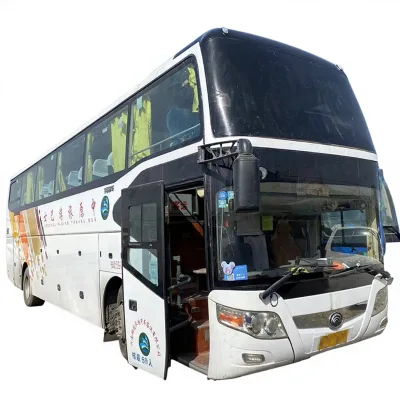
45 Seats High Standard Refurbished Used Bus Used Coach Bus for Sale
$12500.00 - $13500.00
MOQ: 1 Pieces


50seats Second Hand Bus Used Buses for Sale Buses Coach Used Yu Tong
$12500.00 - $13500.00
MOQ: 1 Pieces


Comprehensive Sourcing Guide
Strategic Sourcing Guide for Low Floor Used Buses
Understanding the Low Floor Bus Segment in the Secondary Market
The procurement of used buses, specifically those designed with a low floor structure, represents a critical operational decision for transit authorities, private shuttle operators, and educational institutions. A low floor bus is defined by its structural design, which eliminates the traditional high step at the entrance, facilitating rapid boarding and alighting for passengers with mobility challenges, strollers, or heavy luggage. In the current secondary market, the availability of these vehicles varies significantly based on their age, condition, and previous service history. The core keyword "Low Floor Used Bus" indicates a specific subset of the broader used vehicle market where accessibility and operational efficiency are paramount.
When sourcing these assets, buyers must recognize that the term "low floor" is not merely a marketing descriptor but a structural attribute that impacts the vehicle's center of gravity, maintenance requirements, and interior layout. The observed market data indicates that these vehicles are often categorized under "Bus" usage with a specific "Structure" attribute of "Low Floor Bus." This distinguishes them from single-deck coaches or high-floor transit buses. The availability of such units is often linked to specific model numbers, such as the 6119AG4, 6113, 6110, and 6122, which appear in the current inventory. These model identifiers are essential for cross-referencing technical specifications and ensuring the vehicle meets the specific dimensional and capacity needs of the operator.
Technical Specifications and Performance Parameters
Evaluating the technical viability of a used low floor bus requires a granular analysis of its engine, transmission, and dimensional specifications. The market data reveals a diverse range of powertrains, with fuel types predominantly listed as "Diesel." Buyers must verify the engine capacity, as observed listings include units with engine capacities greater than 8 liters, which typically correlate with higher torque and power output suitable for heavy urban routes. The maximum power ratings observed in the current inventory range from 96kw to 180kw, while maximum torque figures vary between 345n.M and 1250n.M. These figures are critical for determining the bus's ability to navigate hilly terrain or maintain speed on congested highways.
Transmission systems in the used market are split between "Manual" and "Automatic" types. The presence of both options suggests that buyers should prioritize the transmission type based on their driver pool's familiarity and the specific traffic conditions of their operating region. Manual transmissions may offer better fuel economy and lower maintenance costs in some contexts, while automatic transmissions provide smoother operation and reduced driver fatigue. The maximum speed capabilities also vary, with observed ranges falling between 91-110km/h and 111-130km/h. Selecting a unit with an appropriate top speed is essential for compliance with local traffic laws and route scheduling requirements.
Dimensional consistency is another vital technical factor. The standard dimensions for these units often align with specific metric measurements, such as 10.49m x 2.45m x 3.33m or 12.00m x 2.45m x 3.33m. The "Size" attribute is frequently categorized as "Large" or "Bus," indicating a full-sized vehicle rather than a minibus. The seating capacity is a direct function of the interior layout and the "Low Floor" structure, with observed seat capacities ranging from 30 to 60 seats. Buyers must ensure that the specific model's seating configuration matches their passenger volume projections. For instance, a unit with a "Seat Capacity" of 45 or 46 may be ideal for city transit, while a 60-seat configuration might be better suited for intercity coach services.
Compliance, Certification, and Regulatory Standards
Navigating the regulatory landscape for used bus imports is a complex process that hinges on compliance with emission standards and certification requirements. The observed data highlights "Euro" emission standards as a key compliance metric, though the specific Euro stage (e.g., Euro 3, Euro 4) is not explicitly detailed in the provided snippets. Buyers must verify the exact emission standard of any prospective vehicle to ensure it meets the local environmental regulations of the destination country. Non-compliant vehicles may face import bans or require costly retrofitting.
Certification is equally critical. The market listings reference several certification types, including "CCC" (China Compulsory Certification), "ISO 9001," and "ISOCCC." These certifications indicate that the vehicle or the manufacturing process adhered to specific quality and safety standards at the time of production or prior to export. However, the condition of the vehicle is noted as "Used," which means that while the original certifications may be valid, the current operational status must be independently verified. The "Condition: Used" attribute is a standard classification, but it does not guarantee the absence of mechanical issues. Buyers should request current inspection reports that validate the vehicle's compliance with local safety standards, which may differ from the original country of origin standards.
Furthermore, the "Steering Position" is consistently listed as "LHD" (Left-Hand Drive) in the observed data. This is a crucial detail for buyers in countries that drive on the right side of the road. Importing a Right-Hand Drive vehicle for a LHD market would be illegal and operationally unfeasible. The "Product Origin" is identified as "China," which is a common source for these vehicles, but buyers must be aware of the specific export regulations and documentation required to clear customs from this region.
Cost Drivers and Financial Considerations
The financial landscape for sourcing used low floor buses is influenced by several variables, including the vehicle's age, condition, and specific configuration. The observed price range in the market spans from 9,000 to 36,488 USD. This wide variance suggests that price is heavily dependent on the model year, engine power, and the extent of previous usage. A unit with 180kw power and a 60-seat capacity will likely command a higher price than a 96kw unit with 30 seats. Buyers should not view the lower end of the price range as a bargain without a thorough inspection, as "Used" vehicles can carry hidden costs related to immediate repairs or part replacements.
The "MOQ" (Minimum Order Quantity) for these transactions is observed to be 1, indicating that buyers can procure a single unit without needing to commit to a fleet purchase. This flexibility is advantageous for small operators or those testing a new route. However, the "Packing" specifications vary, with options ranging from "Nude" (unpacked) to "Without Package" or specific container dimensions like "12800X3000X4000." These packing details directly impact shipping costs and logistics planning. A "Nude" shipment may require less packaging material but could necessitate additional securing measures during transit to prevent damage.
Additional cost drivers include the "Weight" of the vehicle, which is listed as 12,000 kg in some listings. Heavier vehicles may incur higher shipping fees and may have restrictions on certain road networks or bridges. Buyers must also consider the "Intelligence" features, such as "NBT" or "BRT" (Bus Rapid Transit) systems, which may add value but also increase the complexity of maintenance and the cost of spare parts. The "Customization: Available" attribute suggests that some suppliers may offer modifications, which could add to the overall cost but allow for tailoring the bus to specific operational needs.
Typical Applications and Operational Fit
The versatility of low floor used buses makes them suitable for a wide array of applications. The "Usage" attribute in the market data includes "Bus," "Coach," and "School Bus," indicating that these vehicles are not limited to a single function. For municipal transit agencies, the "Low Floor" structure is essential for compliance with accessibility laws, ensuring that elderly and disabled passengers can board safely. The "Style" is noted as "Sitting," which is standard for transit buses, but the interior layout must be verified to ensure it meets the specific comfort and capacity requirements of the intended route.
In the context of school transportation, the "Seat Capacity" and safety features become paramount. A bus with a capacity of 30 to 45 seats might be ideal for smaller school districts, while larger districts may require the 46 to 60-seat configurations. The "Steering" system, described as "Integral Power Steering," is a standard feature that aids in maneuverability, which is particularly important for school buses navigating tight residential streets.
For intercity coach services, the "Max Speed" and "Max Power" become more critical. A bus capable of 111-130km/h with 180kw power is better suited for long-distance travel where maintaining a schedule is crucial. The "Structure" being "Single-Deck" is consistent with most coach applications, though the "Low Floor" design may require specific interior seating arrangements to maximize capacity without compromising safety. The "Seat Capacity" of 60 seats, as seen in some listings, suggests a high-capacity coach configuration, which is ideal for group travel or tour operations.
Supplier Evaluation and Quality Control Protocols
Selecting a reliable supplier for used low floor buses requires a rigorous evaluation process that goes beyond the basic product listings. Since the "Product Origin" is China, buyers should verify the supplier's export history and their ability to provide comprehensive documentation, including the original "Certificate" and "Emission Standard" proof. The presence of "ISO 9001" certification in the listing is a positive indicator of the supplier's adherence to quality management systems, but it should be validated through independent verification.
Quality control must be a priority, especially given the "Condition: Used" status. Buyers should insist on a pre-purchase inspection by a third-party expert who can assess the engine, transmission, chassis, and body integrity. The "Max Torque" and "Max Power" figures provided in the listing should be verified through dynamometer testing to ensure the engine is performing at the stated levels. Additionally, the "Weight" and "Size" specifications should be physically measured to confirm they match the listed dimensions, as discrepancies can affect shipping and registration.
The "Customization: Available" attribute offers an opportunity to address specific quality concerns before finalizing the purchase. Buyers can negotiate for immediate maintenance, part replacements, or interior refurbishments as part of the deal. However, the "Packing" method should be carefully selected to ensure the vehicle arrives in the same condition it was inspected. "Nude" or "Without Package" shipments require robust securing protocols to prevent damage during transit.
Long-Term Procurement and Lifecycle Management
Procuring a used low floor bus is not a one-time transaction but the beginning of a long-term asset lifecycle. Buyers must consider the availability of spare parts, the cost of maintenance, and the expected remaining service life. The "Fuel: Diesel" specification implies a reliance on diesel fuel infrastructure, which is generally stable, but buyers should monitor fuel efficiency trends. The "Engine Capacity" of over 8 liters suggests higher fuel consumption, which may impact long-term operating costs.
The "Certification" status, such as "CCC" or "ISOCCC," may have expiration dates or may not be transferable to the new owner's country. Buyers must plan for the re-certification process required to legally operate the vehicle in their jurisdiction. The "Intelligence" systems, like "NBT" or "BRT," may require specialized software updates or hardware replacements as technology evolves.
Finally, the "Usage" history of the vehicle is a critical factor in determining its remaining lifespan. A bus used for "School Bus" duties may have experienced different wear patterns compared to one used for "Coach" services. Buyers should request detailed maintenance logs and service records to assess the vehicle's history. By understanding these long-term factors, buyers can make informed decisions that balance initial acquisition costs with ongoing operational expenses, ensuring a sustainable procurement strategy for their fleet.
FAQs
What certification standards do low floor used buses meet?
Low floor used buses often carry CCC, ISO 9001, and ISOCCC certifications. These indicate compliance with quality and safety standards at production, though buyers must verify current operational status independently since the condition is used.
How many seats can a Low Floor Used Bus typically hold?
Seat capacities for these buses range from 30 to 60 seats depending on the model. Specific listings show configurations for 30, 31, 45, 46, 47, and 60 seats, allowing selection based on passenger volume needs.
Which transmission types are available for low floor used buses?
Both manual and automatic transmission types are available in the current inventory. Buyers should choose based on driver familiarity and traffic conditions, as manual options may offer better fuel economy while automatics reduce fatigue.
Can low floor used buses be customized for specific needs?
Yes, customization is available for low floor used buses to tailor them to specific operational requirements. Buyers can negotiate modifications for maintenance, interior refurbishment, or specific feature additions before finalizing the purchase.
What is the typical price range for low floor used buses?
The observed price range spans from 9,000 to 36,488 USD depending on the model and condition. Higher power and seat capacity units generally command higher prices, while lower-end units may require immediate repairs.
How does the low floor structure benefit bus operations?
The low floor structure eliminates high steps to facilitate rapid boarding for passengers with mobility challenges or luggage. This design improves accessibility and operational efficiency, making it ideal for transit, school, and coach services.